
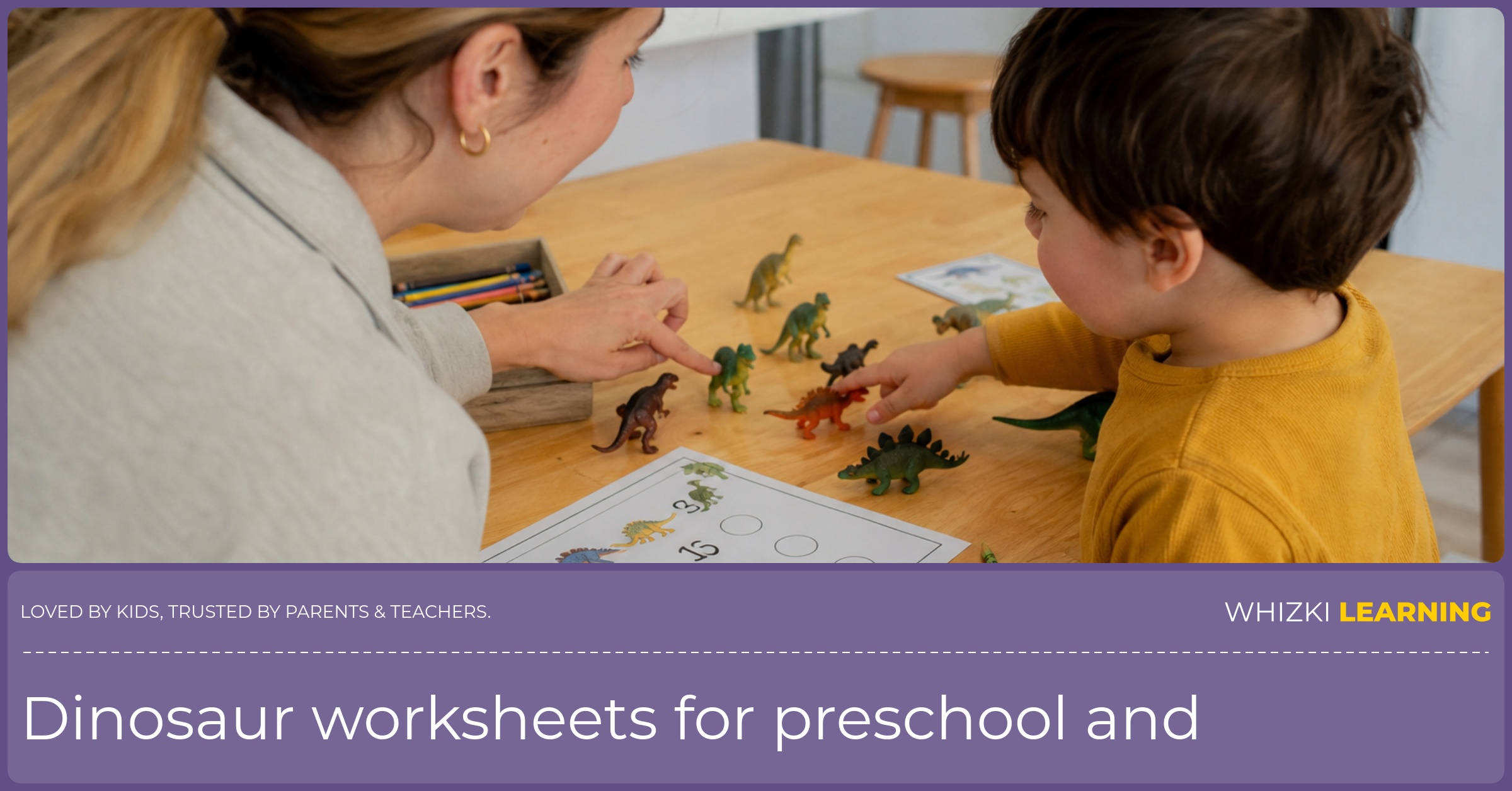
If your child can name five dinosaurs but groans at pencil practice, print one dino page, set out two crayons, and sit beside your child for five calm minutes. Dinosaur interest is real fuel at ages 3 to 7, especially when the page asks for counting, matching, tracing, or talking instead of long seatwork. The goal is not a perfect worksheet; the goal is one small skill practiced with a theme your child already loves.
Reviewed by Whizki Editorial Team, Early Childhood Education Editors.
Why dinosaur worksheets work for young children
Dinosaur worksheets for preschool give children a familiar topic while adults practice early math, language, and pencil control. The search phrase dinosaur worksheets preschool usually comes from a real kitchen-table need: a child wants triceratops and stegosaurus, and the adult wants ten minutes of useful paper practice.
The NAEYC guideline I return to in classrooms is simple: young children learn best when the task fits the child, the setting, and the relationship. A dinosaur counting page feels safer than a plain drill page because the picture gives the child something to talk about before the pencil starts moving.
A good dinosaur worksheet should ask for one clear action, such as circle the matching shadow or trace the path to the nest. A crowded worksheet can bury the skill, while a clean page lets the child notice the picture, plan the hand movement, and finish with pride.
What to print first for ages 3 to 7
The first printable should match the youngest skill your child can do with a little help. A 3-year-old may start with shadow matching or big path tracing, while a 6- or 7-year-old may enjoy counting fossils, finding letter D, and sorting dinosaurs by size.
The printable choice gets easier when the adult keeps a small folder from our printable library instead of searching at the last minute. In my classroom bins, I keep one counting page, one letter page, one tracing page, and one matching page because children often need a fresh doorway into the same skill.
The letter-find page pairs nicely with the Orton-Gillingham approach because the adult can say the sound, show the mouth movement, and have the child tap each target letter before coloring. The size-sorting page fits a Reggio-inspired habit of observing first because the child can compare long necks, short tails, tall bodies, and tiny footprints before any answer is marked.
How to use counting, letters, sorting, matching, and tracing
The dino counting worksheet should begin with touching each picture, not writing the number first. A Montessori-style one-to-one counting habit helps the child connect spoken numbers with objects, and a small toy dinosaur can become the pointer when a finger is tired.
The letter-find worksheet works best when the adult keeps the sound short and clean, such as d, d, dinosaur. The Orton-Gillingham routine of see, say, trace, and mark gives the child several ways to meet the same letter without turning the page into a memory test.
The tracing worksheet is more useful when the adult watches posture, paper angle, and grip before asking for neat lines. Occupational-therapy basics remind adults that shoulder stability and wrist position come before tidy pencil marks, so a big curved dino path may be the right starting page.
A premium Dinosaur Early Skills Worksheet Set can give parents one tidy mix of counting, letter find, shadow matching, and tracing without hunting page by page. Families who prefer paper on the shelf can pair dinosaur practice with our printed workbooks for screen-free table time. The complete dinosaur pack lives in Plus.
When a worksheet needs movement or talk
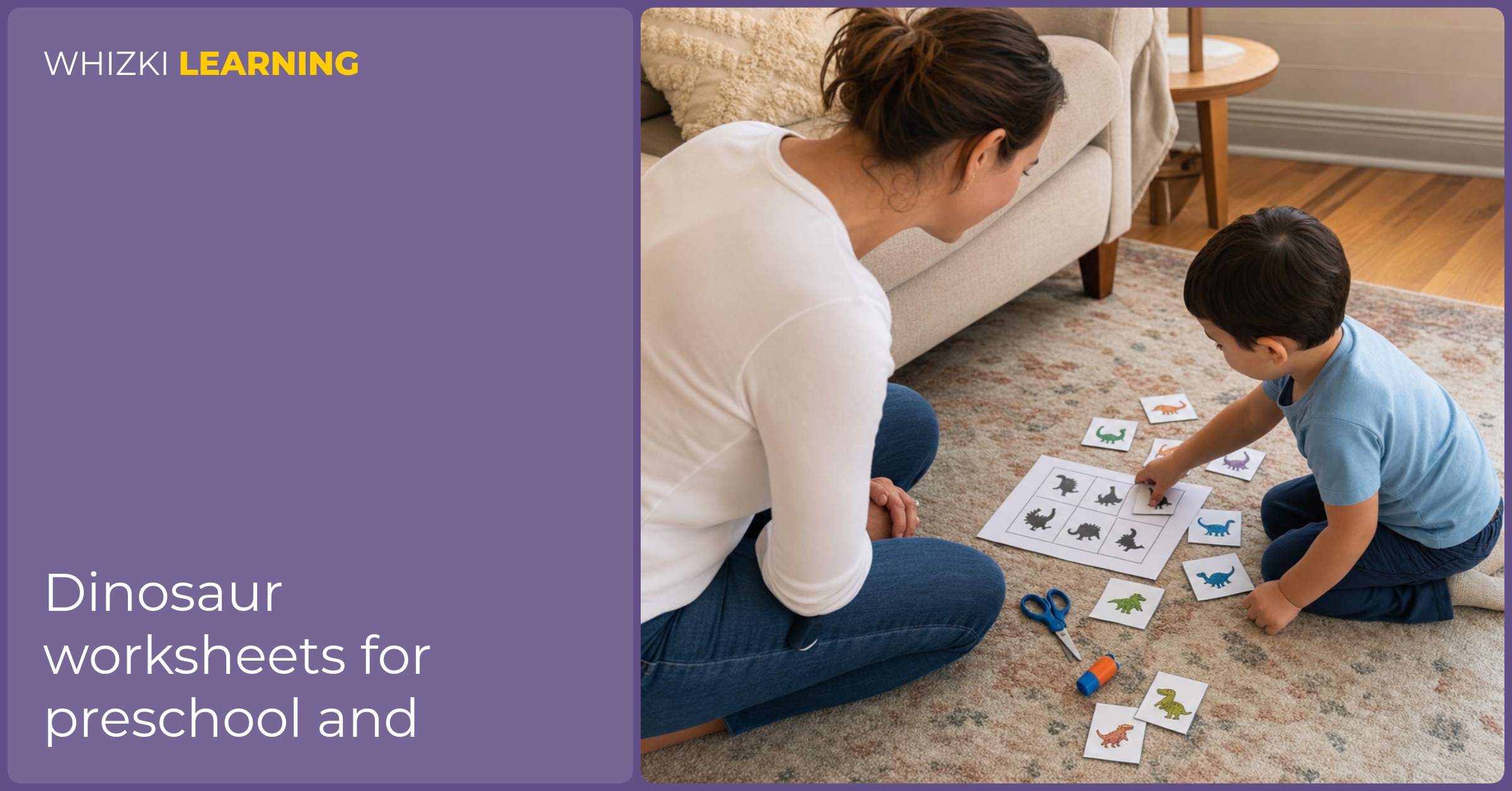
The shadow-matching worksheet often needs body movement before pencil movement. An occupational-therapy heuristic I use is large before small, so the child can make a big dinosaur pose, match a toy to a shadow, and then draw the line on paper.
The cutting or pasting version should stay short because small hands fatigue quickly. A child who snips two dinosaur cards and glues two matches has practiced planning, hand strength, and visual scanning without being asked to finish a full craft sheet.
The talk-before-pencil step matters for children who are still building vocabulary. Speech-language practice often starts with naming and describing, so the adult can ask, “Which dinosaur is taller?” or “Which footprint looks smaller?” before the child sorts the pictures.
A simple weekly dinosaur routine
The weekly routine should stay predictable: Monday counting, Tuesday letter find, Wednesday size sorting, Thursday shadow matching, and Friday tracing. A predictable rhythm follows NAEYC’s emphasis on routines because young children can relax into the activity when the adult is not changing every rule at once.
The worksheet folder can come from our worksheet sets when the adult wants pages grouped by skill. A second visit to the printable library can refill the folder when dinosaur week turns into dinosaur month, which happens more often than adults expect.
Dinosaur worksheets are most helpful when the adult treats the page as a shared activity, not a test. Five focused minutes with counting, letter sounds, sorting, matching, or tracing can give a young child real practice and still leave plenty of room for blocks, books, mud, and pretend play.
If a child resists the page, the adult can lower the demand by doing the first item together, switching to a marker, or finishing after one row. Small endings keep the dinosaur theme joyful, and joyful practice is the page a child will agree to try again tomorrow.