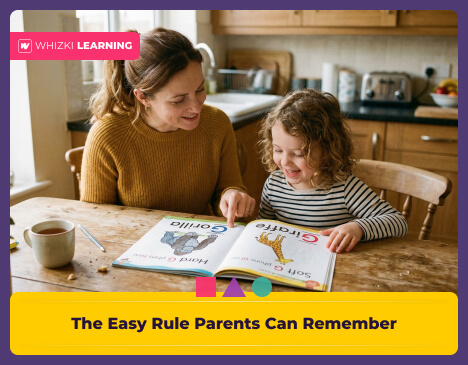
During my years developing early literacy tools, I have watched countless parents hit the exact same roadblock: English is full of confusing exceptions. You spend weeks helping a preschooler that the letter 'G' makes a hard /g/ sound, like in the word 'goat'. Then the child runs into 'giraffe' or 'gem' and suddenly freezes. As a parent, it can feel really discouraging to explain why the “rule” seems to change with no warning. And honestly, experienced kindergarten teachers see this too, kids often lose reading confidence right at this transition point, when letters start making more than one sound.
Here is the good news, you do not need a degree in linguistics to help your child move through it. The Orton-Gillingham approach, a widely used literacy method, leans on a simple visual rule to explain the two sounds of the letter 'G'. This step-by-step guide turns the 'Hard vs Soft G' rule into small, hands-on lessons. And when you choose screen-free, meaningful practice over digital apps, parents and caregivers can give children the tools they need to decode tricky words and do well off-screen.
Understanding the 'Bossy Letters' Rule
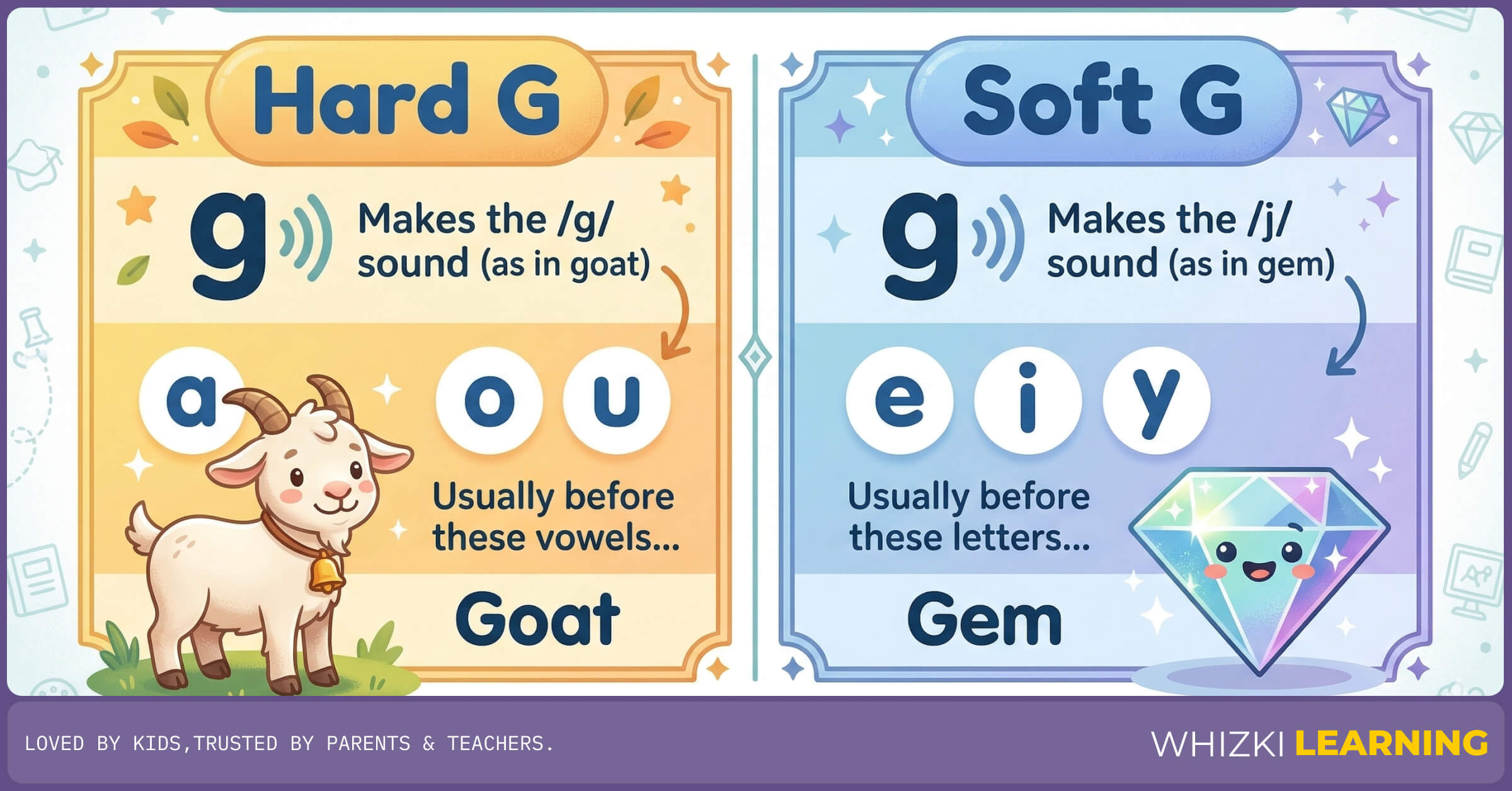
The key to decoding the letter 'G' depends on the vowel that comes right after it. Early literacy educators often call 'E', 'I', and 'Y' the 'bossy letters' because they can change the sound of the consonant before them. When the letter 'G' is followed by an 'E', an 'I', or a 'Y', the letter 'G' makes a soft /j/ sound, like in 'gym', 'giant', or 'gel'. This pattern shows up again and again in everyday English words.
On the other hand, the hard /g/ sound is the default. When the letter 'G' is followed by any other letter, specifically the vowels 'A', 'O', or 'U', or any consonant, the letter 'G' makes its hard sound, like in 'gas', 'goat', or 'gum'. Teaching this clear 'Bossy Letters' rule helps early readers look at a word in order, instead of guessing wildly based on pictures.
How to Teach Hard and Soft G at Home
A tactical, educator-approved sequence for teaching the Hard vs Soft G rule using tactile sorting and screen-free practice.
1. The Physical Sorting Game
Young children understand tricky phonics much faster when they can touch and move things. Parents should grab a basket of small household items or printed flashcards featuring 'G' words, like a toy gorilla, a toy giraffe, garlic, or a gem. Then set up two piles on the floor: the 'Hard G Gorilla' pile and the 'Soft G Giraffe' pile. The child sorts the items by listening closely to the starting sound. This builds auditory discrimination skills before the child even looks at the written spelling.
2. Highlighting the 'Bossy' Vowel
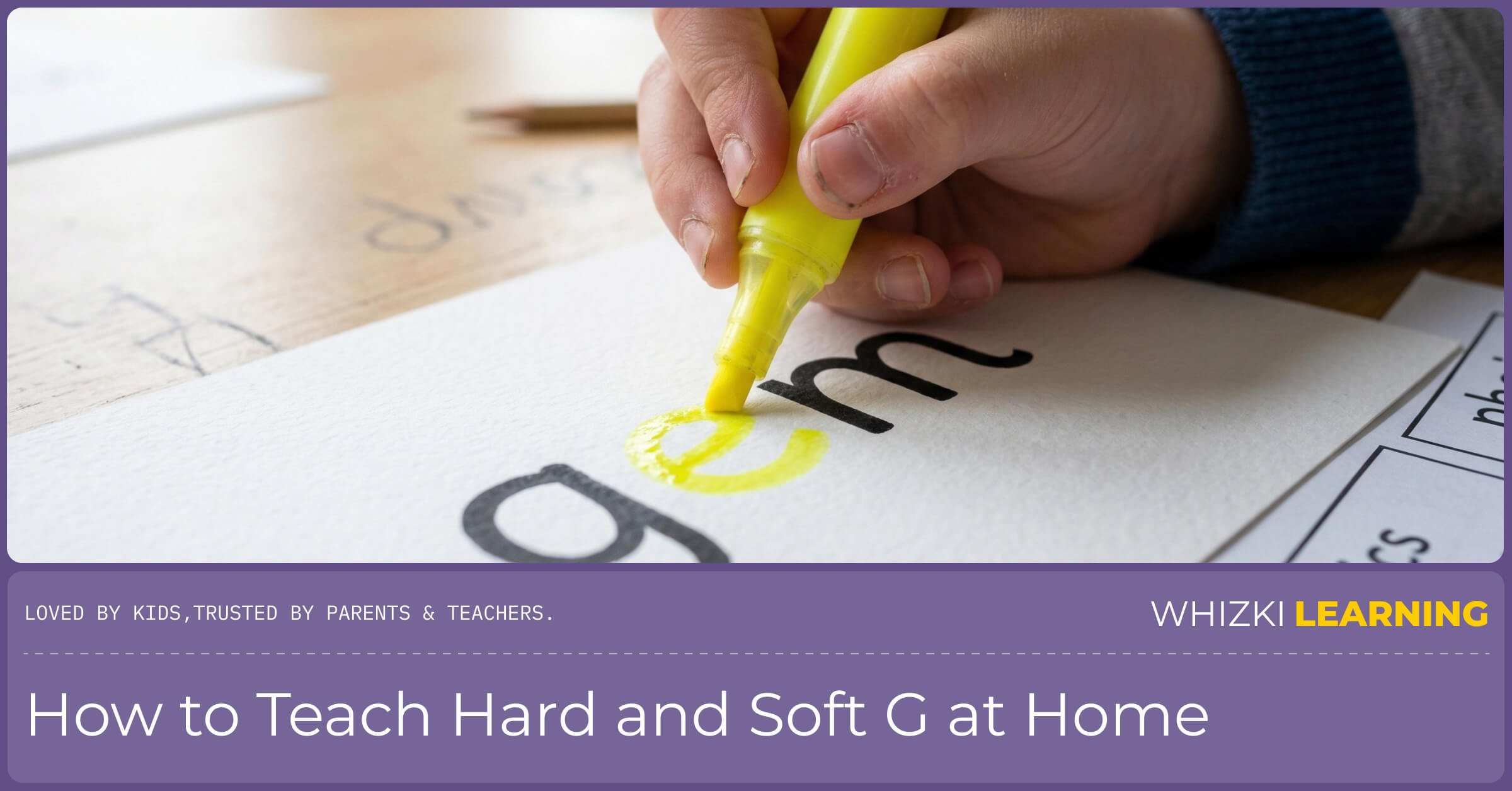
Once the child can hear the difference between the two sounds, it is time to connect that sound to the written rule. Parents can write several 'G' words on a large whiteboard or a sheet of paper. Then hand the child a bright yellow highlighter. The child's job is to highlight the letter right after the 'G'. If the highlighted letter is an 'E', 'I', or 'Y', the child adds a small star next to the word to show that the 'bossy letter' changed the sound. This hands-on learning activity makes spelling rules concrete, so the child is not stuck memorizing without understanding.
3. Tactile Workbook Application
The last step is where the new phonetic rule sticks. Teachers know that moving from a shared game to a structured paper task matters for long-term retention. Parents should use a high-quality printed workbook with 'G' sound discrimination exercises. When the child holds a pencil and circles the correct hard or soft 'G' picture, the work slows the brain down just enough to process the rule carefully, instead of rushing through it.
Meaningful Learning with Whizki Workbooks
Getting the Hard vs Soft G rule right takes structured practice materials that do not distract the child. Whizki printed workbooks include logic-based phonics activities on premium 120gsm paper, which gives early writers the right amount of tactile “friction.” That thicker paper helps the pencil glide less and slip less, so the child can focus on decoding the sounds instead of fighting the materials. If you want more reasons to choose screen-free practice, this connects well with Why "Boredom" is the Ultimate Screen-Free Teacher. With Whizki screen-free workbooks, parents and caregivers create the quiet, meaningful learning environment early readers need to build lasting phonics skills.
Embracing the Tricky Words
English is wonderfully complex, and teaching a child to read is a marathon of small wins. When you break intimidating spelling exceptions into simple, memorable ideas like the 'Bossy Letters' rule, the whole reading process starts to feel less mysterious. And if you are also working on attention and consistency, you can pair this practice with How to Build a 15-Minute Focus Habit Before Kindergarten, so the child gets more “practice reps” with less stress. When parents combine clear phonetic rules with hands-on, screen-free practice, early readers gain the confidence they need to tackle any challenging word they meet.