If the morning plan says letter sounds and counting bears, but the child builds a blanket cave, asks ten questions about spiders, and needs lunch early, write two plain lines tonight: what the child actually did and what learning the adult noticed. Reverse planning gives a busy parent a calm way to stop rewriting the past as if the original plan happened. The goal is a useful homeschool record, not a perfect paper trail that makes family life feel smaller.
Reviewed by Whizki Editorial Team, Early Childhood Education Editors.
What reverse planning means
Reverse planning homeschool record keeping starts with a light plan, watches real life, and then writes a factual record afterward. Reggio-inspired observation helps adults see what the child actually explored instead of forcing the day back into the adult’s first idea. The adult still plans, but the finished record belongs to the day that happened.
A prospective plan is a best guess before learning begins. A factual record is a short note after learning happens, and the factual record should not pretend that a worksheet was completed when the child learned through a walk, a story, or a kitchen task instead. NAEYC guidance on developmentally appropriate practice fits that difference because young children learn through play, conversation, movement, and materials.
A homeschool log becomes stronger when the adult separates intention from evidence. The plan might say, "practice /m/ sound and count to five," while the record might say, "sorted five shells by size, heard /m/ in moon, made, and mud, and asked for help writing Mom." The record is honest, specific, and still small enough to write before bedtime.
The hybrid loop: light plan, real life, actual record
The hybrid loop begins with a light plan first. Orton-Gillingham teaching often uses a clear sequence, so the adult might plan one sound, one quick handwriting motion, and one read-aloud rather than a crowded morning. A light plan gives the adult a direction without asking a four-, five-, or six-year-old to act like a tiny office worker.
Real life comes next, and real life includes wiggly bodies, grandparent calls, weather, snack needs, sibling noise, and sudden curiosity. Occupational-therapy basics remind adults that attention and fine-motor work depend on posture, sensory comfort, and timing. A child who refuses pencil work may still build hand strength by pinching clothespins, scooping rice, peeling stickers, or turning book pages.
The actual record comes afterward, when the adult names the learning that truly took place. When a whole week bends sideways, the changed-week reset can help the adult choose what to keep, what to drop, and what to record without shame. Reverse planning keeps changed plans from becoming invisible work.
The smallest useful fields for a homeschool log
The smallest useful homeschool log has five fields: date, time or part of day, activity, child action, and adult note. Montessori and Reggio observation habits both favor concrete notes over labels, so the adult writes what the child did with materials, language, movement, or relationships. The record can fit on paper, in a notes app, or in a planner.
The activity field should name the main experience in ordinary words. The child action field should name the visible behavior, such as matched rhyming words, counted four apples, retold the story, traced a curved line, mixed blue and yellow paint, or asked why worms come out after rain. The adult note can include support given, a next step, or a quote that shows thinking.
The smallest fields matter because preschool and kindergarten learning can be quick, physical, and scattered across the day. Orton-Gillingham practice might last eight minutes, and a speech-language style retell might happen while the child eats toast. A short factual note protects the learning from being forgotten.
For families who want one adult-managed place for the light plan and the after-the-fact note, the Family Learning Planner can hold the plan, activity, and record in the same routine. The planner is adult-managed, and children do not create accounts or sign in.
A one-day example with the nature walk preserved
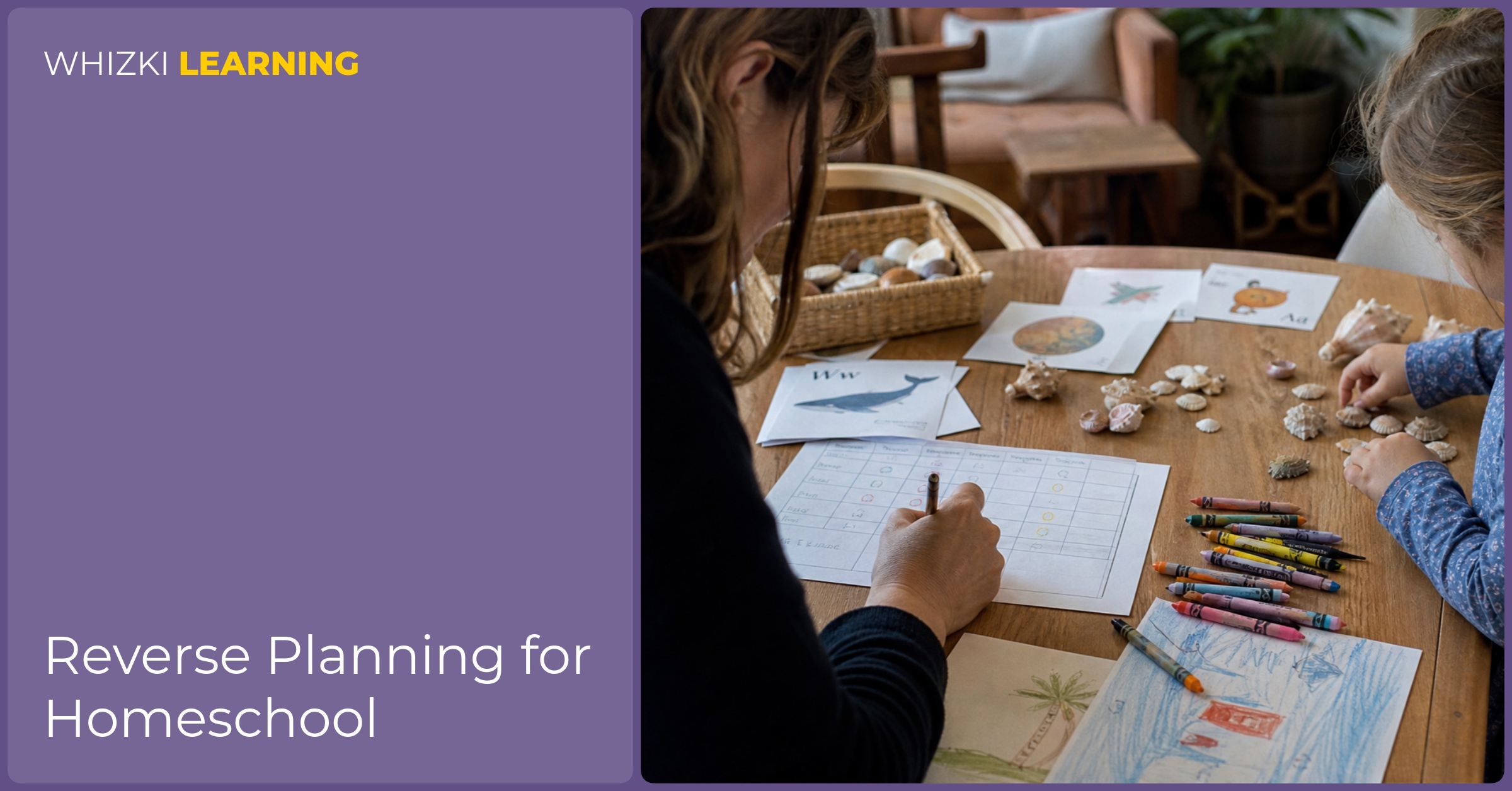
A one-day reverse planning homeschool example might begin with a simple morning plan: read a leaf book, count five leaves, draw one tree, and practice the /l/ sound. The family steps outside, and the child notices pill bugs under a damp log, compares rough bark and smooth bark, and asks why some leaves have holes. The plan changed, but the learning did not disappear.
The actual record can read: "Nature walk, 35 minutes. Child counted five leaves, compared rough and smooth bark, observed pill bugs, used words under, damp, tiny, and crawl, and drew a tree trunk with roots after lunch." A Reggio-style adult note might add, "Child returned to the log twice and asked to bring a magnifying glass tomorrow." The factual record is stronger than a checked box because the record names attention, vocabulary, counting, observation, and drawing.
The adult note should stay useful and gentle. The adult note does not need to say the child mastered science or failed handwriting. The adult note can simply say, "Pencil grip was tired after the walk, so the adult offered a chunky crayon and a clipboard on the floor." Occupational-therapy basics support that kind of note because tool choice, body position, and hand fatigue affect early writing.
A five-day reverse planning example
A five-day homeschool record keeping plan can start as a very light map. Monday can aim for letter sound /s/ and a snake read-aloud, Tuesday can aim for counting snack pieces to six, Wednesday can aim for name writing, Thursday can aim for a library visit, and Friday can aim for a family cooking task. The plan gives the adult a path without promising exactly how each day will go.
The actual five-day record might look different in a good way. Monday, the child built a sock puppet and heard /s/ in sock, sun, and silly. Tuesday, the child counted six crackers, gave two crackers to a sibling, and noticed fewer crackers on the plate. Wednesday, the child wrote the first letter of a name in shaving cream instead of on paper.
Thursday, the library visit became a rainy-day living-room book basket, and the child retold a bear story with toy animals. Friday, the cooking task became banana slicing with a child-safe tool, pattern talk during napkin folding, and a cleanup routine with sweeping. Speech-language pathology practice often values retell, sequencing, and everyday vocabulary, so those moments belong in the homeschool log.
The five-day record can also point to learning outside formal lessons. For more examples of ordinary learning that still counts for young children, the guide to learning beyond formal lessons can help the adult name play, chores, talk, and movement with confidence. Reverse planning does not inflate the day, and reverse planning does not erase the day.
When to write an entry, and what adult notes sound like
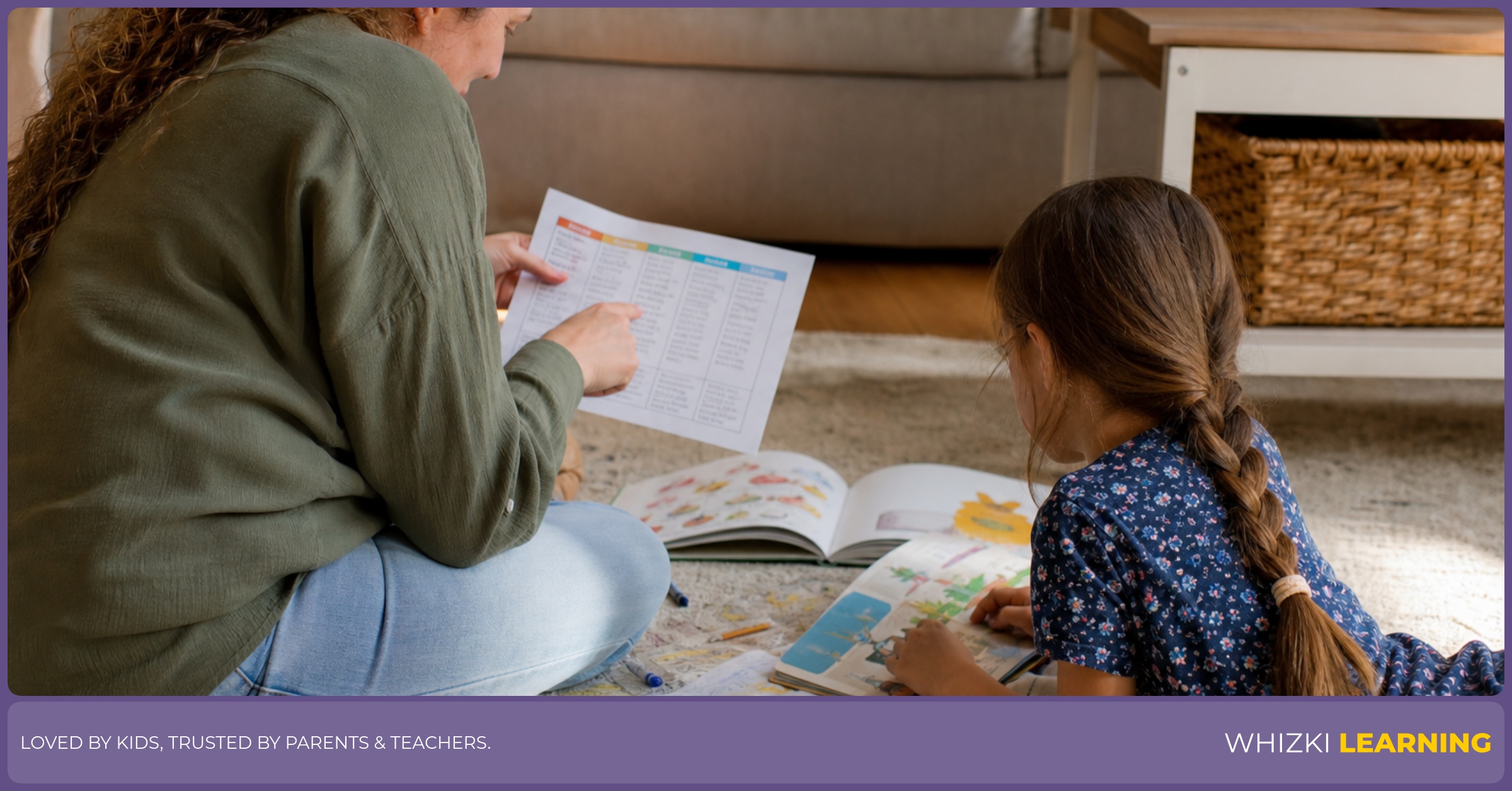
The best time to write a homeschool log entry is after the learning moment, while the details are still fresh. Many parents choose quiet rest time, the first five minutes after dinner, or the next morning before new plans begin. NAEYC family partnership guidance supports records that help adults understand the child rather than records that turn childhood into paperwork.
An adult note should sound like a steady teacher’s clipboard, not a courtroom statement. A useful note says, "Child matched three rhyming pairs with picture support," or "Child needed a movement break before tracing curves." Orton-Gillingham teachers use small observations like sound accuracy, blending support, and handwriting formation because small observations guide the next lesson.
An adult note can also capture social and life skills for ages 3-7. A note might say, "Child poured water with two spills, wiped the table, and asked for a towel," or "Child waited for a turn with one reminder during block play." Occupational-therapy and early-childhood practice both treat self-help, coordination, and shared play as real developmental work.
Local requirements and the record boundary
Homeschool record requirements vary by location, and a family should check state, province, district, umbrella school, charter, or local rules before relying on any record format. A reverse planning record can help the adult remember what happened, but a family’s local authority decides which records matter for compliance. The planner does not provide legal advice, official attendance, or transcripts.
Paper planners, notebooks, binders, calendar pages, and digital notes can all work when the adult can find the factual record later. The useful decision is whether the record answers who learned, what happened, when the activity happened, and what the adult noticed. Montessori observation practice and Reggio documentation both value clarity over decoration.
Privacy matters because homeschool records can include a child’s name, habits, and family routine. Families can review the privacy policy before choosing what to store online. The safest habit is to record enough for the adult’s purpose and avoid turning private family stories into unnecessary files.
Reverse planning gives a parent one doable action today: make a light plan for tomorrow, then write the actual record after real life has had a chance to happen. The record can be short, honest, and useful for planning the next warm lesson with the child in front of the adult. A changed day is still a learning day when the adult knows how to keep homeschool records without pretending the first plan was the final story.