If bedtime arrives and the homeschool record is still blank, write one honest line about the strongest learning moment of the day, then let the rest of the day stay ordinary. Parents and teachers of children ages 3 to 7 already carry enough mental tabs, from library books to snack cups to the math that happened while counting socks. A light record helps adults remember the learning without turning family life into a paperwork job.
Reviewed by Whizki Editorial Team, Early Childhood Education Editors.
What counts as learning at home
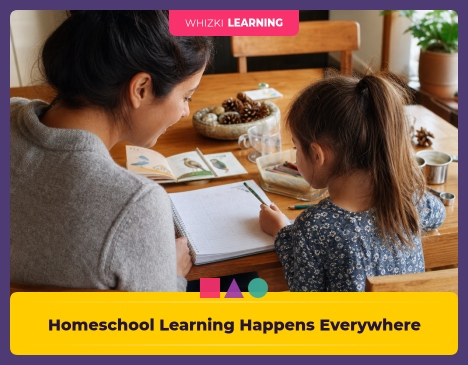
Homeschool learning activities for young children often look like reading on the couch, asking why the moon follows the car, sorting forks after dinner, or drawing a map of the block. NAEYC guidance reminds early-childhood adults to honor play, talk, movement, and relationships as real learning conditions for young children. A home record can name the skill in plain words without making the day sound bigger than the child experienced.
Reading counts when the child hears a story, retells a favorite page, notices a rhyme, matches a letter sound, or tracks print from left to right. The Orton-Gillingham approach gives adults a helpful lens here because reading growth is multisensory, sound-based, and built through small repeated steps. A note such as, "heard three /m/ words in a library book," is stronger than a fancy label the child would not recognize.
Conversation, daily math, science, nature, fine-motor work, classes, trips, projects, and practical life all belong in the learning picture for ages 3 to 7. Reggio-inspired observation asks adults to watch what the child is trying to understand, not to force every moment into a lesson title. For planning across books, printables, classes, and field trips, the guide to connecting activities in one week can help adults see how small pieces belong together.
Use a light capture system for everyday learning
A useful homeschool record keeping system for ages 3 to 7 needs fewer boxes, not more. Montessori practical life work gives a good model because pouring, scrubbing, buttoning, setting the table, and carrying a tray build independence, order, and hand control through real household routines. The record can say "set the table with one-to-one matching" instead of stretching dinner help into a full unit study.
The light capture system I recommend has five fields: date, place, activity, learning noticed, and next gentle step. The same five fields work for cooking, museums, nature walks, library visits, homeschool field trip log notes, and child-led projects. Occupational-therapy basics are useful here because adults can notice grip, bilateral coordination, crossing the midline, scissors control, and stamina without diagnosing the child.
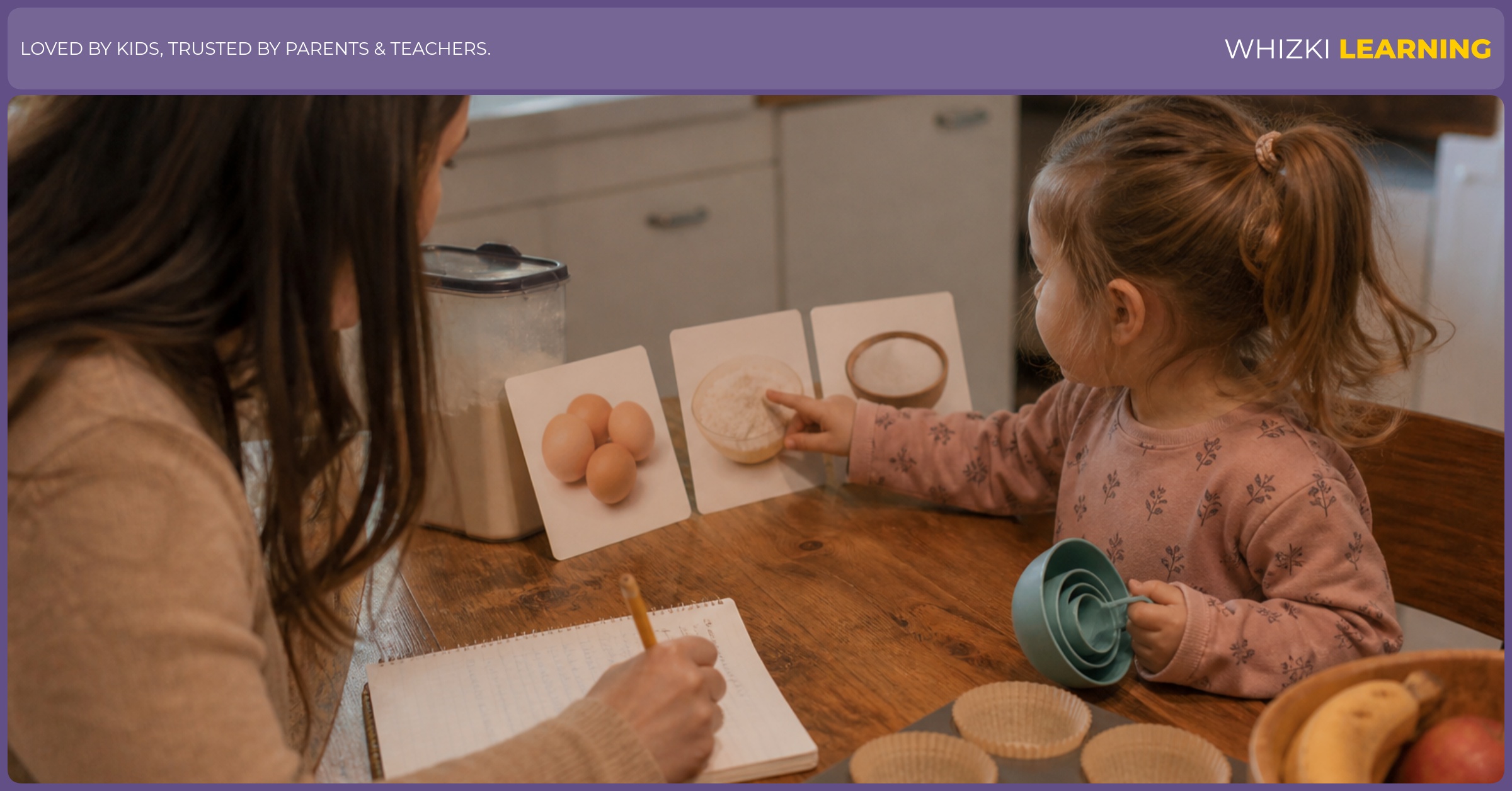
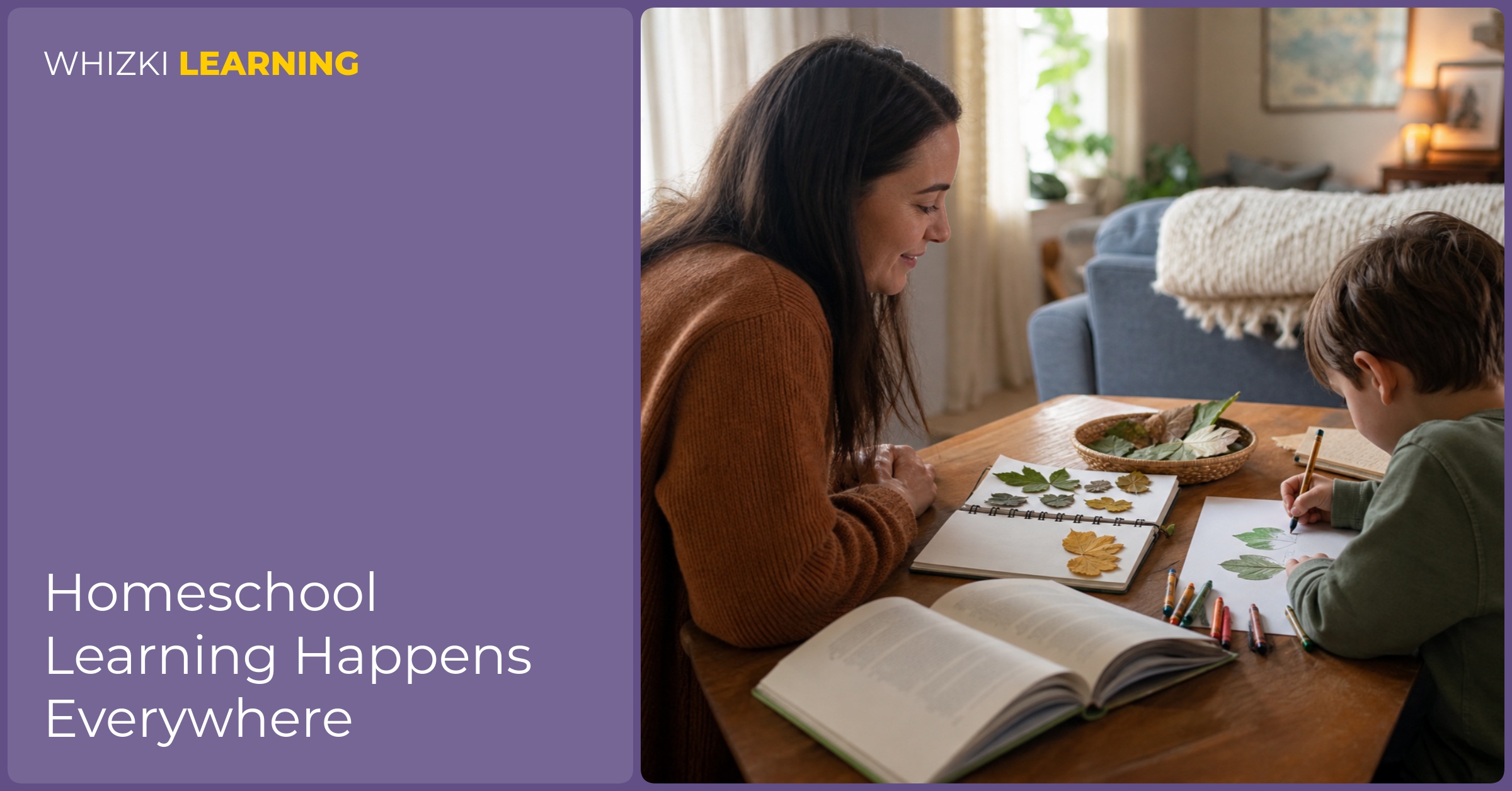
A cooking note might say that the child washed strawberries, counted ten muffin cups, pinched paper liners apart, and listened for the timer. A museum note might say that the child compared animal sizes, asked three questions, and sketched one fossil shape afterward. A nature walk note might say that the child collected leaves by color, used careful words like smooth and rough, and carried the bag back without spilling.
Write one actual-day entry, not a performance report
How to document homeschool learning starts with writing what happened in the child's real day. Speech-language pathology practice often values short, specific language samples because exact words show thinking more clearly than adult summaries. A record for a young child can use the child's question, phrase, drawing choice, or problem-solving move as the center of the note.
Here is a five-field actual-day entry: Date: Tuesday, September 9; Place: kitchen and library corner; Activity: made banana muffins, listened to a bear story, and built a block cave; Learning noticed: counted twelve liners, followed two-step directions, used beginning sound /b/ in bear and banana, pinched paper cups apart, and explained why the cave needed a roof; Next gentle step: read another bear book and invite the child to draw the cave plan before building.
The actual-day entry names reading, conversation, math, fine-motor work, and project thinking without inflating the morning. Stirring batter is hand strength and sequencing, not a college chemistry lab. Counting muffin liners is one-to-one correspondence, not advanced arithmetic.
The best young-child records use plain verbs: listened, counted, compared, asked, drew, sorted, built, dictated, carried, poured, traced, and retold. Orton-Gillingham lesson notes often work the same way because the adult records the sound, the word, the response, and the next practice step. A parent can copy that clarity without copying a formal tutoring log.
Catch up once a week without rewriting the week
A weekly catch-up protects adults from the Friday-night fog that makes every day blur together. Reggio documentation often uses photos, quotes, and work samples as memory anchors, and families can borrow that idea in a modest way. Choose two artifacts, such as a library receipt, a nature photo, a drawing, a class handout, or a recipe card, and write one sentence for each artifact.
The weekly catch-up can follow a simple rhythm: look at the calendar, glance at photos or papers, name three learning moments, choose one next step, and stop. The reverse-planning recordkeeping guide explains how the plan and the actual day can sit side by side without shame. Changed plans are normal in early childhood because a long nap, a muddy puddle, or a deep block project may be the better path for the day.
A homeschool field trip log can stay just as light. For a museum, farm, fire station, library event, park program, or nature center, record the date, location, main question, one new word, and one follow-up idea. The log does not need every exhibit, every mile, or every adult conversation to prove that the child learned.
What not to record
A helpful record leaves room for childhood privacy and family ease. NAEYC guidance asks adults to treat children with dignity, and that includes avoiding notes that rank siblings, shame behavior, or turn a hard moment into a permanent label. A record can say "needed help waiting for a turn" instead of writing a dramatic story about a tired preschooler.
Do not record every snack, every bathroom trip, every correction, every page number, or every minute unless a local requirement specifically asks for that detail. Homeschool record requirements vary by location, so adults should check state, provincial, district, umbrella-school, or charter guidance where applicable. The record should serve the adult's planning and any real requirement, not swallow the family day.
Do not turn ordinary life into compliance paperwork. A library visit can be "chose three books and asked the librarian for dinosaur stories," not "independent research seminar." A walk to the mailbox can be "noticed ice melting and used colder/warmer words," not "formal earth science investigation."
For a ready-made place to plan and jot actual-day notes, the Family Learning Planner gives adults a simple way to connect weekly ideas with what really happened. The planner is adult-managed, so children do not create accounts or sign in.
Keep records useful, legal-aware, and human
Homeschool record keeping should be honest, kind, and easy to reread. NAEYC-aligned documentation focuses on the child's strengths, interests, relationships, and next steps, rather than adult pressure to produce a perfect week. A useful note helps tomorrow's adult choose a book, set out counting bears, revisit a nature question, or offer scissors practice.
Homeschool record requirements vary by location, and families should check the rules that apply to their home. No planner or blog post can replace local guidance from a department of education, umbrella program, evaluator, or qualified legal source. This article does not provide legal advice, official attendance, or transcripts.
The record can still be warm even when the record serves a formal purpose. A kindergarten teacher, homeschool parent, caregiver, or co-op leader can write concrete notes about reading, conversation, math, science, nature, fine-motor work, classes, trips, projects, and practical life. The goal is to remember the child's learning path clearly enough to support the next small step.
Try one entry today: pick the richest moment from the day, name the activity, name the real skill, and write the next gentle step. A small truthful record beats a beautiful empty binder, and young children learn best when the adults can notice without hovering.