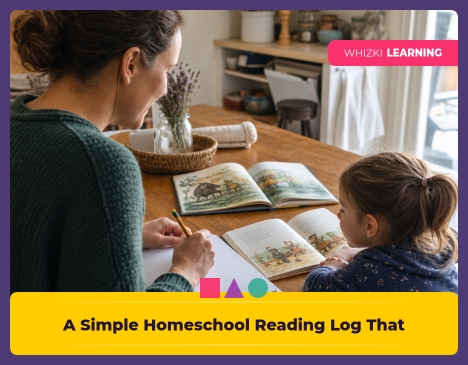
If the homeschool reading log is the thing remembered at 9:47 p.m. while pajamas, dishes, and one more drink of water are all happening, write the book title and today’s date on one adult page, then stop. A reading log for ages 3 to 7 should protect memory, not create another performance chart. The smallest useful log gives a caregiver enough information to notice habits without asking a child to manage paperwork.
Reviewed by Sarah Mitchell, M.S., CCC-SLP, Speech-Language Pathologist.
Start with the smallest useful reading log
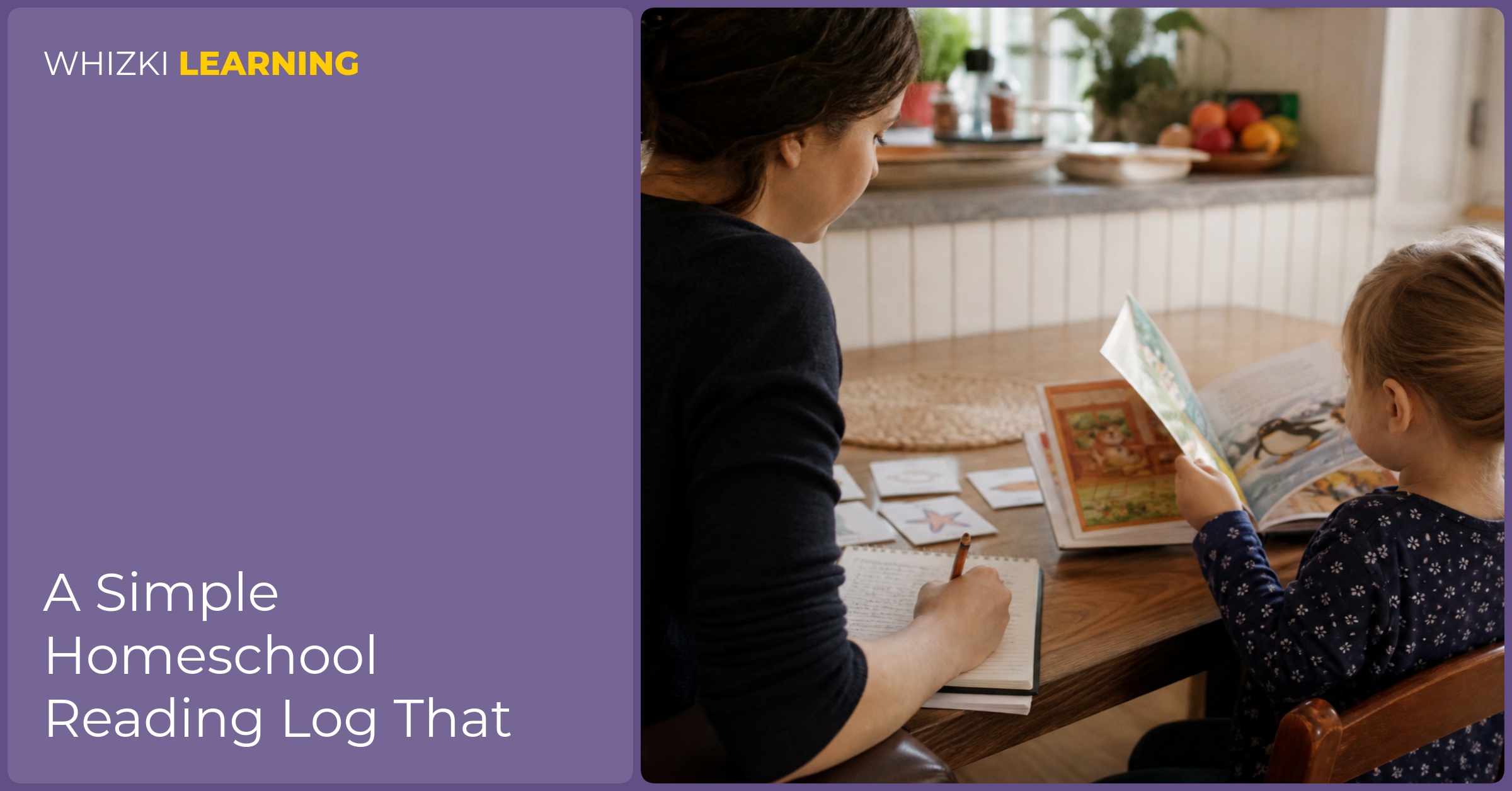
A homeschool reading log for a 3-, 4-, 5-, 6-, or 7-year-old works best when an adult manages the record. NAEYC guidance reminds early-childhood adults to keep documentation meaningful and manageable, so the child can stay with books, talk, drawing, and play instead of clerical work. A child may help choose a sticker or point to the cover, but the caregiver writes the entry.
The smallest useful record is title plus date, with room for one small note when the note matters. Homeschool record requirements vary by location, and a simple reading record homeschool page is not legal advice, attendance, or a transcript. If a family wants to count library trips, recipes, signs, and story retelling too, the guide to recording everyday learning can help keep real learning visible without turning family life into paperwork.
Compare three lightweight systems
The first lightweight system is title plus date, and the Orton-Gillingham habit of clear, repeatable routines fits that choice well. A title-and-date homeschool book log answers the basic question, which books are in the child’s orbit right now. The record stays small enough for a tired adult to keep during breakfast, bedtime, or a library bag cleanout.
The second lightweight system adds pages or minutes, and the added number should serve the adult rather than measure the child. Pages help when an early reader is moving through a decodable book or short reader with clear page turns. Minutes help when the reading is read-aloud, shared reading, audiobook listening, or picture walking.
The third lightweight system adds mode, such as independent, shared, read-aloud, or audiobook, plus one optional note. A reading tracker for kids is still an adult record at this age, because young children are building attention, language, and print awareness before record-keeping stamina. A note can be as small as “asked for bear page,” “noticed /m/ sound,” or “listened while drawing.”
Use a seven-day sample and a short-term total
A seven-day sample gives enough information to notice a pattern without pretending that one week defines a reader. Reggio-inspired documentation values short, honest traces of learning, and a reading log can work the same way when the adult records what actually happened.
The seven-day sample could read: Monday, The Very Hungry Caterpillar, read-aloud, 12 minutes, note: retold the food sequence; Tuesday, Goodnight Moon, shared reading, 10 minutes, note: found rhyming words; Wednesday, Brown Bear, Brown Bear, What Do You See?, read-aloud, 8 minutes, note: asked for the same pages again; Thursday, Frog and Toad Are Friends, shared reading, 10 minutes, note: child tracked the first line with a finger; Friday, Lola at the Library, audiobook, 15 minutes, note: listened during blocks; Saturday, Where's Spot?, independent picture walk, 7 minutes, note: named the dog; Sunday, Goodnight Moon, read-aloud, 10 minutes, note: repeated favorite. The short-term total says 72 minutes across 7 reading encounters, with 2 shared readings, 3 read-alouds, 1 audiobook, and 1 independent picture walk.
The short-term total is useful because a caregiver can see balance without grading the child. The week shows that read-aloud time is steady, a repeated favorite is present, and independent book handling is beginning. The total does not need points, prizes, or public comparison.
Choose pages or minutes with a simple decision rule
The pages-versus-minutes choice matters because early reading includes many kinds of literacy work. Speech-language pathology practice values oral language, listening, retelling, and vocabulary, while occupational-therapy basics remind adults that sitting still and turning pages can be real effort for small bodies. A page count can miss that work during read-alouds and audiobooks.
Choose pages when the child is reading a short decodable book, an early reader, or a familiar text with clear page numbers. Choose minutes when the adult is reading aloud, the child is listening to an audiobook, the child is looking through pictures, or the book has dense pages that take time. When both pages and minutes fit, pick one measure for the week and keep the reading log easy to finish.
Record repeated favorite books without apologizing
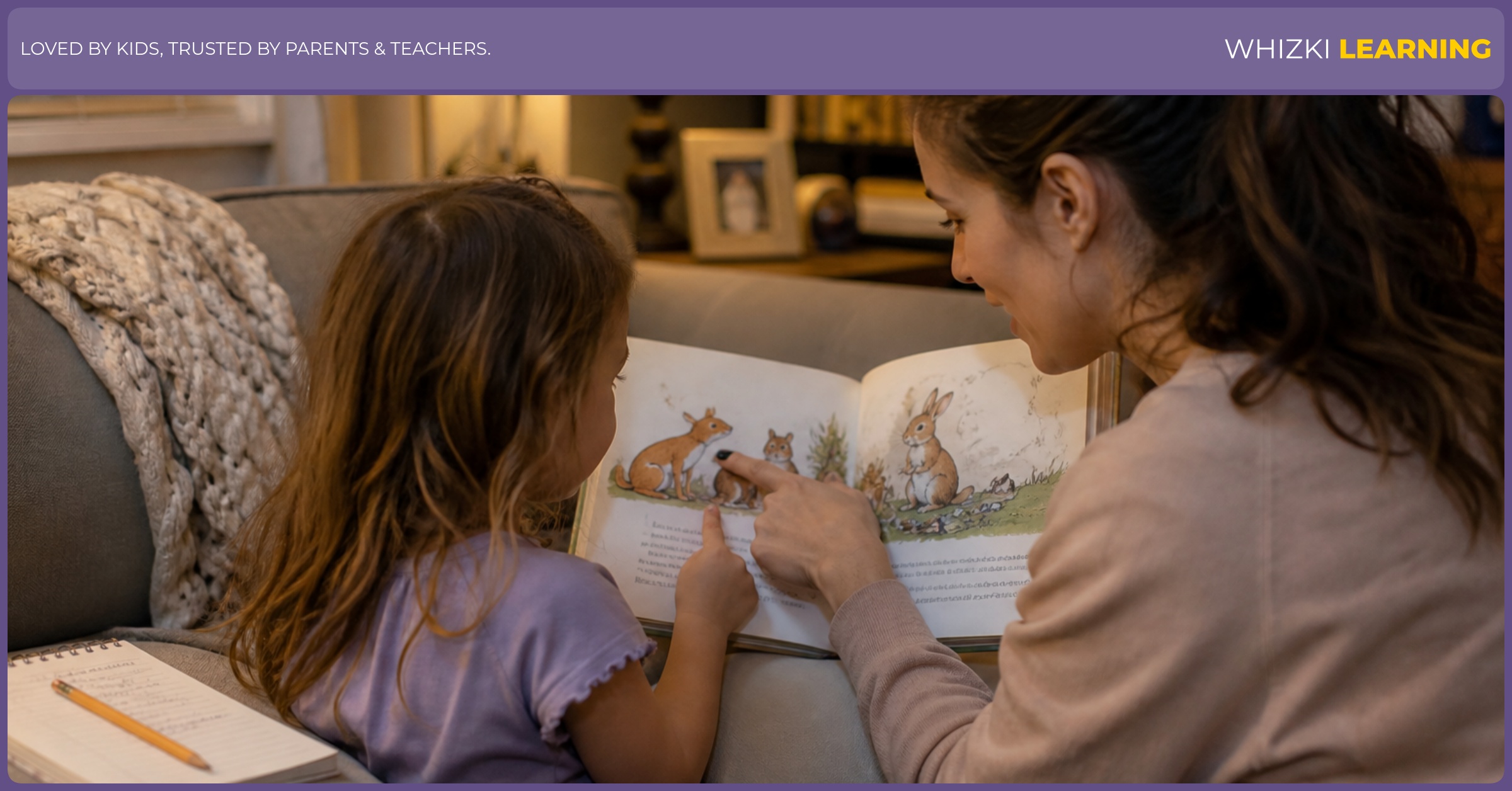
Repeated favorite books belong in the log because repetition is part of early literacy, not a loophole. Montessori and Reggio traditions both make room for repetition, choice, and close attention, and young children often use familiar books to practice memory, sequencing, vocabulary, and confidence. A child who asks for the same bedtime book four nights in a row is doing real reading work with a trusted text.
The adult record can write the same title again with the new date, or the adult record can add “repeat” beside the title. A useful note might say “joined refrain,” “predicted next page,” or “noticed the letter B.” The repeated favorite book does not need extra points, a penalty, or a rule that forces a new title before the child is ready.
Review patterns without points or rankings
A pattern review is not a scoreboard. The Orton-Gillingham approach relies on noticing what a learner needs next, and a reading log can help an adult notice the next sound, format, or support without ranking the child. The adult review can happen every Friday, every second Sunday, or whenever the library bag is going back.
The adult can ask three quiet questions during the review: Which books brought the child back? Which modes were missing, such as audiobook or shared reading? Which tiny skill appeared, such as tracking print, retelling order, hearing rhyme, or naming a letter sound?
The no-points approach keeps the record from becoming a reward chart with hidden pressure. A child who read one short book and listened to three rich read-alouds had a literacy week worth recording. The reading log should help the adult choose the next book, not make the child defend the last one.
Fit the reading log into real family planning
A paper notebook, a binder page, or a planner margin can all hold a strong reading record. NAEYC-aligned assessment for young children favors authentic notes gathered during real activity, so the format matters less than the adult’s ability to keep using the format. Changed plans are normal when a child gets sick, a library hold arrives, or a favorite book wins again.
A homeschool reading log also works better when the weekly plan can move. The flexible weekly planning guide can help a caregiver place read-alouds, library time, and rest days in a plan that can change without guilt. A reading log should sit beside family life, not above family life.
The Family Learning Planner gives adults one place to keep a book log beside the rest of the week’s learning notes. The planner is adult-managed, and children do not create accounts or sign in. Whizki Learning does not provide legal advice, official attendance, or transcripts, so caregivers should follow local homeschool rules.
Tonight, choose one recording line: title plus date. If the reading log still feels easy after three days, add minutes or mode, and skip the note unless the note helps future planning. A homeschool reading log that gets used beats a beautiful reading log that makes everyone avoid the pencil.