Rigid hourly homeschool plans fall apart when a child needs longer, an appointment runs late, or a field trip appears, so start the week with a movable rhythm instead of a clock-by-clock promise. A flexible week still gives a child ages 3 to 7 the comfort of knowing what comes next, and a flexible week gives the adult permission to move, skip, or finish learning later. The next step is simple: choose a few things to try, leave open space on the page, and write down what actually happened.
Reviewed by Whizki Editorial Team, Early Childhood Education Editors.
Start with a rhythm, not an hourly grid
A weekly rhythm tells the adult and child which kinds of learning belong in the day without locking the family into 9:00, 9:20, and 9:40. In my teaching notebooks, Reggio-inspired observation helped me notice that a long block build or careful nature drawing often carried more real thinking than a rushed checklist. A rhythm protects that good learning time.
A young child usually does better with anchors than with a full timetable. NAEYC guidance for early childhood practice values play, conversation, movement, and responsive teaching, so a home education plan for ages 3 to 7 can include short skill practice and generous open blocks. The adult can plan reading, math, outdoor time, and practical life without pretending every morning will unfold neatly.
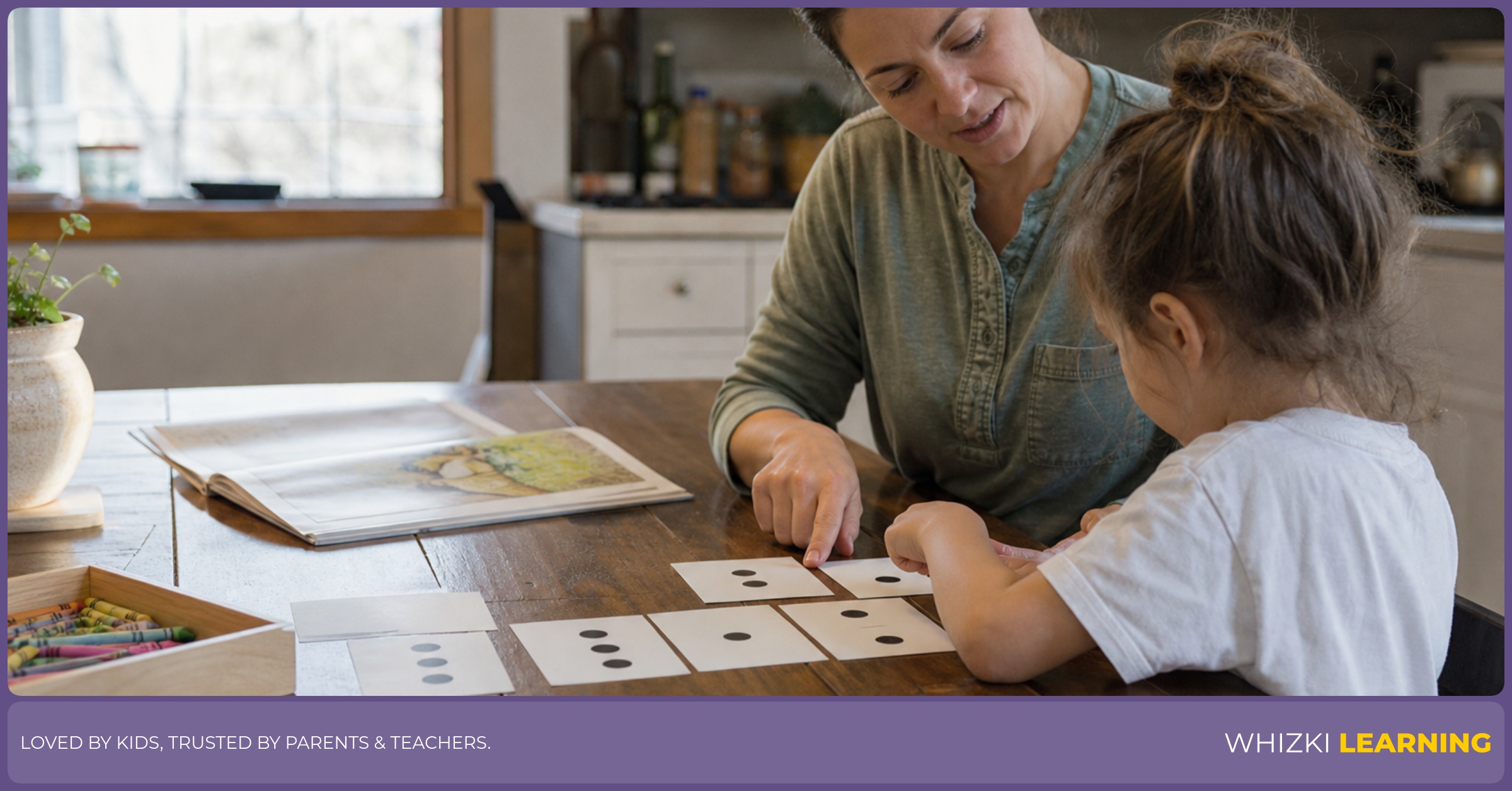
A simple rhythm can sound like morning connection, short table work, movement, read-aloud, lunch help, quiet play, and an afternoon choice. When the weekly rhythm needs a fresh letter, number, or story prompt, the early learning activity library can give adults one idea without turning the whole day into worksheets. The best homeschool plan is small enough to survive a late breakfast and useful enough to guide the adult back after a disruption.
Use one small planning loop
The planning loop is choose what to try, record what actually happened, then review the useful record. The adult chooses a small set of activities for the week, the adult writes the real notes after learning at home, and the adult looks back for patterns. A child can help choose a book or game, but the adult manages the plan.
An Orton-Gillingham approach reminds me to keep literacy practice cumulative and clear, especially with young learners who are still sorting sounds, letters, and hand movements. A weekly plan might choose one known sound to review, one new sound to hear in words, and one read-aloud for vocabulary. The record after the lesson matters because the record shows whether the child needed another day of hearing the sound before writing the letter.
The planning loop can stay short enough for a tired adult to use. On Sunday night or Monday morning, choose three to five learning targets and a few rich experiences, such as a library visit, muffin measuring, seed sorting, or chalk letters outside. Each afternoon or evening, record the real minutes, the child response, and the next useful step.
A sample week for one learner
A sample week for one five-year-old learner can use a steady rhythm with flexible edges. Occupational therapy basics often use a practical rule of thumb: give the body heavy work, hand play, and position changes before asking for careful pencil control. The sample week below keeps table work short and gives movement a real place.
Monday can hold 10 minutes of sound play with the letter M, 15 minutes of counting snack pieces to 10, 20 minutes of read-aloud, and 30 minutes outside collecting leaves. If the appointment runs long, the adult can move the leaf collecting to Tuesday and mark the letter sound as complete. The homeschool week stays intact because the plan has room to breathe.
Tuesday can hold 10 minutes of name writing, 15 minutes of block patterns, 20 minutes of picture-book retelling, and 20 minutes of kitchen measuring while making oatmeal. Wednesday can hold a field trip to the library, a 10-minute shape hunt in the parking lot, and a quiet rest with audiobooks after lunch. The adult can skip name writing on Wednesday because the field trip already carried language, social practice, and real-world noticing.
Thursday can hold 10 minutes of sound review, 15 minutes of counting hops or claps, 20 minutes of drawing the favorite library book scene, and 25 minutes of helping fold towels. Friday can hold 10 minutes of favorite-page rereading, 15 minutes of sorting buttons by color or size, 20 minutes of nature journaling, and a quick celebration of one thing the child practiced. The adult can complete unfinished work only when the child has energy, because pushing tired table work rarely gives a better record.
Record what happened, not what you wished happened
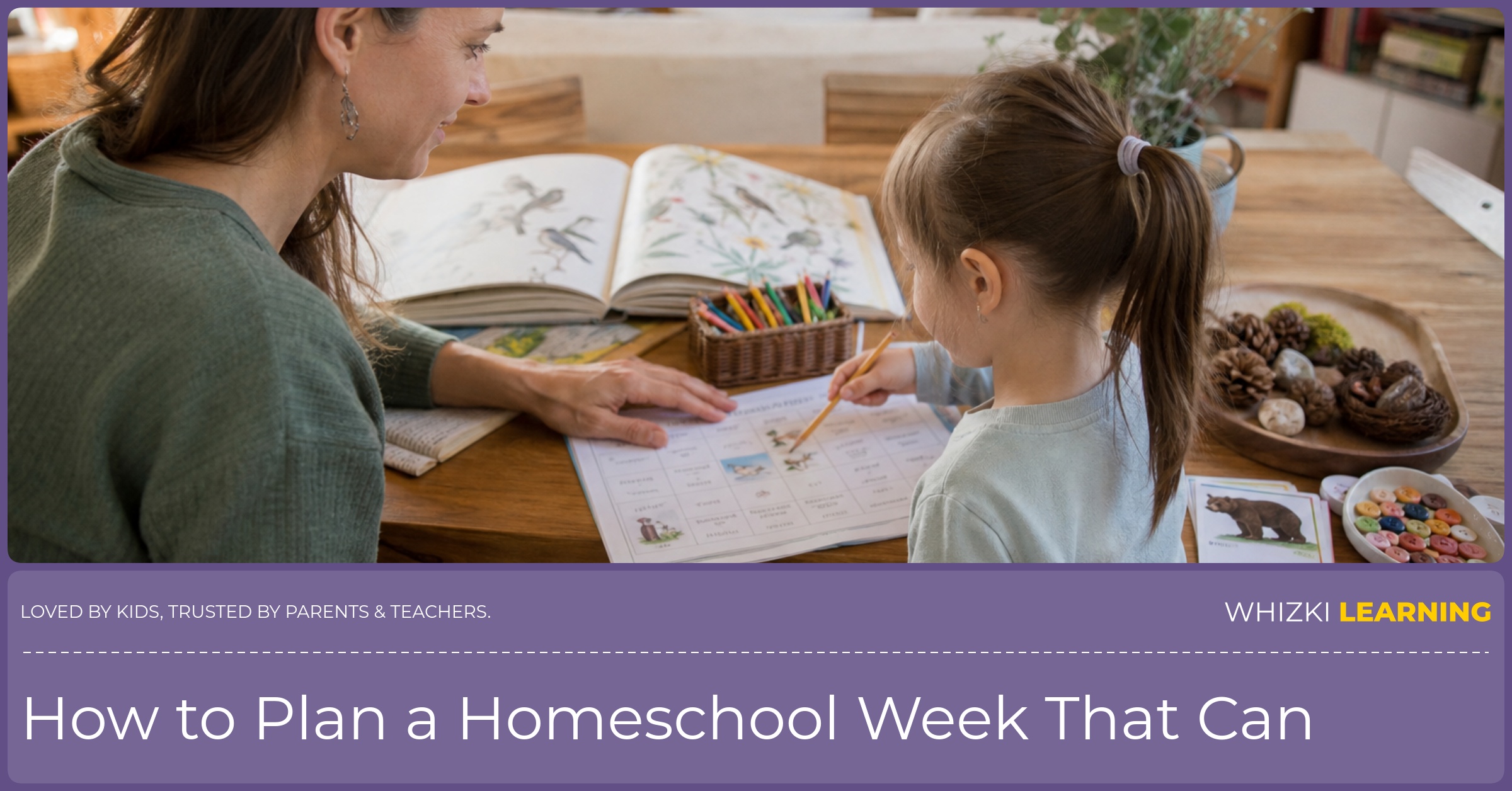
The completed record matters more than perfect adherence because the record tells the truth of the week. Reggio documentation values the child story, the materials used, the questions asked, and the next idea. A checked box alone can miss the best part of learning at home, such as the moment a child invents a pattern with spoons after snack.
A useful record can be brief: date, activity, minutes, child response, and next step. Speech-language pathology practice often looks for what a child understood, said, repeated, or tried with support, and a parent record can borrow that plain noticing style. The adult might write, “counted six rocks with touch help” or “retold the bear story with three picture clues.”
An adult manages the planner, and children do not create accounts or sign in. The planner is a family tool for memory, reflection, and planning, not official attendance, a transcript, proof of compliance, or legal advice. A clear record helps the adult see learning that would otherwise disappear into a busy week.
For a place to keep the loop on one page, the family learning planner can hold the plan, the real notes, and the quick Friday review. The planner is managed by the adult, so the child can stay with crayons, books, blocks, and conversation.
Review the week in ten minutes
A ten-minute Friday review can keep the next homeschool week honest. NAEYC-aligned practice asks adults to notice the whole child, including play, language, movement, social confidence, and early academics. The review should look for growth, friction, and the activity that deserved more time.
The adult can ask three questions while looking at the completed record: What kept the child engaged, what felt too hard, and what belongs on next week’s plan. A Montessori observation habit helps here because the adult watches the child’s choices rather than guessing from a separate wish list. If the child returned to button sorting three times, the next plan can include more sorting, counting, and fine-motor work.
The next week should change in response to the record. If the child needed extra time for sound play, the adult can repeat the sound with a new book and a new game. If the child mastered counting to six with objects, the adult can add seven or eight during snack without rebuilding the whole plan.
A flexible homeschool planner should help the adult pay attention, not make the family feel behind by Tuesday. Choose what to try, record what actually happened, then review the useful record, and the next week will get easier to shape. A child ages 3 to 7 needs steady care, rich language, movement, play, and short practice far more than a perfect page.