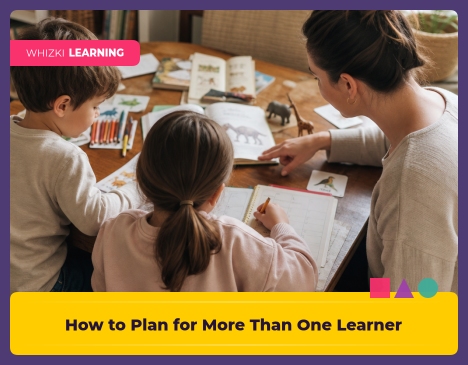
When a preschooler needs glue, a 1st grader needs reading help, and the baby just found the crayons, the fix is to teach the big idea together and record each child's work separately. A mixed-age homeschool day can feel messy because children share your attention, your table, and your books. Start with one shared topic, then write down what each learner actually did.
Reviewed by Whizki Editorial Team, Early Childhood Education Editors.
Start with shared lessons and separate records
A shared lesson works well when the parent chooses one topic for the group and gives each child a different job. NAEYC guidance on developmentally appropriate practice backs the common-sense idea that a 4-year-old and a 6-year-old can explore the same pond book with different expectations. The read-aloud, field trip, song, science tray, or art invitation can stay shared.
The separate record should name the learner, the activity outcome, reading minutes, notes, and progress. A preschooler's record might say, "listened to a pond story and sorted toy animals by where animals live." A 1st grader's record might say, "read a decodable pond page for 10 minutes and wrote two facts with help."
The home education plan gets easier when the adult stops trying to make one worksheet fit every child. Reggio-inspired teachers often use one rich invitation, such as shells, leaves, water, or blocks, and then observe what each child does with the materials. The record belongs to the learner, even when the morning activity belongs to the whole family.
Use one topic at different levels
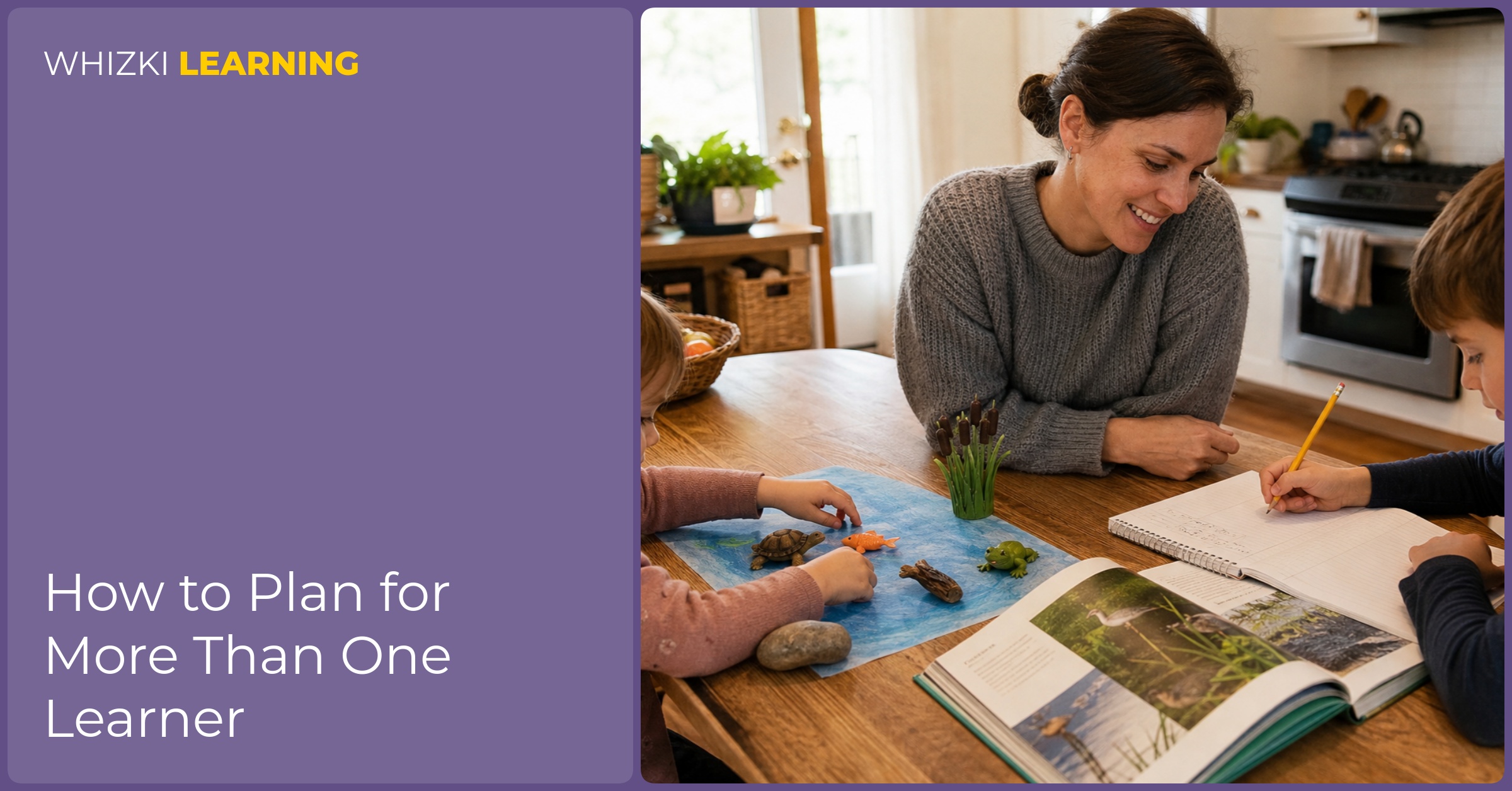
A pond theme gives a simple example for a preschooler and a 1st grader. The shared part can be a picture book about frogs, a short backyard water observation, and a tray with blue paper, toy animals, crayons, and a magnifying glass. The adult introduces the same vocabulary to both children, such as pond, frog, fish, mud, and eggs.
The preschooler's outcome stays concrete and oral because early learning grows through touch, movement, and talk. The preschooler can sort animals into "pond" and "not pond," clap the parts in frog and turtle, draw a frog, and dictate one sentence to the adult. The note might read, "named frog and fish, used green crayon with a tripod grip starting to form, dictated 'frog jumps.'"
The 1st grader's outcome can add print, decoding, and a little written work. An Orton-Gillingham approach would keep the reading task explicit, with the adult pointing out known letter-sound patterns before the child reads a short decodable page. The note might read, "read 10 minutes, needed help with sh in fish, wrote 'A frog can jump' with spacing reminder."
The shared field trip can be one walk to a creek, pond, or rain puddle, but the records still stay separate. The preschooler may collect observations through drawing and naming, while the 1st grader may label a sketch and read a simple sentence back to the adult. The family gets one memory, and each child gets a fair record.
Manage learner profiles as the adult
An adult-managed learner profile is a planning label for the grown-up, not a child login. The adult manages the planner, and children do not create accounts or sign in. Montessori record-keeping uses the same basic idea, where the guide watches each child and keeps notes without handing paperwork to the child.
The planning loop should stay simple: choose what to try, record what actually happened, then review the useful record. The chosen plan might say, "pond read-aloud plus animal sorting and decodable reading." The actual record might say, "preschooler sorted with help, 1st grader read 8 minutes because the page was hard."
A family planner note is a teaching memory aid, not official attendance, a transcript, proof of compliance, or legal advice. If budget, storage, or family size affects the planner choice, the adult can read the free, Plus, and Pro planner options before moving notes into one place. The best planner setup is the one the adult can keep using after an ordinary Tuesday.
When loose notes start spreading across the kitchen counter, the family may need one adult place for plans and child-by-child notes. The family learning planner helps an adult keep shared plans connected to separate learner records without asking children to sign in.
Keep notes short and useful
A useful note tells the adult what to do next. Occupational-therapy basics remind teachers and parents to watch the body as well as the paper, so a note about pencil grip, cutting fatigue, or wiggly seating can matter as much as a correct answer. The note should describe what the child did, what support helped, and what the adult may try next.
Reading notes should stay specific because early reading progress can be uneven. An Orton-Gillingham tutor would rather know "mixed up b and d after five minutes" than read "needs more practice." The specific note tells the adult to shorten the next reading round, add a quick tactile letter review, and end with a decodable page the child can finish.
A weekly review can take five quiet minutes with a cup of coffee or a clipboard at the kitchen counter. The adult can look for one pattern per learner, such as stronger listening after outdoor play or better handwriting before lunch. The useful record protects the next plan from becoming a wish list that ignores the real child in front of the adult.
Build a small-group rhythm
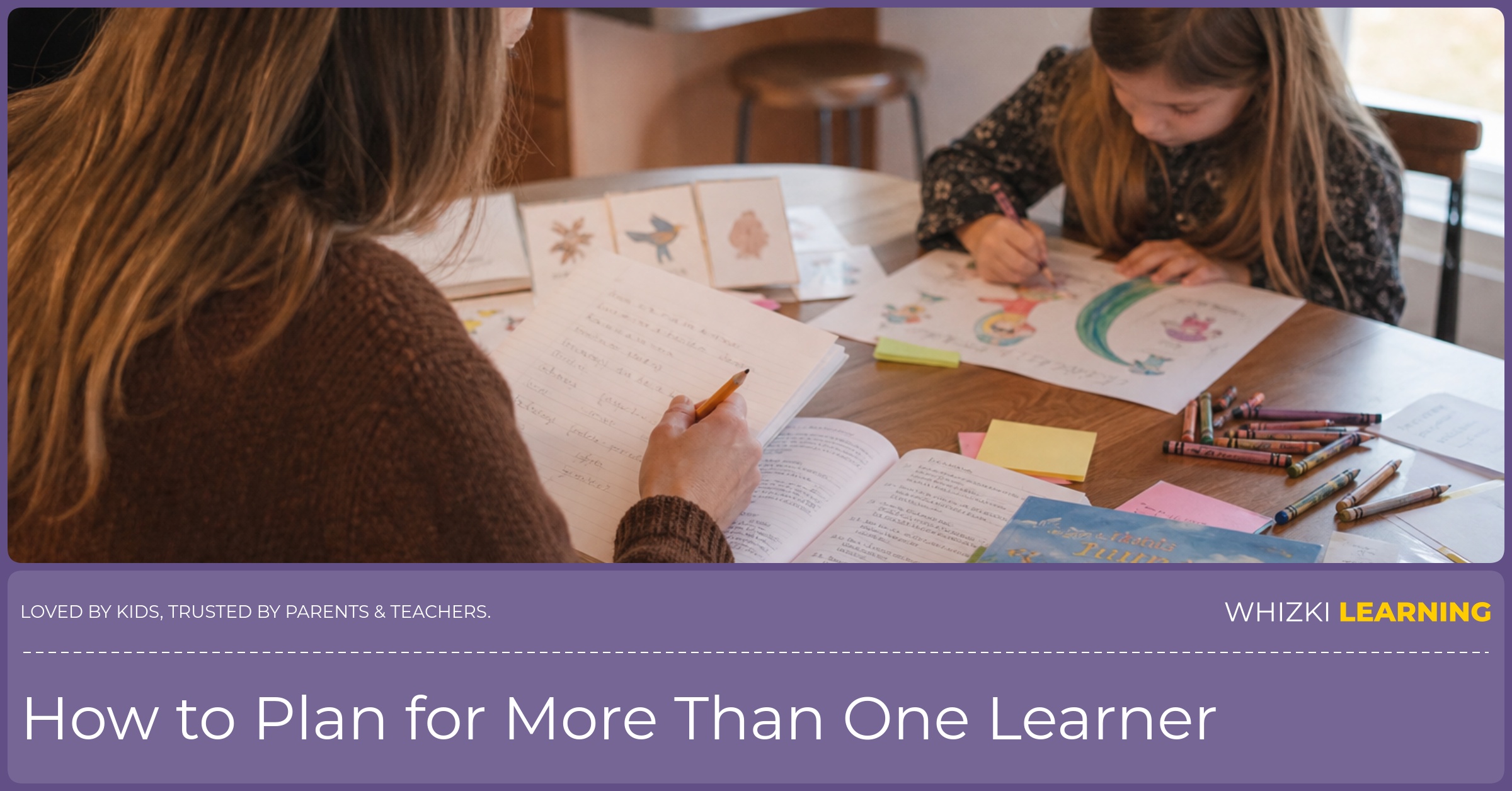
A mixed-age rhythm works best when the shared part is short and the separate part is predictable. Speech-language pathology practice often uses modeling, wait time, and a gentle recast, which fit family discussions during a read-aloud or nature walk. The adult can model a full sentence for the preschooler and ask the 1st grader to read or write one related sentence.
A simple learning at home block might begin with 10 minutes of shared read-aloud, move into 10 to 15 minutes of separate table work, and end with 5 minutes of drawing, building, or telling. The preschooler can leave the table sooner and continue with blocks or play dough. The 1st grader can stay for a short reading round while the adult keeps the preschool materials nearby.
The record after the block should match the child, not the group mood. The adult can write one short note for the preschooler and one short note for the 1st grader, even when the same story started the morning. Separate records help the adult see progress without turning siblings into comparisons.
Planning for more than one young learner is less about perfect scheduling and more about honest noticing. Share the book, the walk, the song, and the messy table, then keep the learner record separate. Choose what to try, record what actually happened, and review the useful record before planning the next small step.