If weekly planning at your kitchen table keeps turning into a late-night pile of sticky notes, choose five tiny learning moments for the week and leave the rest of the hours alone. Young children do better with short, repeatable practice than with a packed schedule, and parents do better when the page matches real life. A simple weekly learning planner can hold preschool, kindergarten, or first-grade learning without making home feel like a mini office.
Reviewed by Whizki Editorial Team, Early Childhood Education Editors.
What belongs on a weekly page
A weekly page for a young learner needs a small set of fields: learner, activity, subject, date, realistic minutes, completion state, and an optional adult note. The learner field matters when siblings share a binder or when a teacher rotates small groups. The completion state can be simple language such as planned, done, changed, or skipped, because a changed plan still tells an adult something useful.
NAEYC guidance for developmentally appropriate practice reminds adults to match plans to a child's age, culture, language, and daily rhythm. The Orton-Gillingham approach gives another helpful cue: a clear sequence helps children feel where practice begins and ends. A weekly page should show one small reading, math, motor, science, or social goal at a time rather than a full-day script.
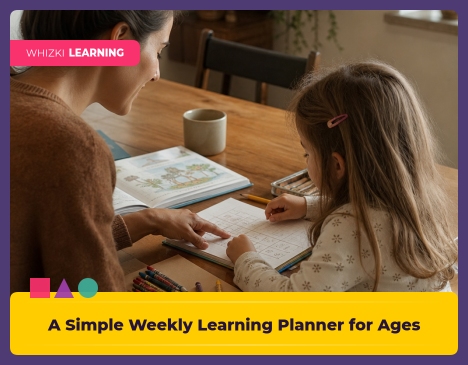
An adult manages the planner, and children ages 3-7 do not create accounts or sign in. A child can choose a crayon color, place a sticker, or tell an adult what felt easy, but the adult keeps the page and makes the entries. The planner record is a family teaching memory, not a task list a child has to manage.
Plan short, then let real life breathe
A short plan respects the way preschool and early elementary attention actually works. Occupational-therapy basics often use a practical heuristic: watch posture, hand use, fatigue, and sensory needs before adding more seat work. A five-minute name-writing practice can be enough when a child's grip is working hard.
Flexible pacing means the weekly page has room for rain, appointments, big feelings, and surprise interest. A kindergarten child who spends twenty minutes sorting acorns has already practiced observation, counting, vocabulary, and fine-motor control. The weekly planner should catch that learning rather than punish the family for missing a worksheet.
The planning loop stays simple: choose what to try, record what actually happened, then review the useful record. The adult can circle one pattern at the end of the week, such as shorter math after lunch or stronger read-aloud attention before dinner. The next week's plan becomes kinder because the record came from real moments.
A sample week for ages 3 to 7
A sample week helps adults see how little a weekly page needs to carry. Reggio-inspired teaching treats children's ordinary observations as serious learning material, so a leaf, a snack bowl, and a storybook can belong beside a class time. The sample below fits a child ages 3-7, and an adult can shrink or stretch each part.
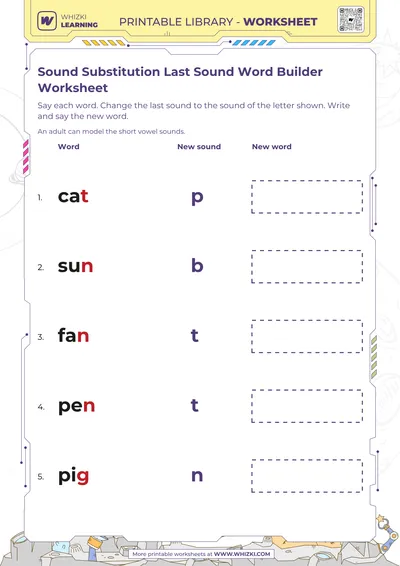
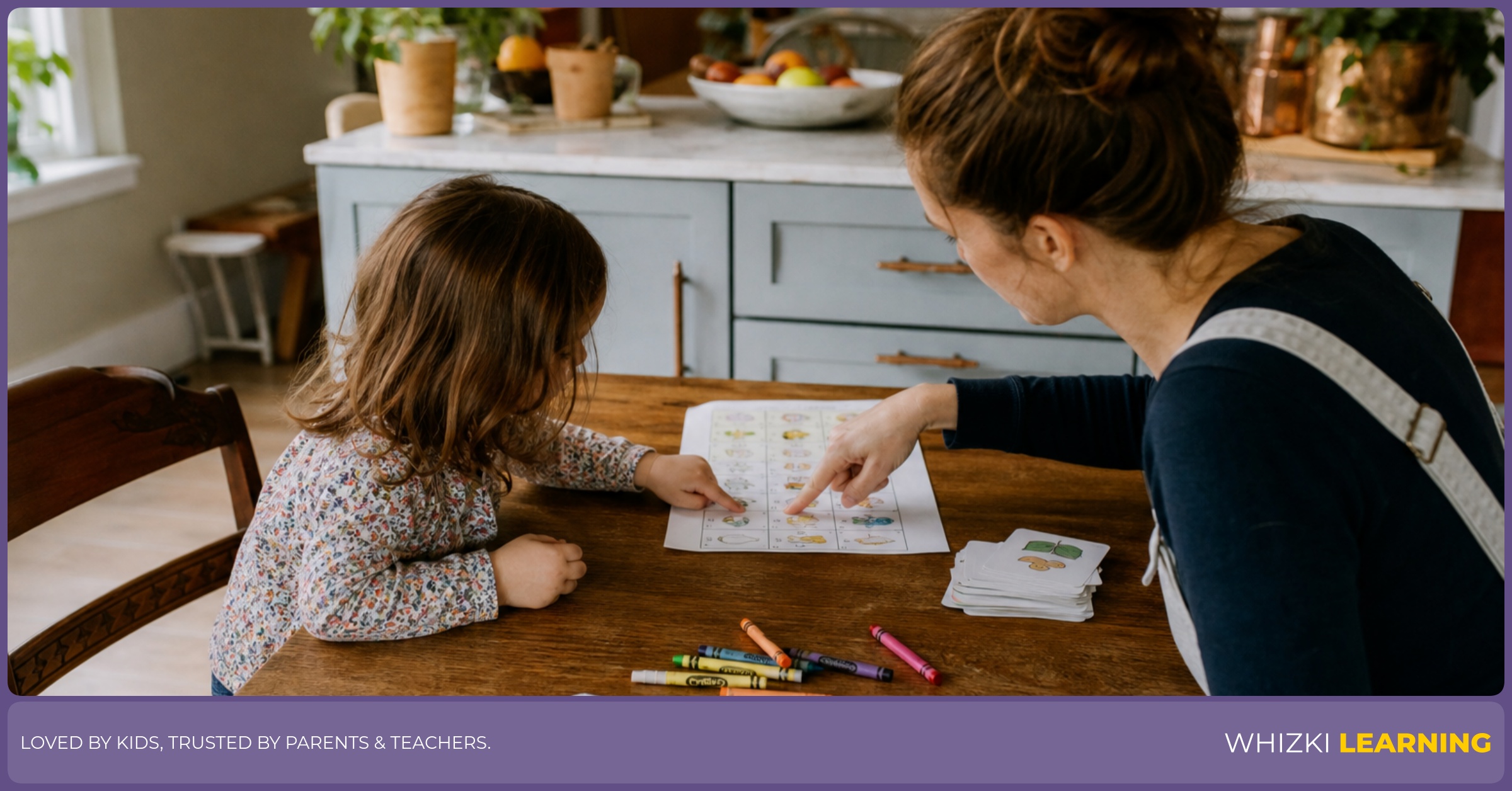
Monday can read: learner, Maya; activity, letter M maze from the free printable library; subject, early literacy; date, Mon. Oct. 7; minutes, 7; state, done; adult note, traced with finger before pencil. Tuesday can read: learner, Maya; activity, read-aloud of a library picture book; subject, language and listening; date, Tue. Oct. 8; minutes, 12; state, done; adult note, predicted the ending after the second page. The Orton-Gillingham habit of saying, hearing, seeing, and touching the letter can make the Monday printable feel concrete rather than rushed.
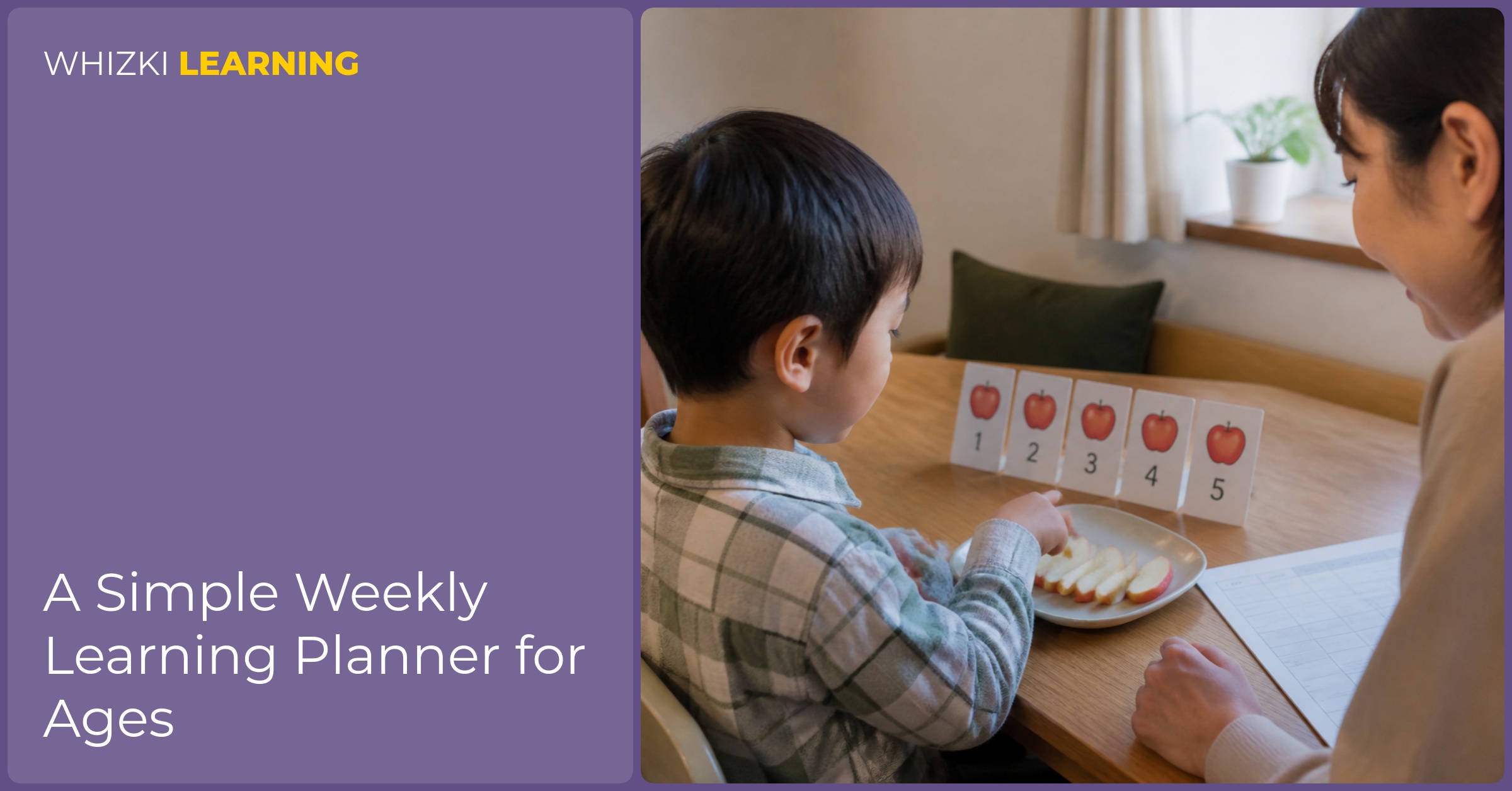
Wednesday can read: learner, Maya; activity, count apple slices during snack; subject, math; date, Wed. Oct. 9; minutes, 5; state, done; adult note, counted to eight and matched one number word to one slice. Thursday can read: learner, Maya; activity, outdoor observation of puddles and worms; subject, science; date, Thu. Oct. 10; minutes, 15; state, changed; adult note, rain moved the plan outside. A Montessori-style prepared environment supports both days because real objects let the child's hands and eyes work together.
Friday can read: learner, Maya; activity, library music class; subject, movement and community; date, Fri. Oct. 11; minutes, 30; state, done; adult note, followed the stop-and-go drum cue. The adult review can be one line: short hands-on learning worked, and longer sitting can wait. The next weekly page can keep one printable, one book, one snack count, one outdoor look, and one class or group activity.
How adults can use the record
Parents, caregivers, preschool teachers, kindergarten teachers, and homeschool adults can use the same weekly page in slightly different ways. A home education parent may want a calm memory of what subjects appeared across the week, while a classroom teacher may want a quick small-group note. The record should serve the adult's teaching decisions, not become a report card for a young child.
Speech-language pathology practice offers a useful reminder: adult notes should capture real words, gestures, questions, and attempts. A note such as said /mmm/ while touching the macaroni picture gives more guidance than a vague smiley face. A note can also show when a child needed movement, quiet, or a shorter turn.
Learning at home often happens in the margins of family life, and a weekly planner can make those margins visible. A caregiver can write counting socks under math, retelling a story under language, or pouring water under practical life. Homeschool planning feels lighter when everyday learning gets recorded beside printed pages and classes.
For families who want a simple place to choose activities and record what happened, the family learning planner keeps the weekly loop in adult hands. The planner works best when an adult enters short notes after learning, while children keep playing, drawing, reading, and moving.
Keep the weekly review gentle
A gentle weekly review should take five minutes, not an entire planning night. Montessori observation asks adults to notice the child before correcting the environment, and that habit fits a young learner's weekly page. The adult can look for one strength, one friction point, and one small next step.
The review questions can stay plain: Which activity got real attention, which activity caused avoidance, and which activity can move to a better time of day? A preschool child who refuses pencil work after lunch may need play-dough, tongs, or vertical coloring before another worksheet. A first-grade child who guesses at words may need slower sound-by-sound practice before longer reading.
The weekly planner is successful when the page helps the adult teach with less noise. A full week of blank spaces can still show illness, travel, visiting relatives, or a needed reset. The next step is to pick one activity for tomorrow, give the activity a realistic number of minutes, and write what actually happened.
Family learning for ages 3-7 works best when the plan is small enough to use. A weekly page can hold a printable, a story, a snack count, an outdoor discovery, and a class without filling every hour. The useful record is the one an adult can review at the kitchen table and use for the next gentle choice.