Some days it feels like your child is “supposed” to be reading, but the letters, sounds, and story all get jumbled. Reading work is easier when you know it is a stack of skills, and you practice the right layer at the right time. This guide walks through the five pillars of reading in parent language for ages 5 to 7.
Reviewed by Sarah Mitchell, M.S., CCC-SLP, Speech-Language Pathologist.
1) Phonemic awareness: hearing and playing with sounds
Phonemic awareness means a child can notice and manipulate the individual sounds in spoken words, like hearing that cat has three sounds. In kindergarten and early first grade, you might see your child stretch a word into sounds, blend sounds into a word, and change one sound to make a new word. This is the “sound play” layer that supports later decoding, and it fits well with an Orton-Gillingham style approach that starts with clear, explicit sound work.
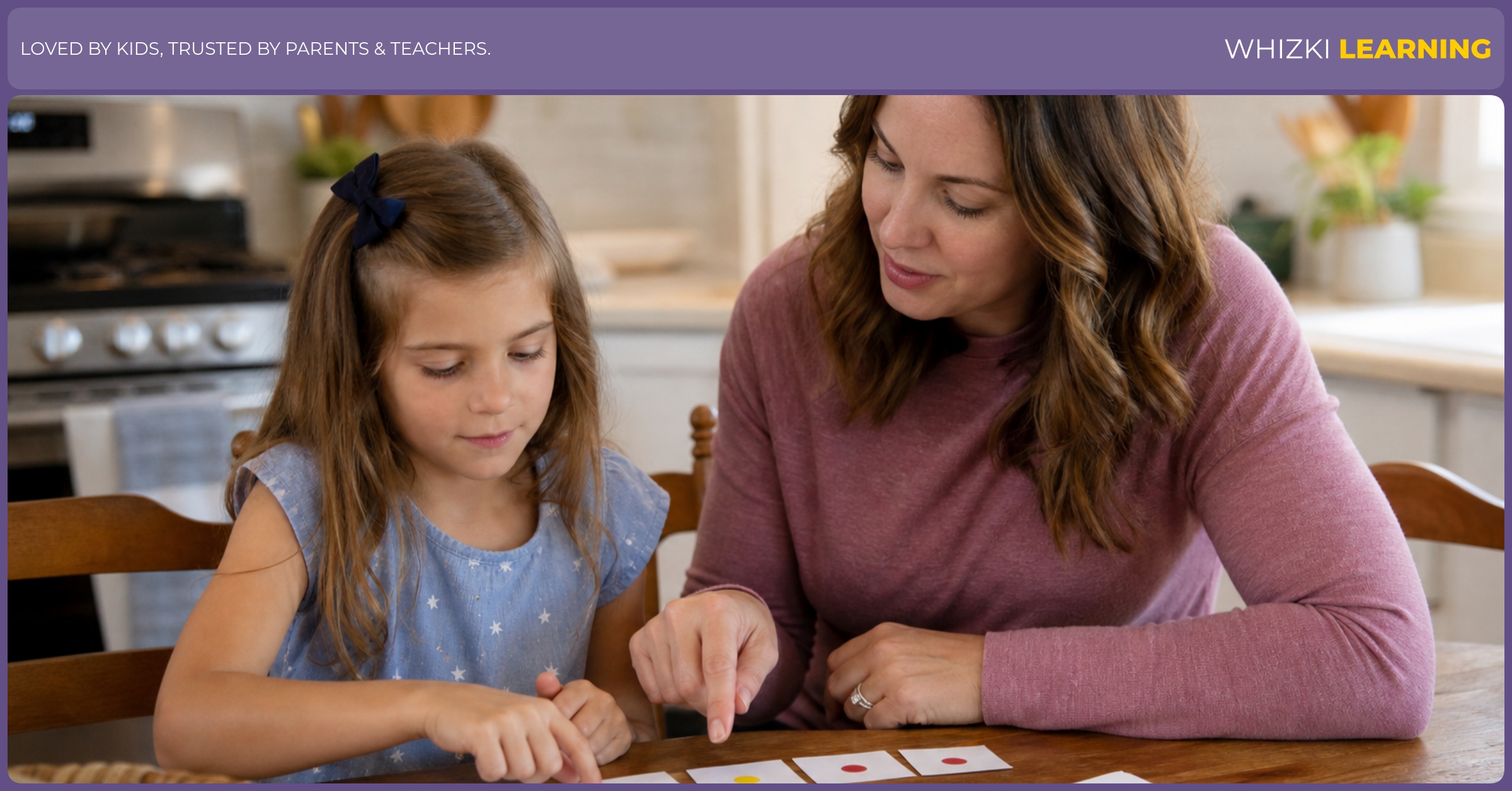
At home, keep it short and playful, and use the same routine so your child knows what to expect. A quick phonemic awareness moment can look like this: say a simple word, then have your child tap each sound with a finger or a counter. When your child can do that reliably, phonemic awareness becomes a strong base for phonics.
- Activity: “Sound taps” with 3-sound words, like sun, map, and bed.
- How: You say the word, your child taps once per sound, then your child blends the sounds to say the word.
- Keep it moving: Do 5 words, then stop while it still feels easy.
If you want a place to start with letter and sound routines, check our alphabet learning hub for parent-friendly guidance and practice patterns.
2) Phonics: matching letters to sounds
Phonics means a child learns how letters and letter groups map to sounds, so the child can look at a word and decode it. In kindergarten and first grade, phonics shows up when a child can read and spell simple words using common letter-sound patterns, like CVC words (consonant-vowel-consonant) and high-frequency word chunks. A structured phonics plan also aligns with NAEYC guidance to support early literacy through intentional teaching, not just exposure.
When phonics is working, the child is not guessing from pictures, and the child can explain how the word sounds. When phonics is shaky, you may notice the child skips around, reads the wrong word, or avoids sounding it out. That is a sign to slow down and practice the letter-sound connections with clear, consistent steps.
- Activity: “Letter sound hunt” using sticky notes on household items.
- How: Pick one sound, like /m/, then place a sticky note on items that start with that sound, like mug and marker.
- Then read together: “m-m-mug,” “m-m-marker,” and have your child point to the first sound.
For a parent-ready way to plan what to practice next, use our learning standards explainer to match activities to what kindergarten and first grade typically expect.
3) Fluency: reading with accuracy and smoothness
Fluency means a child can read text accurately and with a steady pace, so the child can focus on meaning. In kindergarten and first grade, fluency often looks like repeated reading of short books, smoother word recognition, and better phrasing when reading aloud. Speech-language pathology practice often emphasizes that fluency grows when decoding and word recognition become more automatic through repeated, supported practice.
Fluency is not speed for its own sake, it is “less effort” reading. If a child is spending all their brain power on sounding out every word, comprehension gets crowded out. Repeated reading with a caring adult helps the child build confidence and phrasing without turning reading time into a battle.
- Activity: “Buddy rereads” with one short page or mini-book.
- How: You read the page once, your child reads it once, then you reread it together for a second pass.
- Focus cue: “Let’s try to keep our voice going, not stopping at every word.”
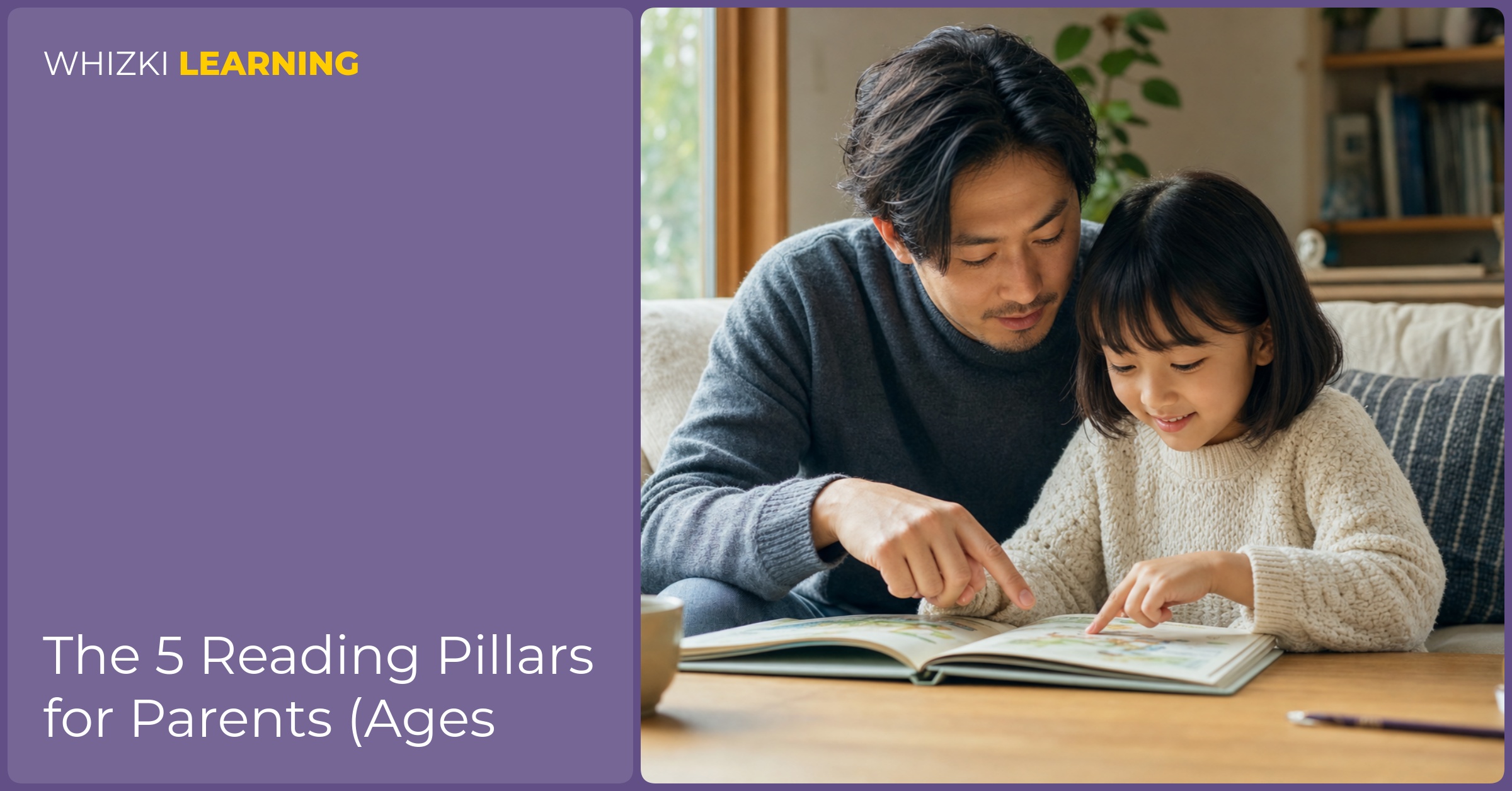
To keep fluency practice connected to real reading, choose books your child can decode with help and repeat the same title for a few days. This is also a good moment to model expression, because the child hears how punctuation changes the voice.
4) Vocabulary: knowing word meanings
Vocabulary means a child understands what words mean, both when hearing them and when reading them. In kindergarten and first grade, vocabulary shows up when a child can explain what a word means in a sentence, use new words in conversation, and understand more of the story without needing constant clarification. Reggio-inspired and Montessori-style observation both value language-rich environments, so vocabulary grows best when children hear and use words in meaningful moments.
When vocabulary is low, comprehension feels harder even if decoding is improving. A child might read the words correctly but still miss the point because key words are fuzzy. The fix is not more worksheets, it is more word meaning in context, plus a few quick “say it, use it” moments.
- Activity: “Word of the day from the book” during read-aloud.
- How: Pick one useful word from the story, like gigantic, tiny, whisper, or brave.
- Then do: parent says the word, child repeats, parent uses it in a new sentence, child uses it once.
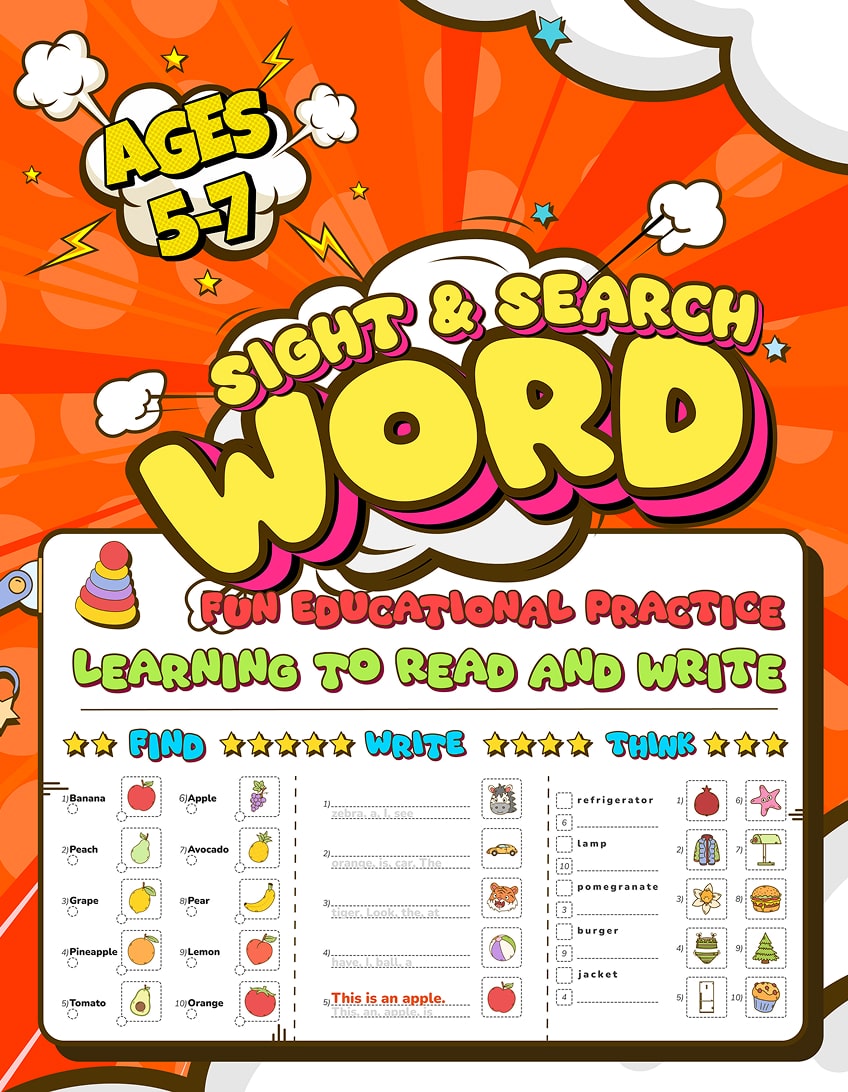
If you want ready-made practice for common words children see often, use our sight-words printables to support vocabulary and recognition together.
5) Comprehension: understanding and making sense
Comprehension means a child can understand what a text says and connect it to their own knowledge and experiences. In kindergarten and first grade, comprehension looks like retelling the story in order, answering simple “what happened” questions, and noticing details like characters, settings, and cause-and-effect in kid-friendly ways. NAEYC guidance reminds us that comprehension grows through talk, interaction, and meaningful questions, not just silent reading.
Comprehension is where the whole stack shows up. A child with strong phonics and vocabulary can still struggle if the child is not used to thinking about the story. The good news is that comprehension practice can be calm and conversational, and it does not require long reading sessions.
- Activity: “Story rewind” after reading one short text.
- How: Ask three prompts, “Who is in the story?”, “What happened first?”, and “What happened next?”
- Then add one connection: “Where have you seen something like this?”
When comprehension feels stuck, check the other pillars first. If the child is decoding too slowly, comprehension questions will land late, and the adult can help by reading the tricky parts while the child focuses on meaning.
Want a simple way to practice the “word recognition” side of reading at home? Whizki Learning offers sight-words and vocabulary printables that pair well with short daily practice, especially when your child is learning to read common words with less effort. Start with the sight-words printables and keep sessions to 5 to 10 minutes.
Reading is not one skill, it is a stack, and each pillar supports the next one. Phonemic awareness helps children play with sounds, phonics helps them connect letters to those sounds, fluency helps reading feel less effortful, vocabulary helps meaning stick, and comprehension helps the child understand the story. When you practice one pillar at a time, your child gets clearer progress and you get less guessing about what to do next.
If you want a starting plan for the week, choose one pillar for each day, keep the activities short, and repeat the same routine so your child feels safe and capable. If a child is working hard and still falls far behind across multiple pillars, a speech-language pathologist or reading specialist can help you pinpoint which layer needs extra support.