
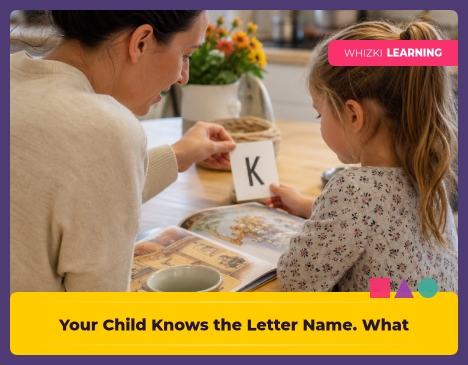
If your child proudly says “That’s an M!” and then freezes when you ask what M says, try one tiny bridge today: point to the letter, say the sound together, and find the same letter on a cereal box. The next step after letter names is not a bigger stack of flashcards. The next step is a short path that links shape, sound, print, meaning, and only later, writing.
Reviewed by Sarah Mitchell, M.S., CCC-SLP, Speech-Language Pathologist.
Start with the letter shape
The letter shape comes first because a child needs to notice the sticks, curves, tails, and open spaces before the child can use the letter on purpose. In Reggio and Montessori rooms, teachers often slow down and observe what the child notices before adding a demand. At home, the adult can say, “B has a tall back and two bumps,” while tracing the air with one finger.
The NAEYC developmentally appropriate practice guidance fits beautifully here because preschool learning works best when the task is active, brief, and tied to real materials. The adult can build the shape with a pipe cleaner, a breadstick, a shoelace, or two craft sticks before asking for a sound. The goal is recognition with the eyes and fingertips, not a perfect recitation.
Move from name to sound
The letter sound is the next bridge because reading depends on connecting print to speech. The Orton-Gillingham approach teaches the letter name, the keyword, and the sound in a clear multisensory loop, but young children need only a light version at first. For M, the adult can say, “M, moon, /m/,” while the child feels lips close gently for the sound.
The speech-language pathology habit I use in preschool is to keep sounds clean and short. The sound for B is /b/, not “buh,” because the extra vowel can confuse a child who is listening for the first sound in ball. For more letter-by-letter ideas, the alphabet learning hub is a helpful place to check examples without turning practice into a long lesson.
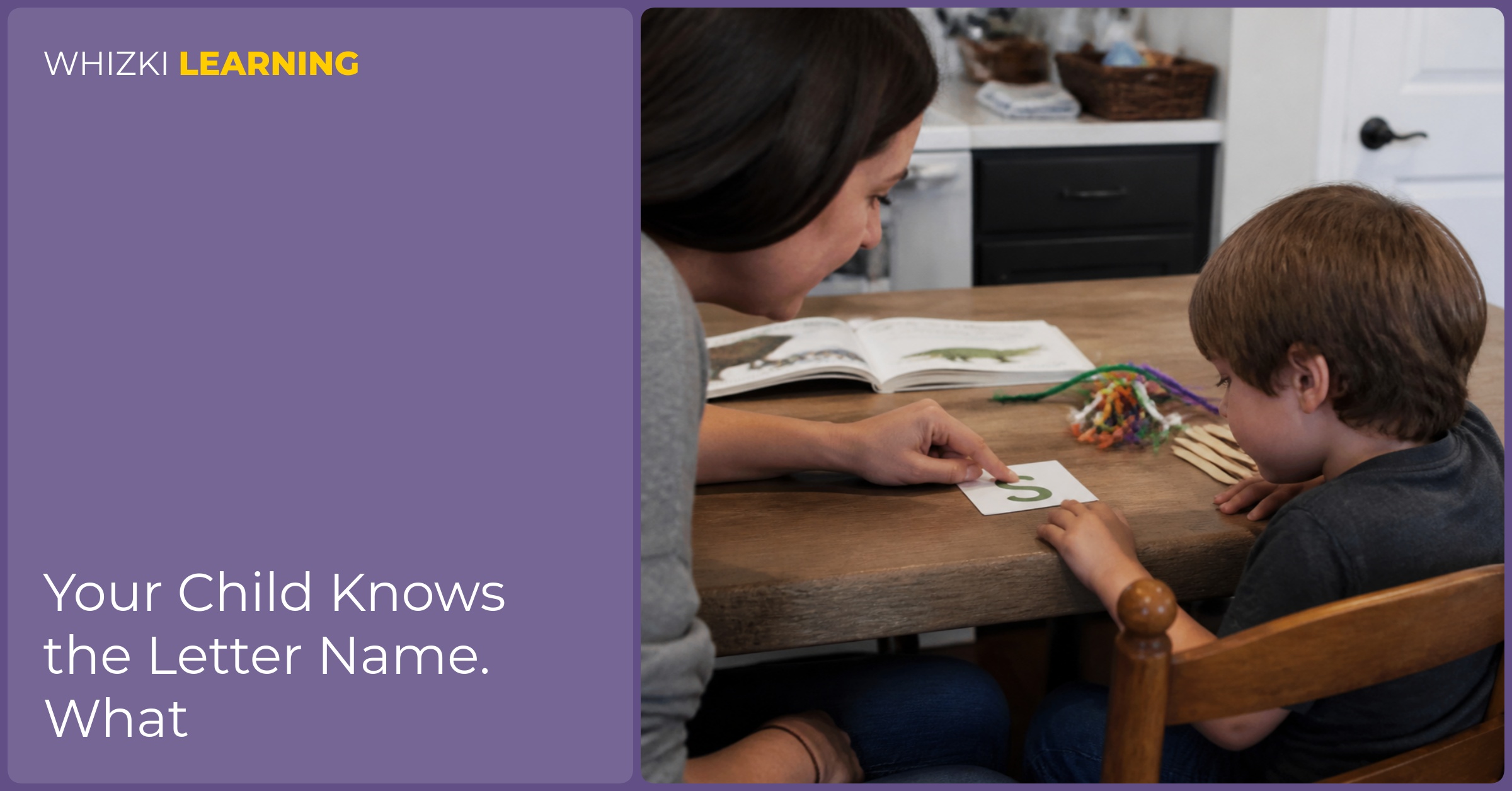
Find the letter in real print
The letter in real print helps a child understand that letters live beyond the practice table. NAEYC guidance on print-rich environments supports using labels, books, food boxes, mail, and signs because children learn that print carries meaning. In my preschool room, a hunt for one letter in a favorite book often gets more attention than a full page of matching.
The decision point is simple: if the child can name the letter and make the sound with support, ask the child to find the same letter in print. The adult can open a picture book, point to one line of text, and say, “Can your eyes find another M?” The child can touch the letter, and the adult can give the sound again before moving on.
The print hunt should stay small because attention for ages 3 to 7 changes quickly from day to day. A three-year-old may find one giant letter on a cracker box and be finished. A kindergarten child may find the letter in two fonts, uppercase and lowercase, with the adult nearby.
For a low-prep version, choose one page from the Whizki printable library and pair the page with a real book or package from the kitchen. The printable gives the eye a clear target, and the real print shows why the target matters.
Connect the letter to a familiar word
The familiar word gives the sound somewhere to live. Speech-language pathologists often build from meaningful words because a child remembers names, pets, snacks, and favorite places more easily than random examples. M can connect to Mom, Milo, mango, or a child’s own meaningful word.
The Orton-Gillingham keyword idea works well when the keyword stays consistent for a while. The adult can say, “M, moon, /m/,” for several days before adding other M words. Consistency lets the child rehearse the same sound-symbol link without guessing what the grown-up wants.
The age adjustment matters. A three- or four-year-old may only need “B, bear, /b/” with a toy bear in hand. A five- to seven-year-old can sort two familiar words by first sound, such as Mom and Sam, as long as the task stays playful and the adult does not turn every family name into a quiz.
Wait for writing readiness
Writing is a motor job before writing is an academic job. Occupational-therapy basics look for stable sitting, one helping hand on the paper, shoulder and wrist control, and a grasp that does not cause pain. A child who knows the letter name may still need weeks or months of big-arm practice before pencil writing feels reasonable.
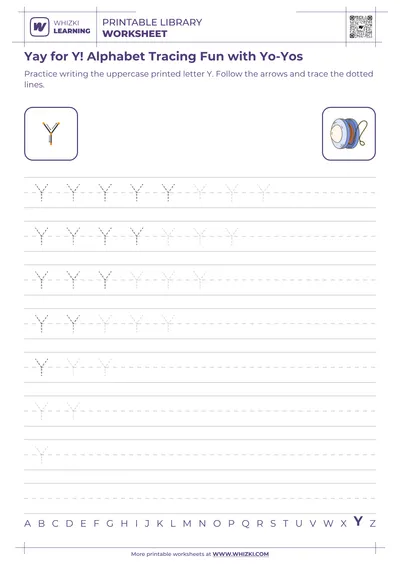
The adult can offer motor-friendly choices before expecting a pencil line. The child can form the letter in sand, draw the letter on a foggy window, roll the letter with play dough, or paint the letter with a chunky brush. Those choices build the movement path without asking tiny hand muscles to do all the work.
A worksheet is not a complete solution when the child’s hand is not ready. The worksheet can be useful for a child who enjoys tracing, but a child who presses hard, complains about hand pain, or avoids all drawing may need easier tools and more whole-arm movement. A pediatrician or occupational therapist can help when pain, strong avoidance, or daily fine-motor struggles keep showing up.
Try a three-minute letter routine
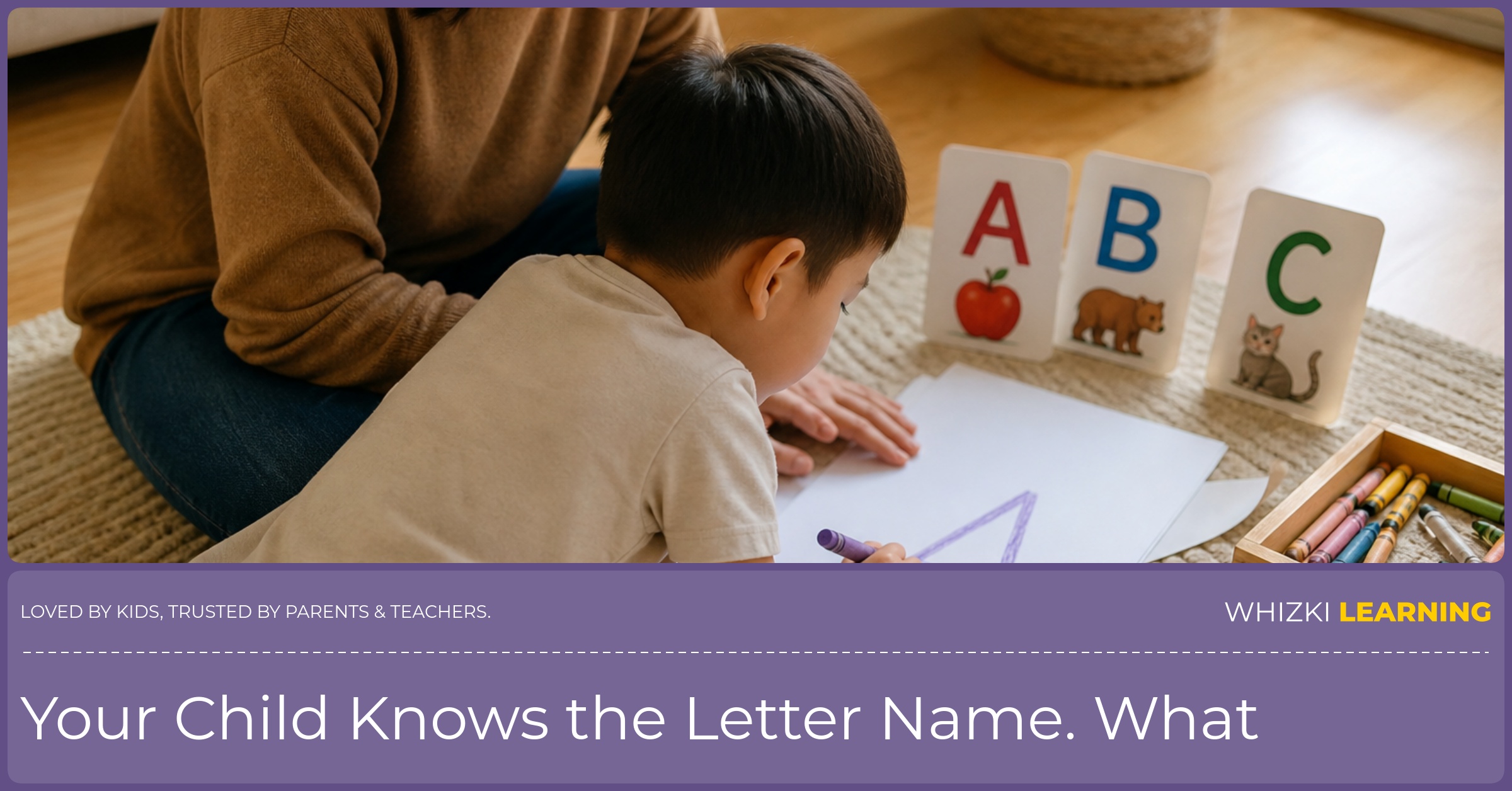
The three-minute routine uses one letter card, one familiar word, and one piece of real print. The routine borrows from Orton-Gillingham multisensory practice, NAEYC play-based guidance, and occupational-therapy pacing because the child sees, says, touches, and moves without a long table session.
The first minute is shape noticing: the adult shows one letter and names one feature, such as a tall line, a curve, or a tail. The second minute is sound and word: the adult says the letter name, a keyword, and the sound, then the child repeats only as much as the child can manage comfortably. The third minute is print hunting: the child finds the same letter in a book title, snack box, recipe card, or envelope.
The routine can change by age without changing the goal. A three-year-old may only trace the shape in the air and find one matching letter, while a six- or seven-year-old may add a quick sound sort or write the letter on large paper. The stopping point is just as important as the start, because a cheerful three minutes teaches more than a tense fifteen.
The best next step after letter names is small and repeatable. Shape, sound, print, familiar word, and ready-hand writing give the child a clean path without pressure. When the child loses interest, the adult can stop, smile, and bring the same letter back during another ordinary moment.