PreschoolKindergartenFirst Grade

Snack Sorting Is an Early Data Lesson

Sep 4, 2026
Snack Sorting Is an Early Data Lesson

If snack time has turned into bargaining over crackers, fruit, or “just one more,” try giving the food a small job before eating: sort a tiny handful by one attribute, count each group, and then mix the snack back together for cleanup. The snack sort feels playful because the child can touch real pieces, and the parent still keeps the portion and time limit clear. Five quiet minutes at the table can become an early data lesson without adding another worksheet.

Reviewed by Dr. Anna Klein, EdD, Early Childhood Curriculum Specialist.

Set up the five-minute routine

The snack sort starts with a small amount: six to twelve pieces of cereal, crackers, berries, pretzels, or cheese cubes on a napkin or plate. The NAEYC guidance on young children and math reminds teachers to use meaningful, hands-on materials, so a real snack gives children a reason to notice color, shape, size, or kind.

The adult names one attribute before the child begins: “Sort by color,” “Sort by shape,” or “Sort by kind.” One attribute matters because preschoolers often lose the thread when color and shape compete at the same time.

Allergy-friendly sorting can use large buttons, pom-poms, counting bears, jar lids, socks, shells, or paper squares. The adult still uses the snack-routine language, “Sort first, count next, put the groups back together last,” because the math pattern stays the same with nonfood objects.
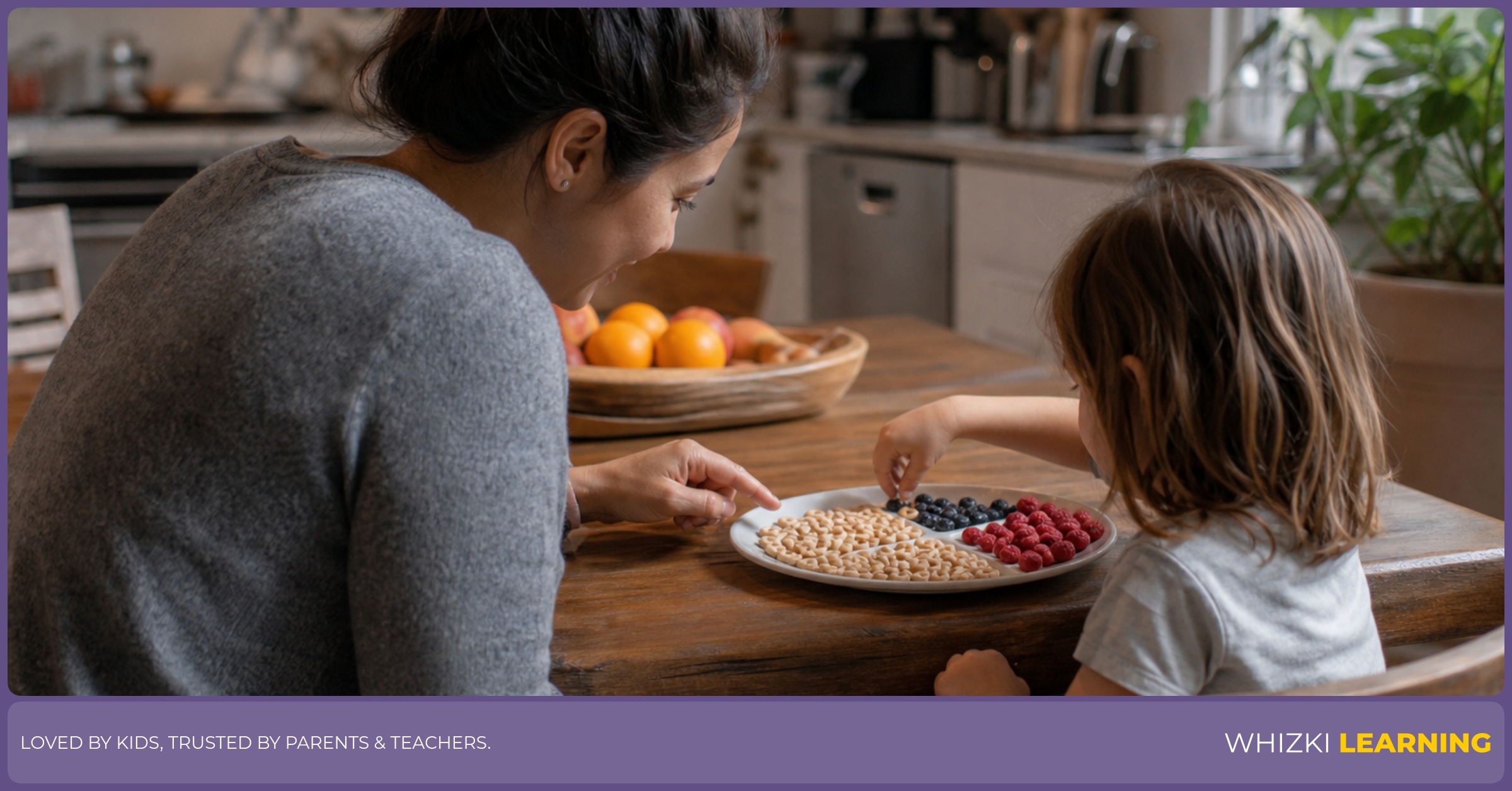
A parent and child sort cereal and berries into small groups on a kitchen table.

Count and compare without a worksheet

The count begins after sorting, not during sorting, because small hands need time to finish one task before starting another. Montessori-style practical life work uses clear sequence for independence, and the same sequence helps a child see that a group is a set with a count.

The adult points to one group and asks, “How many red pieces?” The child touches or moves each piece while saying one number word, and the adult gently slides any skipped piece back into the line.

The comparison can stay simple: more, fewer, same, or zero. For a child who wants numerals, the adult can point to the numbers learning hub after the activity and connect the counted groups to written numbers later.

Put the data back together at cleanup

Cleanup is part of the lesson, not the boring end tacked on after the math. Reggio-inspired classroom practice treats materials as part of the conversation, so putting sorted pieces back together helps the child see that information can be organized and then returned to everyday use.

The adult says, “We had four circles and two squares, and now the whole snack goes back in the bowl.” The child can pour both groups into one cup, stir with a clean spoon, or place every piece back on the plate before eating.

The phrase “put the data back together” may sound grown-up, but the child only needs the action. The child sees separate groups become one collection again, which is the beginning of understanding that a chart or graph describes real objects.
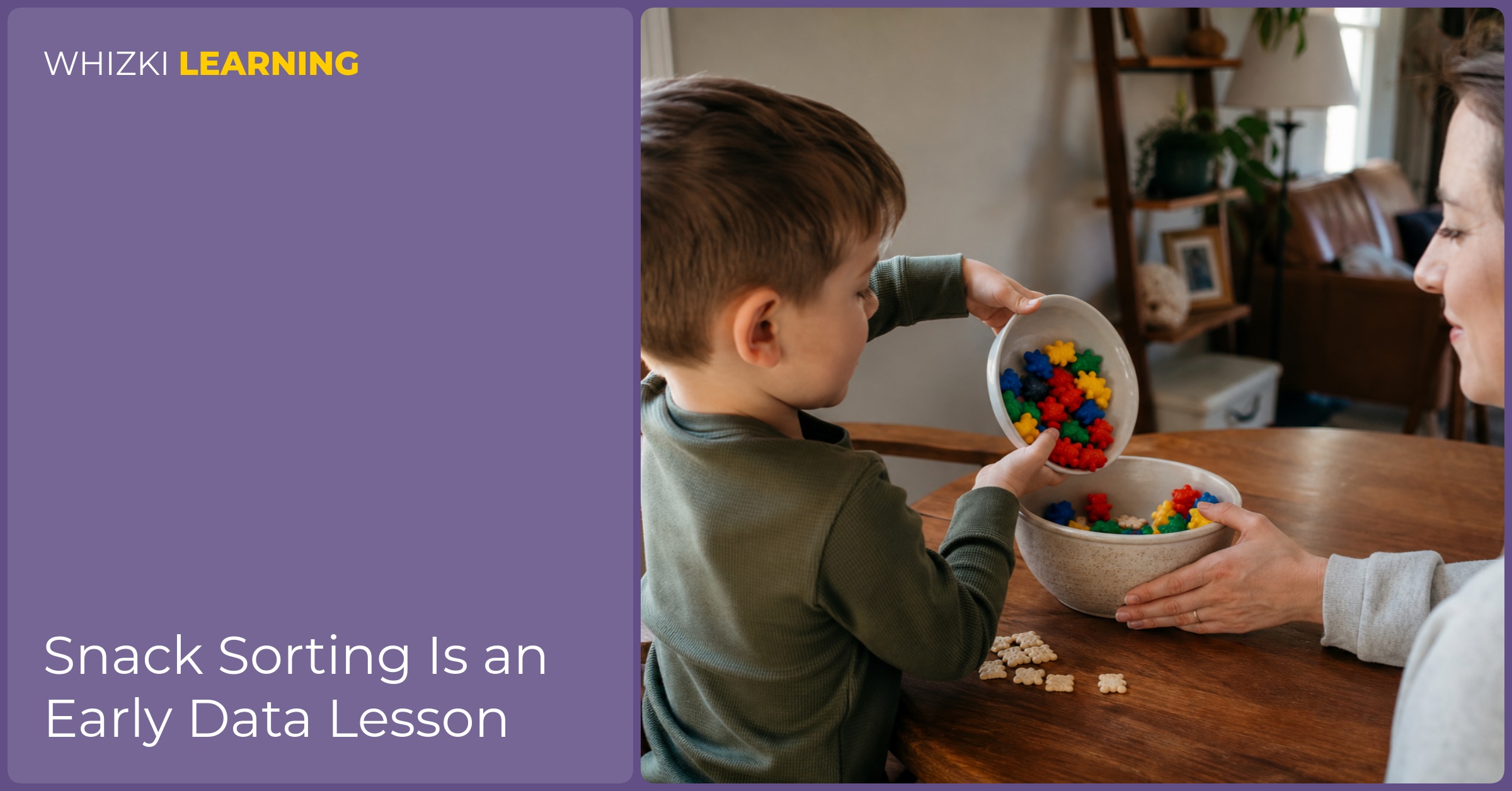
A caregiver and child put sorted snack pieces back into one bowl after counting groups.

Adjust for age, allergies, and attention

The snack sort should fit the child, not the other way around. Occupational-therapy basics remind adults to notice grip, posture, and sensory comfort, so a wiggly child may need larger objects, a tray with edges, or a standing spot at the counter.

For a three-year-old, the plan can be one attribute and two groups, such as round and not round. For a five-year-old, the plan can include a written numeral on a sticky note. For a six- or seven-year-old, the plan can add a quick sentence: “The square group has more than the circle group.”

The snack sort has limits. A hungry child may need to eat first and sort nonfood objects later, and a child with a known allergy plan should only handle materials approved by the family or classroom. The clear, brief direction matches the explicit-teaching habit I use in Orton-Gillingham reading lessons: say the job, do the job, name what changed.

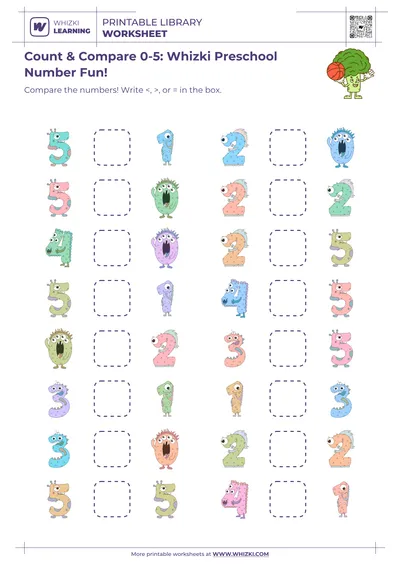
A simple sorting mat can keep the table calm when snacks roll or mix too fast. The printable sorting pages in the Whizki printable library give children clear spaces for groups without turning the whole lesson into paperwork.

The snack sort is small on purpose, because early data work grows from noticing, counting, comparing, and cleaning up real things. The next time snack time needs a calmer rhythm, choose one attribute, count each group, say which group has more or fewer, and put the pieces back together.

Vocabulary Numbering Picture Words Worksheet Worksheet Cover BackgroundVocabulary Numbering Picture Words WorksheetA printer-friendly vocabulary numbering worksheet for Kindergarten learners around 6 years old. Use it for quick home practice, homeschool review, classroom centers, or a calm screen-free warm-up when your child needs focused focused practice.
Clock-Wise Kids: Read the Time with Whizki Learning Worksheet Cover BackgroundClock-Wise Kids: Read the Time with Whizki LearningA printer-friendly time and money practice worksheet for Preschool learners around 5 years old. Use it for quick home practice, homeschool review, classroom centers, or a calm screen-free warm-up when your child needs focused everyday math vocabulary.
One Apple Fun: Trace the Number 1! Worksheet Cover BackgroundOne Apple Fun: Trace the Number 1!Help your child fall in love with numbers using Whizki Learning's One Apple Number 1 worksheet. Simple tracing and counting games turn early math into joyful play.

Use the idea when it helps

Keep the useful part of this guide with your week.

Add one practical next step to the Whizki planner, then record what your family, homeschool, or classroom actually did.
Plan
Activities, books, classes, trips, or your own ideas.
Record
What was completed, skipped, moved, or changed.
Review
Time, subjects, reading, and recent progress.
See the Family PlannerFree for one learner. Children do not sign in.

Frequently asked questions

How many pieces should a child sort?

Start with six to twelve pieces for ages 3 to 7. A small set lets a child finish sorting, count with touch, and compare groups before attention fades. Use fewer pieces when a child is hungry, tired, or likely to mouth small objects.

What attribute should I choose first?

Choose the attribute the child can see fastest, usually color, shape, or kind. One clear attribute lowers the memory load and makes the comparison fair. Choose texture or size later if the child handles the first sort with ease.

Can snack sorting work with allergies?

Yes, snack sorting can use nonfood objects approved by the family or classroom. Large buttons, counting bears, jar lids, and paper squares give the same sort-count-compare pattern without food contact. Follow the child's allergy plan and ask the school nurse or pediatrician when material safety is unclear.

Should I correct every counting mistake?

Correct gently when a child skips an object or says two numbers for one piece. Touching or moving each object gives the number word a visible match. Ask a teacher or specialist for ideas if counting remains stressful across play, meals, and daily routines.

When should I stop the activity?

Stop after one completed sort, count, compare, and cleanup step. Ending while the child is still successful protects the routine from turning into a battle. Stop earlier when hunger, allergy concerns, or mouthing risk makes the activity unsafe.

Limited-time savings
on Whizki workbooks.

Boost your child’s skills with our discounted workbooks. Engaging activities for preschool, kindergarten, and grade 1 - now at special sale prices!

First Learn to Trace and Write Letters: Bilingual Ukrainia... Workbook Cover BackgroundFirst Learn to Trace and Write Letters: Bilingual Ukrainian-English Handwriting Workbook for Kids Ages 3-7 (Ukrainian Edition)A bilingual Ukrainian-English handwriting workbook for ages 3 to 7. Both alphabets traced side by side, with simple first words in each lang...

-0% $16.99

List Price: $16.99
June Summer Learning Workbook for Kindergarten to 1st Grad... Workbook Cover BackgroundJune Summer Learning Workbook for Kindergarten to 1st Grade: Math, Reading, Writing, Science, Brain QuestsA workbook for the slow weeks of June. Reading, math, writing, science, and brain quests for kids stepping from kindergarten into 1st grade.

-27% $10.99

List Price: $14.99
Buy Now
Summer Brain Activities Workbook for Preschool and Kinderg... Workbook Cover BackgroundSummer Brain Activities Workbook for Preschool and Kindergarten: Coloring, Logic Puzzles, Brain Quests, Social StudiesA summer thinking workbook for ages 4 to 6. Coloring, logic puzzles, brain quests, and short social studies activities for the slow afternoo...

-45% $10.99

List Price: $19.99
Buy Now
First Learn to Trace and Write Numbers: Bilingual Ukrainia... Workbook Cover BackgroundFirst Learn to Trace and Write Numbers: Bilingual Ukrainian-English Workbook for Kids Ages 3-7 (Ukrainian Edition)A bilingual Ukrainian-English number workbook for ages 3 to 7. Tracing 1 to 100, counting pictures, and short brain quests.

-0% $12.99

List Price: $12.99
Buy Now

Join the Screen-Free Movement.

Get exclusive activities, expert tips, and inspiration for a more meaningful, offline family life.

Copyright © 2025 - 2026 Whizki Learning. All rights reserved.