If the jacket argument starts five minutes before leaving, tape one small weather chart to the window today and let your child mark the sky before the coat decision. A two-minute window journal gives young children something real to look at, which feels calmer than arguing with an app or guessing from yesterday. The goal is noticing, not perfect measuring.
Reviewed by Whizki Editorial Team, Early Childhood Education Editors.
Set up the two-minute field note
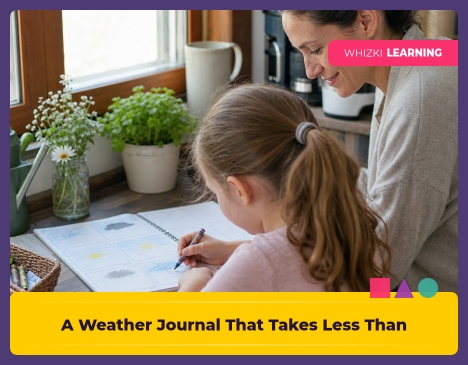
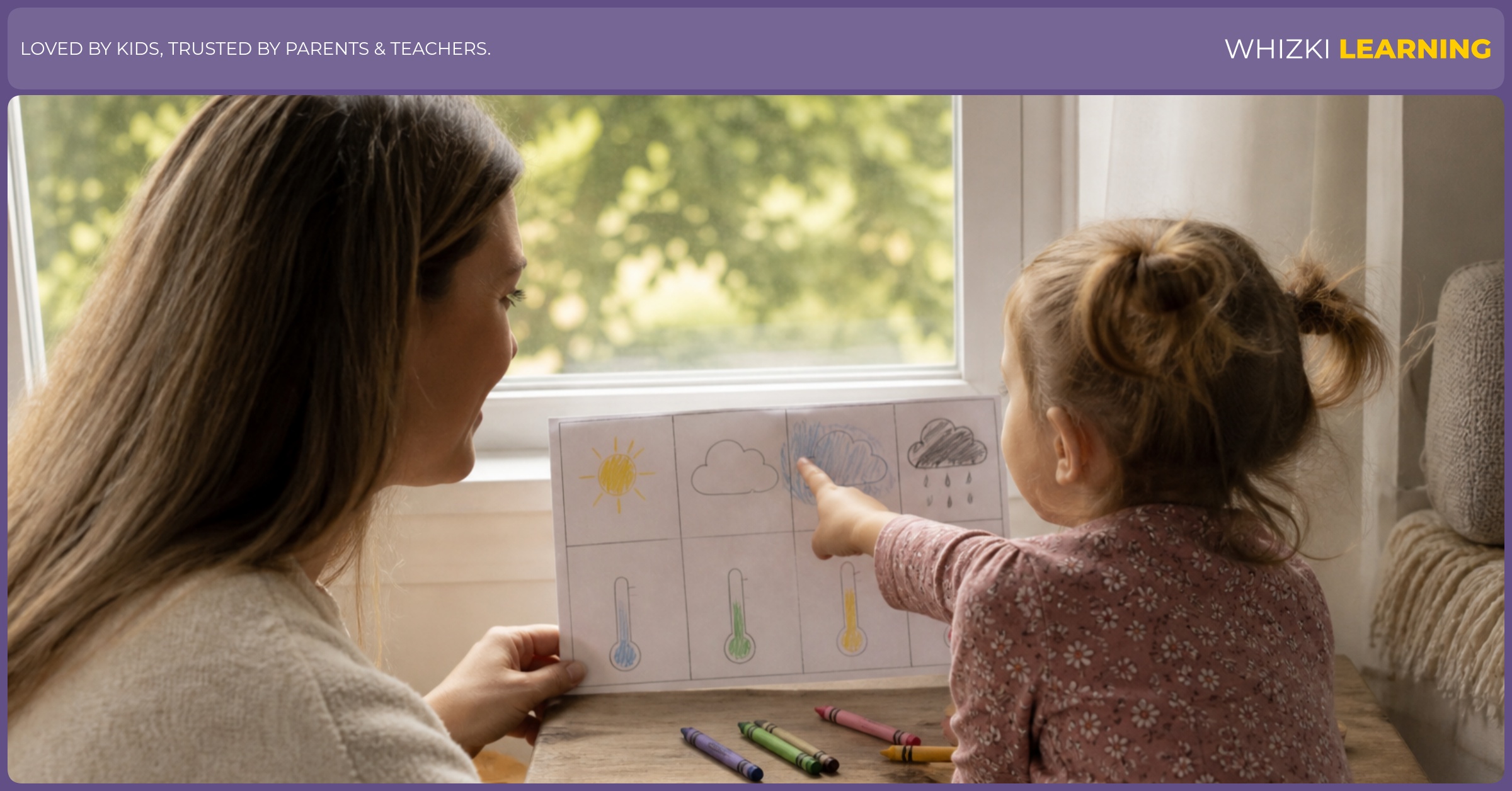
The weather window journal needs one sheet of paper, a pencil, two crayons, and the same view each day. Reggio Emilia practice treats children as careful observers, and the NAEYC view of early science starts with real materials children can touch and talk about. A window, a porch step, or the same classroom door gives the journal enough consistency.
The adult draws a small grid with the days across the top and two rows labeled sky and feels like. The child adds one sky symbol, such as a sun circle or cloud bump, and one temperature-feeling mark, such as a warm color or cool color. The whole field note should take less than two minutes, because preschool attention is busy and mornings already have shoes, lunchboxes, and missing mittens.
For a 3-year-old, the weather window journal can be one big box with a choice between sunny and cloudy. For a 5-year-old or 6-year-old, the journal can hold three or four days before comparison. For a 7-year-old, the journal can include a short spoken sentence that the adult writes, such as The sky looks gray today.
Use symbols that fit small hands
Weather symbols work best when the adult accepts rough marks. Occupational-therapy basics remind teachers and parents that large, simple strokes come before tiny neat pictures, so a lopsided sun still counts as an observation. A child can make a dot for rain, a swirl for wind, a blob for a cloud, or a white patch for snow.
The temperature-feeling row should stay about body awareness, not exact measurement. The child can point to hot, warm, cool, or cold and mark the box with red, yellow, blue, or gray. A thermometer can sit nearby for adult curiosity, but the child's job is to notice how the air feels on cheeks, hands, or arms.
Observation means what the child sees or feels right now, while a forecast means an educated guess about later. Speech-language practice often builds vocabulary through contrasts, so the adult can say, Our observation is cloudy now, and the forecast says rain later. The weather window journal teaches that both ideas can be useful without asking a young child to be precise.
Compare several days without a quiz
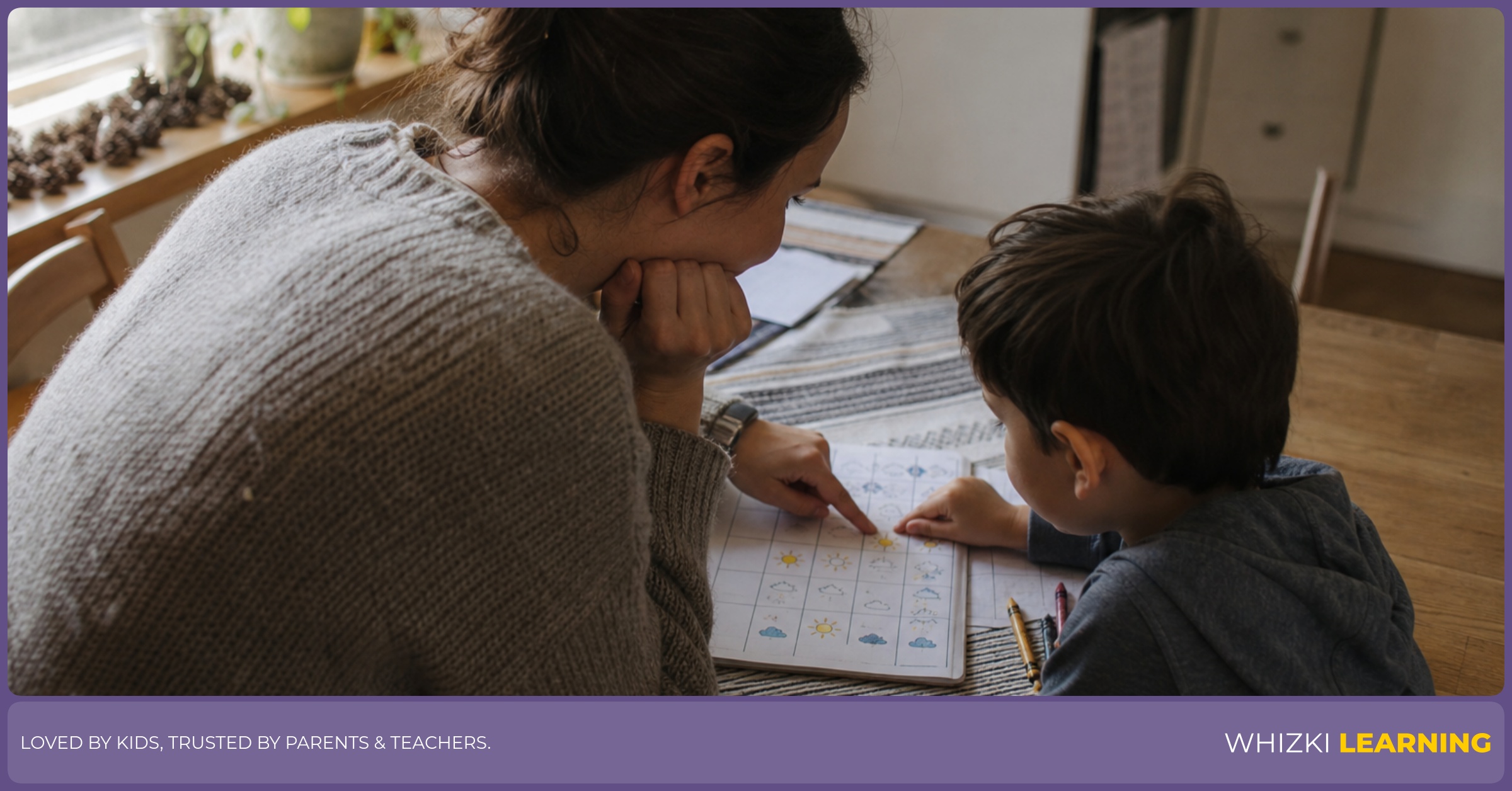
The weather comparison should wait until the journal has at least three days, because one mark by itself does not give much to compare. Montessori-style observation asks adults to slow down and notice patterns before correcting children, which fits the weather journal well. The adult can ask, Which boxes look alike? or Which day felt different?
The child can circle two matching sky marks, place a finger on the warmest-feeling color, or line up crayons beside the boxes. The Orton-Gillingham approach reminds me to pair looking, saying, and touching when language is new, and weather words are new for many children. Short sentence frames help, such as Monday was cloudy and Today feels cooler.
The weather window journal has honest limits, especially during fast-changing storms or when a child checks the window at a different time each day. A simple note from the adult, such as We looked after breakfast today, keeps the comparison fair enough for ages 3 to 7. For more hands-on nature and early science ideas, the Learning Hub offers screen-light activities that fit short family routines.
Try a five-day home or classroom routine
A five-day routine gives enough repetition without making the weather window journal feel like homework. NAEYC guidance on developmentally appropriate practice supports short, meaningful routines that connect to children's real lives. The adult keeps the same order each time: look, mark, say one sentence, and move on.
In a preschool or kindergarten group, the teacher can invite one child to be the weather watcher while other children show thumbs for warm or cool. In a homeschool or caregiving day, the weather watcher can be the child who is already waiting by the window in pajamas. The adult should skip the journal on rushed days rather than turning weather noticing into a power struggle.
The routine also works when the view is limited, because children can still observe light, wet pavement, moving branches, or people wearing coats. The adult can say, Forecasts help us plan, observations help us check, and the sentence is enough for young learners. A precise number is optional, and a child's careful noticing is the main work.
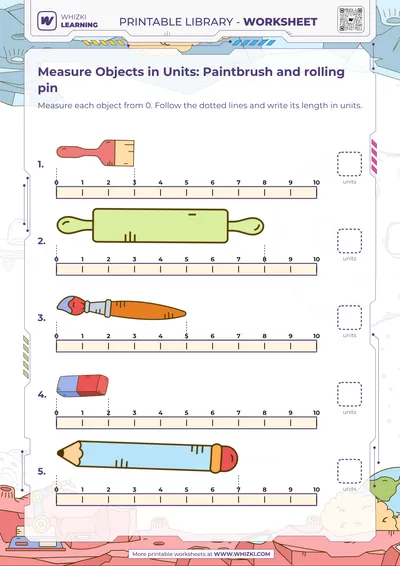
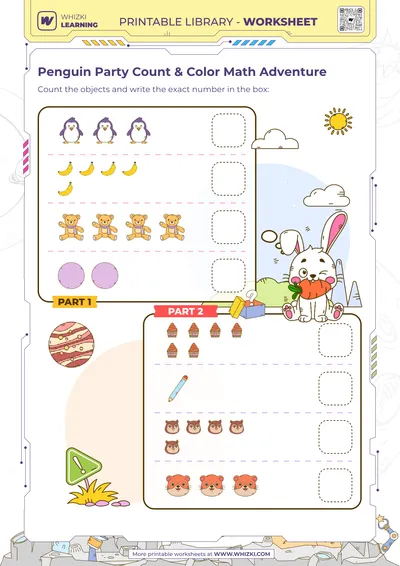
A simple weather page from the printable library can save setup time when the morning is crowded. Choose a page with big boxes and simple symbols, then let the child add one crayon mark instead of filling every line.
The weather window journal is small on purpose. A child who marks the sky for a few days is practicing attention, language, comparison, and decision-making with real life as the material. If the routine helps the jacket decision feel a little less stuck, the journal has already done good work.