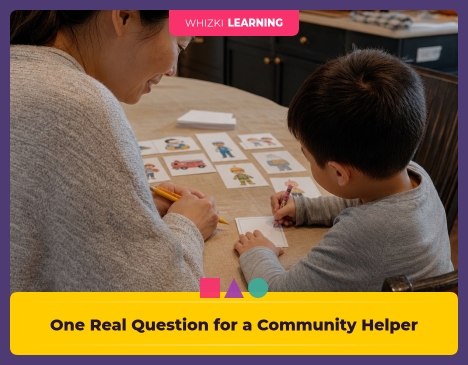
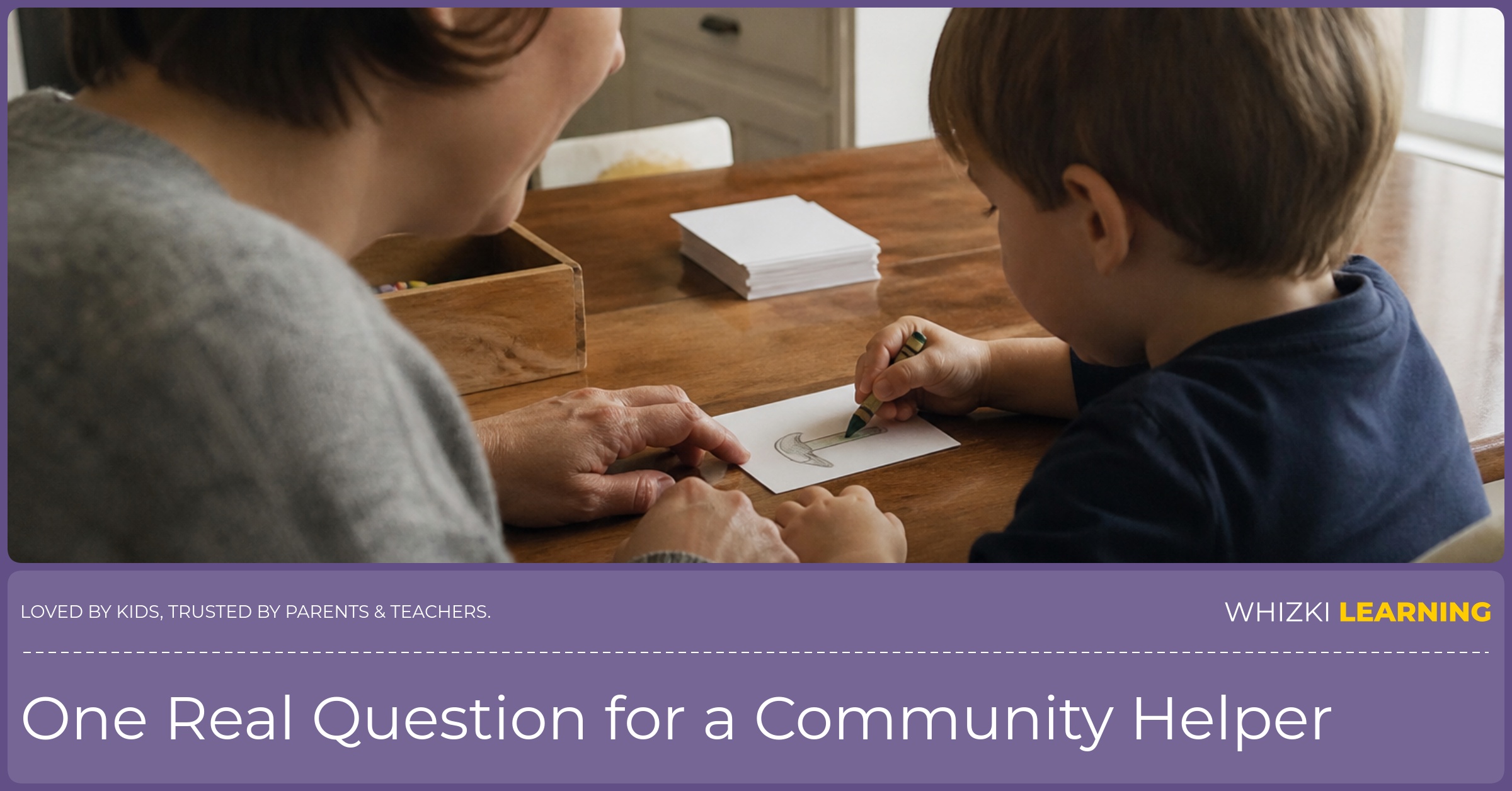
When a community-helper visit lands on the calendar and your child wants to ask, “Do you drive the big truck?” twelve times, try a two-minute question card today: draw one tool, one job duty, or one part of a typical day, then help your child turn the drawing into one respectful question. The goal is not a perfect interview; the goal is a child who can notice, wonder, and speak to a real person without leaning on costume jokes or TV ideas. A single worker can share one lived version of a job, and no worker represents everyone in that job.
Reviewed by Whizki Editorial Team, Early Childhood Education Editors.
Start with a question card
The question card gives a young child something concrete to hold while meeting a community helper. In my preschool room, Reggio-inspired observation helps children begin with what the child actually noticed, while NAEYC guidance keeps the adult role respectful and child-centered. The question card is small on purpose because a 3-year-old and a 7-year-old both do better with one clear job than with a long script.
The materials are simple: one index card or half sheet of paper, a pencil, two crayons, and a timer set for five to ten minutes. A child ages 3 to 4 can draw one object and dictate the question to an adult, while a child ages 5 to 7 can copy a short sentence under the drawing. The adult can write neatly at the bottom without correcting the child’s drawing, because the card is a speaking support, not a handwriting test.
The adult script can be calm and direct: “A respectful question helps the helper explain the work.” The question card should avoid asking whether the worker is a “real” helper, whether the worker is brave every day, or whether the worker wears a famous outfit. The child can still be curious about trucks, tools, hats, aprons, boots, or bags, but the adult can connect those objects to the work rather than to a costume stereotype.
Choose the question path
The question path can stay verbal, especially for a child who is not ready to write. The Orton-Gillingham approach reminds adults to move from spoken language to print in clear, small steps, so the child can say the question before the adult writes the sentence. The adult can repeat the child’s words slowly and keep the final question short enough to remember.
The drawing tells the adult which path to use. A tool drawing can become, “What tool do you use most often?” A safety drawing can become, “What is one responsibility you have?” A school or practice drawing can become, “What training helped you learn the job?” A clock, lunchbox, or doorway drawing can become, “What is one part of a typical day?”
The question path works best when the adult stops at one finished question. Children who want more choices can browse a hands-on idea source such as a hands-on activity hub, then return to one card instead of carrying a stack of prompts. One question leaves room for listening, and listening is the part many young children need to practice most.
Practice the delivery
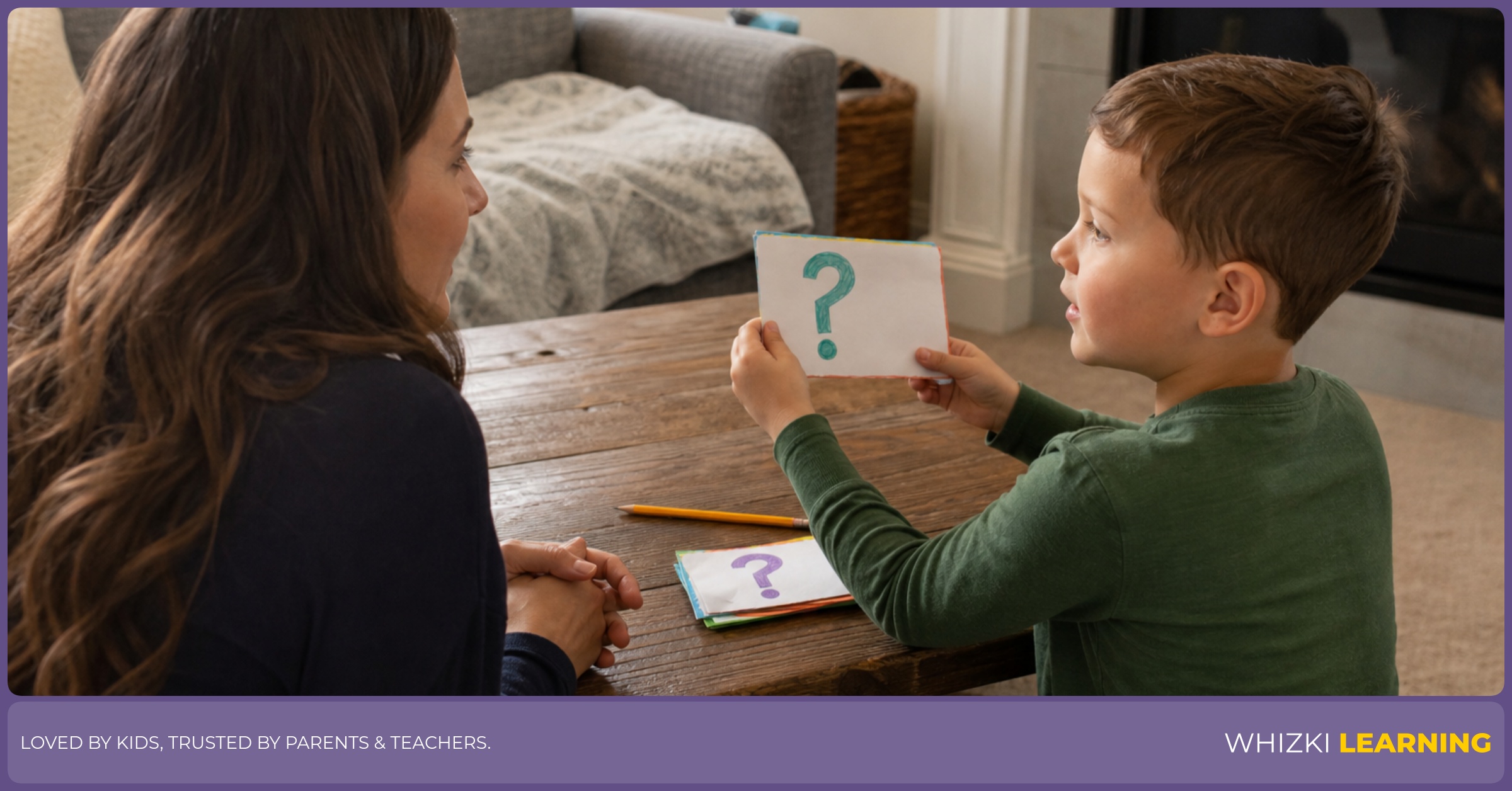
The delivery practice should feel like rehearsal, not a performance. Speech-language pathology practice often uses a simple path of adult model, child tries with help, and child tries alone, and that pattern works well at the kitchen table. The adult can say the question once, say the question together with the child, then let the child try while holding the card.
The body setup matters for young children. An occupational-therapy basic is to support posture and hand use before expecting speech, so the child can sit with feet on the floor, hold the card at chest height, and point to the drawing if words get stuck. A child who fidgets can squeeze a small cloth or keep both hands on the card while waiting for a turn.
The backup plan protects dignity. If the child freezes, the adult can say, “My child wondered about your tool,” and pause so the child can point or add one word. The community helper visit is still useful when the adult asks the question for a shy child, because the child is watching respectful language happen in real time.
Keep the worker human
The community helper should be treated as a person with skills, limits, and a specific workplace. Montessori and Reggio traditions both value real materials and real language, so a firefighter’s turnout coat, a nurse’s stethoscope, or a mail carrier’s bag can be discussed as work equipment. Clothing can protect a worker or identify a role, but clothing should not become the whole lesson.
The adult can add one sentence before the visit: “We are meeting one person who does one version of this job.” That sentence helps children avoid big claims such as all dentists do the same tasks or all police officers have the same day. The sentence also makes space for family experience, because a parent, neighbor, or relative may know a different version of the same work.
The same respectful habit shows up in simple science talk. In the previous world lab guide, prediction is treated as a way to think, not as a right-or-wrong show. A community-helper question can carry the same message: wondering is welcome, guessing is normal, and a real answer may be more specific than a child expected.
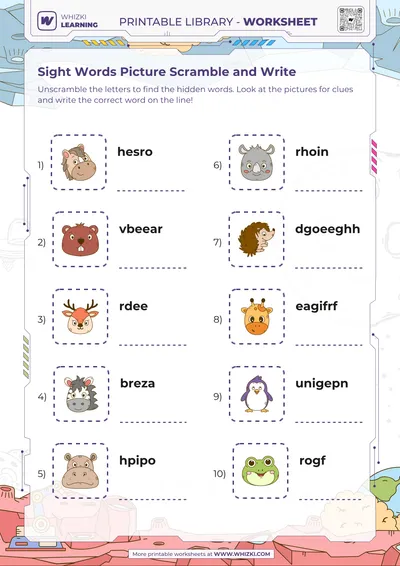
If a blank card stalls the question, a simple printable can lower the pencil pressure. The community-helper page in the printable library gives children a place to draw a tool, a responsibility, or a day moment before the visit.
Save one answer after the visit
The after-visit record should be as small as the question card. NAEYC guidance values family connection and meaningful documentation, and one remembered answer is meaningful for a child ages 3 to 7. The adult can write the helper’s answer on the back of the card and ask the child to add one picture from memory.
The adult should resist turning the visit into a quiz. A child may remember the shiny wrench, the friendly voice, the office dog, or the loud garage door before remembering the official job title. Those details are not distractions; those details are the child’s way into real-world learning.
The honest limit is that a question card cannot teach a whole career, fix public speaking nerves, or replace a real conversation about safety and fairness. The question card can, however, give the child a respectful first move. For many young children, one clear question is enough work for one visit.
The best community-helper question is small enough for a young child to own and respectful enough for a worker to answer honestly. If the visit gets noisy, the card still did its job: the child practiced noticing a real person, choosing words, and listening for one answer.