If sink-or-float turns into a sibling argument over who was right, try one bowl, six safe objects, and the sentence, “My first idea can change after the test.” The investigation should feel like cooking with water, not like a quiz at the table. The best learning happens when the child can guess, test, be surprised, and change the guess without losing face.
Reviewed by Whizki Editorial Team, Early Childhood Education Editors.
Set up a small water lab
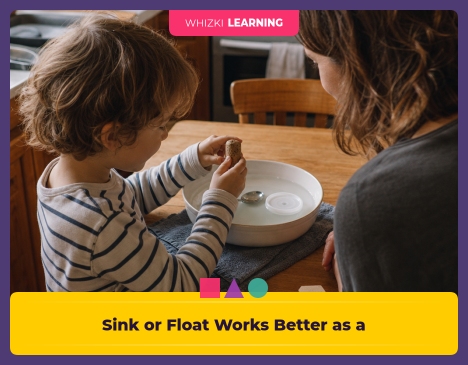
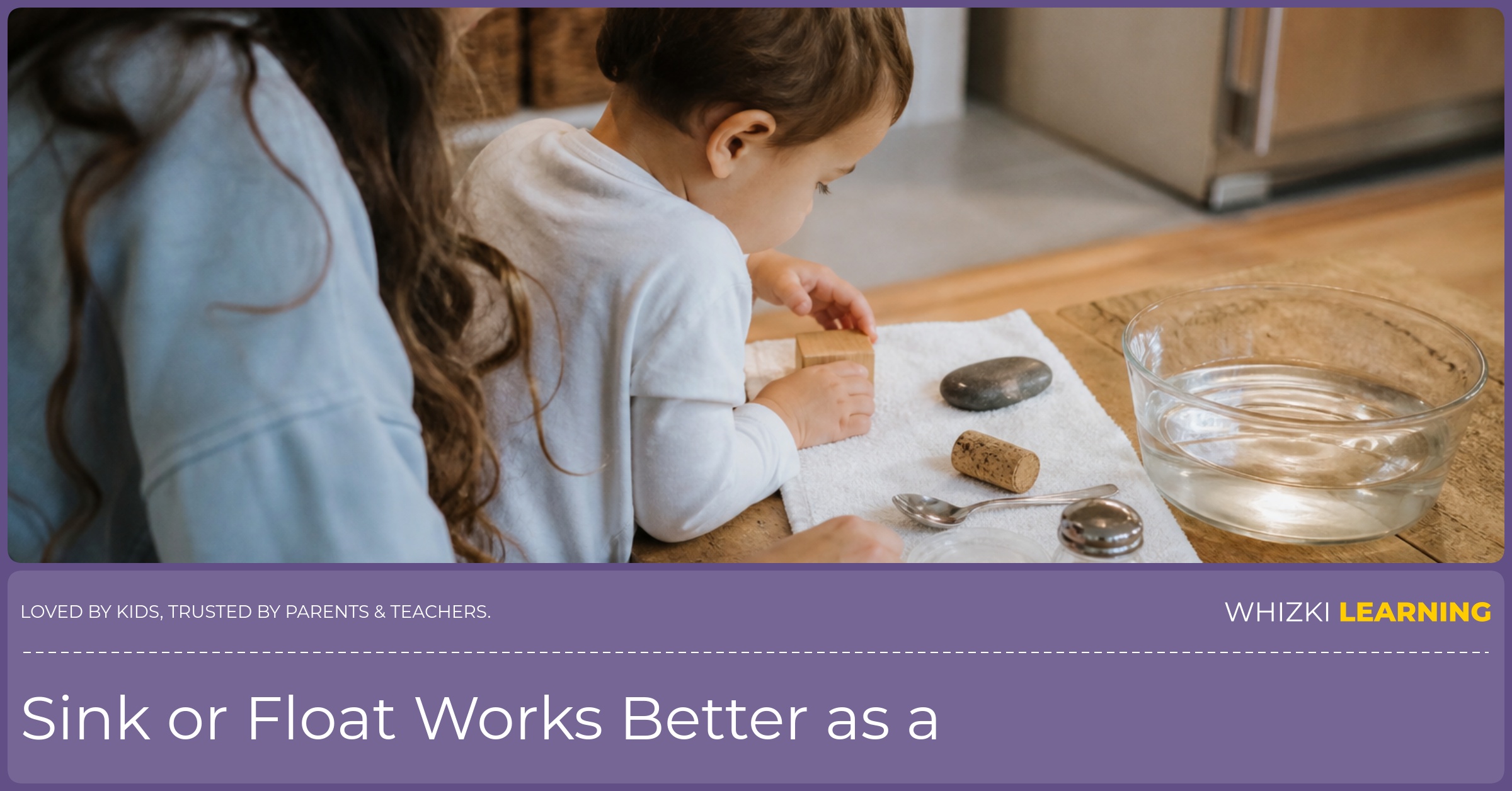
The sink-or-float lab works best in a dish tub, a mixing bowl, or a shallow plastic storage bin with only two or three inches of water. A towel under the bin, a towel beside the bin, and a clear “water stays in the bowl” rule prevent most of the chaos that makes parents stop science early. The whole investigation can take 10 to 15 minutes, which is plenty for ages 3 to 7.
The Reggio approach treats children as careful observers, so the setup should invite slow looking rather than fast answers. Place the dry objects on a tray first, let the child touch each object, and ask what the child notices before water enters the scene. The earlier habit of watching closely also connects nicely with the previous world lab guide, where the same child-friendly skill is paying attention over time.
The adult job is supervision, not stage management. Keep the bowl within arm’s reach, stay beside the child, and empty the water right away if splashing becomes the main event. NAEYC guidance reminds early educators to match activities to a child’s development and safety needs, so a younger preschooler may need a smaller bowl, fewer objects, and shorter turns.
Choose objects that keep the lab safe
The object set should be large enough to avoid choking concerns, washable, and safe if dropped into clean water. Good choices include a metal spoon, a cork, a plastic lid, a rubber duck, a smooth rock, a wooden block, a sealed empty spice jar, and a crumpled piece of aluminum foil. Skip batteries, coins for children who still mouth objects, glass that can break, sharp items, electronics, and anything with peeling paint.
The occupational-therapy rule of thumb I use in preschool is simple: if an object invites mouthing, poking, pinching skin, or hard throwing, choose a different object. A child can still build strong sensory and motor learning with safe textures, weights, and shapes. The adult can add a ladle or slotted spoon if the child needs a tool to slow down impulsive grabbing.
The best object set has a few likely floaters, a few likely sinkers, and one surprise. A sealed empty container can float because air is trapped inside, while the same container can sink if water gets inside. The surprise is the point, because the child learns that science is about checking ideas, not performing certainty.
Make predictions with room to revise
The prediction routine should be short enough that a 3-year-old can join and steady enough that a 7-year-old can explain more. Hold up one object, name the object, and say, “I think the cork will float because the cork feels light.” Then let the child copy the pattern with a different object, using pointing or a one-word answer if language is still growing.
The Orton-Gillingham tradition uses clear, multisensory steps, and the same teaching wisdom helps here. The child hears the object name, feels the object, says or points to a prediction, watches the result, and then uses words or gestures to revise the idea. A sentence frame such as “I used to think ___, now I think ___” keeps the focus on thinking instead of being right.
The age adjustment is simple. Ages 3 to 4 can sort objects into “guess float” and “guess sink” piles with adult help, ages 5 to 6 can give a reason, and age 7 can compare two objects before testing. The adult should accept “because it is big” as a real starting idea, then help the child notice when size alone does not explain the result.
For a paper record after the bowl is dry, the sink-or-float page in the printable library gives children a place to draw one guess and one result. The page is useful when a child wants to tell another grown-up what happened, but the hands-on water test should come first.
Notice material, shape, and trapped air
The sink-or-float conversation becomes richer when the adult names material without turning the moment into a lecture. Say, “The spoon is metal,” “The block is wood,” or “The lid is plastic,” and let the child compare how each material feels in the hand. Montessori and Reggio classrooms both value exact language connected to real objects, and water play gives that language a clear purpose.
The shape conversation matters because the same material can behave differently. A flat piece of foil may float for a while, a tight foil ball may sink, and a foil cup may float because the cup shape holds air. The child does not need adult-level vocabulary, but the child can notice that trapped air helps some objects stay up.
The result chart should welcome surprises. If the rock sinks after a confident float prediction, the adult can say, “The rock surprised us, so our next guess can use the new information.” Families who want more low-prep science and early learning ideas can browse the Learning Hub after the water is put away.
Manage spills, feelings, and supervision
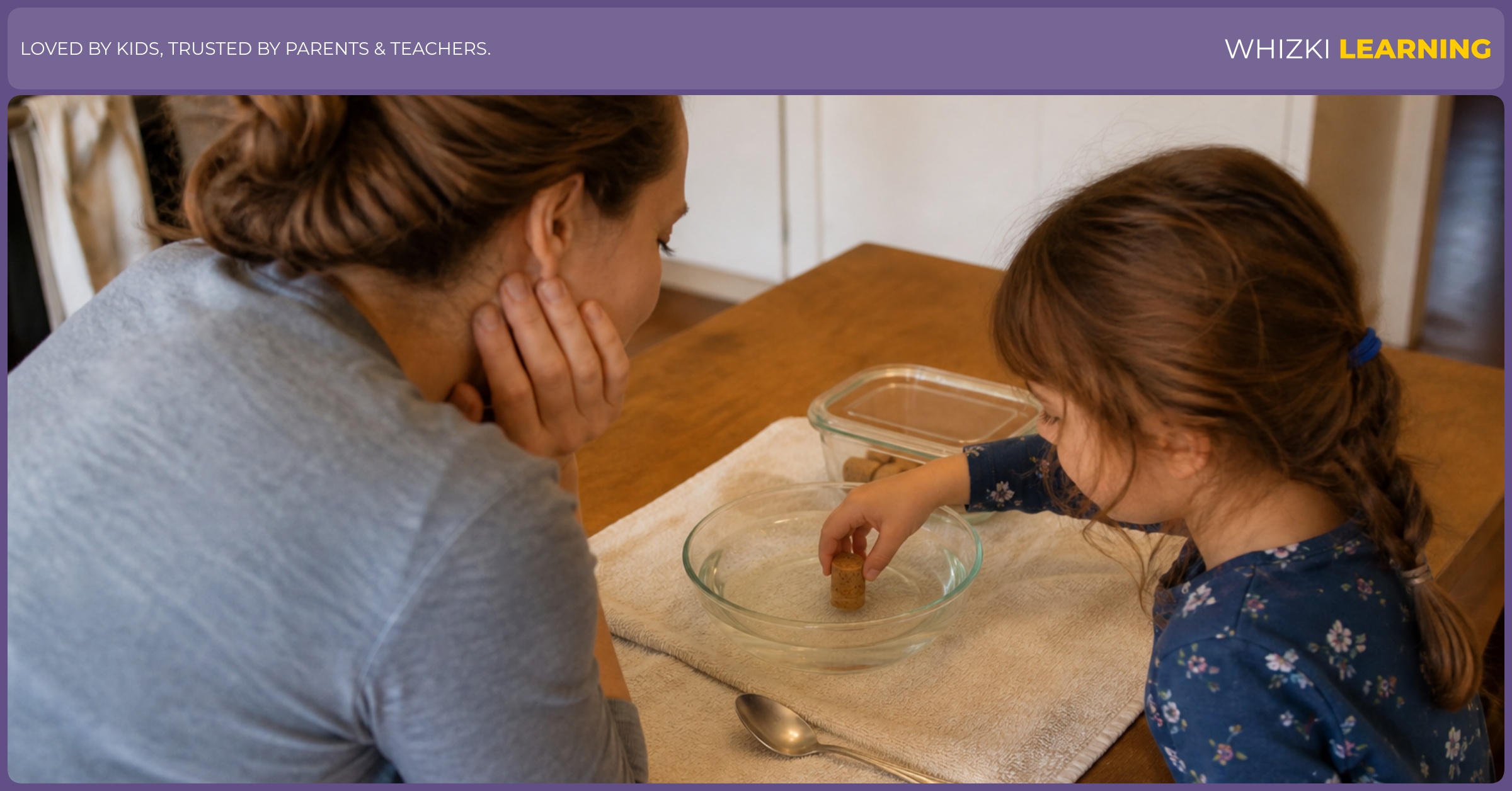
The spill plan should be stated before water appears. Tell the child, “Water in the bowl is science, water on the towel is cleanup, and water on the floor means we pause.” That calm limit fits NAEYC’s guidance on predictable routines, because young children behave better when the boundary is clear before excitement starts.
The supervision plan should match the child in front of the adult. A child who pours quickly may need one object at a time, while a child who waits well may handle a tray of several objects. An occupational-therapy lens also reminds adults to watch posture, grip, and arousal level, because a tired or sensory-seeking child may need heavy towel work before more testing.
The feelings plan matters when a child treats the prediction like a score. Say, “A changed idea is a scientist move,” and move straight to the next object instead of praising only correct guesses. The sink-or-float lab is successful when the child can stay curious after a wrong guess, not when the child predicts every object correctly.
Sink-or-float is a small investigation with a big message for young children: a first idea is allowed to grow. A safe bowl, a towel, a few household objects, and an adult who stays close can turn a wet ten minutes into real science talk.
The adult does not need a perfect explanation for every result. The useful move is to notice together, name what happened, and say, “What should we try next?”