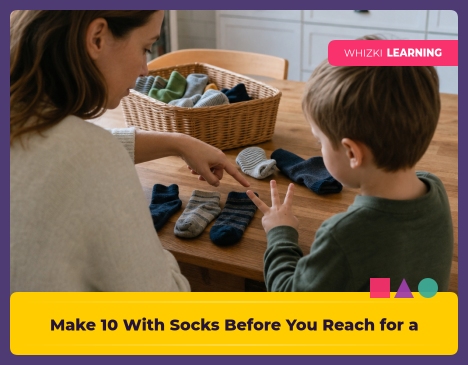
If the laundry pile is already testing your patience, pull out ten clean socks before folding and ask your child to help make pairs, count the socks, and find two groups that make 10. The sock basket is not a polished lesson, which is why many children relax and join in. A five-minute sock game can give a child real number practice before anyone reaches for a worksheet.
Reviewed by Dr. Anna Klein, EdD, Early Childhood Curriculum Specialist.
Why socks work for early math
Clean socks give children a concrete way to see that numbers can be broken apart and put back together. A child can touch one sock, move one sock, and hear the count at the same time, which helps number words connect to real amounts.
NAEYC guidance for early childhood math supports playful work with everyday materials because young children learn best when ideas live inside familiar routines. Sock sorting also keeps the math short, social, and useful, which matters when a child has limited sitting stamina after preschool or kindergarten.
The Reggio habit of treating household materials as worthy learning tools fits the sock basket well. If your family liked counting during movement in the previous math at home guide, sock counting gives the same kind of real-life practice in a calmer spot.
Set up the sock ten-frame
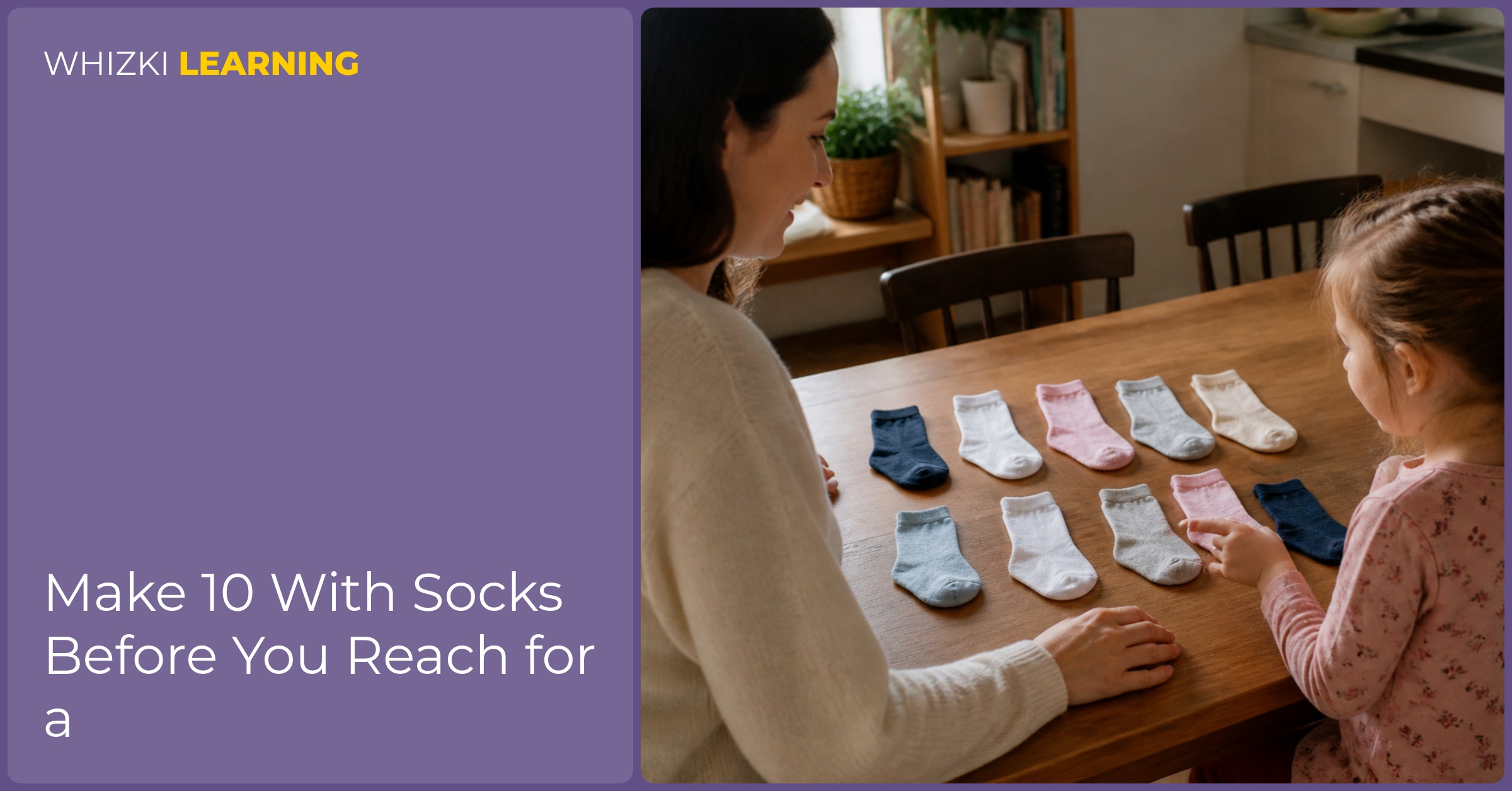
The sock ten-frame starts with ten clean socks laid in two rows of five on the bed, rug, or kitchen table. A light and dark color mix helps a child see groups, but matching socks are not required for the first round.
Occupational-therapy basics remind adults to reduce motor clutter when a task asks for thinking. A small work space, a clear edge, and socks that are not inside-out make the counting easier for children who are still building finger control and visual tracking.
The adult can say, “Let’s make a full row of five, then another row of five,” while the child places each sock. The goal is not speed, because the goal is for the child to notice that five and five fill the whole set of ten.
Play the make-10 game
The preschool version works best with smaller totals, such as four socks or six socks. The adult can say, “I have two socks here and two socks there, so we made four,” while the child moves socks into two little groups.
The kindergarten version can use all ten socks after the child has warmed up. The adult can make one group of seven socks and leave three socks apart, then say, “Seven and three make ten,” while the child slides the groups together.
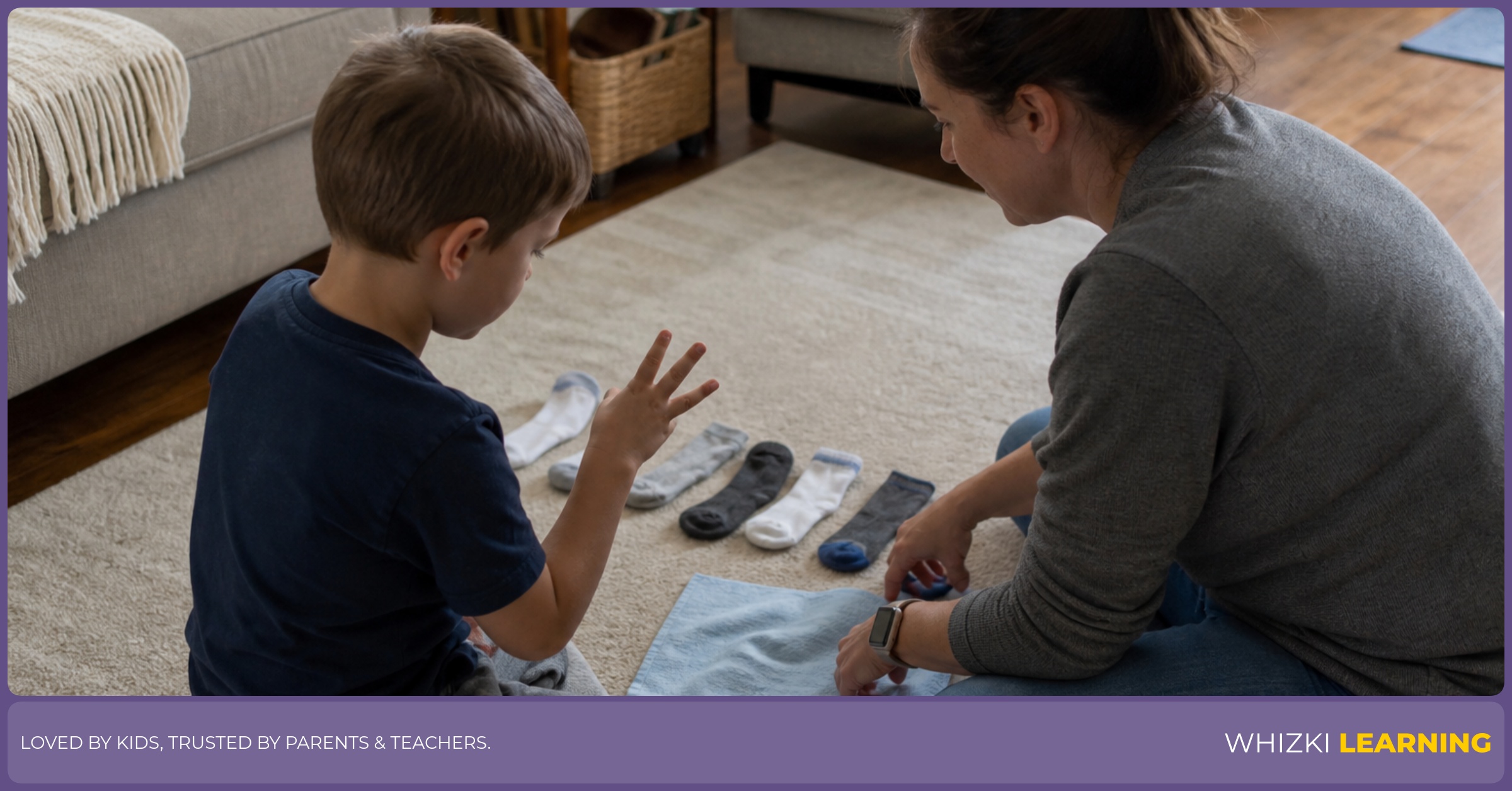
The older-child challenge adds a missing-part question without turning the game into a quiz. The adult can hide some socks under a towel and ask, “We need ten socks, and seven are showing, so how many socks are hiding?”
The Orton-Gillingham approach uses multisensory routines for language, and the same “say, touch, move” rhythm helps early number work feel steady. For more counting language and number ideas, families can visit the numbers learning hub after the sock basket is put away.
Watch for readiness and friction
The sock game should feel like shared laundry work with math tucked inside. If a child starts tossing socks, grabbing too many at once, or guessing without looking, the activity may be too long or the total may be too large.
Montessori observation gives adults a useful habit here, watch the child’s hands before adding more words. A child who lines socks up carefully may be ready for “How many more to make ten?” while a child who crumples socks may need a two-minute matching job instead.
Speech-language practice also reminds adults to model the answer before expecting the child to produce the answer alone. The adult can say, “I see six socks, and four more would make ten,” then invite the child to repeat or build the same amount.
When a paper follow-up helps
A worksheet can be useful after the child has handled real socks. NAEYC-aligned practice usually works better when paper records a known idea, rather than introducing a brand-new idea cold.
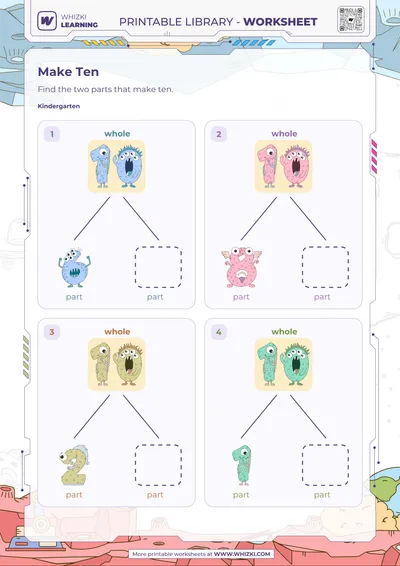
The paper follow-up can be as simple as drawing circles for socks and coloring two groups that make ten. A preschooler might draw four socks total, while an older child might draw eight socks and add two more to complete ten.
Whizki Learning keeps related counting pages in the printable library for families who want a quiet follow-up after hands-on play. A printable can capture the child’s sock combinations, but the real learning still starts with moving, counting, and talking together.
The honest limit is that sock play will not fix every math struggle in one afternoon. Sock play can, however, give parents, caregivers, teachers, and homeschoolers a low-pressure look at whether a child understands “how many” and “how many more.”
After the game, finish the laundry in the normal way and name one combination the child made, such as “You found six and four.” A small, ordinary moment repeated across family routines often teaches more than a long worksheet battle at the table.