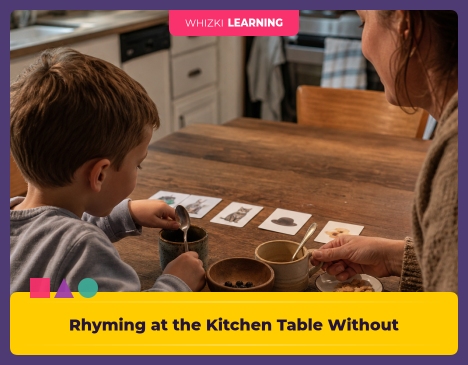
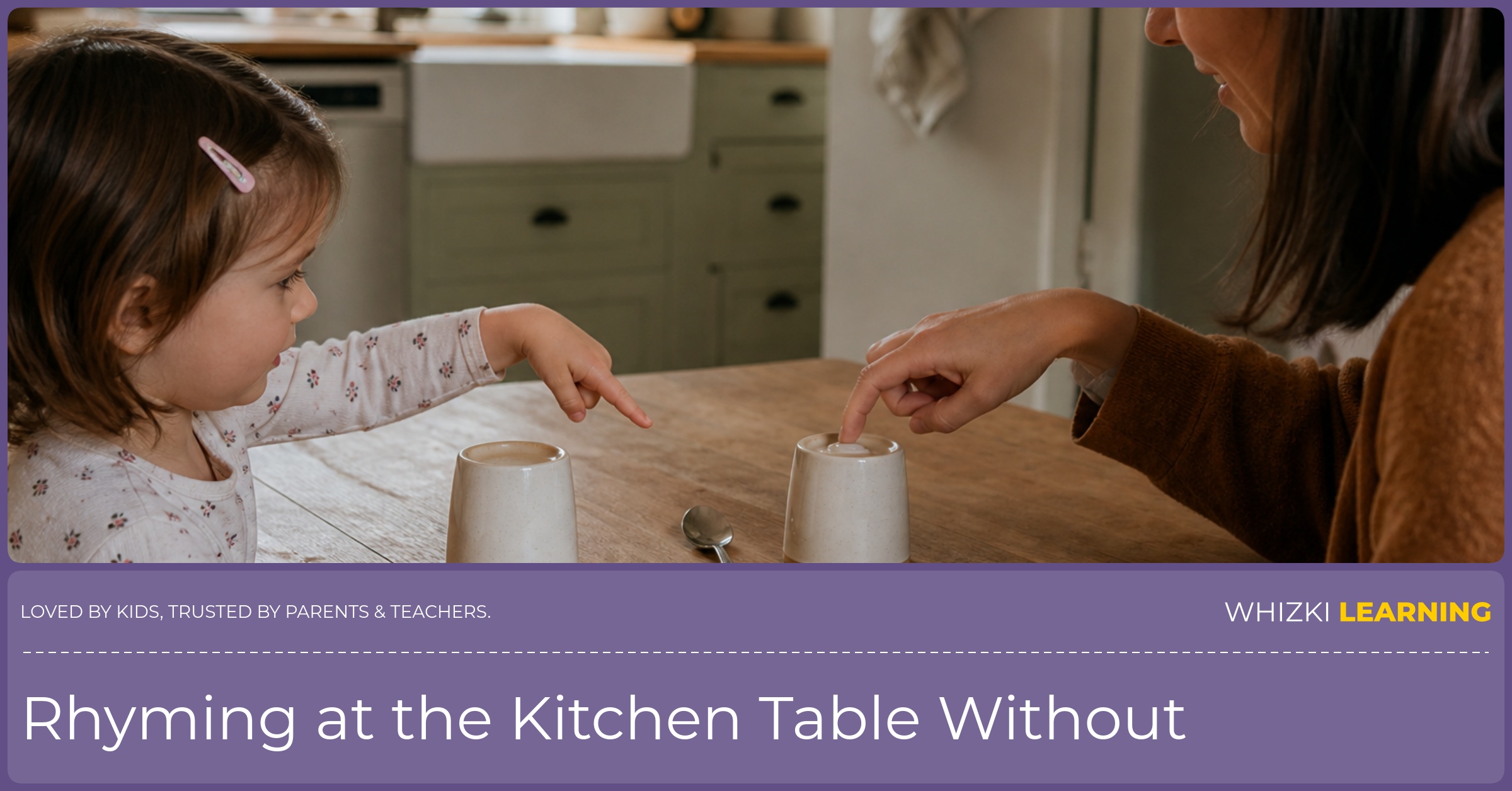
When dinner is running late and a child is tapping a spoon like a drum, put two cups on the table and ask, “Does cup rhyme with pup?” The kitchen noise becomes a tiny listening game, not another task to set up. Keep the first try under two minutes and stop while the child still wants another turn.
Reviewed by Sarah Mitchell, M.S., CCC-SLP, Speech-Language Pathologist.
Why kitchen rhymes work
Kitchen rhyming works because young children hear sound patterns best when hands and ears are busy together. The Orton-Gillingham approach starts with careful listening before letters, and a cup, spoon, or snack gives the child something real to hold while listening. The kitchen table lowers pressure because the child can answer with a nod, a laugh, or a point before saying a word out loud.
Rhyme recognition is easier than rhyme production. A child can hear that “rice” and “mice” sound alike at the end long before the child can invent “nice” on request. Speech-language pathology practice treats that difference as normal, so the adult job is to offer choices first and ask for original rhymes later.
The five-minute cup and spoon routine
The five-minute routine needs two cups, one spoon, and three food names from the actual meal. Start with real words such as pear, chair, and bear, then add one playful nonsense word such as lairzy if the child enjoys silly talk. NAEYC guidance reminds teachers and parents that playful language belongs in everyday routines, so the table game should feel like talk, not a quiz.
Step 1 is the adult model: “Cup, pup. Those rhyme.” Step 2 is the choice: “Spoon, moon, or spoon, cracker?” Step 3 is the child response with a thumb, point, or spoken answer, and occupational-therapy basics support any response mode that lets the child stay regulated and engaged. Step 4 is the adult close: “Yes, spoon and moon end the same,” then the game pauses before the meal turns into a lesson.
For families who like a paper backup, Whizki Learning keeps letter-and-sound printables near the alphabet learning hub. A printable can hold favorite kitchen words after the table game, but the listening practice still starts with real cups, spoons, and food names.
Age versions for three, five, and seven
Age adjustments keep the same kitchen routine fair for preschool, kindergarten, and early elementary learners. NAEYC developmentally appropriate practice asks adults to match the challenge to the child in front of the adult, rather than asking every child to perform the same way. A Reggio-inspired lens also helps because the adult watches what the child notices, repeats, avoids, and finds funny.
A three-year-old version should stay in the yes-or-no lane. The adult says two words, such as pan and fan, then asks whether the words sound the same at the end. The child can answer by handing over the cup for yes or keeping the cup for no.
A five-year-old version can add a tiny set of choices. The adult says “rice” and offers mice or noodle, then lets the child pick the word that rhymes. The adult can add one nonsense option, such as zice, because playful invented words help children listen to sound without worrying about meaning.
A seven-year-old version can invite production, but the adult should still warm up with recognition. The adult says “plate” and gives one model, such as gate, before asking the child for another match. If the child says a near rhyme or a silly attempt, the adult can repeat the shared ending and keep the mood light.
When producing a rhyme feels hard
Producing a rhyme feels hard because the child must hold the first word in memory, hear the ending, search for another word, and speak the answer. Orton-Gillingham teaching separates those small steps on purpose, so the adult should not treat a blank stare as refusal. Recognition can stay the main goal for many playful sessions.
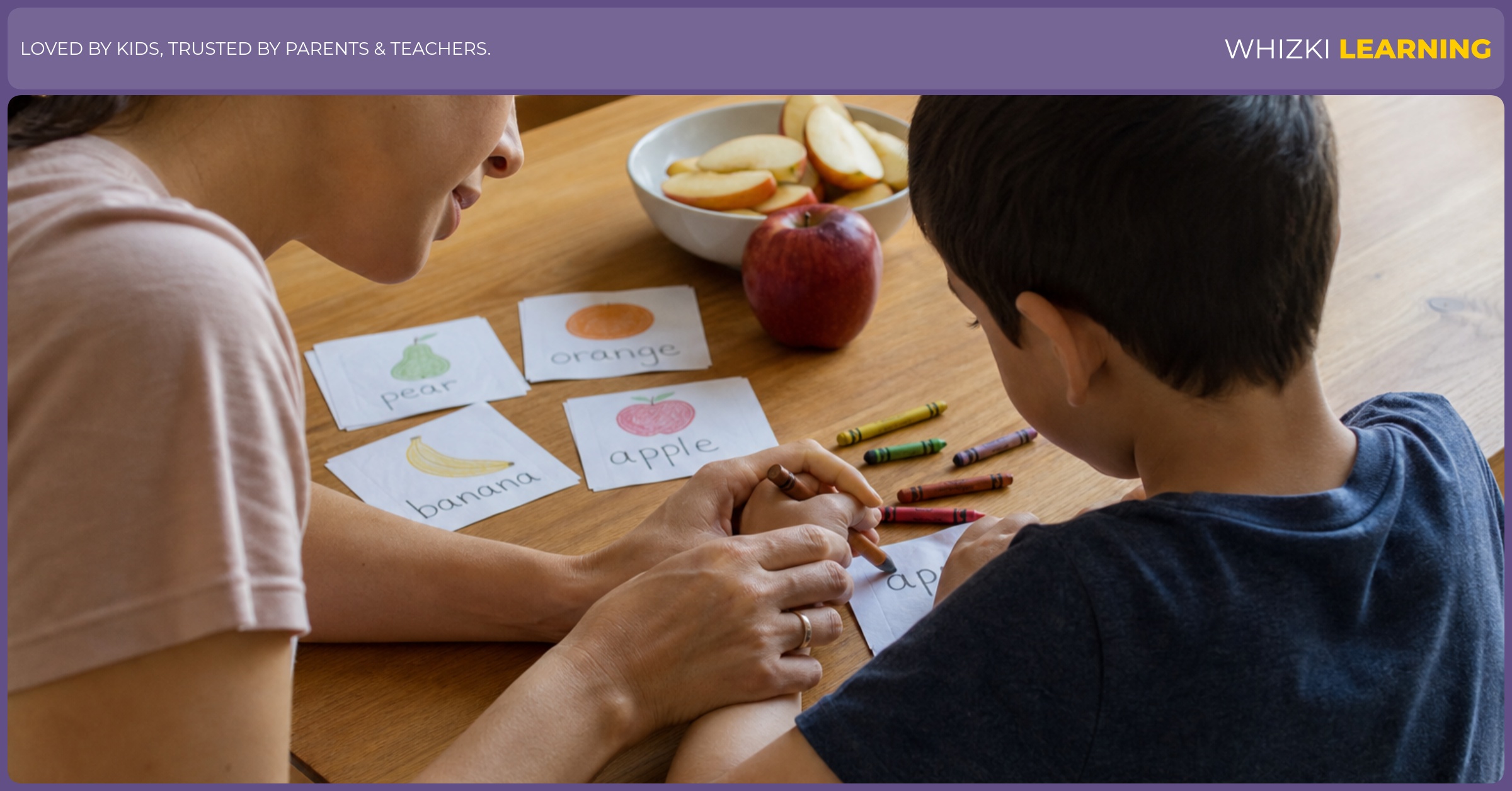
The adult can return to story language when table rhyming feels stale. The previous literacy lab guide pairs pictures with oral language, and that kind of retell work supports the same listening muscles without demanding a rhyme. A child who enjoys stories may accept “cat, hat” inside a silly sentence more easily than inside a direct question.
The broader Learning Hub can help an adult connect rhyme to letters when the child is ready. Occupational-therapy basics still matter during early literacy practice because posture, fatigue, hunger, and noise can change how much listening a child can manage. A tired child may need one easy recognition round and then dinner, not a longer activity.
A kitchen-table decision tree
A kitchen-table decision tree keeps the adult from pushing too hard. Reggio observation starts with noticing the child response, so the adult watches the face, hands, voice, and attention span before choosing the next move. The right next move is usually smaller than the adult first planned.
If the child answers quickly, the adult can add one more pair and then stop. If the child guesses every time, the adult can go back to modeling and say the ending sound longer, like “riiiice, miiice.” If the child gets silly, the adult can join for one nonsense pair and then name the pattern, because laughter can keep listening open. If the child turns away or covers ears, the adult can end the routine and try again another day.
Kitchen rhyming has honest limits. A short table game will not replace speech-language support for a child who is hard to understand, rarely responds to sound play, or seems frustrated by spoken language across many days. A pediatrician, speech-language pathologist, or early childhood team can help families decide whether extra support is needed.
The kitchen rhyme routine is small on purpose. A cup, a spoon, and one food name can give a child practice hearing word endings without turning dinner into school.
A good day may be five happy matches, and a hard day may be one adult model before everyone eats. Both days count because early literacy grows through many calm, ordinary repeats.