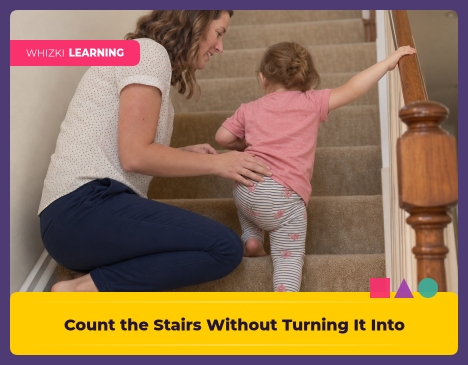
If stair counting keeps turning into a sprint, choose one adult-led rule today: one hand on the rail, one foot on the step, one number for that step, and stop counting the moment racing starts. The counting game can stay slow and safe when the adult treats the staircase as a short math routine, not a race course.
Reviewed by Dr. Anna Klein, EdD, Early Childhood Curriculum Specialist.
The seven-minute stair routine
The seven-minute stair routine starts with a choice: count only one short flight, or count the first six steps and turn around with help. The adult says touch, step, say, then the child touches the rail, places one foot, and says the next number. The Orton-Gillingham approach uses clear, repeated, multisensory routines, and the same teaching habit helps early math because the child hears, feels, and says one count at a time.
The adult should model the first two steps before inviting the child to join. The adult can say, “One,” step, then say, “Two,” step, with no clapping, chanting, or speeding ahead. One-to-one counting means one spoken number matches one stair, so the pace matters more than reaching the top.
The stair routine should feel ordinary, like counting spoons or spotting dates on a wall calendar. If the child enjoyed noticing repeats in the previous math at home guide, the staircase gives the same kind of visible order with body movement added. Stop after one climb, because a short success is easier to repeat tomorrow.
Safety boundaries before numbers
Safety boundaries come before any number talk. NAEYC guidance on developmentally appropriate practice reminds adults to match an activity to the child, the setting, and the moment, so a tired child, a crowded hallway, or slippery socks are all reasons to skip stair math. The adult owns the safety decision, even when the child wants another turn.
Occupational-therapy basics give a helpful rule of thumb: one hand should be free for the rail, eyes should be looking at the step area, and the body should move at walking speed. The child should not carry toys, cups, backpacks, blankets, or pets while counting. A caregiver can stand one step below or beside the child, depending on the staircase and the child’s balance.
Teachers and homeschoolers can set the same boundary with classroom steps, porch steps, or indoor carpeted stairs. The adult can say, “Counting happens only when feet are calm,” then return to counting after the child slows down. That calm limit keeps the activity from becoming a chase game.
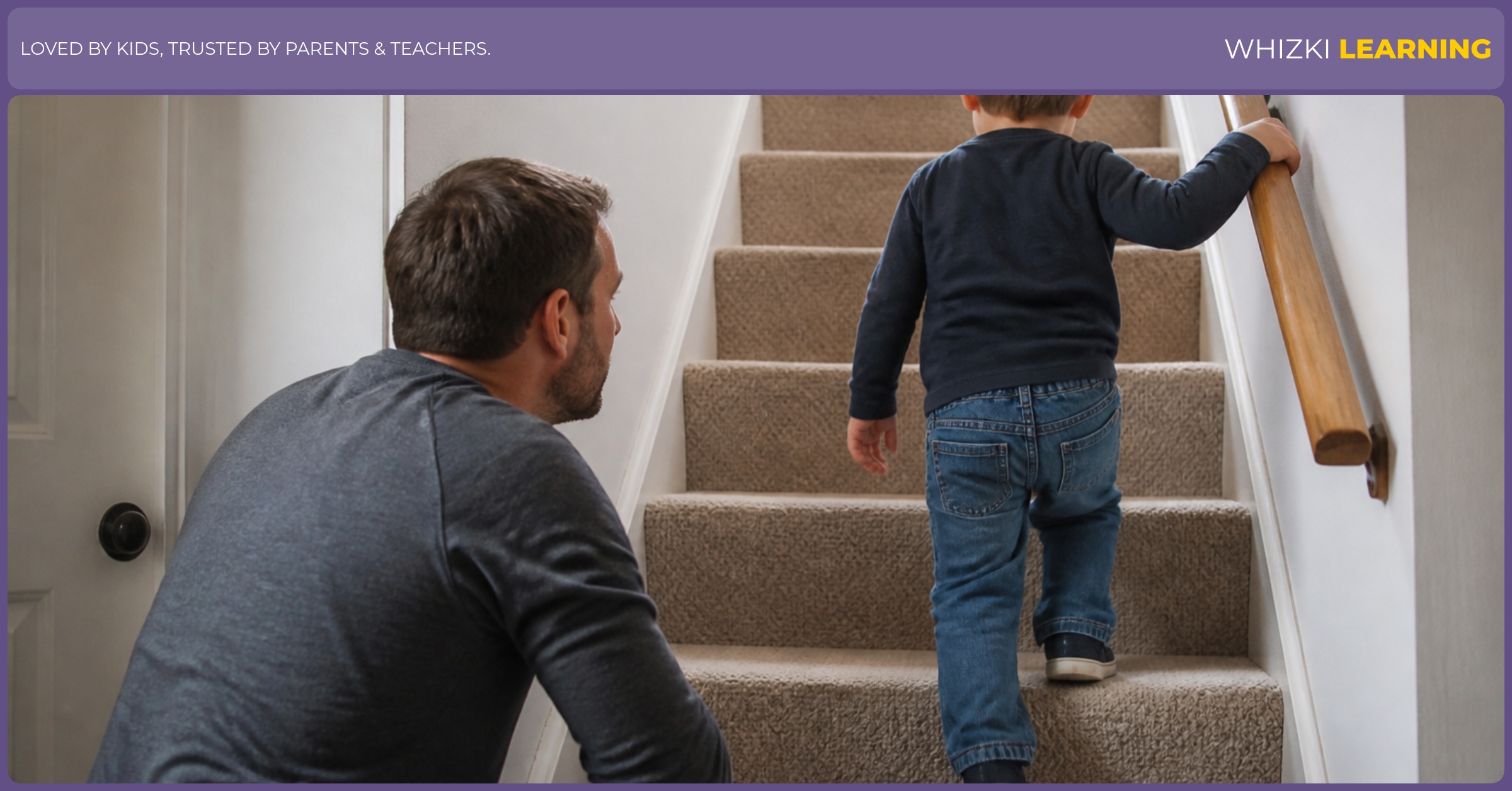
Ask what changed going up or down
The best question comes after the movement, not during the tricky footwork. At the top, the adult can ask, “What happened to the numbers while the body went up?” At the bottom, the adult can ask, “What changed when the body came down?”
A Reggio-inspired observation habit helps adults listen for the child’s idea before supplying the adult answer. A child might say the numbers got bigger, the voice got louder, the top step felt far away, or the last number changed. Those comments give the adult a natural opening to name more, fewer, higher, lower, first, and last.
A caregiver who wants more play ideas can browse the Whizki Learning Hub after the child has had a real movement turn. Early math grows from repeated noticing, so the adult can keep the question simple and ask the same question on another day. The goal is not a perfect explanation, the goal is attention to change.
A stationary block-stair alternative
The block-stair alternative is the safer choice when stairs are busy, unsafe, or too exciting. Use large wooden blocks, foam blocks, couch cushions on the floor, or shoeboxes against a wall, then build three to six levels. Montessori practice often isolates one idea at a time, and a small block staircase lets the child focus on matching one count to one level without managing a real staircase.
The child can move a toy animal, small car, or finger up the block stairs while saying one number for each level. The adult can slow the hand by saying touch, move, say, then pause at the top. If the child knocks the tower down, the adult can rebuild fewer levels and keep the tone light.
The same changed question works on the floor. The adult can ask, “What changed when the bear went up?” and later ask, “What changed when the bear came down?” Occupational-therapy basics still matter here because a stable floor setup, open space, and calm hands keep the activity usable for young children.
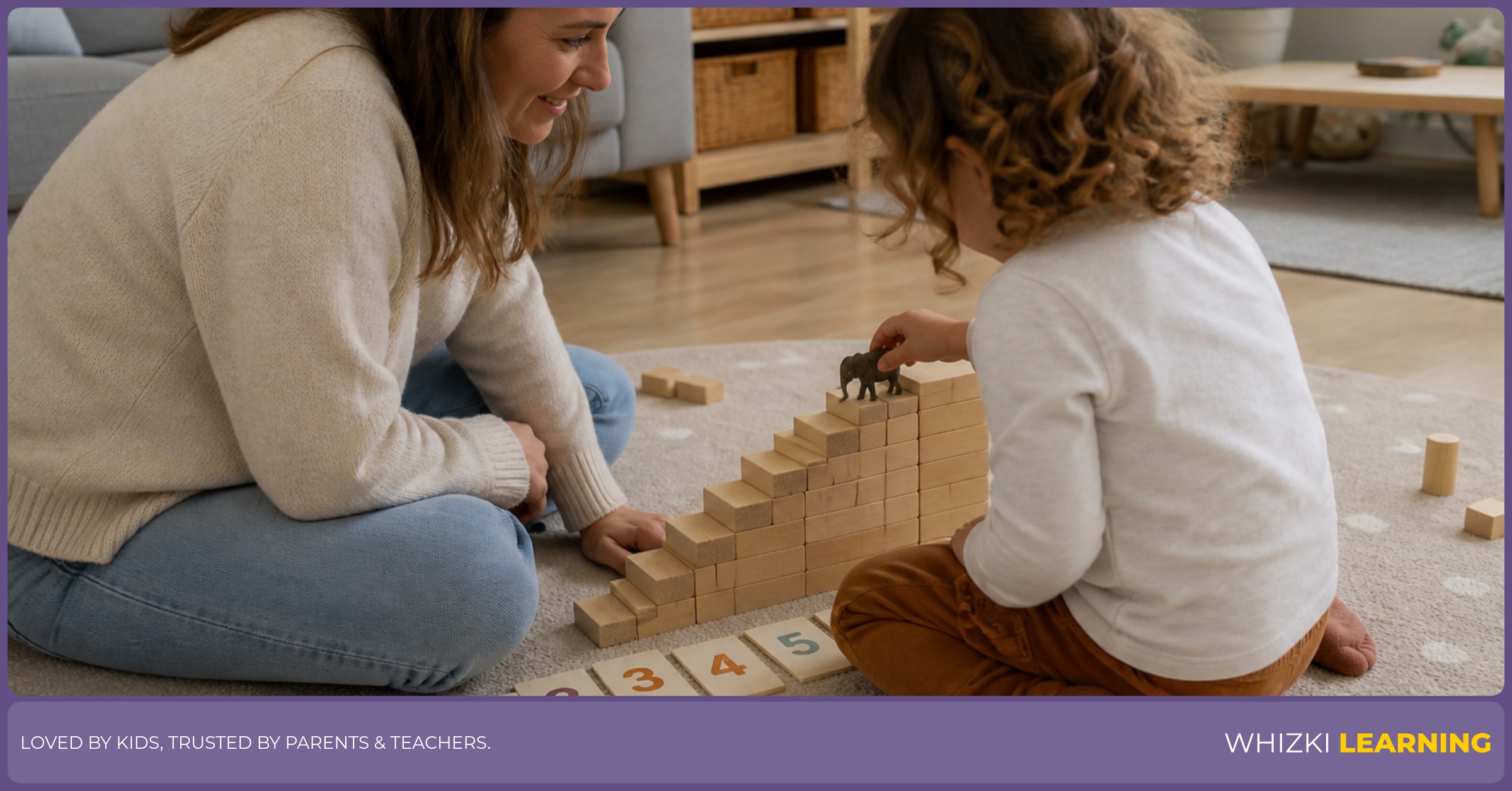
For a quiet follow-up, Whizki Learning has printable number pages in the numbers learning hub that pair well with floor blocks after stair play. A printable can help a child trace or color the number noticed during the routine, but the moving count is still the main lesson.
Age adjustments and honest limits
For ages 3 and 4, the adult can count three steps, stop, and celebrate the match between one number and one stair. NAEYC guidance supports short, playful routines that fit a child’s current attention and motor control. A preschool child may say numbers out of order, and the adult can gently model the next count without turning the moment into a quiz.
For ages 5 to 7, the adult can invite the child to predict the last number before starting, then check the prediction at the top. Speech-language pathology practice often uses wait time after a question, and wait time helps here because the child needs a moment to think about what changed. The adult can ask one follow-up, such as “How do you know?” and then let the answer be enough.
The stair routine is not a test, and the stair routine is not worth a power struggle. Use the block-stair alternative when the child is rushing, avoiding the rail, upset, or seeking big movement. Ask a pediatrician, occupational therapist, or vision professional for guidance when stair use often feels unsafe or unusually hard for the child.
Stair counting works best as a tiny family habit, not a performance. Pick one calm flight, count slowly, ask what changed, and save the next round for another day.