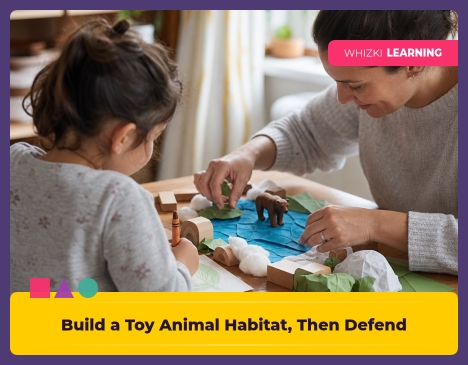
If your preschooler wants the shark to sleep in a tree while an older sibling argues that sharks need oceans, put the argument to work today: build the habitat with five labeled choices, food, water, shelter, space, and climate, then ask your child to defend one choice with a fact or a “pretend” label. The goal is not a perfect zoo display. The goal is a calm, hands-on science talk where young children can move blocks, change minds, and practice saying, “I am not sure yet.”
Reviewed by Whizki Editorial Team, Early Childhood Education Editors.
Set up the habitat lab
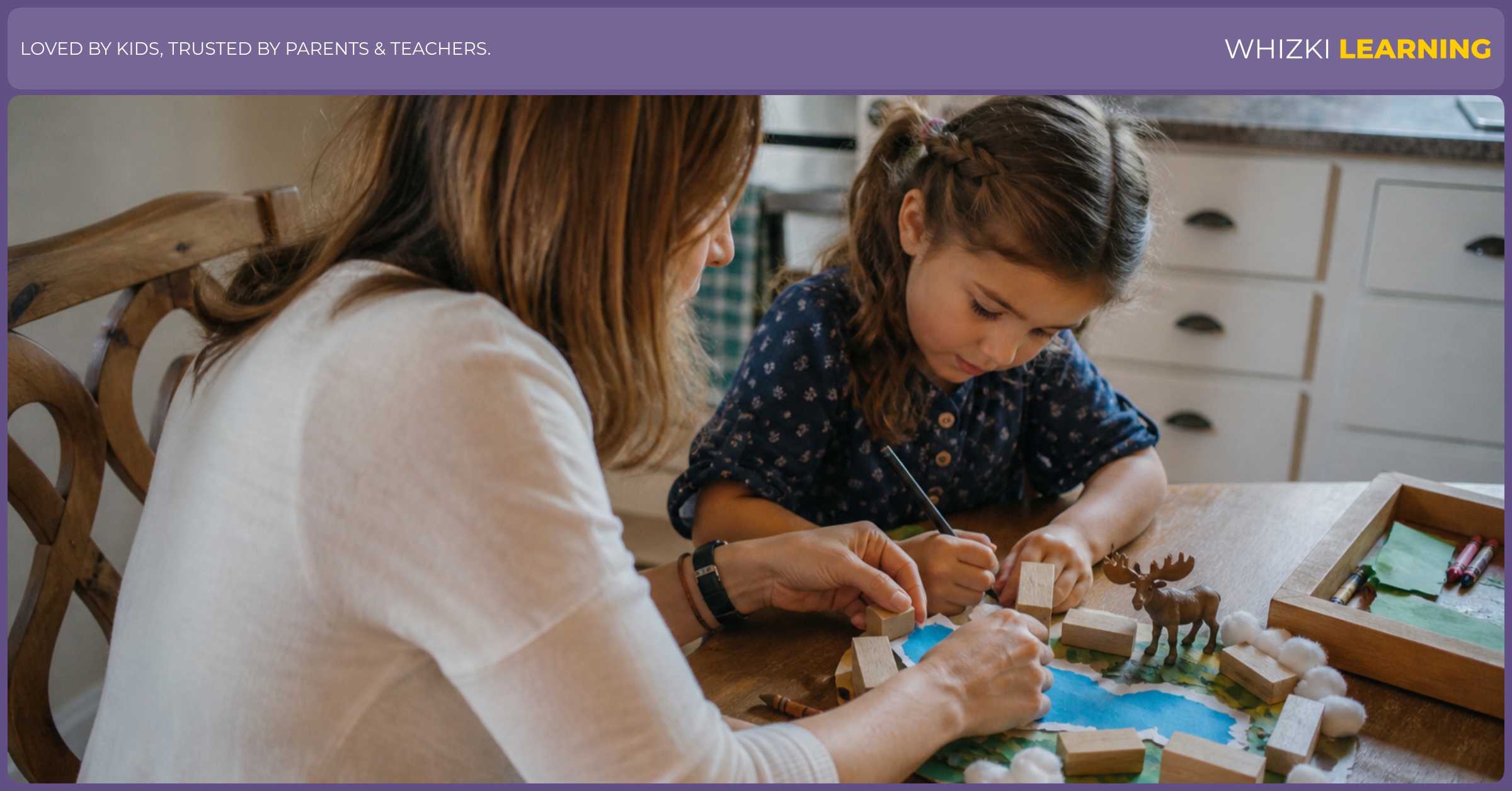
The habitat lab works best on a floor, table, or tray where children can reach every piece without waiting for adult hands. NAEYC guidance reminds early-childhood teachers to start with materials children can touch, move, and talk about, because science for ages 3 to 7 is built through active play. Gather blocks, scrap paper, crayons, blue paper for water, cotton balls for snow, green paper for plants, a few toy animals, and one book or trusted picture source.
The habitat lab needs about 15 to 25 minutes, although a three-year-old may be finished in seven minutes and a seven-year-old may keep revising for half an hour. Place one animal in the center and say, “The animal needs a place to live, so the habitat must answer five questions.” Write the five words on small paper slips if your child enjoys labels, or draw tiny icons if reading is still new. The activity stays friendly when the adult treats the first build as a draft, not a test.
Use a five-choice decision tree
The decision tree gives the child a simple path instead of a lecture about biomes. Occupational-therapy practice often uses “just-right challenge,” which means the task should be hard enough to invite effort and easy enough to avoid a shutdown. For this age band, the adult can ask one choice at a time and let the child build before the adult adds another question.
Food comes first because young children understand hunger before climate words. Ask, “What can the animal eat here,” then offer paper fish, leaves, berries, grass, or pretend meat shapes. A lion can have a hunting space, while a rabbit can have low plants. A child can also say, “Pretend pizza,” as long as the adult marks that answer as play rather than animal science.
Water and shelter come next because both choices are easy to show with paper and blocks. Ask, “Where does the animal drink,” then add a pond, river, ice edge, bowl, or rain. Ask, “Where does the animal rest or hide,” then build a den, tree hollow, nest, cave, burrow, or shaded patch. Shelter conversations are a good place to say that animals avoid danger in different ways.
Space and climate finish the build because both choices require a little more reasoning. Ask, “Does the animal need room to run, swim, climb, fly, or dig,” then adjust the block area. Ask, “Is the place hot, cold, wet, dry, snowy, or shady,” then add paper sun, cotton snow, blue water, or a roof of leaves. The child defends the final build by pointing to one feature and giving a reason.
A simple habitat mat from the printable library can give children a place to sort food, water, shelter, space, and climate without turning the activity into a worksheet day. Print one page if a blank table feels too open, then let blocks and paper do the real thinking work.
Keep pretend play and facts in separate lanes
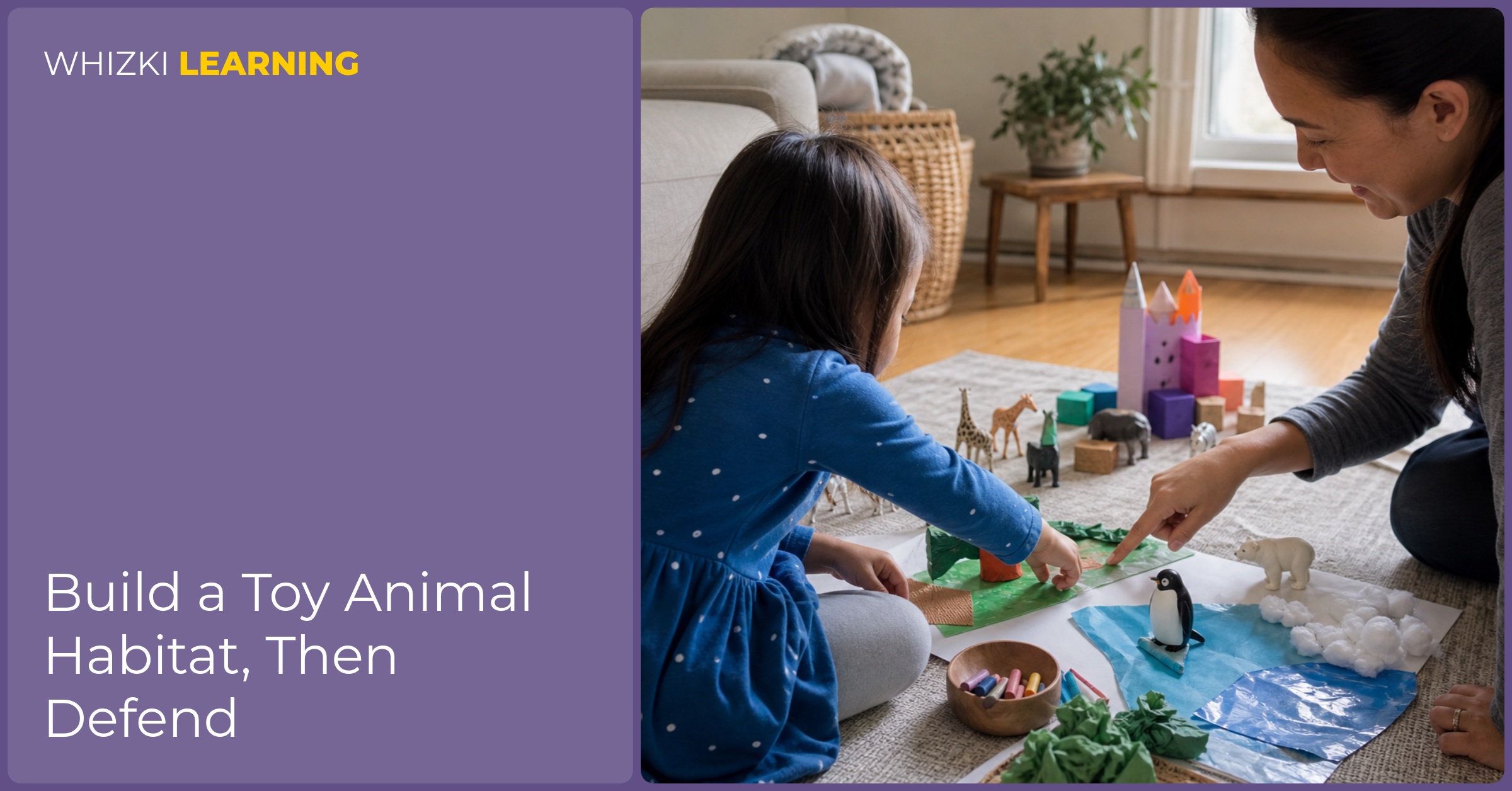
The pretend lane matters because imaginative play is how many young children stay engaged long enough to learn a fact. Reggio-inspired teaching treats a child’s idea as a starting point for conversation, not as a wrong answer to erase. Say, “The penguin castle can stay in the pretend part, and the icy water belongs in the fact part.”
The fact lane matters because children deserve clear language about the real world. Use two paper signs, “pretend” and “fact,” or draw a star for pretend and a magnifying glass for fact. When a child adds a blanket fort for a camel, the adult can say, “The fort is a fun story choice, and the desert shade is a science choice.”
The habitat conversation also pairs well with cultural and place-based learning, because children often mix animals, homes, foods, and clothing from many stories. I use the same gentle sorting tone from the previous world lab guide: real people and real animals deserve careful facts, while pretend play gets named kindly. The distinction helps children enjoy imagination without turning guesses into claims.
Check one uncertain claim together
The uncertain claim is the best teaching moment in the whole build. Orton-Gillingham lessons often pair seeing, saying, touching, and moving, and the same multisensory pattern helps early science vocabulary stick. Point to the feature, say the claim aloud, touch the animal, then check one source together.
The adult can choose one question small enough for a young child to hold in mind. Try, “Do frogs need dry sand,” “Do polar bears eat leaves,” or “Can a giraffe live inside a tiny cave.” A picture book, zoo education page, children’s encyclopedia, or the learning hub can support the search when the adult wants an age-fit next step.
The check should end with one sentence the child can repeat while pointing to the habitat. Speech-language practice often builds stronger explanations by giving children a sentence frame, so offer, “I changed the habitat because I learned...” or “I kept the pretend part because...” The sentence frame turns a correction into a choice the child can own.
Age adjustments and real limits
The age adjustment for three-year-olds is fewer choices and bigger materials. Montessori practice values real objects and orderly work spaces, so set out one animal, one food choice, one water piece, and one shelter option. A toddler-style preschooler can still hear the words “animal home” and “safe place” without needing to master the word habitat.
The age adjustment for four- and five-year-olds is a simple defense after each build. Ask, “Show me the water,” and “Tell me why the animal can hide there.” If fine-motor work is tiring, an occupational-therapy basic is to reduce the drawing demand by offering torn paper, chunky crayons, stickers, or pre-cut shapes.
The age adjustment for six- and seven-year-olds is one revision after checking a source. Ask the child to rebuild one feature after learning a new fact, then keep one pretend feature clearly labeled for story play. The honest limit is that a toy habitat will not cover animal behavior, conservation, or every ecosystem, and the simple build is still a strong start for observing, asking, and revising.
The animal habitat plan turns a small family argument into a science routine children can repeat with any toy animal. Food, water, shelter, space, and climate give the build enough structure, while the pretend and fact lanes protect the joy of play. If the next claim sounds questionable, check only one claim together and leave the rest for tomorrow.