You may be staring at a school “culture day” note and wondering whether your child needs a costume, a dish, or a family story you are not ready to share; today, choose one small story prompt instead: “What is something our family says, sings, does, celebrates, or visits that you would like a teacher to know?” The family answer can be a name, a lullaby hum, a breakfast routine, a bus ride, a prayer, a park, or a weekend call. The adult job is to offer choice, because young children learn belonging better from safe, specific stories than from a performance.
Reviewed by Whizki Editorial Team, Early Childhood Education Editors.
Start with choice, not a stage
The NAEYC guidance on family engagement asks teachers to build respectful two-way relationships, and family culture work starts there. A child ages 3-7 should never have to stand in front of a group as the expert on a whole country, religion, or language community. A better invitation says, “Your family may share one small thing, or your family may pass.”
The Reggio Emilia tradition treats children as capable meaning-makers, and the teacher's role is to listen closely before planning display boards. A family story table can hold blank paper, crayons, a small basket, and sticky notes for names, sounds, routines, celebrations, and places. The table works best when the teacher values a child's drawing of Grandma's apartment as much as a festival photo.
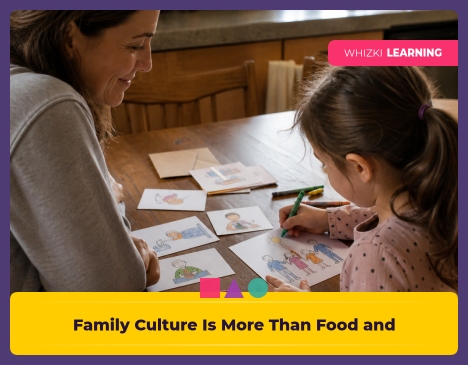
At home, the same choice can take five minutes at the kitchen table. A caregiver can say, “Pick one: a word we say, a song we know, a place we go, or a thing we do.” A preschooler may point or draw, while a kindergartner may add a label with adult help.
Use a five-minute story prompt
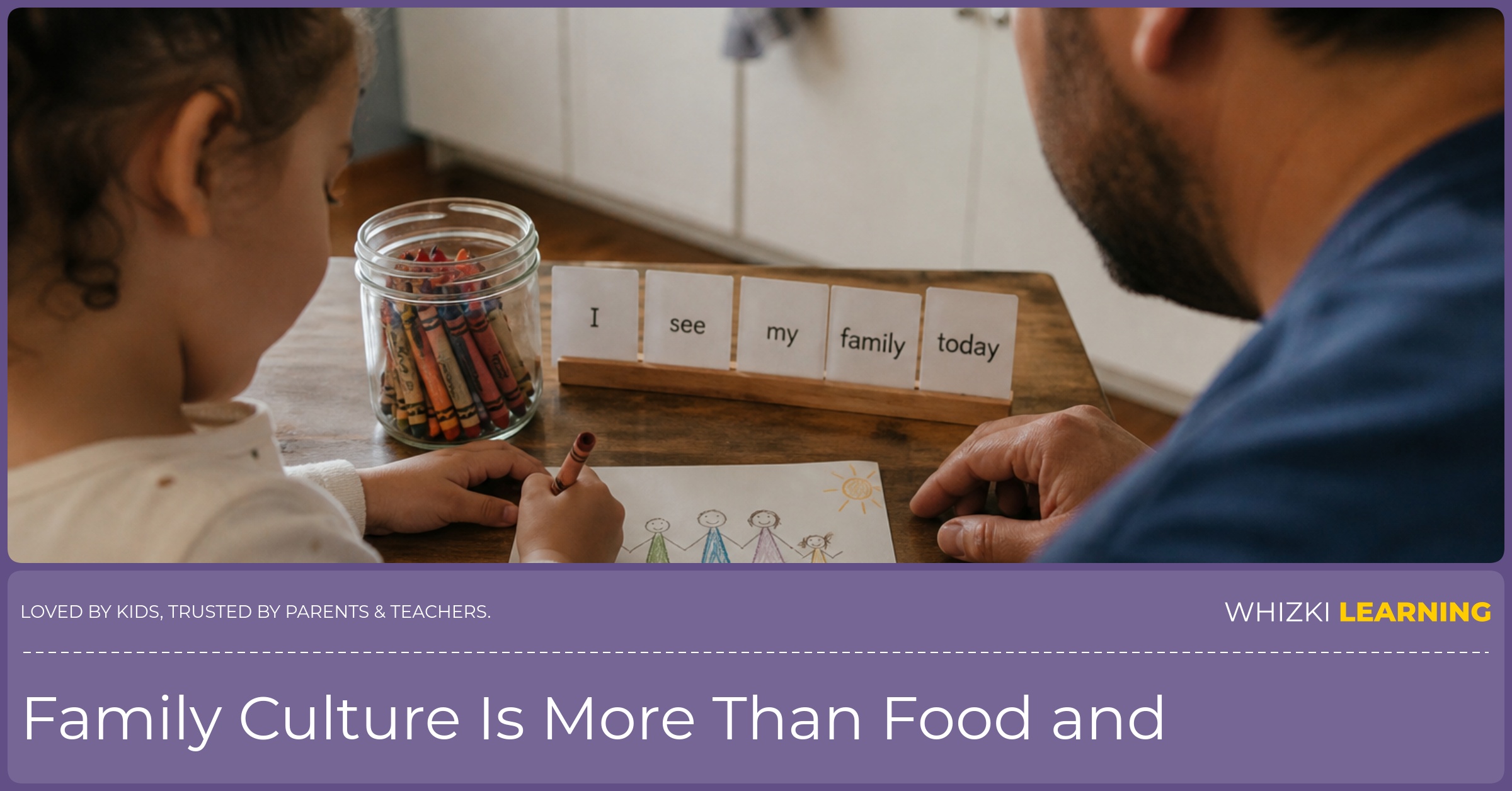
The five-minute story prompt borrows from Orton-Gillingham practice in one useful way: move from sound to meaning to a small mark on paper. The adult says the family word slowly, claps the syllables, tells the meaning if the meaning is shareable, and invites the child to draw beside the word. The prompt respects multilingual families because the adult can write the word in any script, write a pronunciation clue, or leave the word as an oral memory at home.
Materials stay simple: one index card, a pencil, crayons, and a small envelope labeled for the teacher. A three-year-old can make a color mark while the adult writes the chosen word or routine. A six- or seven-year-old can add a first letter, a name label, or a tiny map corner.
The story prompt is intentionally narrow because broad prompts make children perform. “Tell about your culture” is too large for a small child and too personal for many adults. “Tell about one sound, one name, one song, one routine, one celebration, or one place” gives the child a door, not a spotlight.
For a low-prep paper option, the holiday and culture printables can hold a drawing, a family word, or a simple map note. The printable works best when the adult treats the page as an invitation, not proof that a child knows enough about a culture.
Decision tree for teachers and parents
The occupational therapy rule of thumb I use in classrooms is to lower the motor and sensory load before asking for language. If a child freezes at a blank page, offer two crayons, a sticker dot, or a real object from home to touch while the adult writes. If a child talks nonstop, give the child a small card and ask for one drawing first, because hands-on focus can settle the story.
The Montessori influence here is practical: prepare the environment so the choice is visible and calm. If the family wants privacy, the child can share only “a place we go” or “a routine we do” without naming a religion, immigration story, or family arrangement. If the family wants to share more, the adult can add a note for pronunciation, preferred name order, or a celebration date.
The decision tree for a teacher is simple enough to use during arrival. If the family sends nothing, greet the child normally and keep the invitation open. If the family sends a story, ask permission before reading the card aloud, and let the child decide whether the card stays private, joins a class basket, or goes home.
Families who like ready-made choices can browse the Learning Hub for simple paper formats, but a blank card is enough for the decision tree. The useful part is consent, not decoration. The teacher or caregiver keeps the story small, child-led, and easy to decline.
Make room for language, names, music, and place
Speech-language pathology practice reminds adults to honor the words a family actually uses, including home-language words, nicknames, and pronunciations. A teacher can ask, “How would your family like this name said?” and then practice the name quietly before saying the name in a group. A caregiver can model the same respect by telling a child, “Names can carry family history, and people get to teach others how to say names.”
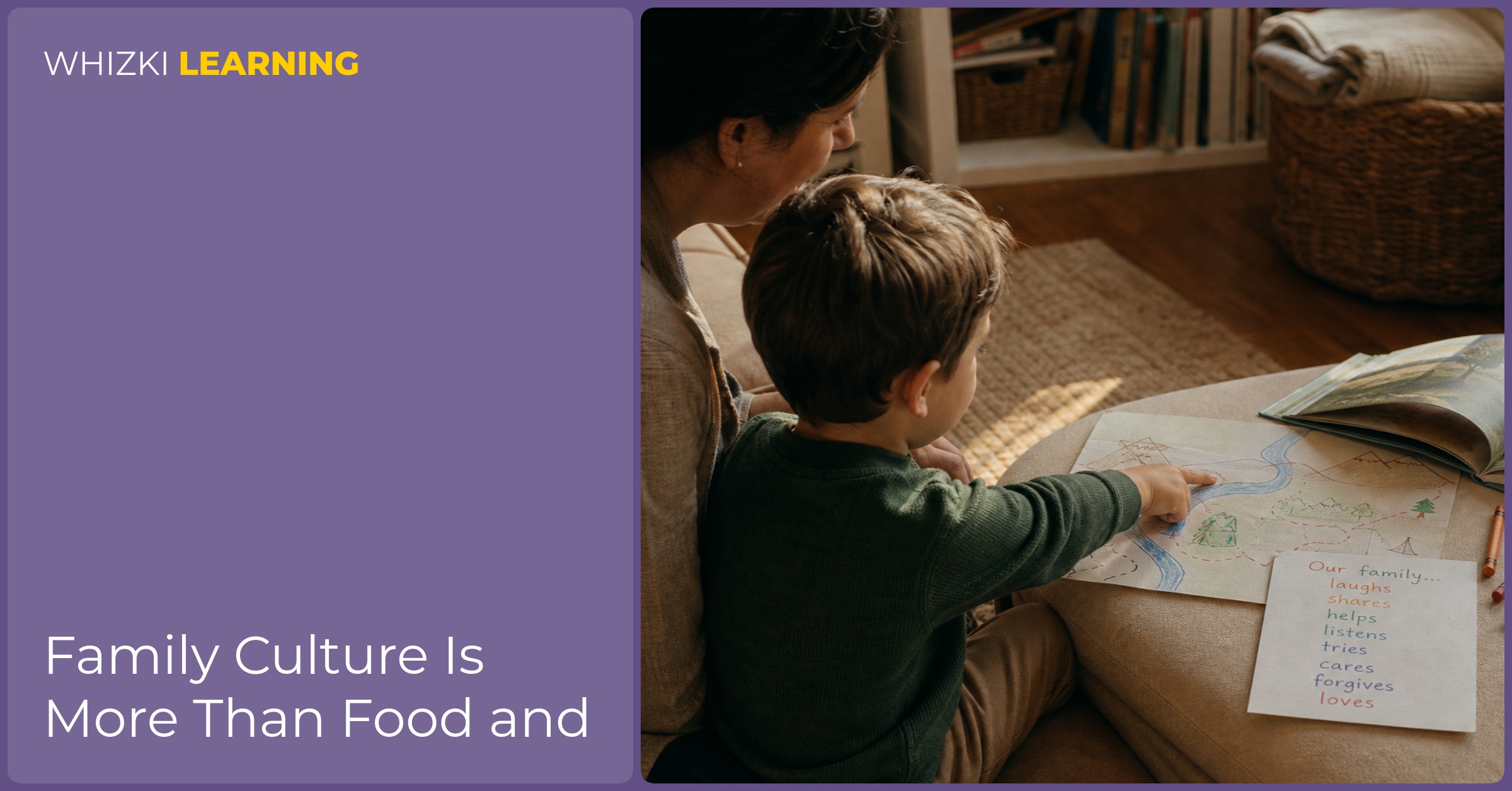
Music and routine stories work well for children who are not ready to talk about identity labels. A child can tap a table beat from a bedtime song, draw the bowl used for Saturday soup, or mark the route to an auntie's building. The previous world lab guide, the previous world lab guide, pairs nicely with place stories because a simple map lets children show movement without needing a big speech.
NAEYC's anti-bias guidance also asks adults to avoid tourist activities that flatten people into costumes, flags, and foods. Food can be part of family culture, but food should not become the only doorway. A lunchbox, a bedtime phrase, a bus stop, a hairstyle routine, or a holiday absence can all carry real meaning.
What to skip and what to save
A classroom display should skip any request that asks a child to represent a nation, explain a religion, or wear clothing for other people's viewing. Reggio-inspired documentation works better when documentation records a child's thinking in context, such as a drawing caption, a dictated sentence, or a photo of hands arranging map pieces. The adult can write, “Maya chose to show the walk to Pop's garden,” instead of turning the child into a spokesperson.
A family culture invitation should also skip pressure around money and time. No parent needs to buy fabric, cook for twenty children, print photos, or translate a personal history on short notice. A strong invitation accepts a sticky note, a voice-to-adult dictation, a child's scribble, or a quiet pass.
An honest limit matters: some families have adoption stories, custody concerns, grief, displacement, language loss, or safety reasons for sharing less. The teacher can protect trust by saying, “Share only what feels comfortable for school.” The parent can protect the child by practicing a simple line, such as “Our family is sharing a song today, and the rest is private.”
Family culture teaching for ages 3-7 becomes stronger when the invitation is small, specific, and optional. The child learns that names, words, music, routines, celebrations, and places are worth noticing without being turned into a show.
Try the prompt today with one card and five quiet minutes. The best share may be a single word, a crooked map, a hummed tune, or the brave choice to pass.