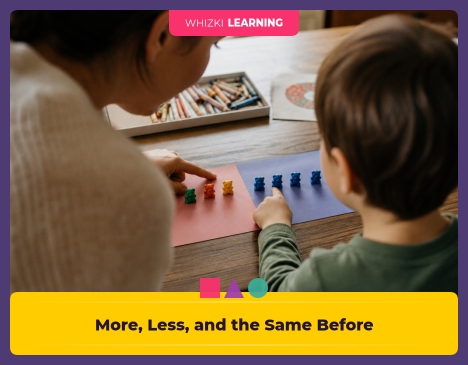
When one cookie plate has three and the other has four, the argument can feel bigger than the snack; today, set out two tiny collections and let your child match object to object before anyone says a symbol. The goal is not a perfect math lesson at the table, the goal is a calm comparison your child can see, touch, and say out loud.
Reviewed by Dr. Anna Klein, EdD, Early Childhood Curriculum Specialist.
Start with two real collections
Small collections make comparison visible for children ages 3 to 7. NAEYC guidance favors early math that grows from real materials, play, and conversation, so five buttons on a napkin teach more than a lonely symbol on a page.
The starter setup takes about 5 minutes and needs two bowls, two small mats, and objects that do not roll away too fast. Snack crackers, toy animals, pompoms, jar lids, or blocks all work, as long as the objects can be moved one at a time.
Three-year-olds usually need sets of one to three objects, and many kindergarten children can handle sets of six to ten. The adult job is to keep the numbers small enough that the child can focus on the relationship, not on managing a pile that keeps sliding around.
Use matching before counting wins
Matching objects is the main act because one-to-one correspondence shows the relationship without a lecture. A Reggio or Montessori teacher would watch the hands first, because the way a child pairs bear to bear or cracker to cracker tells more than a fast answer.
The adult can place three blue blocks in a row and four red blocks below, then ask the child to give each blue block a red partner. The leftover red block becomes the proof: the red collection has more, the blue collection has fewer, and the paired part is the same.
Occupational-therapy basics remind adults to notice the body demand inside the math task. If tiny counters frustrate a child, larger blocks or snack pieces may let the child use the same math thinking with less finger work.
Choose spoken language before signs
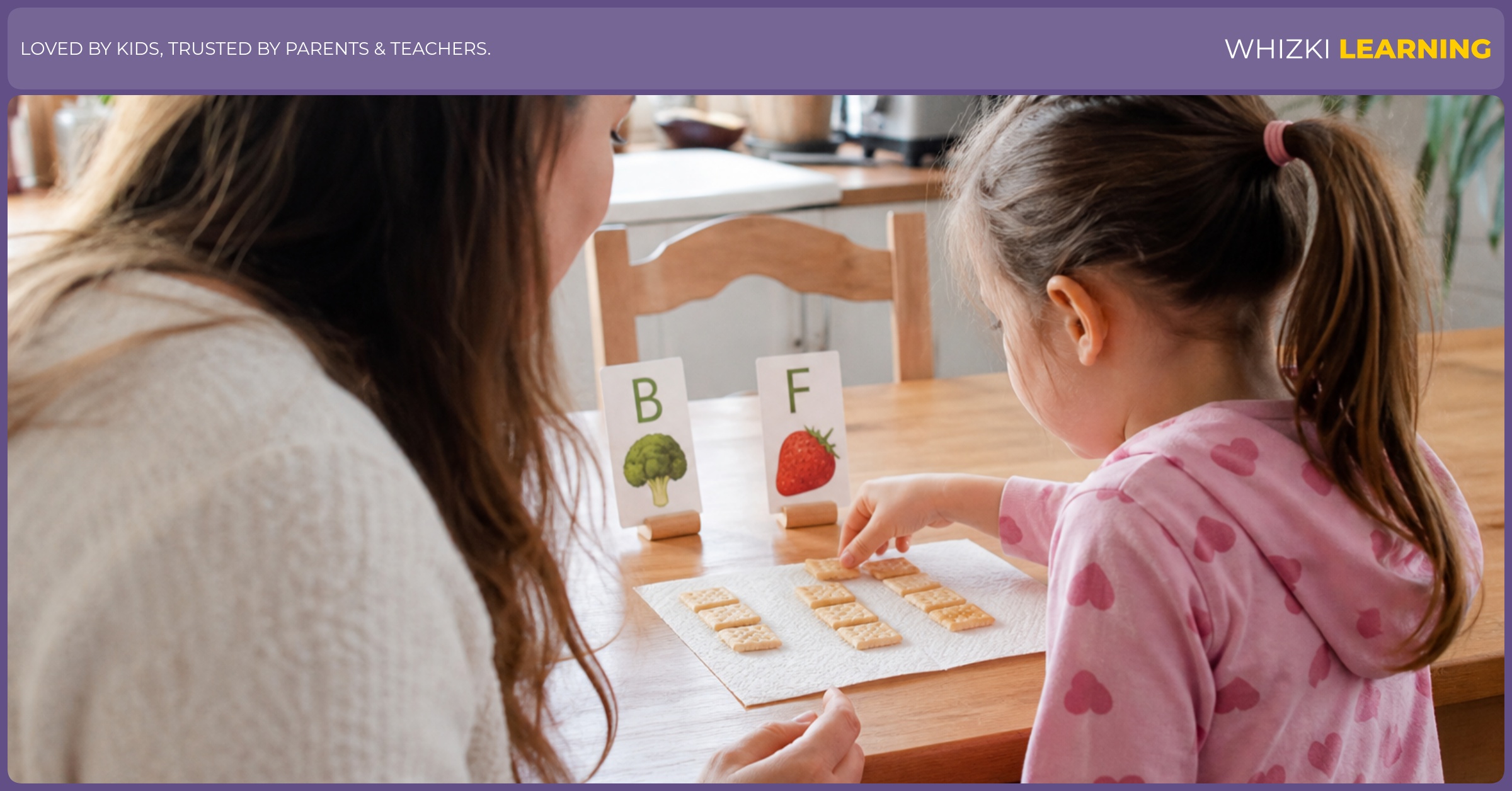
Spoken comparison words give the child a bridge from touching to thinking. Speech-language pathology practice often builds understanding by pairing a word with a visible action, so the words more, fewer, and same amount should come while the child is still moving the objects.
The Orton-Gillingham approach in literacy uses a similar path: hear the word, say the word, touch the material, and then connect the idea to a mark. Early math can borrow that careful sequence so a symbol does not arrive before the child has a felt meaning.
The numbers learning hub can support that slower path when your child is ready for numeral talk, especially after hands-on comparing has become familiar. Pair number naming with real sets from the numbers learning hub, and keep the comparison language in the foreground.
The previous math at home guide used shape hunts to help children notice attributes before naming rules. The same idea applies here: the previous math at home guide shows how observation comes before labels, and amount comparison deserves that same patience.
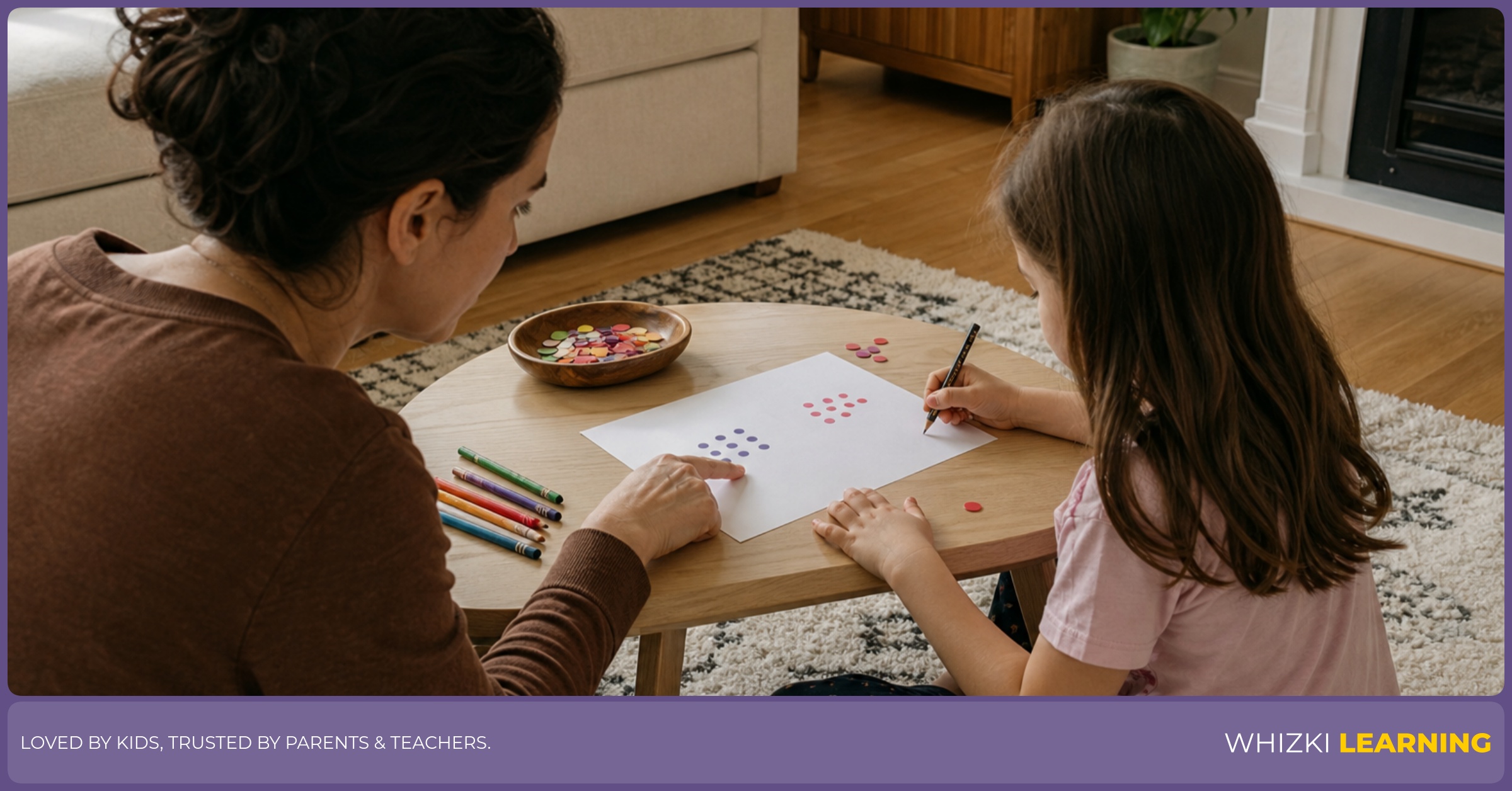
If drawing dots is one more job at the end of a long day, a simple compare-and-match page can hold the space for you. The pages in the Whizki printable library work best when children still use counters, crayons, or snack pieces on top of the paper instead of treating the page as the whole lesson.
A simple decision tree for today
A decision tree keeps the adult from rushing into correction. Montessori practice often protects a child’s concentration by changing the material before changing the child, so the first fix is usually fewer objects, clearer spacing, or slower pairing.
The adult can use the next steps during snack, cleanup, or a homeschool table activity. The decision tree takes about 8 to 12 minutes, and the routine can stop earlier if the child has already shown the comparison through action.
- Unequal: align pairs, name extras.
- Equal: tap mates, say same.
- Mixed: reduce piles, begin again.
- Ready: draw dots, compare aloud.
The decision tree is not a test, and a wrong answer is useful information. If the child counts both rows correctly but still says the longer-looking row has more, the next lesson should use matching again rather than a symbol.
Why the alligator shortcut waits
The alligator shortcut often asks a child to remember that the open mouth eats the bigger number. The trouble is that the alligator can hide the relationship, because the child may focus on the animal story instead of noticing which collection has an extra object.
The greater-than sign also carries direction, and direction is a separate load for young children. Orton-Gillingham teaching reminds educators to separate similar-looking symbols, directionality, and meaning, because mixing all three at once can turn real understanding into guessing.
The alligator idea can be playful later, especially for a child who already compares amounts easily with objects and drawings. The honest limit is simple: if the child cannot prove more, fewer, or same by matching collections, the symbols > and < should wait.
Amount comparison grows best when children can build, match, touch, and talk before adults add signs. A child who says, these have the same amount, while pointing to matched pairs is already doing the important math.
The next useful step is small and repeatable: compare two snack groups, two toy groups, or two crayon groups today, then stop while the child still feels successful. Written signs can come after the relationship is steady in the child’s hands and words.