
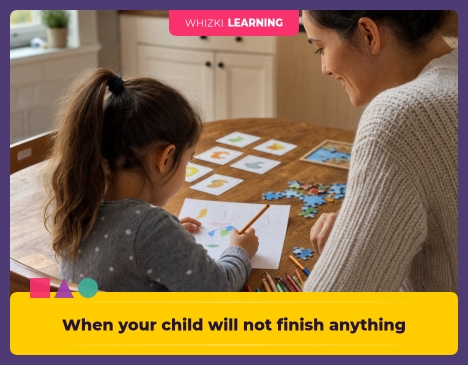
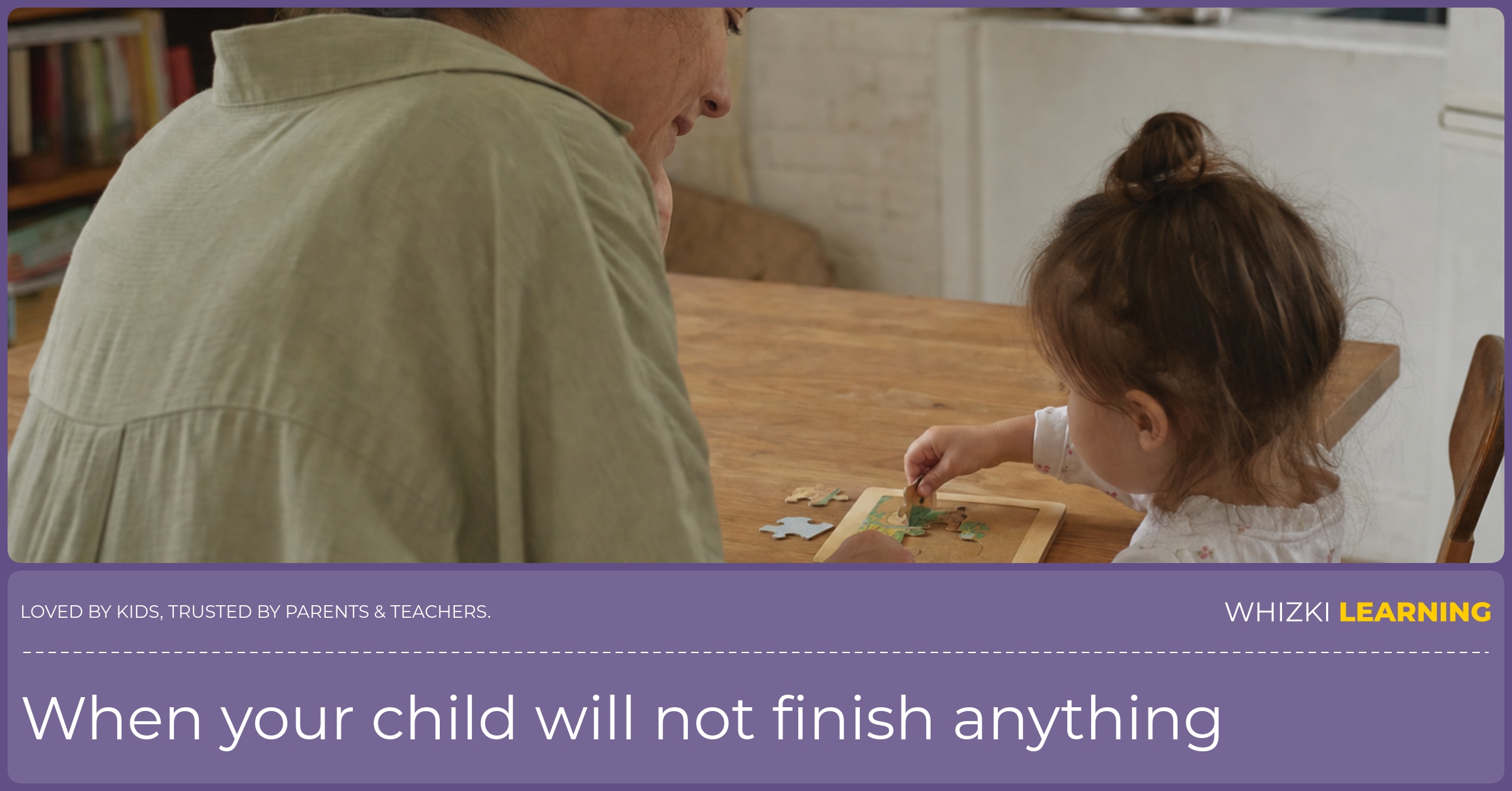
When your 5-year-old starts a puzzle, abandons the crayons, and wanders away from cleanup, the mess can feel like proof that no lesson is landing. Try naming one tiny finish line before the next start, such as “Put three blue pieces in, then we are done.” At ages 4 to 6, stopping early is often executive-function practice in progress, not laziness or a character problem.
Reviewed by Whizki Editorial Team, Early Childhood Education Editors.
Why stopping early is normal at ages 4 to 6
Task finishing is an executive-function skill, and executive function is still under construction in preschool and kindergarten. NAEYC guidance reminds educators to match expectations to a child's developmental stage, not to an adult wish for neat follow-through. A child can be bright, curious, and loving while still needing practice with finishing.
A preschooler may understand the direction and still lose the thread halfway through the activity. Working memory, impulse control, time sense, and body stamina are all part of completing a puzzle, a drawing, or a cleanup job. The task can fall apart when any one of those skills runs out before the adult expected.
A helpful check is the span, not the dream plan. If a planned activity is longer than realistic attention spans for a young child, the adult may be asking for endurance rather than learning. Shorter work periods often show more true ability than a long session filled with reminders.
The finish line may be too far away
Many abandoned tasks are really finish-line-too-far problems. A whole coloring page, a bin of mixed blocks, or a twenty-piece puzzle can look endless to a 4-year-old. The child may leave because the child cannot see where “done” lives.
Occupational-therapy basics teach adults to notice the physical load of a task. Small hands tire during coloring, sitting upright takes effort, and a noisy room can drain attention before the last step arrives. The child's behavior may be saying, “The job is bigger than my body can manage right now.”
Reggio-inspired observation helps the adult watch the exit moment without blame. The adult can notice whether the child leaves when the page looks crowded, when the pencil grip slips, or when another toy calls from across the room. The exit moment gives clues for making the next finish line closer.
Shrink the task until your child can win
A smaller task is not lowering the bar. A smaller task gives the child a real ending, and a real ending builds the memory of success. The adult can always add one more tiny step after the child experiences a clean finish.
In Orton-Gillingham lessons, strong teaching often uses one clear sound pattern, one small response, and immediate feedback. Home practice can borrow that rhythm by asking the child to circle two letter-sound pictures, trace one name, or sort three rhyming cards. The win comes from accuracy and completion, not from filling every box on the page.
Montessori practice also protects completion by limiting the material on the tray. Place six blocks instead of the whole bin, three crayons instead of the full jar, or one matching mat instead of a stack. The smaller setup tells the child, “Here is the work, and here is the end.”
Families working toward the 15-minute focus habit can begin with two to five minutes of finishable work. A young child who completes a tiny job is practicing the same follow-through muscle needed for a longer focus routine. The small win is the bridge, not the ceiling.
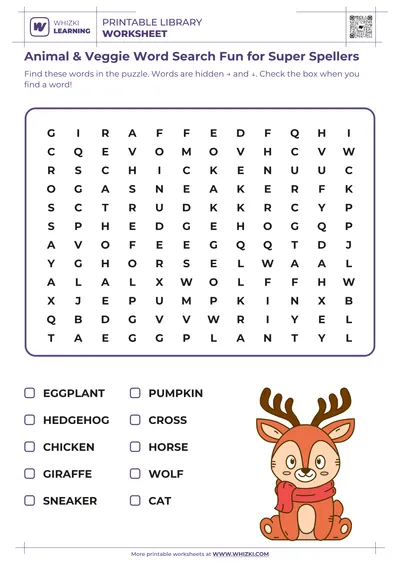
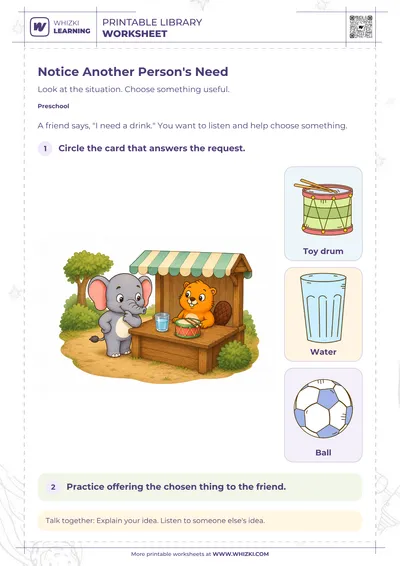
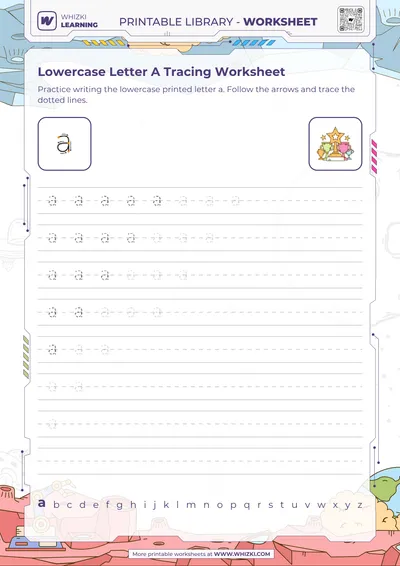
A short printable can make the finish line visible without adding prep. Choose one half-page from our printable library, fold or cover the extra boxes, and call the page finished when the promised part is done.
Use the two-more-minutes script
The two-more-minutes script gives a child warning, choice, and a nearby ending. The script works best when the adult says the words before frustration takes over. A calm script can sound firm without turning the moment into a battle.
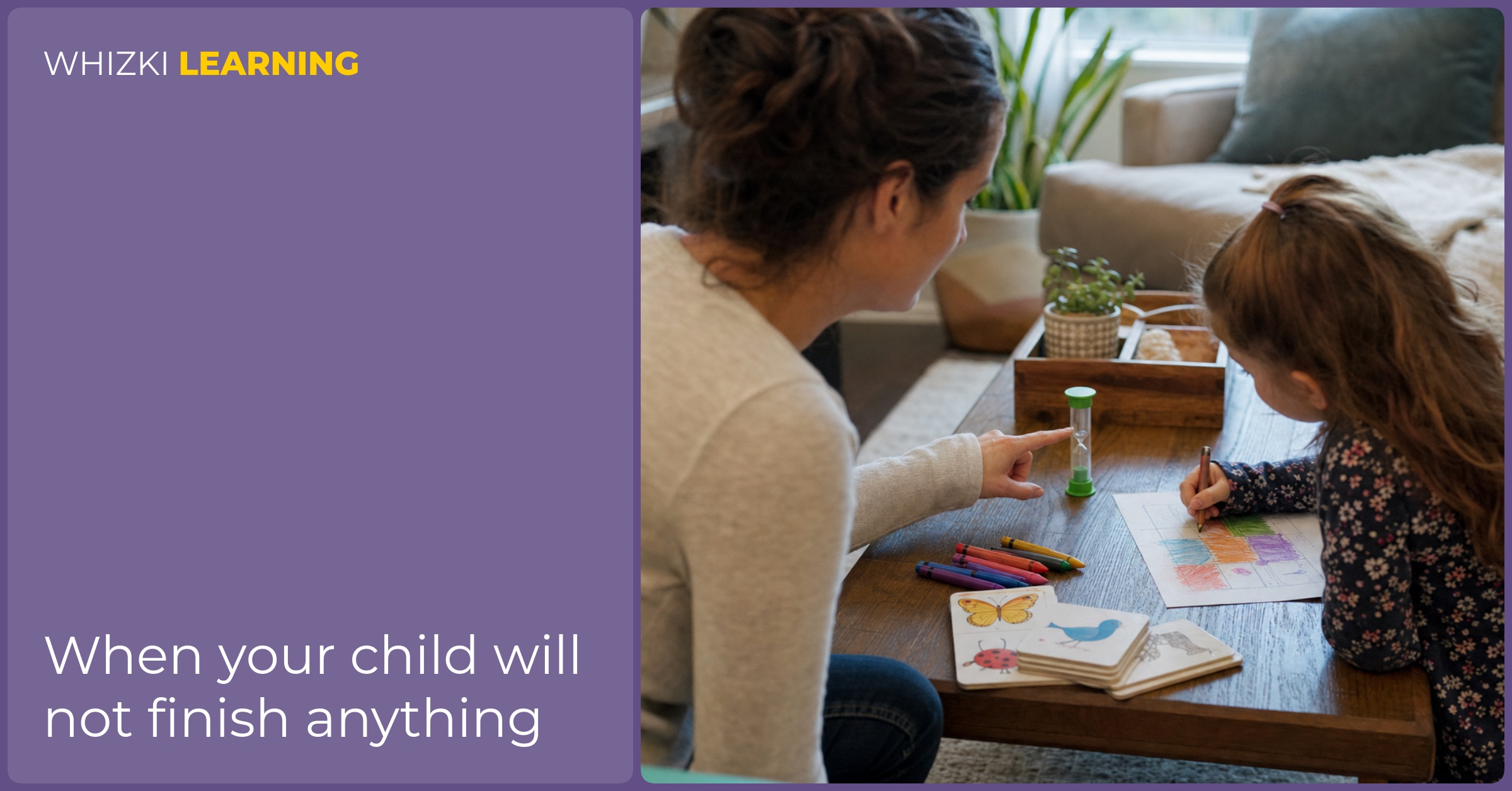
Say, “Two more minutes, then we stop. Pick one thing to finish, the tower top, the last blue mark, or three blocks in the basket.” A picture timer or sand timer can make the ending visible for children who do not yet feel time passing.
Speech-language pathology practice often favors short, concrete language over a long explanation during hard moments. The child can echo “one thing to finish” while choosing the final action. The repeated phrase becomes a cue the child can use later during play, art, or cleanup.
Build routines that make finishing easier
A routine gives the child fewer decisions to manage. NAEYC-aligned classrooms often use predictable beginnings and endings because young children feel safer when the pattern is known. The same idea works at the kitchen table or on the living-room rug.
A start basket and a done tray can reduce wandering. The start basket holds only the small task for that moment, and the done tray receives the finished piece with a little ceremony. The visual move from basket to tray tells the child that follow-through has a clear shape.
The kindergarten teacher, homeschool parent, or caregiver can narrate effort in plain words. Say, “You put the last card in the tray,” or “You finished the three blocks we chose.” Specific language helps the child connect the action with the feeling of being done.
When task abandonment needs a closer look
Most unfinished work at 4 to 6 is typical, especially when the day includes hunger, tiredness, big transitions, or too much noise. NAEYC guidance encourages adults to look at the whole child and the whole day before labeling a behavior. A child who quits after school may simply be out of fuel.
A closer look is wise when task abandonment appears across play, meals, dressing, stories, and peer activities every day. Skill loss, strong distress around any demand, very weak hand use, or difficulty understanding simple directions can also deserve support. The goal of support is practical help, not a scary label.
The pediatrician, occupational therapist, speech-language pathologist, or early-childhood special educator can help sort attention, language, motor, and sensory needs. A good professional will ask what the child can finish, what settings help, and what changes have already been tried. That kind of conversation gives the family a clearer next step.
Children learn to finish by finishing small, real things with an adult nearby. If your kitchen table needs steadier little wins, come join our weekly newsletter for gentle practice ideas.