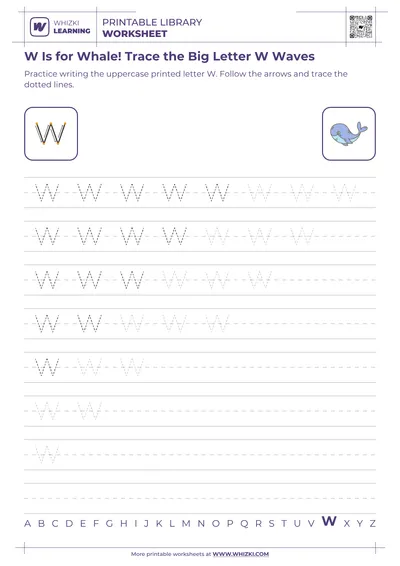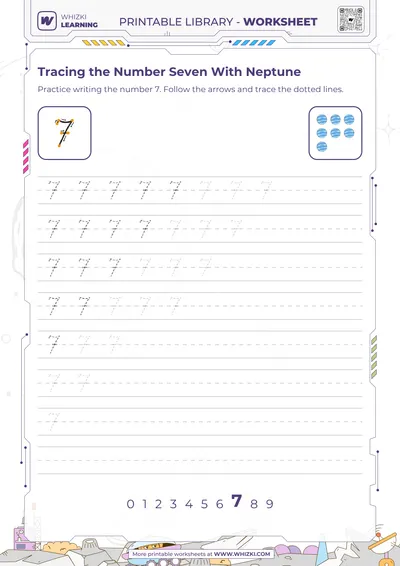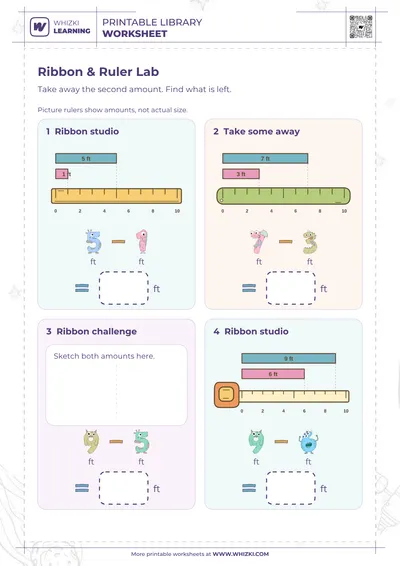

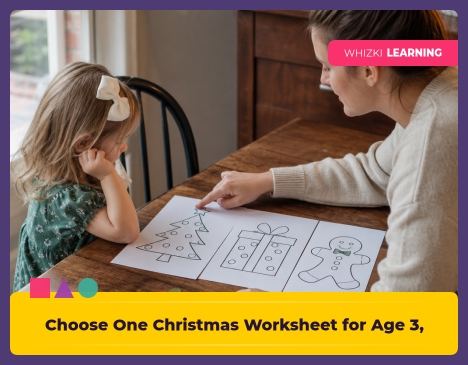
If the printer is open, the crayons are rolling off the table, and a child is losing patience before the Christmas worksheet even starts, choose the page by response mode first: age 3 points or marks, age 5 counts and connects, and age 7 reads a short direction and records an answer. Today, set out one page, two crayons, and a few counters, then stop after 10 minutes even if blank spaces remain. The goal is a calm bit of practice, not a finished page for the fridge.
Reviewed by Dr. Anna Klein, EdD, Early Childhood Curriculum Specialist.
Why one page is enough
The worksheet is most useful when the worksheet behaves like a small invitation, not a long assignment. NAEYC guidance on developmentally appropriate practice reminds teachers and parents to match the activity to the child in front of us, including attention span, motor control, language load, and interest.
The Christmas worksheet choice starts with the response mode. A page that asks a 3-year-old to circle ten tiny pictures with a skinny pencil is usually asking for more hand control than the child has today, while a 7-year-old may enjoy the same theme when the page includes a short written direction and a clear place to answer.
The worksheet density matters as much as the holiday theme. In my preschool and kindergarten work, I look for how many separate responses the page requires before the child gets a natural pause, because too many tiny boxes can turn a sweet seasonal moment into negotiation.
Age 3: choose big marks and simple choices
A Christmas worksheet for age 3 should ask for large, obvious responses. Occupational-therapy basics point us toward big arm movement, short crayon strokes, sticker placement, pointing, matching, or covering a picture with a counter before expecting careful pencil lines.
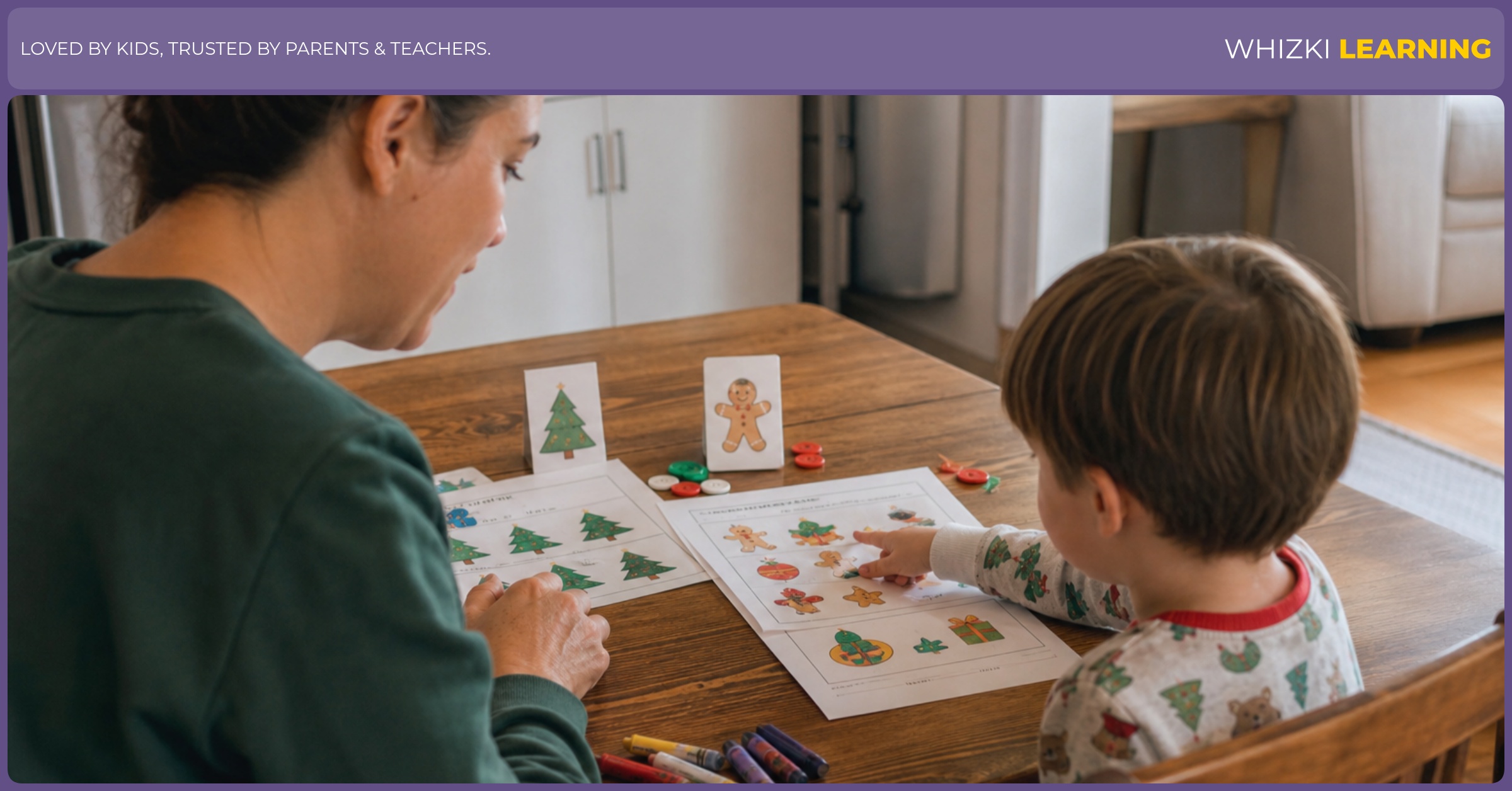
The useful response mode for age 3 is “show me” before “write for me.” The child might point to the bigger tree, put a button on each ornament, make one fat crayon mark on every star, or choose between two pictures while an adult names the vocabulary.
The task density for age 3 is usually three to five responses. A page with five stockings to cover can be plenty, and a page with twelve tiny tracing paths can wait for another day or become an adult-guided pointing game instead.
Age 5: choose counting, matching, and connecting
A Christmas worksheet for age 5 can hold a little more structure when the page still gives the hands something clear to do. Montessori math practice and Reggio-style observation both remind me to watch the child’s strategy, because counting ornaments with a finger tells more than a silent filled-in box.
The useful response mode for age 5 is count, draw a short line, color a matching amount, or trace a familiar numeral after touching real objects. If a family is browsing the Whizki printable library, the better choice is the page with fewer boxes and clearer spacing, not the page with the fanciest border.
The task density for age 5 is usually six to ten responses. A page might ask the child to count six bells, connect five pairs, or color the group with four candy canes, and the adult can cross out extra rows before the child begins.
Age 7: choose short directions and a written answer
A Christmas worksheet for age 7 can ask for reading, thinking, and recording, but the page still needs breathing room. The Orton-Gillingham approach teaches me to break language into small, explicit chunks, and that same habit helps when a worksheet direction has several steps.
The useful response mode for age 7 is read a short direction, solve one small task, and write a numeral, word, or check mark. A good page might say, “Count the stars and write the number,” while a crowded page with three directions in one line may need an adult to cover part of the page with scrap paper.
The task density for age 7 is usually ten to fourteen responses when the work is familiar. If the Christmas worksheet includes new vocabulary, tiny print, or a lot of visual detail, the worksheet density should drop because reading the page is already part of the work.
A quick decision tree for choosing the page
The decision tree begins with the child’s hands. If the child is tired, wiggly, or gripping the crayon with the whole fist, an occupational-therapy heuristic would steer the adult toward big marks, counters, stickers, or pointing instead of neat tracing.
The decision tree continues with the child’s language load. Speech-language pathology practice often reduces extra talking during a new task, so a page with one simple direction is kinder than a page that needs a long adult explanation before the first mark.
The decision tree ends with the child’s counting or reading independence. If the child can touch and count objects one by one, choose a count-and-record page, and if the child can read a short sentence with support, choose a page with a small written direction and a clear answer space.
If a seasonal printable would save decision time, Whizki Learning keeps choices grouped in holiday and culture printables. Pick one page that fits the response mode for today, then leave the rest for another morning.
The 10-minute use plan
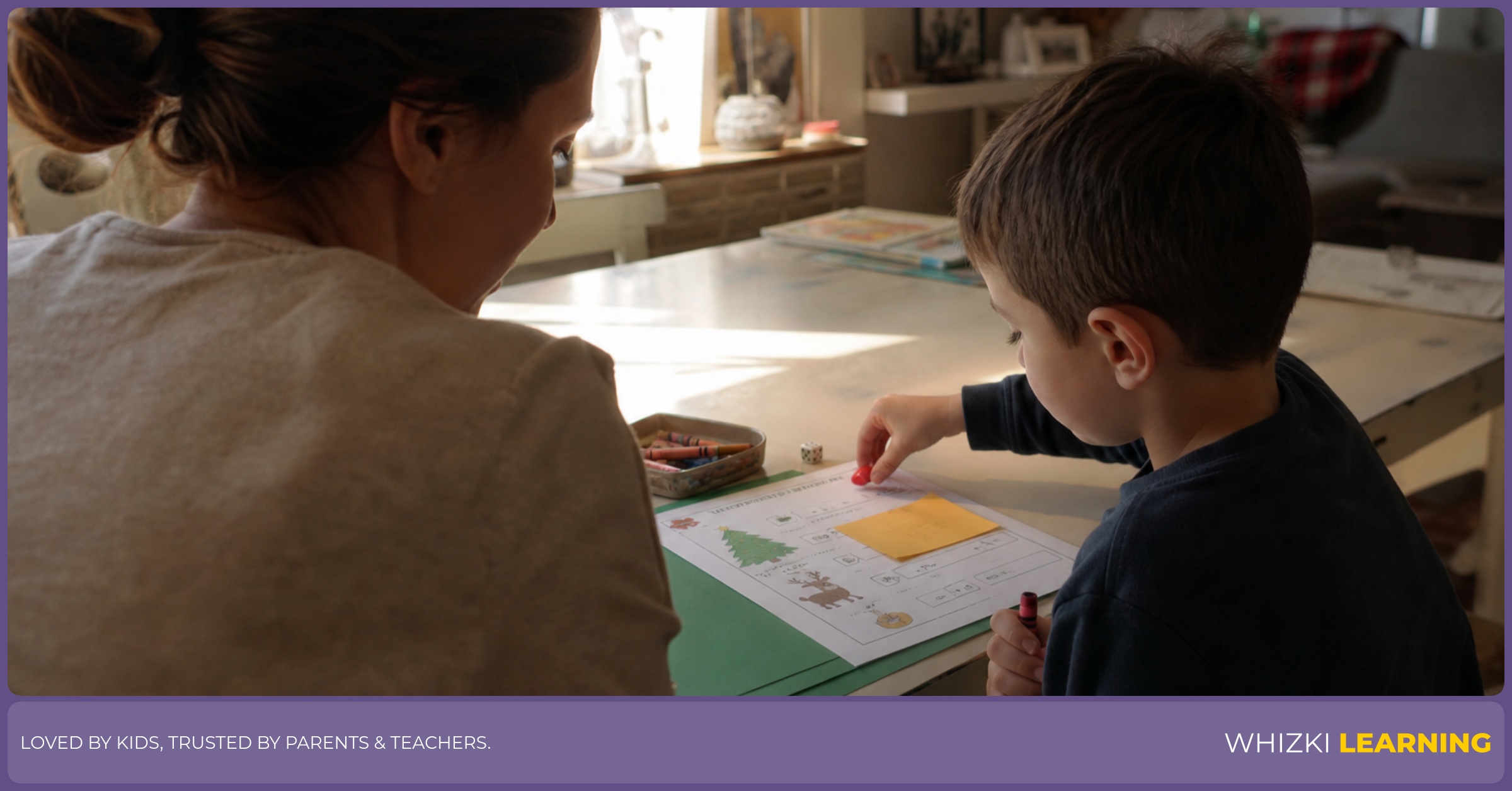
The 10-minute plan needs one worksheet, two crayons, five to ten small counters, and a blank sticky note for covering extra space. NAEYC practice favors active participation, so the counters give the child something to move before the pencil has to do all the work.
Minute 0 to 2 is setup and choice. The adult can say, “Pick red or green,” then place the worksheet sideways if the child needs more elbow room, because occupational-therapy basics often start with posture and paper position before pencil work.
Minute 2 to 7 is the main work. The child touches each object, says or hears the number, and makes the smallest useful response, such as a mark, a line, or a numeral, while the adult covers busy parts of the worksheet with the sticky note.
Minute 7 to 10 is the soft landing. The adult names what the child did, such as “You counted each ornament with your finger,” and the Christmas worksheet can go into a folder unfinished without a reward chart, present promise, or lecture.
When to stop or save the page
The stop point is part of the plan, not a failure. Reggio-inspired observation asks adults to notice what the child is showing with posture, pace, and questions, so a child who starts pressing hard, guessing wildly, or looking away may be finished for today.
The worksheet is also easy to adapt for families who celebrate Christmas differently. A winter picture, a family tradition page, or a general holiday page can use the same response mode and task density without asking the child to pretend the theme fits every home.
The worksheet is not a full math program, reading lesson, or behavior fix. If fine-motor pain, speech clarity, vision concerns, or constant distress around table work keeps showing up, the next step is a conversation with the child’s pediatrician, teacher, occupational therapist, or speech-language pathologist.
Choose the Christmas worksheet that matches the child’s hands, attention, and confidence today. A short, peaceful 10 minutes gives the adult useful information and gives the child a real chance to say, “I can do that.”