If your 5-year-old pops up after three puzzle pieces while dinner is burning, set out one tiny job with a clear finish, like pouring dry beans from cup to cup for five minutes. A five-year-old is still learning how to stay with a task, so concentration often looks like short bursts, wiggly bodies, and a lot of restarting. The goal is not silent table work, the goal is one doable activity that helps attention grow without turning your kitchen into a training center.
Reviewed by Whizki Editorial Team, Early Childhood Education Editors.
What counts as concentration at five
Five-year-old concentration usually means a child can stay with a preferred task for 5 to 15 minutes, especially when the task has hands, movement, or a visible ending. NAEYC guidance reminds early educators to match expectations to development, which means a short, successful round is more useful than a long battle. A child who leaves the table after four minutes may still be building real attention.
Reggio and Montessori classrooms both lean on observation before correction, and that habit helps at home too. The adult watches what holds the child, what frustrates the child, and what makes the child return for one more try. The best concentration activities for kids feel like work the child chose, even when the adult quietly shaped the setup.
Screen-free focus grows faster when the setup removes extra decisions. A small basket, one activity, and a simple finish line beat a crowded shelf every time. If your family is trying to reset after a lot of media time, these offline focus boosters explain why hands-on play helps attention feel more natural.
Table activities that buy quiet minutes
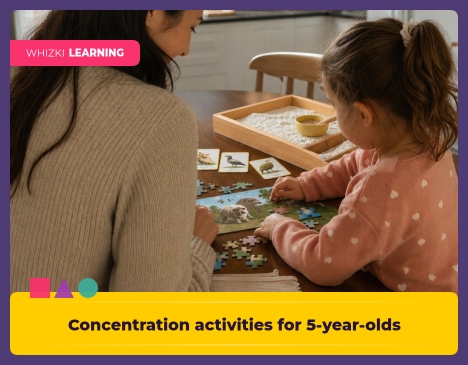
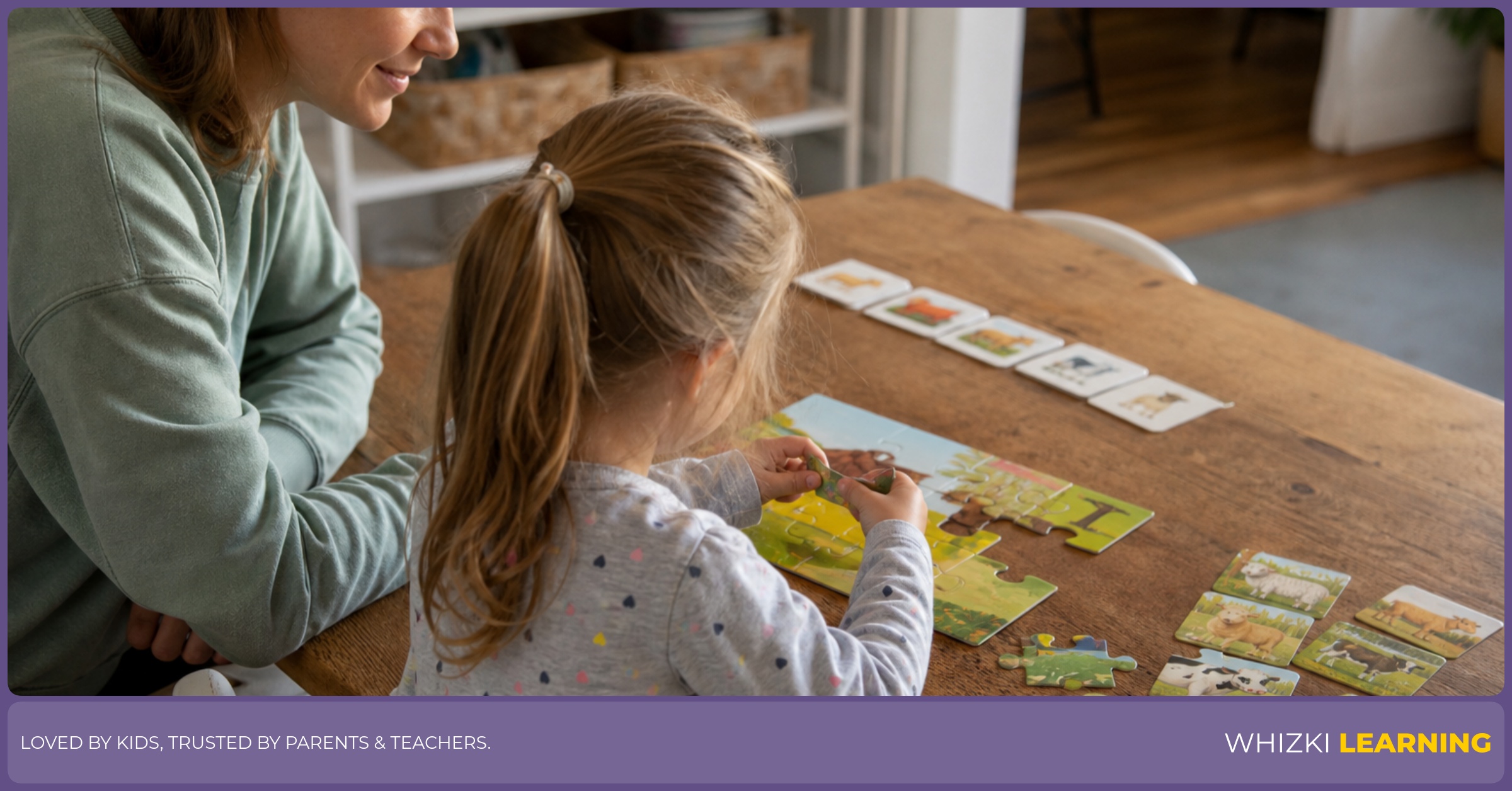
Focus-builder 1: a 12- to 24-piece puzzle buys about 6 to 10 minutes and stretches visual tracking, patience, and part-to-whole thinking. The Orton-Gillingham approach often uses multisensory work because young children learn best when eyes, hands, and language work together. A puzzle gives the child a built-in reason to scan, compare, rotate, and try again without a worksheet feeling.
The puzzle setup matters more than the puzzle size. Put the border pieces in one little pile, place the picture lid beside the child, and say, “Find one piece with blue sky.” That small prompt keeps the task from becoming a dump-and-walk-away moment, and the science behind puzzles and the growing brain backs up why puzzle play is worth protecting.
Focus-builder 2: picture matching or memory cards buys about 5 to 8 minutes and stretches working memory, visual discrimination, and turn-taking. Speech-language pathology practice often uses matching because children have to notice details, name what the child sees, and hold a rule in mind. Use six pairs at first, then add more pairs only when the child can finish with a calm body.
Focus-builder 3: bead stringing, lacing cards, or button boards buy about 7 to 12 minutes and stretch fine-motor control, crossing the midline, and planned sequence. Occupational therapy basics often use the “just-right challenge,” where the task is tricky enough to matter but not so hard that the child quits. Big beads, stiff laces, and a short pattern give a 5-year-old a satisfying finish without adult hovering.
Movement games that reset busy bodies
Focus-builder 4: freeze dance or statue games buy about 4 to 7 minutes and stretch auditory attention, body control, and stop-start control. Occupational therapy classrooms often pair movement with regulation because many young children focus better after heavy muscle work or rhythmic action. The adult can play music, pause the music, and name one body shape, such as “hands on knees” or “feet glued down.”
A freeze game works best when the rule stays simple. The child listens for one cue, stops one body, and starts again when the adult says go. A kindergarten teacher can use the same game before circle time, and a homeschool parent can use the same game before handwriting or story time.
Focus-builder 5: a stuffed-animal delivery path buys about 6 to 10 minutes and stretches motor planning, following directions, and task completion. Speech-language practice often builds direction-following with playful routes, like “Put the bear under the chair, then on the pillow.” The adult can keep the path short and end with a clear delivery basket, so the child gets the feeling of finishing a job.
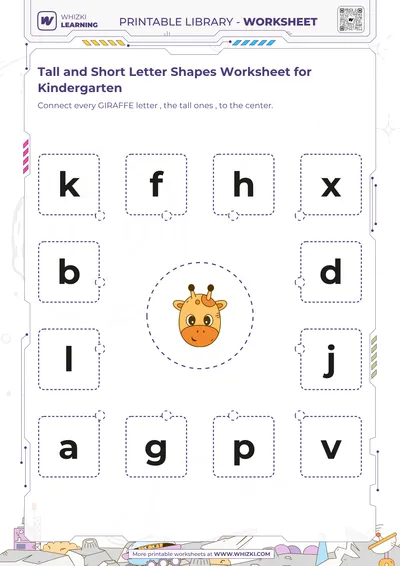
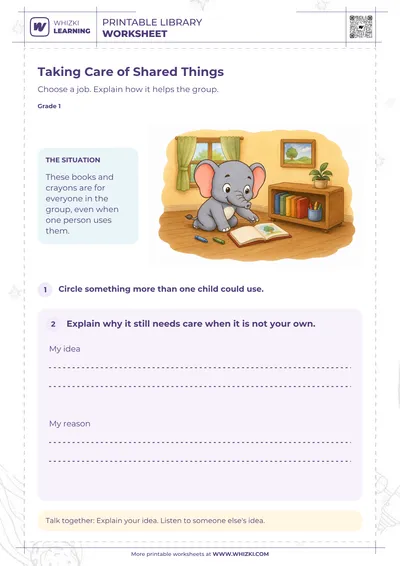
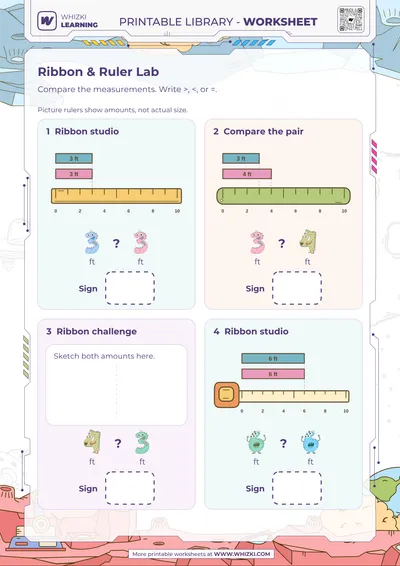
When a paper task would help, I keep a few low-pressure matching, tracing, or hunt pages from our printable library near the crayons. A printable page works best as a backup plan beside play, not as a bribe or a test.
Kitchen jobs that stretch attention
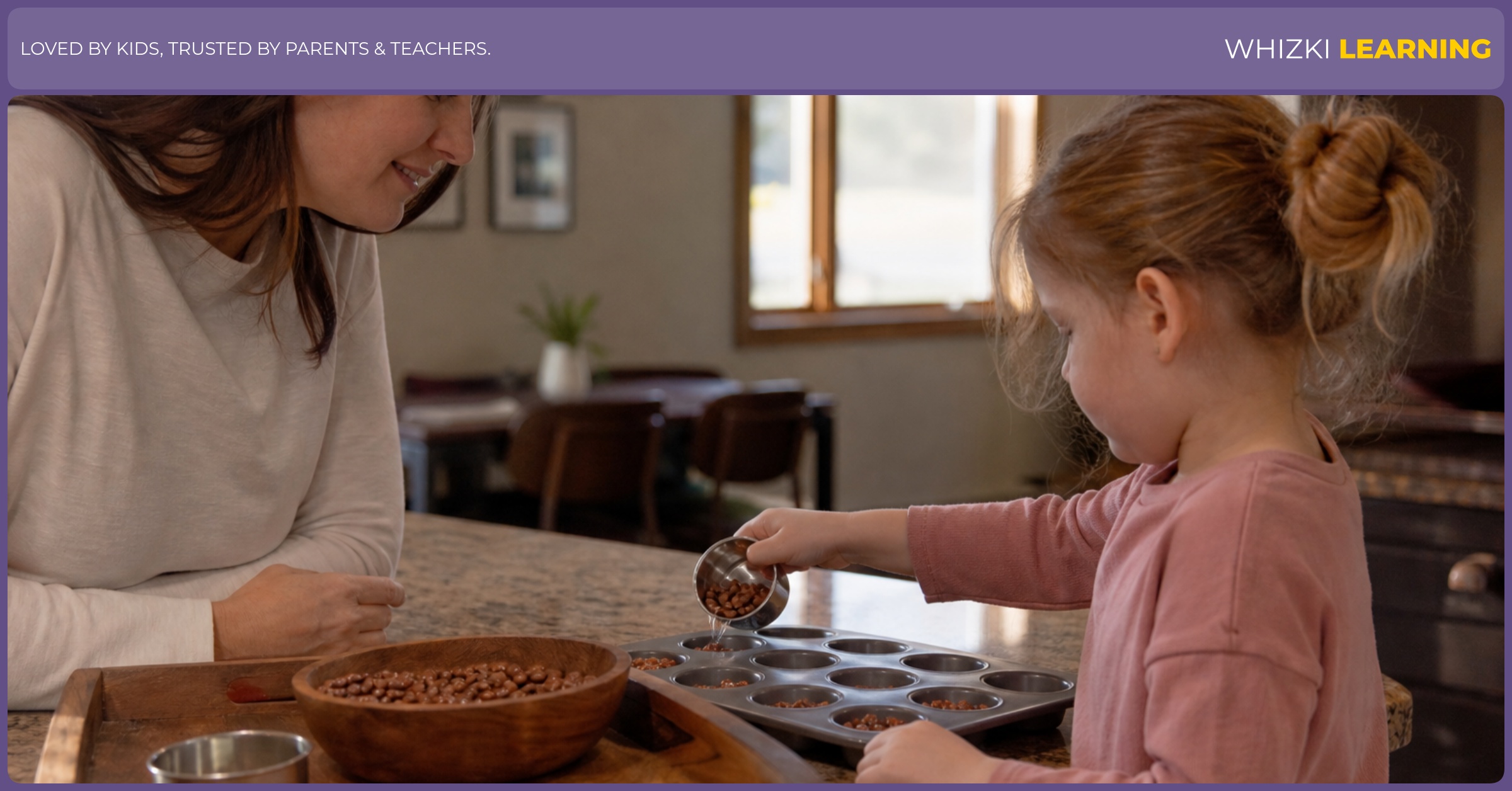
Focus-builder 6: a pouring station buys about 8 to 15 minutes and stretches hand control, visual attention, and impulse control. Montessori practical-life work uses pouring because the child can see the purpose right away. Put dry rice, beans, or water in a tray, offer two small cups, and keep a towel nearby so spills become part of the routine rather than a crisis.
The pouring station should start small enough for success. A half-cup of beans, a muffin tin, and a tiny scoop can hold attention longer than a full sensory bin because the child sees each transfer. The adult can say, “Fill three spaces,” and then stop before the activity turns wild.
Focus-builder 7: cooking jobs buy about 5 to 12 minutes and stretch sequencing, listening, and hand strength. NAEYC-aligned classrooms treat cooking as real curriculum because measuring, stirring, washing, tearing, and spreading all ask a child to follow steps. A 5-year-old can wash berries, tear lettuce, sprinkle cheese, mash banana, or stir pancake batter with close supervision.
Focus-builder 8: a clipboard picture hunt buys about 5 to 10 minutes and stretches scanning, memory, and purposeful movement. The adult draws four simple pictures, such as sock, spoon, block, and book, then the child checks off each object found around the room. Reggio-inspired teachers use this kind of child-sized investigation because the child gets to search, notice, and record without needing polished handwriting.
How to keep focus play from becoming a fight
A focus activity needs a finish line before the child starts. The adult can say, “When the six cards are matched, the game is done,” or “When the muffin tin is full, pouring is finished.” Clear endings lower the chance of bargaining because the activity has a visible stopping point.
An attention activity should end while the child still has a little fuel left. Orton-Gillingham tutors often stop practice before fatigue turns into guessing, and the same idea works beautifully for play. Ending after one good round teaches the child, “I can finish,” which is a stronger lesson than pushing for ten more minutes.
A caregiver should watch for patterns rather than judge one hard day. If a 5-year-old cannot settle for any hands-on task, avoids fine-motor work, seems unusually sensitive to sound or touch, or loses skills the child once had, a pediatrician, occupational therapist, or speech-language pathologist can help sort out next steps. Most children still have uneven attention at this age, and a few well-chosen play jobs can make home and classroom routines feel steadier.
Start with one focus-builder, set the timer for fewer minutes than you hope, and let success be small. A child who finishes a five-minute puzzle, a three-step cooking job, or one careful pouring tray is practicing real concentration. For more kitchen-table ideas each week, you are warmly invited to join the weekly newsletter.