If your child can shout “kick!” while launching a sock ball but freezes when a worksheet says verb, start with one K action today: say the word, do the motion, then point to the printed word. K verbs work best when a child can feel the action in the body before reading the word on paper. A small routine gives the child practice without turning vocabulary into a battle.
Reviewed by Whizki Editorial Team, Early Childhood Education Editors.
How to teach K verbs to young readers
The Orton-Gillingham approach reminds teachers to connect sound, movement, and print, so K verbs should be heard, acted, and traced. The letter K usually says /k/, as in kick, keep, and kneel, and our letter K learning page is a helpful place to pair the sound with simple word work.
The NAEYC guidance on early literacy fits the kitchen-table routine I use with preschool and kindergarten children: real talk first, print second, pressure last. This post stays with verbs, which are action words, so families who want nouns can use first words starting with K, and families who want adjectives can use describing words starting with K.
Body actions that start with K
Body verbs give young children a clear meaning because the body does the word right away. NAEYC play-based practice supports short movement turns, and occupational-therapy basics remind families to offer safe space, soft props, and calm pacing.
The body action list works well as a two-minute wiggle break before reading or handwriting. The adult says the verb, the child acts the sentence, and the adult points to the printed word for a quick sound-print match.
- Kick: Kick the soft ball.
- Kneel: Kneel on the rug.
- Knock: Knock three gentle taps.
- Kiss: Kiss your own hand.
- Knuckle-bump: Knuckle-bump a grown-up.
- Karate-chop: Karate-chop the air.
- Kangaroo-hop: Kangaroo-hop across pillows.
- Koala-hug: Koala-hug a stuffed bear.
- Kitten-crawl: Kitten-crawl under chairs.
- Kite-run: Kite-run with arms wide.
- Knee-bend: Knee-bend down and up.
- King-march: King-march around the room.
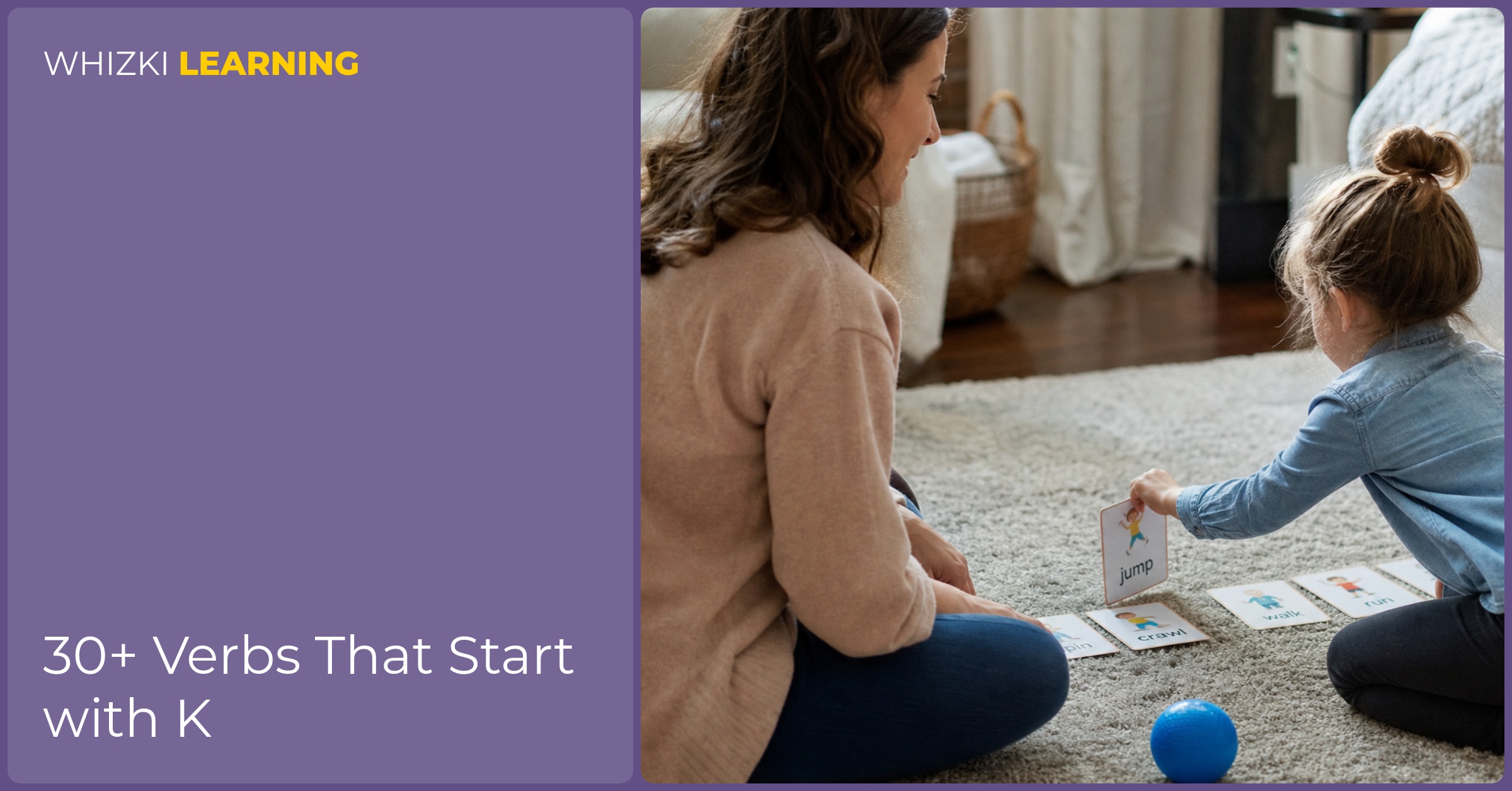
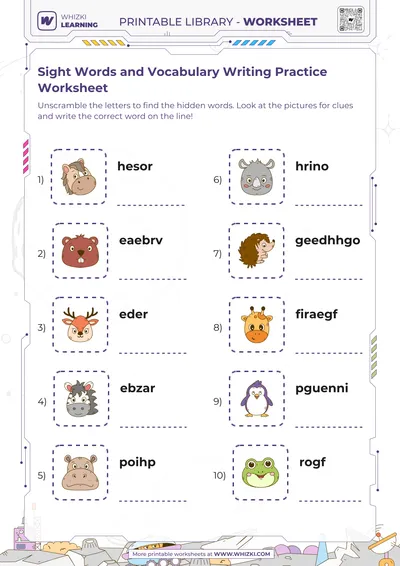
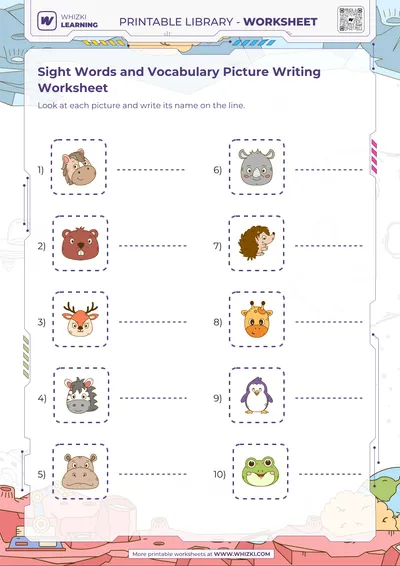
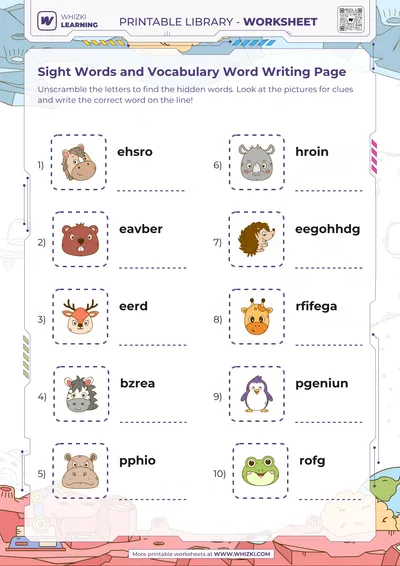
Print one matching action-word page from our sight-words printables and tape the page to the wall near the play space. The wall page turns “Kick the soft ball” into a quick daily routine: point, say, act, and trace with one finger.
Household actions that start with K
Household verbs feel meaningful because the child can help with real materials. Montessori practical-life work and Reggio observation both value useful jobs, especially when the adult watches what the child can already do and then adds one small word.
The household action list should stay safe and supervised, especially around keys, cords, food, and small objects. Occupational-therapy practice often starts fine-motor work with bigger tools first, so large scarves, chunky crayons, and pretend locks are easier than tiny pieces.
- Keep: Keep toys in baskets.
- Knead: Knead dough with palms.
- Key-turn: Key-turn a pretend lock.
- Knot: Knot two scarf ends.
- Knit: Knit with finger loops.
- Keyboard: Keyboard a pretend email.
- Knob-turn: Knob-turn an old radio.
- Kibble-feed: Kibble-feed the toy puppy.
- Kit-pack: Kit-pack crayons and paper.
- Ketchup-squeeze: Ketchup-squeeze an empty bottle.
- Key-sort: Key-sort big safe keys.
Play actions that start with K
Play verbs help children rehearse language before print feels easy. Speech-language pathology practice often uses imitation, turn-taking, and short repeated phrases, which makes a pretend K action easier to remember than a long explanation.
The play action list includes real verbs and a few classroom-friendly pretend compounds, because kindergarten children often learn new words through make-believe. Reggio-inspired teaching treats the child’s pretend story as useful evidence, so a block tower, teddy bear, or pillow boat can become the lesson.
- Kayak: Kayak on floor cushions.
- Kite: Kite through the yard.
- Kickball: Kickball toward the fence.
- Kickbox: Kickbox slow shadow kicks.
- Kerplunk: Kerplunk blocks into a bin.
- Knock-down: Knock-down the block tower.
- Knight: Knight the teddy bear.
- Karaoke-sing: Karaoke-sing a silly chorus.
- Keep-away: Keep-away with a balloon.
- Kicky-dance: Kicky-dance to soft claps.
- Knock-knock: Knock-knock on a box.
- Kite-glide: Kite-glide across the carpet.
K verb charades game
The K verb charades game turns vocabulary into a quick family round instead of a sit-still lesson. Orton-Gillingham teaching uses multisensory links, and the charades routine links the spoken word, the body action, and the printed word in one short turn.
The charades game should last about five minutes for preschoolers and about ten minutes for kindergarten children. NAEYC guidance supports playful choice, so let the child pass on any card and choose another action without scolding.
- Choose five cards: Pick verbs from one group.
- Act silently: Move without saying the word.
- Guess kindly: Name the action word.
- Point together: Touch the printed verb.
- Trade roles: Let the child lead.
The adult can add a tiny reading step after each guess: “Kick starts with /k/.” The child does not need to memorize every spelling during the game, because the goal is a warm connection between action and print.
Trace-the-word tip for K verbs
The trace-the-word tip I use most is finger first, crayon second, pencil later. Occupational-therapy basics favor large-motor and tactile practice before small pencil control, especially for children ages 3 to 5.
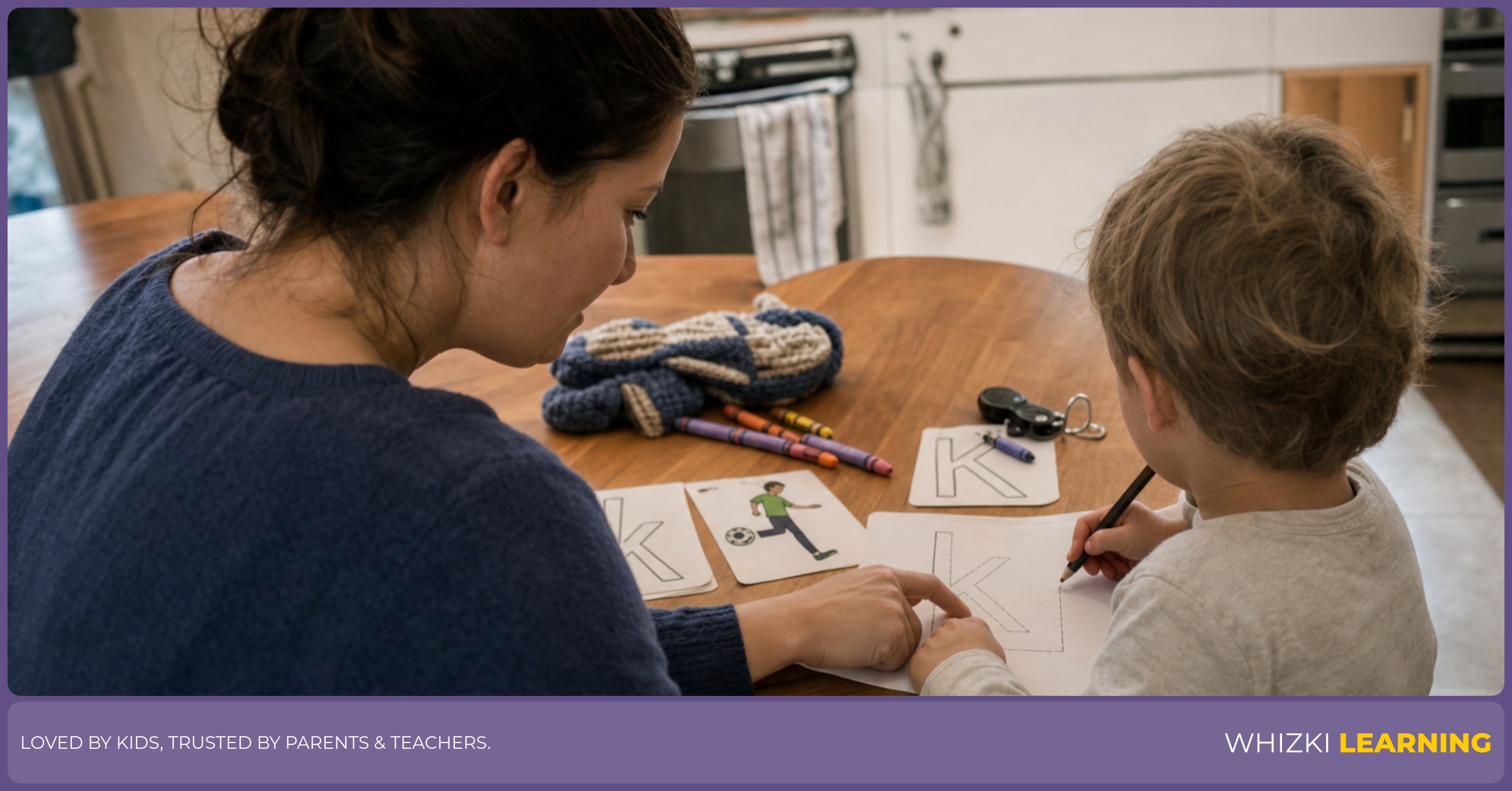
The printed K verb card can sit on the table while the child traces the big K in the air, traces the word with one finger, and then traces over the word with a crayon. Orton-Gillingham practice would add the sound while tracing, so the child says /k/ at the start of kick, keep, or kneel.
The writing goal for ages 3 to 7 is steady practice, not perfect letters. A preschool child may only trace the first K, while a kindergarten child may trace the whole word and act the sentence afterward.
K verbs are easiest when the child can do the action, hear the /k/ sound, and see the printed word in a short loop. Pick three verbs for today, tape the printable where the routine already happens, and let the child move before the child writes.