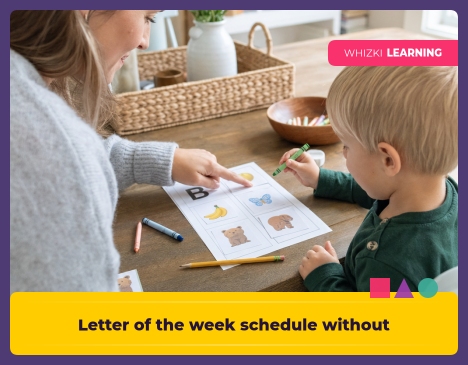
If letter of the week keeps turning into five crafts, unfinished pages, and a cranky kitchen table, set a timer for 15 minutes today and teach only the letter name, the main sound, and one quick hand activity. A sustainable alphabet routine feels small enough to repeat on a tired Tuesday and flexible enough for a sick day. The goal is steady familiarity, not a perfect binder.
Reviewed by Whizki Editorial Team, Early Childhood Education Editors.
Why 15 minutes works better than a long lesson
A 15-minute letter lesson matches the attention span I usually see with 3- to 7-year-olds during small-group literacy time. The Orton-Gillingham approach starts with clear links among the letter sound, the printed symbol, mouth movement, and handwriting, and young children can practice those links without a long table session. The short lesson also leaves room for play, snack, outside time, and the real life that happens around learning.
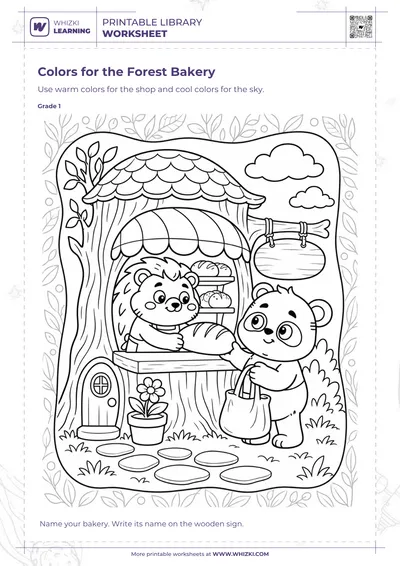
The daily routine can stay almost boring on purpose: Monday introduces the sound and name, Tuesday sorts a few objects, Wednesday traces the shape in salt or on a rug, Thursday finds the letter in a familiar book, and Friday gets one craft. The kindergarten children I have taught remember the weekly rhythm better when adult energy is calm and predictable. The one craft gives small fingers a cutting, gluing, or tearing job without turning the refrigerator into a proof-of-learning wall.
The alphabet background can stay close by when a child asks for more examples or a teacher needs a quick picture prompt. Keep the alphabet learning hub bookmarked for letter pages, sound ideas, and simple extension activities. A parent can use one extra page for a child who wants more while protecting the 15-minute plan for the whole family.
The letter order that beats A to Z
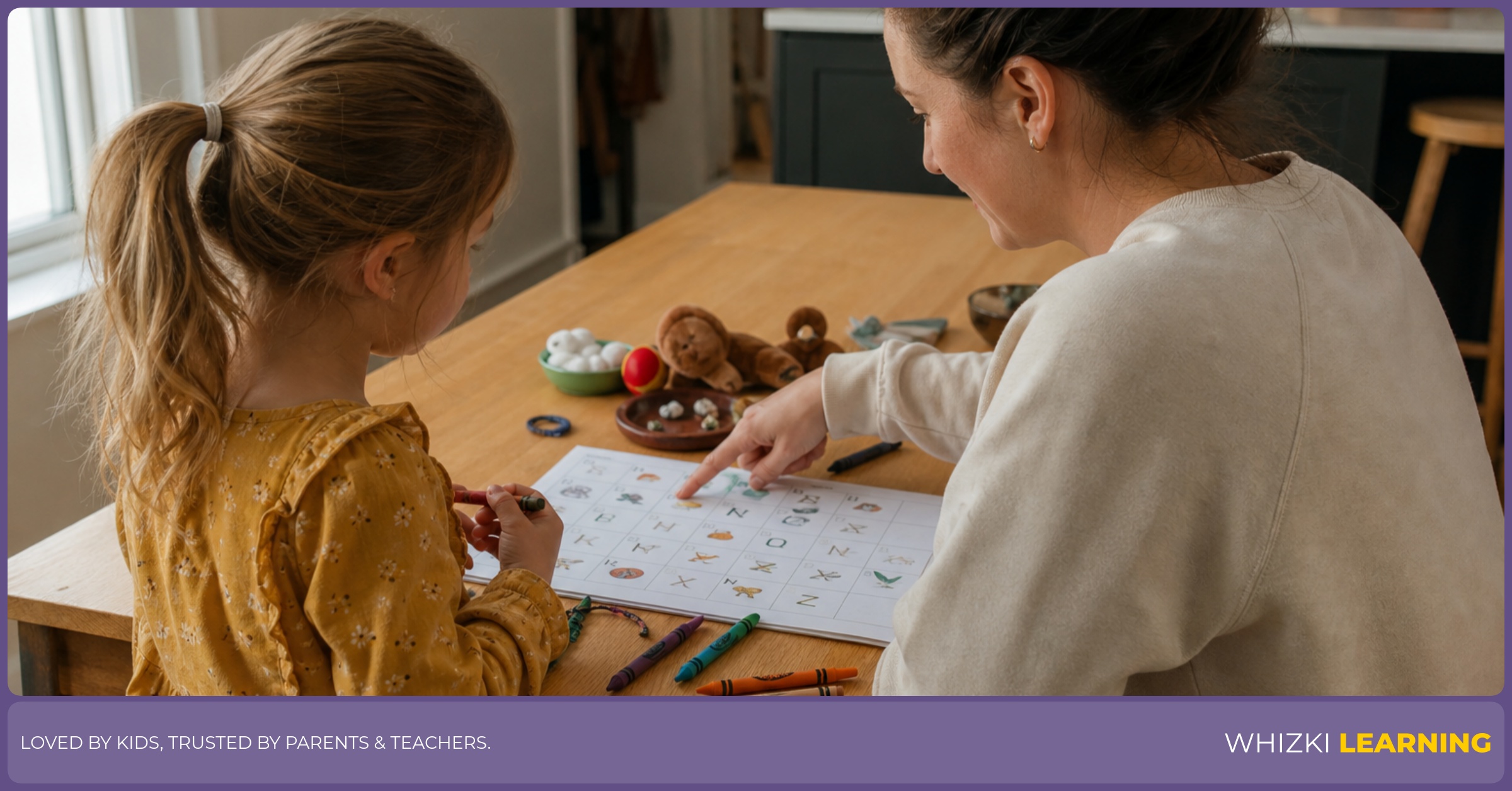
A to Z is song order, not always the best teaching order. Speech-language pathology practice and Orton-Gillingham tutoring both pay attention to how easy a sound is to hear, how clearly a child can make the sound, and how different the letter looks from nearby letters. A better starting point uses high-utility sounds and visually distinct letters before tricky partners like b and d sit side by side.
A practical order can begin with m, s, t, a, p, f, c, h, b, r, n, d, l, g, i, o, u, e, j, k, v, w, y, x, q, z. The first several letters give children enough sounds to build tiny words such as am, sat, map, and cap, which makes the alphabet feel useful instead of decorative. For a fuller walk-through, use the letter order that works and adjust the pace for the child in front of you.
The letter order can still honor a child’s name, family words, and seasonal interests. NAEYC guidance reminds early educators to connect literacy to meaningful experiences, so a child named Maya should absolutely notice M early even when the weekly plan starts elsewhere. The schedule serves the child, not the other way around.
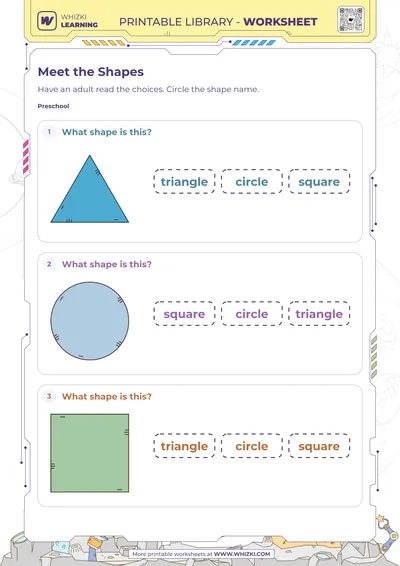
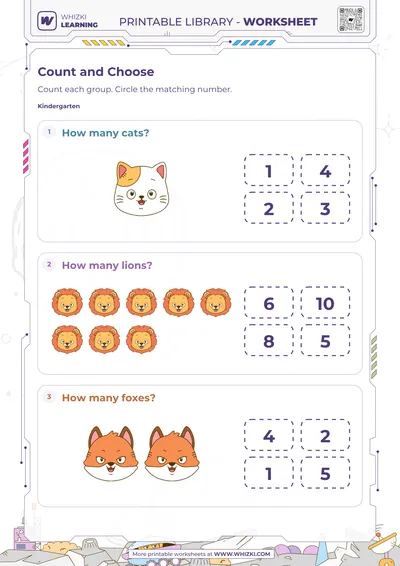
Print the planner before Monday: choose a 26-week alphabet planning page from our printable library, tape the page to the wall, and circle one tiny routine for each day. The printable works best when a parent writes the focus sound in pencil and leaves open boxes for missed days instead of turning the week into a checklist race.
A sustainable 26-week planner frame
A 26-week planner is a frame, not a contract. Reggio-inspired observation has taught me to watch what a child is reaching for, repeating, and avoiding before I decide whether a planned activity needs more time or a softer entry point. The planner should make learning visible without making the adult feel behind.
The weekly rhythm can use five small blocks across the week. Day 1 names the letter and sound, Day 2 forms the letter with fingers or a crayon, Day 3 sorts real objects, Day 4 hunts for the letter in a book or label, and Day 5 offers one craft or review game. The 15-minute timer protects the routine from growing into a project that needs special supplies.
The 26 boxes can cover all letters while still allowing pauses. A skipped week can become a review week, a travel week, or a family week written right on the planner in pencil. The planner is doing the job when the adult can see the next letter without feeling guilty about the last one.
What to do when a week falls apart
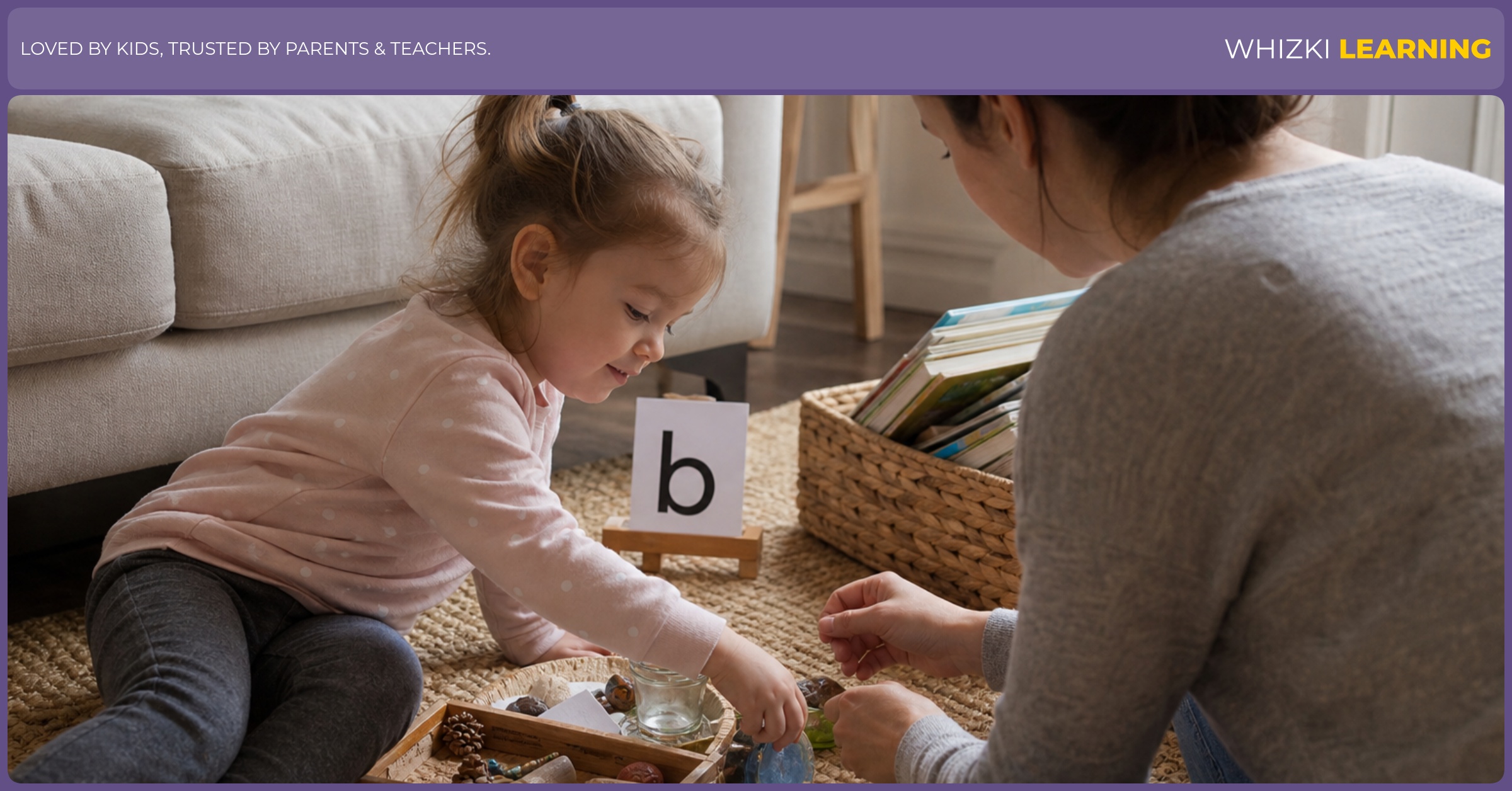
A missed letter week is normal in homes, classrooms, and homeschool rooms. Occupational-therapy basics remind adults to notice the body before judging the learning: tired hands, wiggly posture, heavy pencil pressure, or a child sliding off the chair can mean the task is too long or too demanding right now. The better move is to shorten the activity and keep the relationship warm.
A reset day can be only three minutes long. The adult can say the focus sound, trace the letter once with two fingers, find one object that starts with the sound, and stop while the child still feels successful. A worksheet can wait until the child has had enough movement, food, sleep, or outdoor time to bring a steadier body back to the table.
A teacher or homeschool parent can also fold a missed letter into the next week without announcing a failure. The next Monday can review the old letter for two minutes, introduce the new letter for ten minutes, and save the craft for Friday. A calm repair teaches children that learning has rhythm, rest, and another chance.
A sustainable letter of the week schedule is simple enough to survive real family life. Choose the better letter order, use one craft, keep the daily lesson to 15 minutes, and write skipped weeks in pencil. The best alphabet plan is the plan a child and adult can return to with calm hands and a fresh start.