
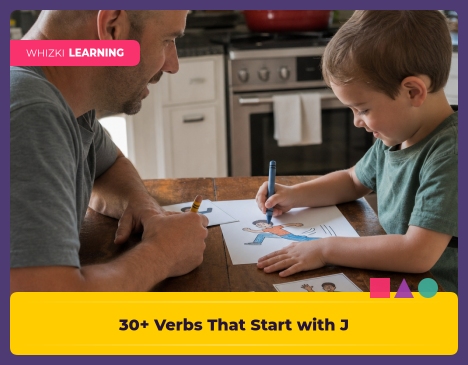
If your child can name the letter J but freezes when asked for a J action word, start with one action your child can act out in ten seconds. Early readers often need movement before pencil work, especially after a long preschool or kindergarten day. A short routine with one card, one motion, and one spoken sentence is enough for today.
Reviewed by Whizki Editorial Team, Early Childhood Education Editors.
Why J verbs help kindergarten readers
J verbs give young children a reason to connect a sound, a printed letter, and a real motion. The Orton-Gillingham approach often pairs seeing, saying, hearing, and moving because multisensory practice makes a new letter pattern easier to remember. A kindergartener does not need a long vocabulary lecture, because a tiny action sentence can carry the whole lesson.
The letter J usually says /j/ at the beginning of words like the action words below. Parents who want a sound review can keep our letter J learning page nearby for quick warmups. Families who also want nouns can visit first words starting with J, and families working on describing can use describing words starting with J after action practice.
Body actions that start with J
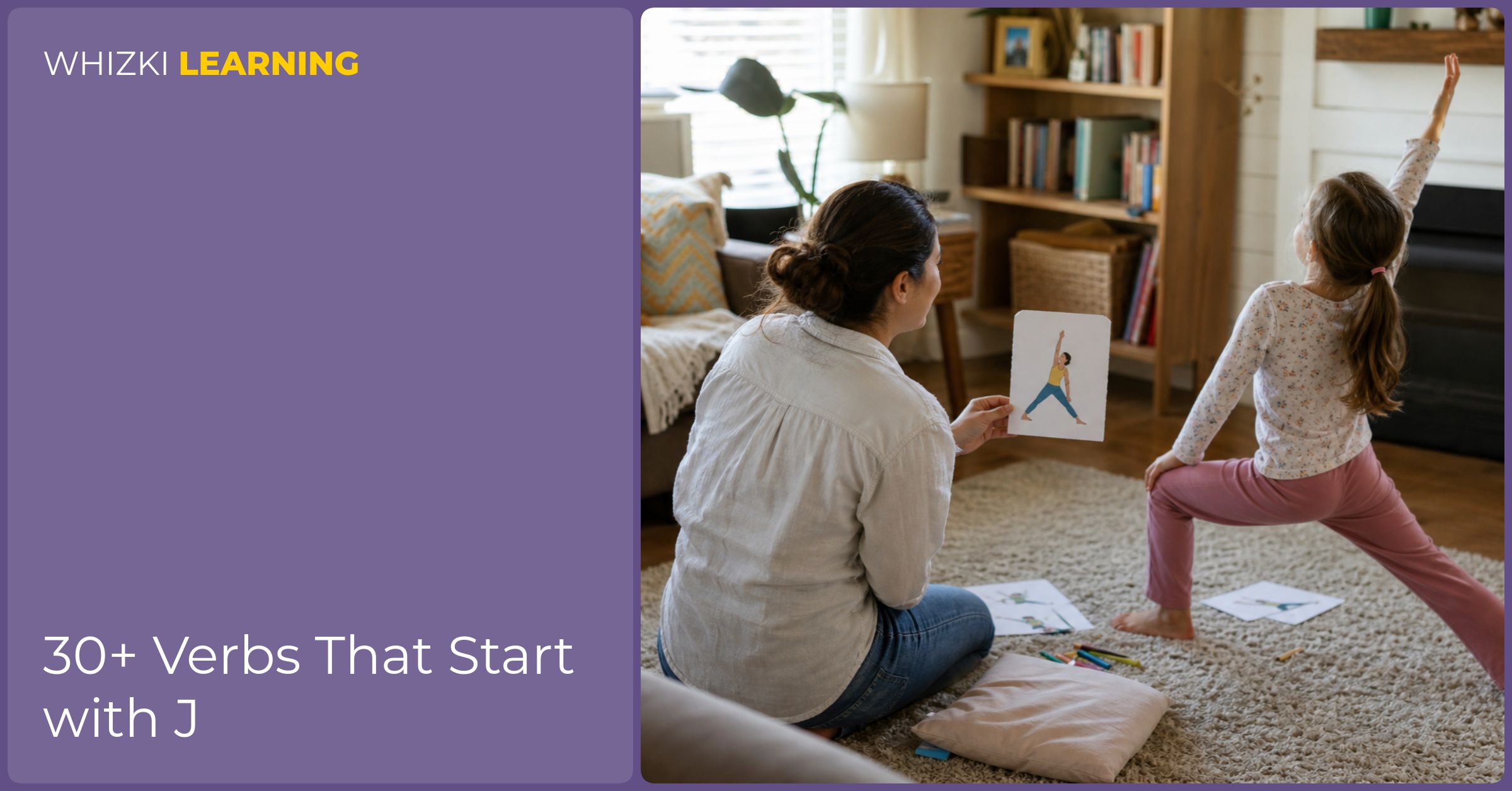
Body action words are the easiest place to begin because children can feel the meaning right away. Occupational-therapy basics remind teachers and parents to use big muscles before asking for small pencil movements, especially for ages 3-7. A safe floor spot, a pillow, or a taped line can make the verb clear without turning the room wild.
The body list works best when the adult models the sentence first, then the child copies the motion and says the word. NAEYC guidance supports active, playful learning because young children learn language through hands-on experiences. Keep the pace gentle, and stop before the activity becomes too silly to hear the beginning sound.
Body J verbs to act out
- Jump: Jump over the cushion.
- Jog: Jog to the door.
- Jiggle: Jiggle your wiggly knees.
- Jive: Jive to the beat.
- Jab: Jab the air gently.
- Jolt: Jolt your shoulders once.
- Jounce: Jounce on the beanbag.
- Jerk: Jerk your thumb upward.
- Jut: Jut your chin forward.
- Jostle: Jostle the pillow softly.
Household actions that start with J
Household verbs help a child notice that reading words live inside real routines, not just on a worksheet. Montessori and Reggio classrooms often treat practical life tasks as language moments because children can touch the object while saying the word. A sock drawer, a key ring, or a snack bowl can become a quick J lesson without adding another project to the day.
The household list is best used during a routine that already exists. The adult can say the verb, point to the first letter, and invite one small action before moving on with lunch or cleanup. That kind of short practice respects a preschooler's attention span and keeps reading from feeling like a test.
Household J verbs to act out
- Join: Join hands before dinner.
- Juice: Juice the orange halves.
- Jot: Jot one tiny line.
- Jam: Jam socks into the drawer.
- Jangle: Jangle the key ring.
- Jar: Jar the stuck lid.
- Junk: Junk the torn paper.
- Judge: Judge which cup matches.
- Jumble: Jumble the clean socks.
- Jack: Jack up the toy car.
Print one matching verb page from our sight-words printables and tape the page to the wall near the table. Use a crayon to circle one J verb before breakfast, then act out the sentence before backpacks or blocks come out.
Play actions that start with J
Play verbs are powerful because pretend play gives a child a reason to repeat a word many times. Speech-language pathologists often coach adults to add one clear word to a child's action during play, then pause so the child has room to copy. The goal is a natural back-and-forth, not a perfect performance.
The play list can sit beside blocks, scarves, toy cars, or dress-up clothes. Reggio-inspired observation helps here because the adult watches what the child already loves and adds the J word to that play theme. A child who likes cars may need movement words, while a child who likes stuffed animals may prefer silly voice words.
Play J verbs to act out
- Juggle: Juggle two soft scarves.
- Joke: Joke with a silly voice.
- Jazz: Jazz up the paper hat.
- Jigsaw: Jigsaw two pieces together.
- Joust: Joust with pool noodles.
- Journey: Journey across the blanket.
- Jet: Jet around the chair.
- Juke: Juke past the cone.
- Jink: Jink around the block.
- Jingle: Jingle the bell bracelet.
- Jabber: Jabber to your teddy.
- Jockey: Jockey the stick horse.
Act-it-out J charades game
The J charades game needs only folded paper slips, a bowl, and a little floor space. Write six words from the body, household, and play groups on separate slips, then let the child pull one slip without showing the adult. The child acts, the adult guesses, and both people say the verb together after the guess.
The charades routine fits NAEYC play guidance because the child leads with movement and meaning before formal reading. The adult can make the game easier by reading the card aloud, or make the game harder by asking the child to find the printed J before acting. Stop after three turns if attention fades, because a happy short game beats a tired long lesson.
Trace-the-word tip for J verbs
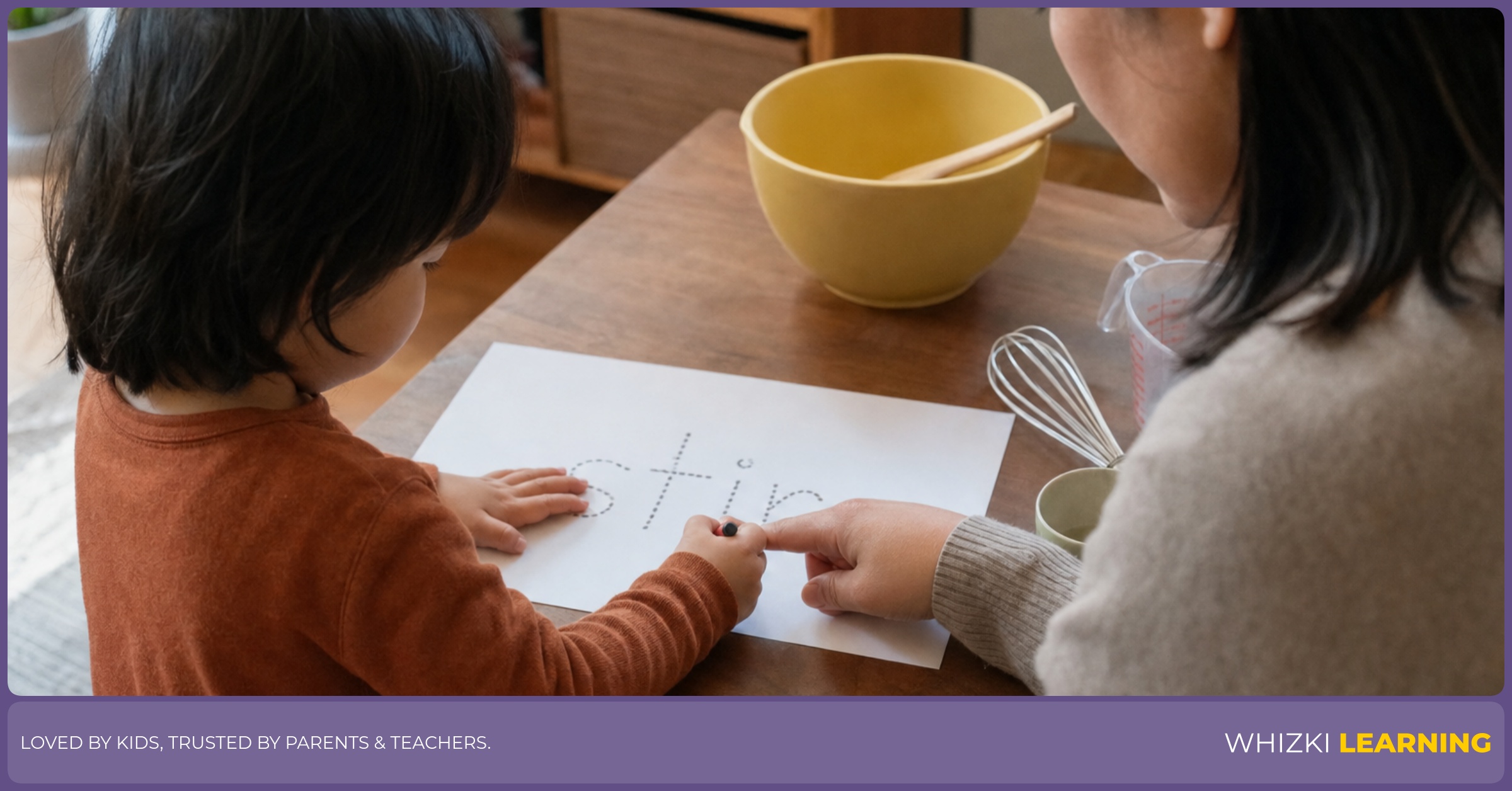
The trace-the-word tip is simple: say the sound, trace the first letter with two fingers, then trace the whole word with a crayon. Occupational-therapy heuristics favor larger movements before tighter pencil work, so a child can trace on a paper taped to the wall before tracing at the table. A wall trace also helps children who press too hard or slump over the page.
The Orton-Gillingham sequence can stay very small for home practice. The adult says the word, the child taps the sounds or syllables, and the child traces while repeating the action sentence. If pencil grip becomes the whole battle, switch to finger tracing in salt, shaving cream, or on a carpet square for one more minute.
J action words do not have to become a full lesson plan to help an early reader. Pick three verbs, act out three tiny sentences, trace one favorite word, and call the routine finished while the child still feels successful.