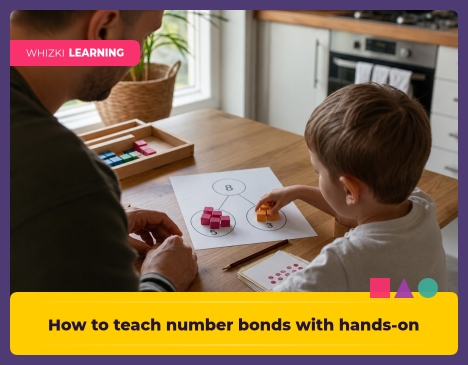
If number bonds feel like one more worksheet battle at the kitchen table, start today with five blocks in your child's hands and ask, "How can we split 5 into two hiding places?" Number bonds are just a part-part-whole picture, and young children usually understand the picture faster when the quantity is real. The first goal is calm noticing, not speed.
Reviewed by Whizki Editorial Team, Early Childhood Education Editors.
What a number bond is really showing
A number bond is a part-part-whole picture: one whole amount connects to two smaller parts. A child sees that 5 can be 2 and 3, or 4 and 1, without needing a long explanation. NAEYC guidance keeps early math playful and concrete, so the number bond should begin as something a child can touch, move, and describe.
The part-part-whole picture matters because counting alone can hide understanding. A child may count five blocks correctly and still miss that the same five blocks can be split in different ways. In Reggio-inspired classrooms, teachers watch the child's hands and words first, because the child's representation tells the adult what the child actually understands.
Start with five blocks and two hands
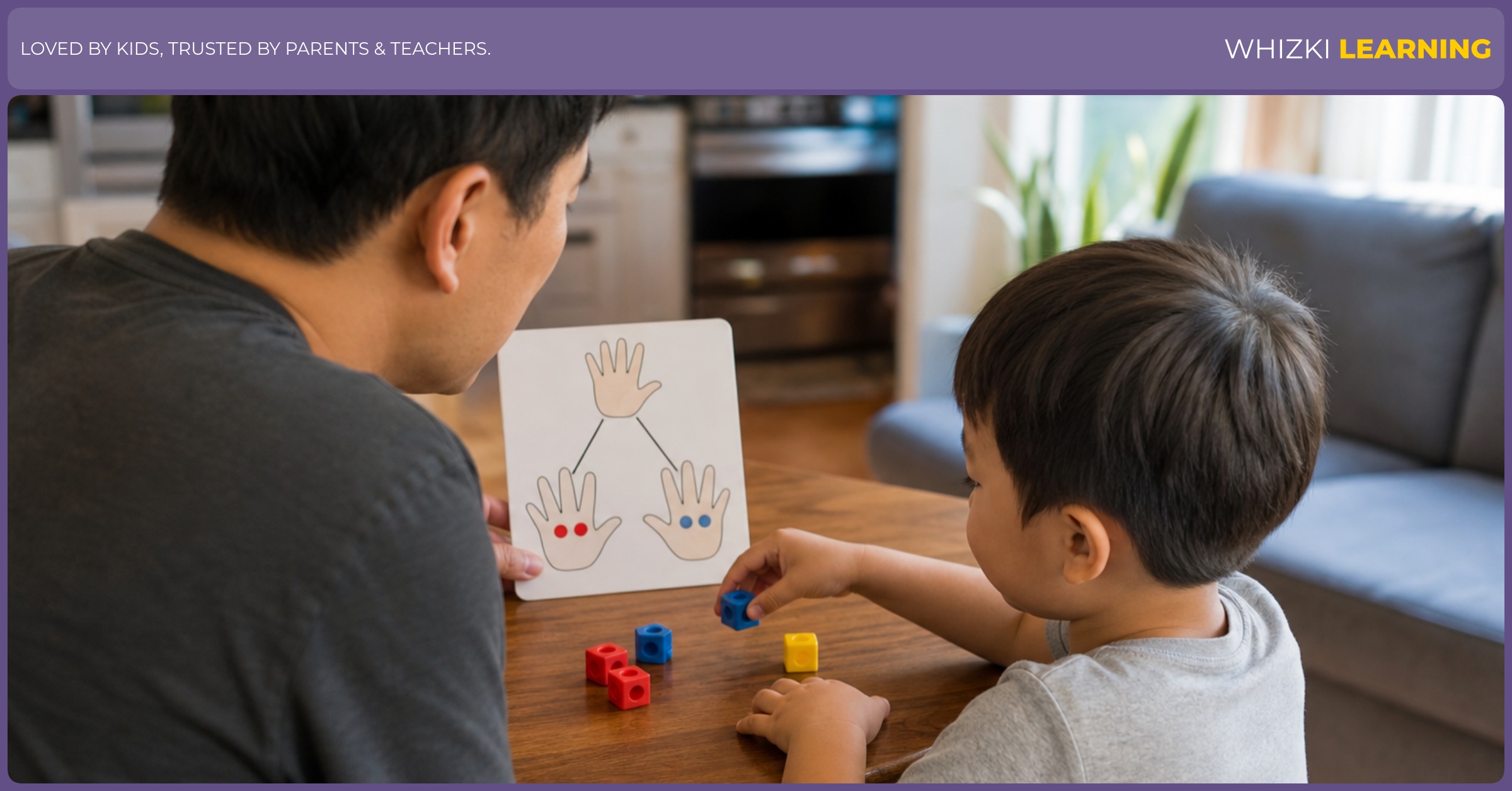
The five-block lesson is the best first routine because the child can feel the whole amount before seeing a triangle on paper. Put five blocks on the table, count the blocks together, then ask the child to hide some blocks in one hand and the rest in the other hand. Occupational-therapy basics remind teachers that finger movement, hand strength, and eye tracking all support early pencil work later.
The adult script stays small: "You have 5. One hand has 2. The other hand has 3." The Orton-Gillingham approach uses multisensory teaching for reading, and the same hands-eyes-voice pattern works beautifully in early math. The child touches the blocks, sees the split, and says the parts before any worksheet appears.
Name all the ways to make 5
The ways-to-make-5 stage should feel like a small discovery game, not a quiz. After each hand split, say the whole sentence together: "5 is 0 and 5," "5 is 1 and 4," "5 is 2 and 3." For extra practice with the same small target, use our ways to make 5 ideas during snack, block play, or a quick morning table routine.
The teacher move is to keep the whole amount visible while the parts change. Montessori number work often begins with fixed quantities that children rearrange, because the stable whole helps the child notice relationships. When a child says "2 and 3 makes 5" after moving the blocks, the child is building the language needed for addition later.
Move from hands to bond triangles
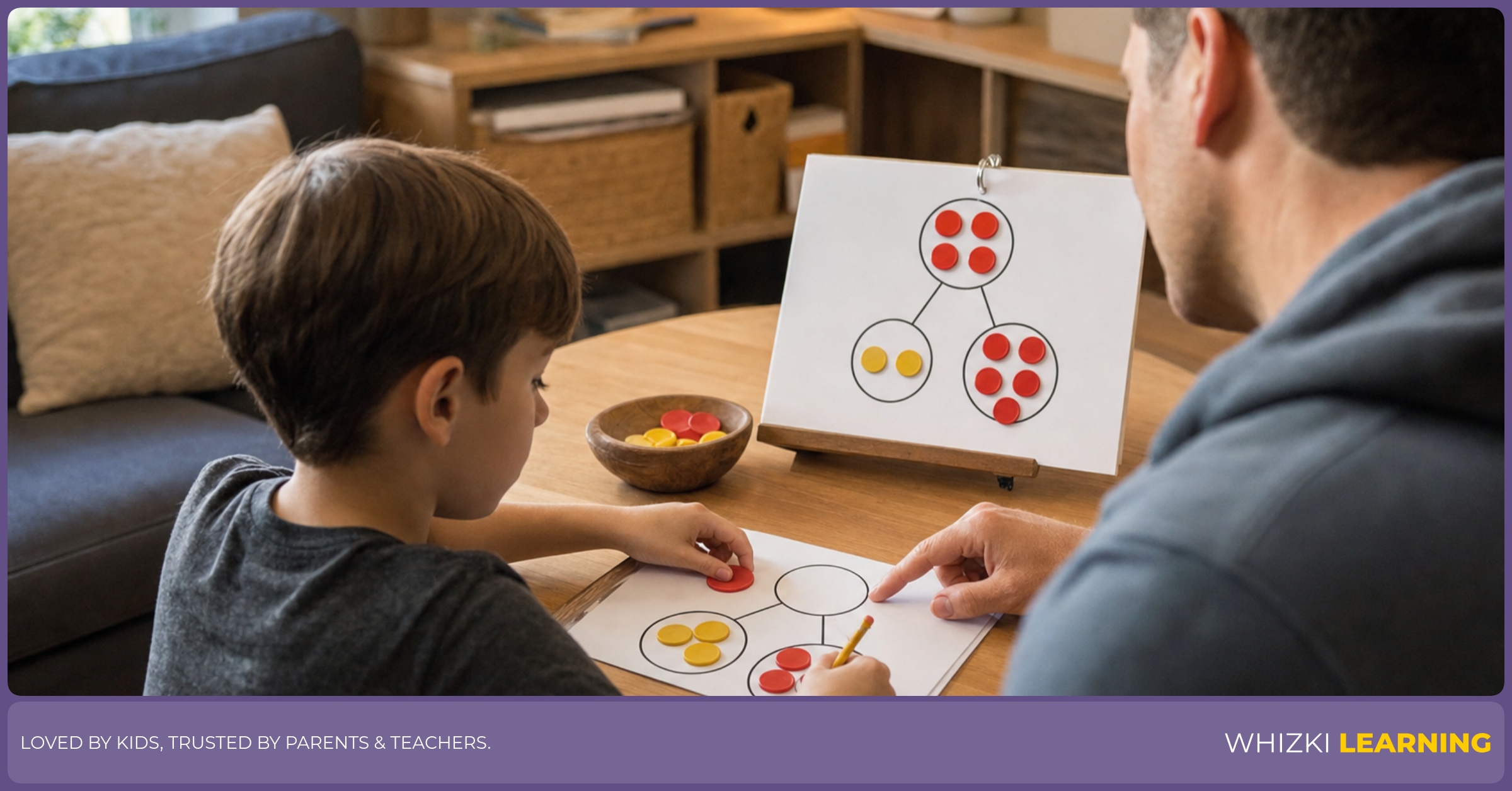
A bond triangle is the paper version of the two-hand game. Write the whole number at the top point, write one part in a bottom corner, and write the other part in the remaining bottom corner. The triangle should come after the blocks, because the symbol makes sense when the child has already felt the split.
An Orton-Gillingham teaching habit helps here: move from concrete to spoken to written in the same order every time. The child builds 5 with blocks, says "5 is 2 and 3," then places 5, 2, and 3 on the triangle. The predictable routine lowers the guessing and gives the child a clear path from hands to paper.
Tape one matching printable to the wall
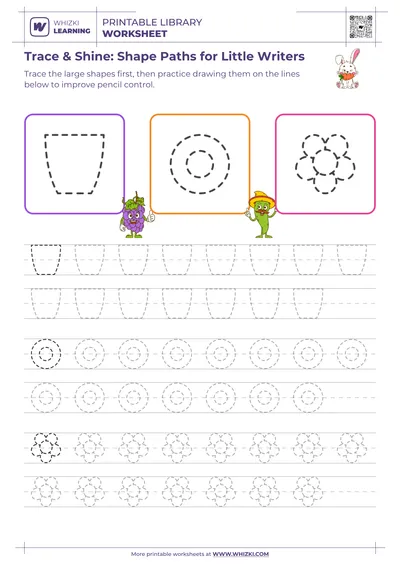
The printable should enter the routine after the child has built several bonds with real objects. Print a one-page bond mat, tape the printable to the wall or cabinet, and use a sticky note to cover one part at a time. NAEYC-aligned practice favors short, meaningful repetition, so one visible page used for three minutes often works better than a thick packet.
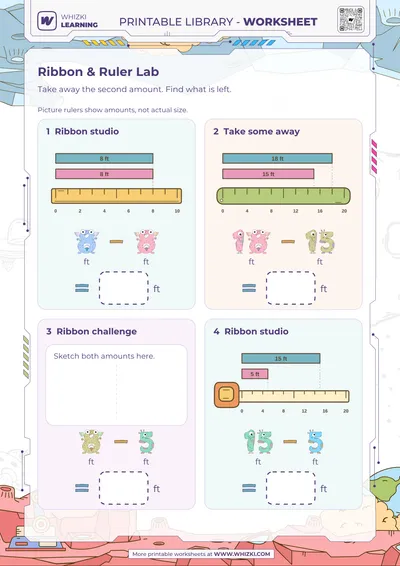
For a ready follow-up after the hands-on lesson, choose number bonds to 10 worksheets that match the same part-part-whole language. The worksheet should ask the child to draw dots, move counters, or fill one missing part, rather than race through rows of facts. The paper practice should feel like the child is recording something the child already understands.
The printable set in the numbers learning hub gives families a clean number-bond page to print and tape beside the table. Use one page for the week, add counters or cereal pieces, and let the child mark each split after building the bond with hands first.
Use a week-by-week path from 5 to 10
Week 1 should stay with bonds of 5 because five fingers are always available as a built-in math tool. Practice 0 and 5, 1 and 4, 2 and 3, then turn the order around with 3 and 2, 4 and 1, 5 and 0. Montessori and Reggio traditions both respect repetition with variation, so the routine can feel familiar while the child notices a new split each day.
Week 2 can move to bonds of 6 and 7 with the same small routine. Use blocks, small animals, crackers, or buttons, and keep the total amount in a tray so the whole stays clear. The child should still say the full sentence aloud, because math language is part of the learning.
Week 3 can move to bonds of 8 and 9 when the child can build smaller bonds without starting over each time. Place the whole amount in a ten-frame or shallow tray, then split the counters into two groups. Occupational-therapy practice often uses organized workspaces to reduce visual clutter, and the tray helps the child see the two parts clearly.
Week 4 can focus on bonds of 10 with fingers, ten-frames, and the bond triangle. Ten is a special anchor in early math because children use ten to count, compare, and add later. Keep the pace gentle, because a steady path from 5 to 10 builds confidence better than a fast jump into memorized facts.
When number bonds feel stuck
The stuck point is often language, not math. A speech-language pathology practice that helps in classrooms is to shorten adult talk and repeat the same sentence frame: "The whole is 5. The parts are 2 and 3." Clear words give the child a sentence to borrow.
The stuck point can also be finger control or visual tracking. Occupational-therapy basics suggest using larger objects, a tray with a plain background, or two small bowls before asking for pencil marks. The child may understand the split long before the child can draw neat circles in a worksheet box.
The stuck point deserves extra support when a child cannot count a set of five objects with one-to-one touch after steady playful practice. A kindergarten teacher, pediatrician, or early-learning specialist can help sort out counting, language, vision, attention, or fine-motor concerns. Early help should feel practical and kind, with the same hands-on math routines continuing at home.
Number bonds become easier when the child can build the whole, split the parts, say the relationship, and only then record the picture. Start with five blocks today, keep the routine short, and let paper be the place where the child shows what the child already knows. The best number-bond lesson is often five calm minutes with real objects and one adult who is willing to repeat the same simple sentence.