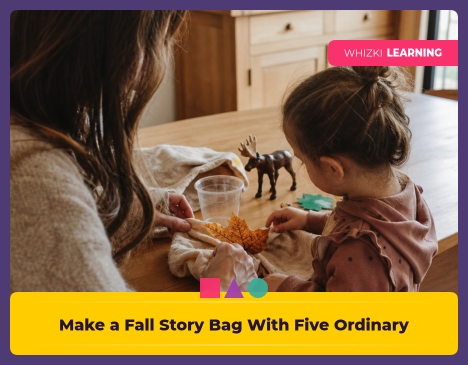
If the post-dinner stretch has turned into a choice between one more show and a child who is too wiggly for a book, put five ordinary objects in a pillowcase and tell a two-minute fall story together tonight. A leaf, scarf, cup, small toy, and paper shape give little hands something to hold while language warms up. The fall story bag works best as play, not a quiz, so a missed word can become the next silly twist.
Reviewed by Sarah Mitchell, M.S., CCC-SLP, Speech-Language Pathologist.
Set up the five-object story bag
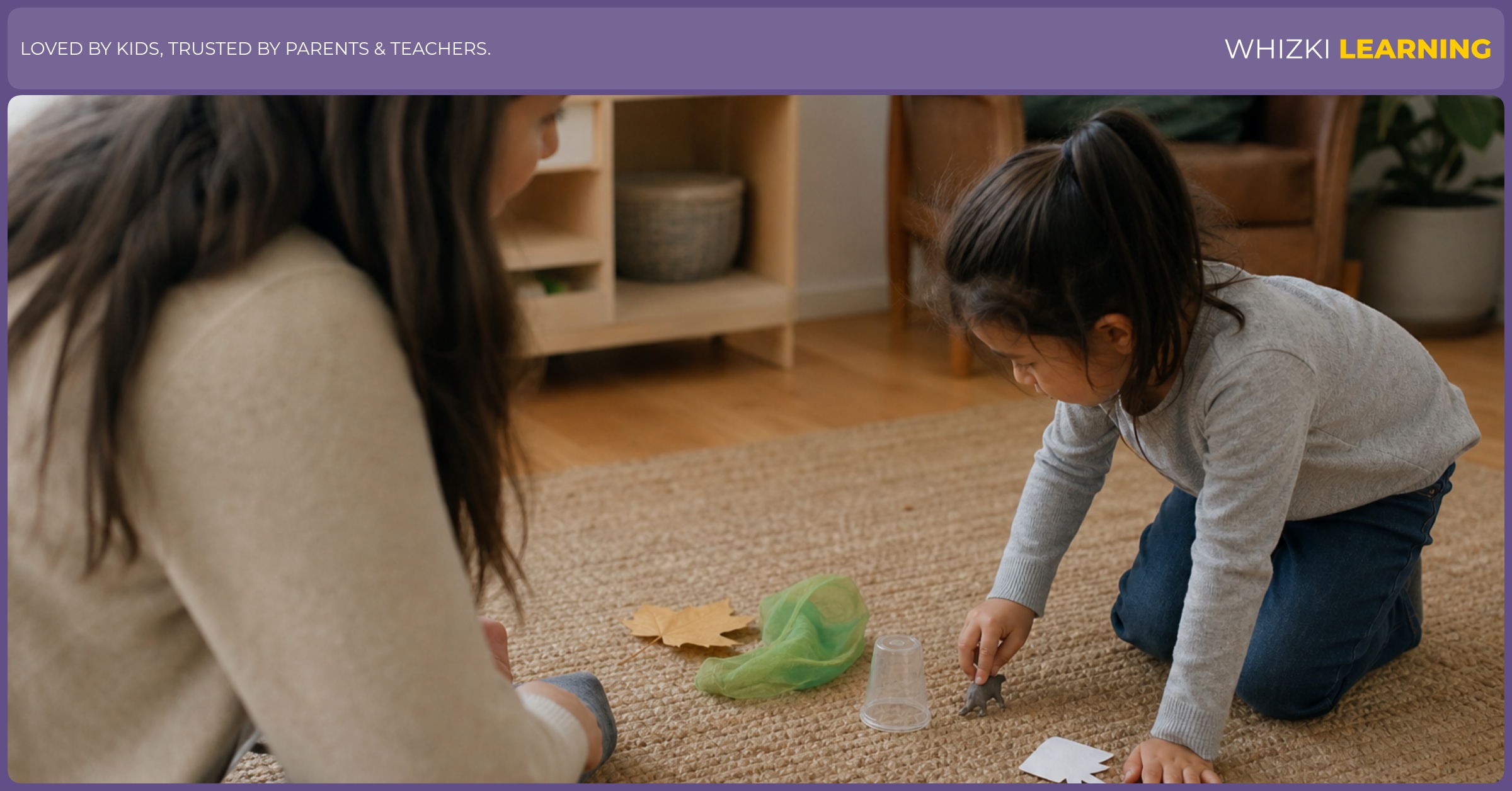
The fall story bag needs five objects and about three minutes of setup. Choose one leaf, one scarf, one cup, one small toy, and one paper shape cut from scrap paper. NAEYC guidance favors hands-on, meaningful play for young children, and the story bag keeps early literacy close to real objects rather than a worksheet first.
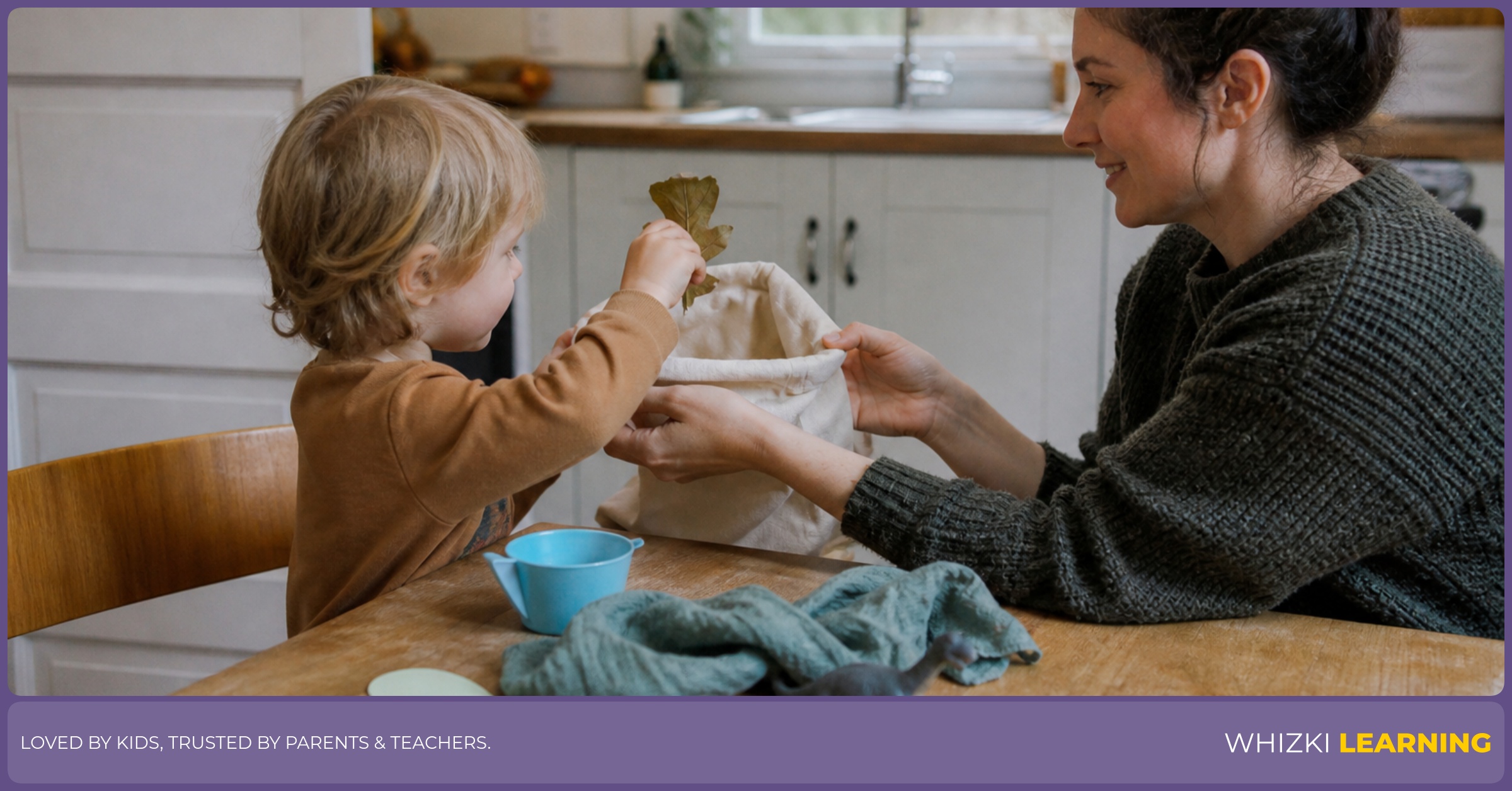
The caregiver can place the five objects in a pillowcase, tote bag, or lunch bag so the child reaches in without seeing the next piece. The occupational-therapy rule of thumb is simple, small hands focus longer when the body has a job, and pulling, holding, folding, or pointing can help a child stay with the story. Reggio-inspired teaching also asks adults to watch what children do with materials, so notice whether the child names, sorts, hides, or acts out each object.
The five objects can change with whatever your kitchen or classroom already has. A paper leaf can replace a real leaf, a plastic cup is safer than glass, and a toy animal or block should be large enough for children ages 3 to 7 to handle safely. The story bag is not a choking-risk activity for unsupervised toddlers, so keep small loose parts away from children who still mouth objects.
Play the story change game
The story change game takes 8 to 10 minutes, or less if bedtime is near. The adult begins with one plain sentence, such as, The leaf fell into the cup, then the child pulls a new object and changes one part of the story. Speech-language pathology practice often builds oral language through repeated turns with small changes, and the story bag makes that repetition feel like play.
The scarf can change the place, the cup can become a house, the toy can become a character, and the paper shape can become a sign, door, cookie, moon, or ticket. The Orton-Gillingham approach values clear, structured, multisensory practice, so say the sentence aloud, tap each object as the word appears, and let the child move the pieces in order. The adult can model one funny version before asking the child for a turn.
The fall theme can stay gentle and flexible for families with different traditions. If your child wants pumpkins, candles, apples, or parade pictures, the holiday and culture printables can add a few seasonal picture choices without turning the activity into a lesson on one holiday. The child can always choose a neutral fall setting, such as a windy park, a cozy porch, or a rainy sidewalk.
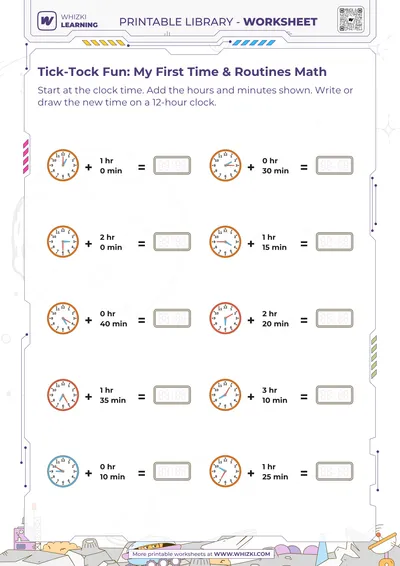
Families who want a few picture choices can print seasonal cards from the Whizki Learning Hub and tuck two cards into the bag. A printable can add variety, but the five real objects still do the main teaching because children can touch, move, and rename the pieces. Keep the printable optional and stop before the game feels like table work.
Adjust for ages three through seven
The preschool version is naming and choosing. A 3- or 4-year-old can pull one object, name the object, and place the object on a scarf path while the adult says a short line. Montessori and Reggio classrooms both treat naming real materials as serious language work, so slow down and let the child repeat, point, or act before adding a longer story.
The kindergarten version is sequencing. A 5- or 6-year-old can arrange three objects and tell what happened first, next, and last, then swap one object to make a new ending. NAEYC-aligned early literacy practice values talk, play, and shared meaning, and sequencing with objects gives children a concrete bridge into story order.
The age-7 version is sentence building. A 7-year-old can say a complete sentence for each object, then write one favorite sentence after the oral story is finished. If your family tried the previous literacy lab guide, use one familiar word from that wall in the story and keep the spelling talk short, clear, and encouraging, the way Orton-Gillingham lessons protect attention by working in small steps.
Know when the story bag is enough
The story bag should feel lively, not exhausting. If the child grabs every object, refuses to speak, or starts crashing the toy into the cup, the adult can shorten the turn to one object and one sentence. Occupational-therapy basics call that finding the just-right challenge, because a task that is too easy or too hard can push a young child away from language play.
The adult can also switch from telling to acting. A quiet child may move the toy under the scarf while the adult supplies the words, and that still counts as story work. Speech-language pathologists often accept gestures, sound effects, and partial phrases as communication steps, especially when adults model fuller language without pressuring a child to perform.
The fall story bag has honest limits. The activity will not replace reading aloud, speech support, or a teacher conference when a child is hard to understand, loses words, or seems unusually frustrated across many routines. Ask a pediatrician, teacher, or speech-language pathologist for help when communication concerns show up often, not just during one tired evening.
A fall story bag is small enough for a backpack, car ride, waiting room, or homeschool basket. The five ordinary objects invite children to name, sequence, pretend, and speak in sentences without needing a perfect craft setup. Start with two minutes today, and let tomorrow's story be different on purpose.