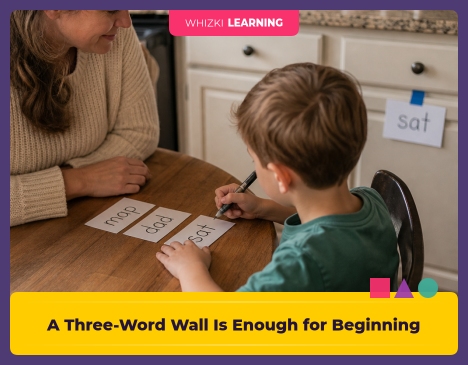
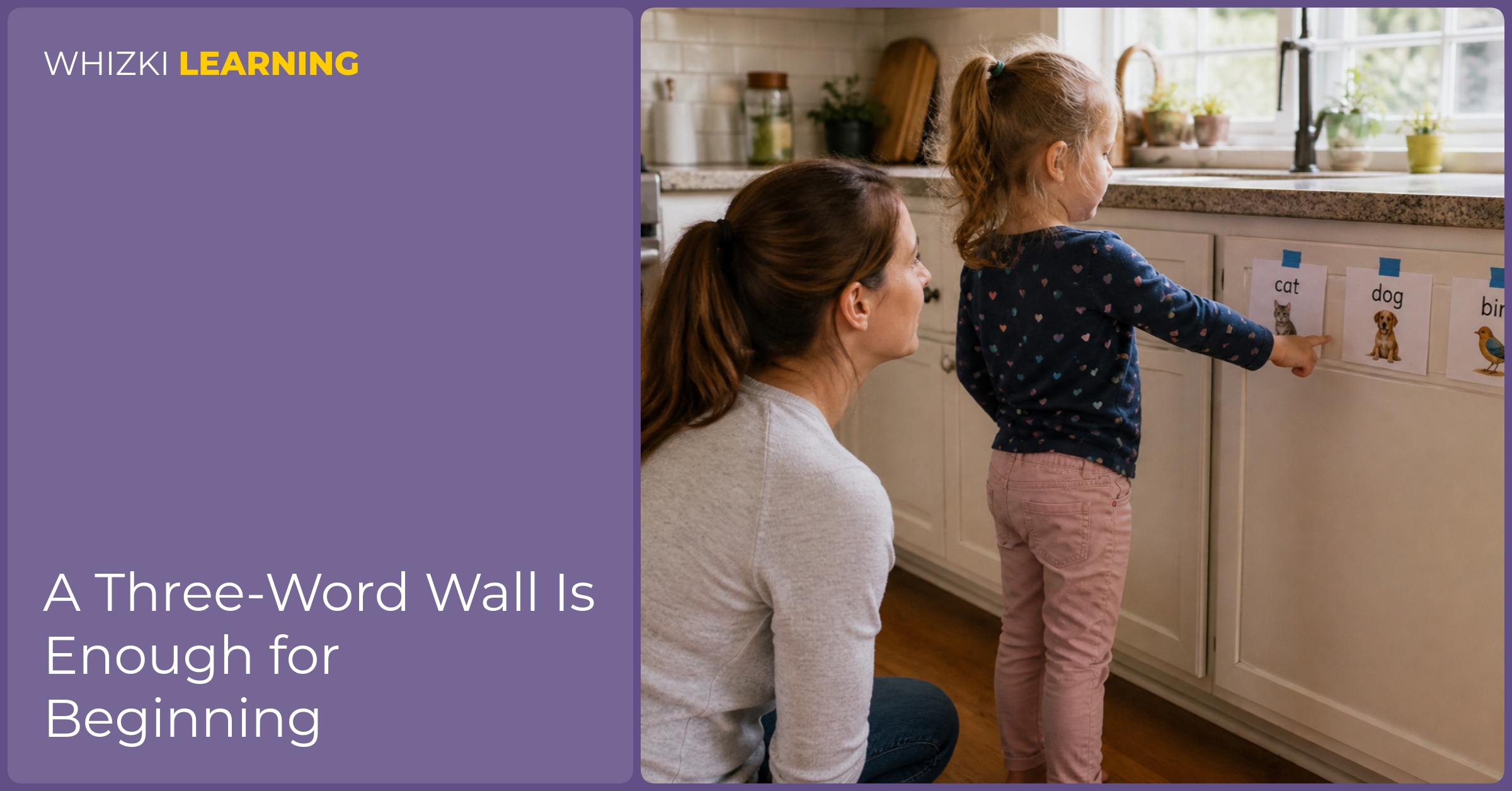
If bedtime notes, lunch packing, and kindergarten papers are all shouting for attention, choose three useful words from family life today, write each word on a separate card, and tape the cards at your child’s eye level before dinner.
Reviewed by Sarah Mitchell, M.S., CCC-SLP, Speech-Language Pathologist.
Start with three words that already matter
The word wall works best when the words come from real life instead of a faraway word list. A family word wall might begin with snack, shoes, and go because those words come up during meals, the front door scramble, and car rides. A classroom word wall might begin with name tags, cubbies, or the class pet because those labels already pull children’s attention.
The Orton-Gillingham approach reminds teachers to connect what children see, say, hear, and touch. Three cards give a beginning reader enough repetition to build recognition without turning the wall into visual noise. A smaller set also fits NAEYC guidance about meaningful print, because print is easier to use when print belongs to the child’s actual day.
The material list can stay simple: three index cards or paper rectangles, a dark marker, painter’s tape, and five quiet minutes. A caregiver can write each word in lowercase letters unless the word is a name, then add a tiny sketch only if the child needs a picture clue. The best height is the child’s chest to eye level, where the child can point without asking an adult to lift or read for them.
Choose words with a small decision tree
A Reggio-style observation habit begins with watching what the child is already trying to understand. If the word shows up in play, chores, meals, or family plans, the word is a strong candidate. If the word only appears on a worksheet and never comes up again, the word can wait for another day.
The NAEYC guidance on developmentally appropriate practice supports choosing words that carry a purpose for the child. A child’s name can be powerful, a sibling’s name can be motivating, and a daily action word can be useful because the word helps the child say something real. A tricky word is not wrong, but the child needs many friendly meetings with the word before the word feels familiar.
A three-year-old may use the wall mostly for pointing, naming, and matching a picture to a word. A five- to seven-year-old can help copy one card, find the first letter, or notice the same word on a cereal box or envelope, much like the print noticing in the previous literacy lab guide. The adult’s job is not to quiz the child at every pass, because too much checking can make the wall feel like a test.
Use the wall in one-minute moments
A one-minute wall routine is enough for most children ages 3 to 7. Speech-language pathology practice often begins with shared attention, so the adult can point to one card, say the word in a normal voice, and connect the word to the moment. During snack time, the adult might tap the card once and say that the word on the wall matches what the family is doing now.
The alphabet connection can stay light and useful. If a child asks about a first letter, the adult can say the letter name and sound, then stop before the moment turns into a long lesson. For families who want a simple letter reference, the alphabet learning hub can support short sound practice without adding more cards to the wall.
An occupational-therapy classroom heuristic I use is to give little hands a reason to move with control. A vertical word wall invites pointing, tracing with one finger, and crossing the body midline during natural movement. The tracing should be gentle and brief, because the goal is attention to print, not perfect handwriting.
Replace words before the wall turns into wallpaper
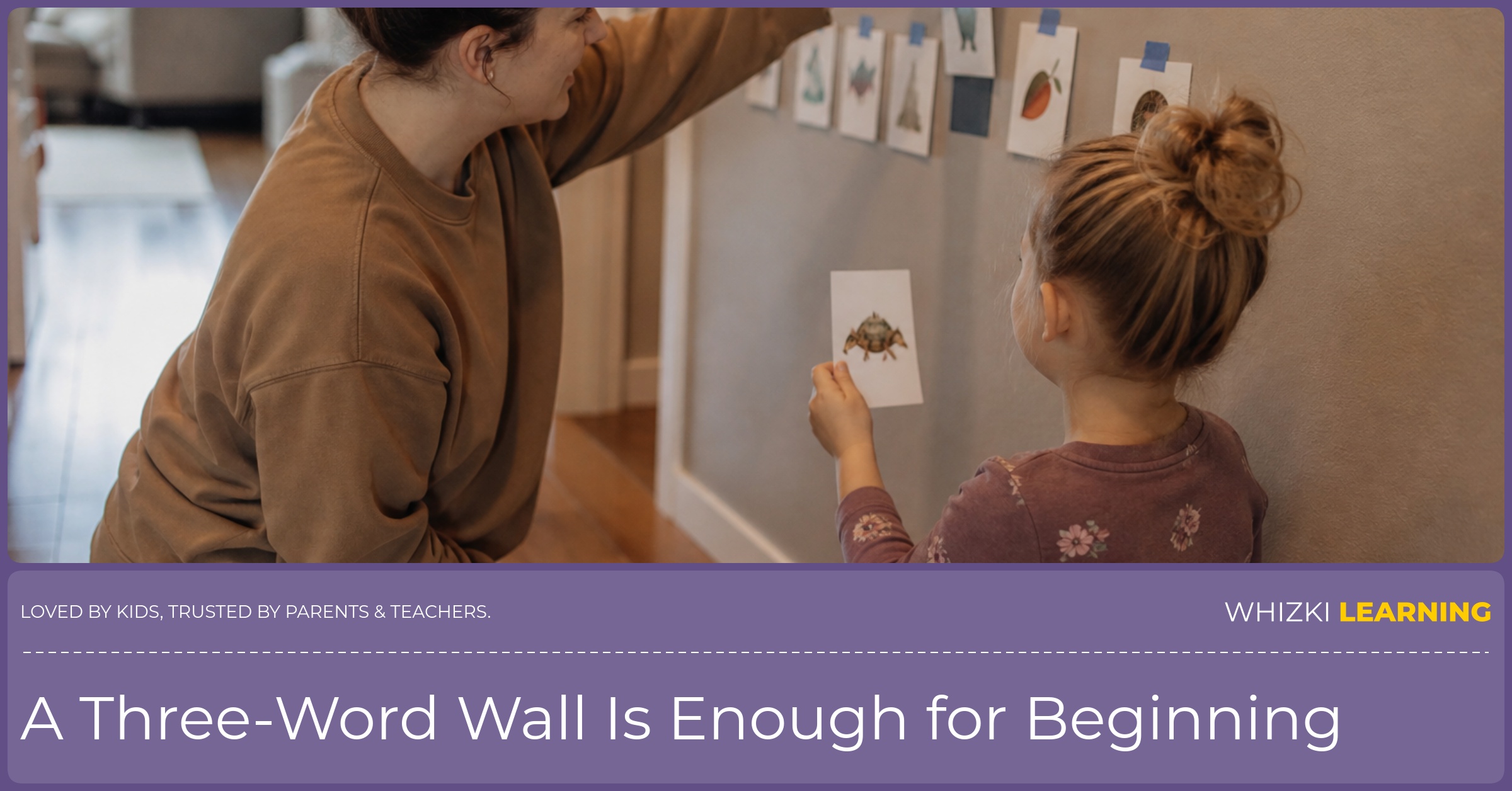
A crowded wall often becomes background decoration. Montessori observation has a useful reminder here: the prepared space should invite independent action. Three clear cards invite a child to point, read along, move a card, or ask about a word because the choice field is small.
The replacement plan is simple: after four to seven days, remove one card and add one new word from current life. A home caregiver can put the old card in a small envelope, and a teacher can place the old card in a class basket for later rereading. The wall should grow through rotation, not through endless adding.
A small set can lead to more actual use because the child knows where to look and what to try. Beginning readers often need repeated, low-pressure encounters before a word becomes familiar. The adult can celebrate noticing in context, such as finding the wall word on a lunch note, without asking the child to perform on command.
The honest limit is that a three-word wall will not teach reading by itself. The child still needs shared books, songs, conversation, play, and adult modeling, and some children need extra help with hearing sounds, saying words, or remembering letters. If a child is upset by print, cannot see the cards clearly, or seems to be losing communication skills, the family should ask the pediatrician, teacher, or speech-language pathologist for guidance.
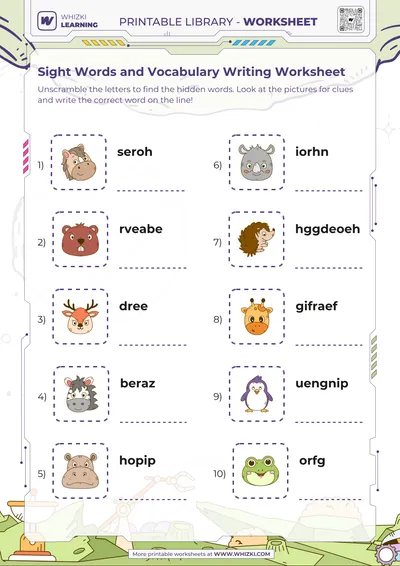
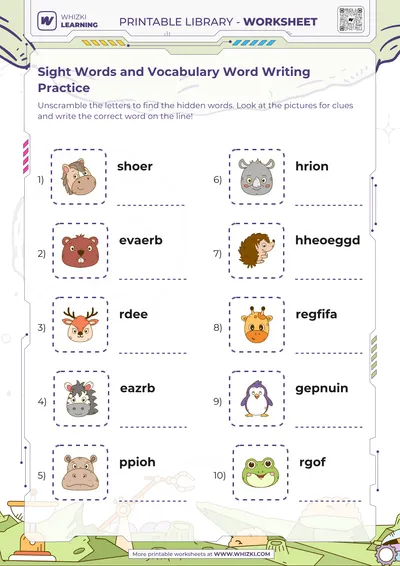
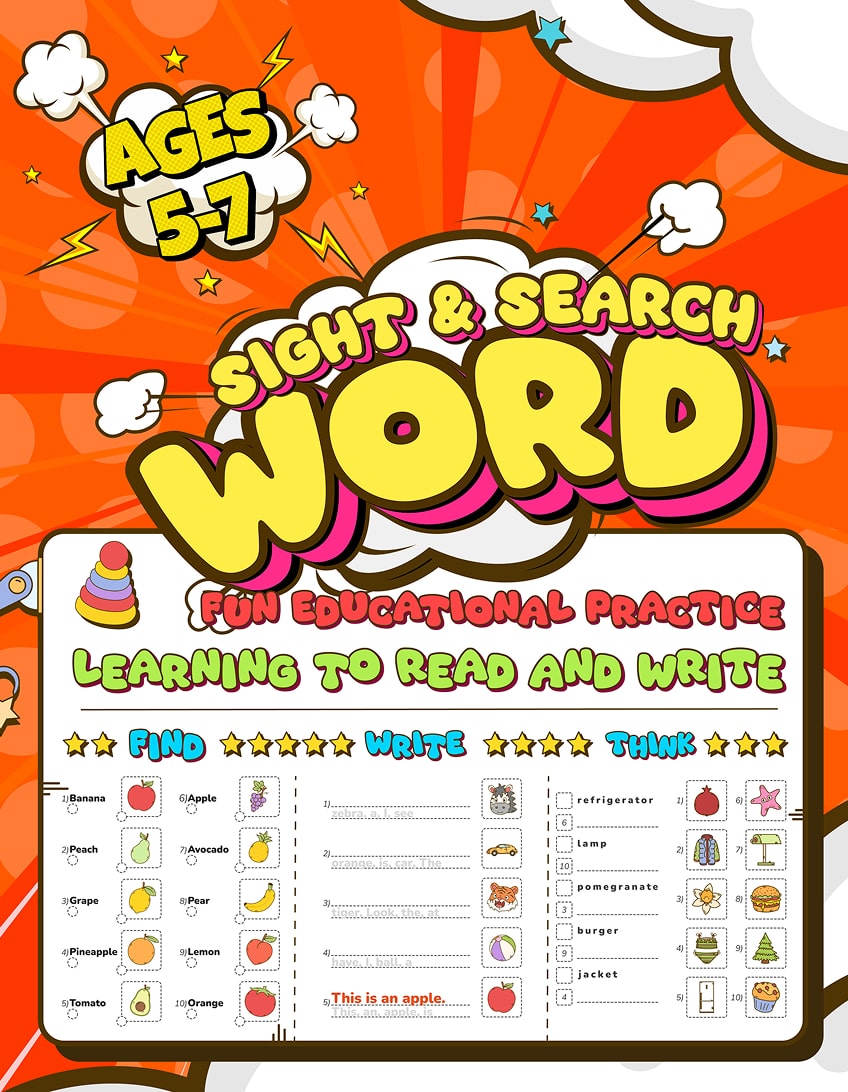
If making neat cards is the barrier, Whizki Learning has simple letter and word templates in the printable library. Print one page, cut only three cards, and leave the rest for later so the wall stays small.
A three-word wall is a small teaching promise: the adult will choose useful words, place print where the child can reach it, notice the words in real life, and replace the cards before the display becomes clutter.