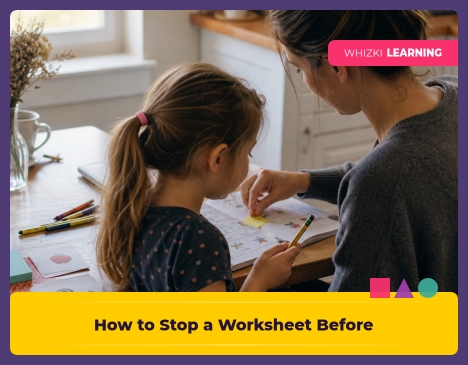
When the worksheet is starting to turn into a power struggle, stop at the first clear distress signal and say one calm closing sentence today. The goal is not to rescue a child from every hard moment, because real learning includes a little effort. The goal is to protect the relationship and leave a clean path back to learning later.
Reviewed by Whizki Editorial Team, Early Childhood Education Editors.
Early stopping signals worth noticing
The worksheet is still useful when the child is thinking, asking for a repeat, erasing with purpose, or saying, “Can you help me start?” Productive effort often looks slow, quiet, or a little wiggly in ages 3 to 7. In Orton-Gillingham tutoring, I expect a child to need repetition, touch, voice, and time before a new sound or symbol feels steady.
The worksheet has moved into distress when the child crumples the page, hides under the table, scribbles across every answer, freezes silently, or argues about every pencil mark. Occupational therapy basics remind adults to watch the whole body, including grip pressure, shoulders, breathing pace, and seat posture. A child who cannot get the body organized may not be able to show what the mind knows on paper.
The early stopping signal is clearest when the child’s behavior gets bigger while the task stays the same. NAEYC guidance asks adults to match learning to development and to keep warm relationships at the center of instruction. A preschool or kindergarten worksheet should never cost the child’s trust in the adult sitting nearby.
A worksheet stop decision tree
The worksheet stop decision tree takes about 30 seconds, and the materials are simple: the page, a pencil, one sticky note, and a calm adult voice. Decision point one is effort, so ask, “Is the child trying a strategy or only fighting the page?” If the child is trying, reduce the load by covering half the page or doing one item together.
The next decision point is body state, because a hungry, tired, or over-wiggly child may need movement more than another reminder. A Reggio-inspired observation stance helps the adult notice patterns before giving a lecture. The adult can say, “Your hand is pressing very hard, so the page is telling me we need a pause.”
The third decision point is language, especially when the child says, “I don’t know.” Speech-language practice favors giving wait time, modeling a first word, and offering a small choice instead of pushing for a fast answer. The wording in the previous parent systems guide pairs well with a worksheet pause because the adult can keep thinking open without demanding completion.
The final decision point is the adult’s own agenda. The worksheet should not become the price of a snack, a bedtime story, outside play, or a favorite activity. Completion as a reward condition turns a learning page into a power tool, and young children usually remember the power struggle more than the letter, number, or cutting line.
A neutral closing sentence that works
The neutral closing sentence should be short enough to remember when the room feels tense. My favorite sentence is, “We are stopping here, and we can come back when bodies are ready.” The sentence names the adult decision without blaming the child or calling the child lazy, naughty, or dramatic.
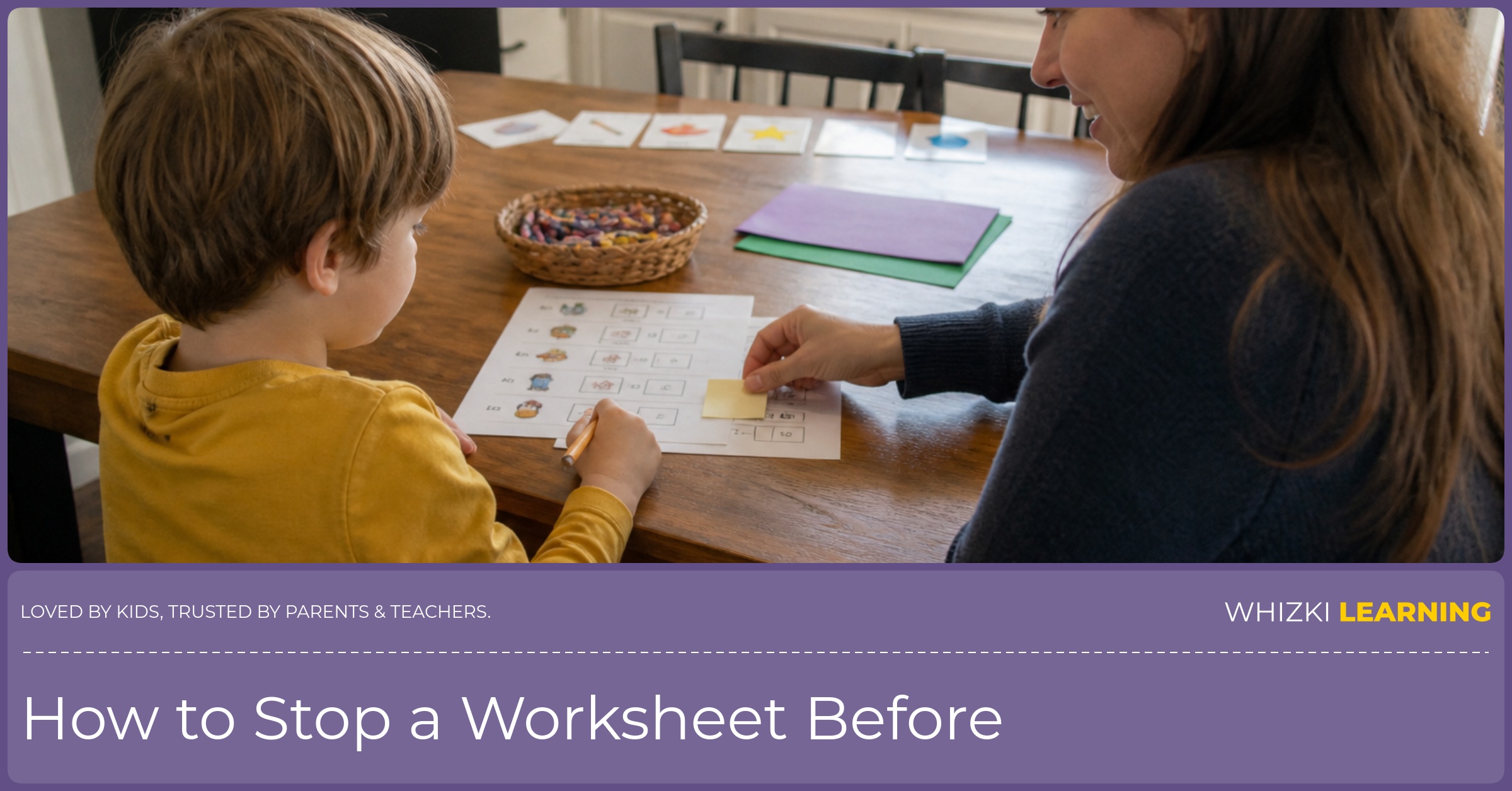
The worksheet return point needs a visible marker, because a clean stopping place lowers the chance of another argument later. Place a sticky note beside the next item, draw a small star in the margin, or slide the page into a folder with the next part facing up. For a child who gets upset by marks on the page, use a paper clip or bookmark instead.
The family schedule matters because a worksheet that failed at 6:45 p.m. may go better at 9:00 a.m. The family learning planner can hold the return time so the adult does not have to keep the unfinished page in mind all day. A planned return feels different from a threat because the adult names when the page will fit the child’s day.
The closing routine also borrows from Montessori practice, where the adult protects order, choice, and respectful transitions. The child can put the pencil in a cup, place the page in a folder, and choose a body break like wall pushes or carrying napkins to the table. The worksheet closure becomes a routine, not a debate.
The printable library is helpful when a page is too long and a shorter practice sheet would fit the child better. Pick one small page, set a five-minute timer, and plan the stopping spot before the pencil touches the paper.
When not to return to the worksheet
The worksheet does not always deserve a second round. If the page is far above the child’s current skill, if the child is sick, if the page caused repeated tears across more than one day, or if the task depends on fine-motor control the child is still building, put the page away. A different hands-on activity can teach the same idea with less friction.
NAEYC guidance supports using materials that fit the child, not forcing the child to fit the material. Occupational therapy heuristics also remind adults that pencil work is a body task, not just a brain task. A child who can count toy bears correctly may still struggle to write tiny numerals in boxes.
The teacher, caregiver, or homeschool parent can replace the worksheet with an easier bridge. Letter practice can move to sand, play dough, air writing, or magnetic letters. Number practice can move to snack pieces, blocks, toy cars, or steps across the rug.
The honest limit is simple: a worksheet is a tool, not a full reading, writing, or math plan. Orton-Gillingham lessons include sound, speech, touch, movement, review, and carefully chosen paper practice. A printable works best when the adult treats the page as one small check-in, not the whole lesson.
Age adjustments for children 3 to 7
The three- and four-year-old worksheet window is usually tiny, often three to five minutes for tracing, matching, coloring, or circling. A preschool child may need the adult to do the first item, name the plan, and stop while the child still feels successful. Reggio practice helps here because the adult studies the child’s interest and builds from what the child is already showing.
The five- to seven-year-old worksheet window can stretch to five to ten minutes when the skill is familiar and the body is fed, rested, and ready. A kindergarten child may handle one line of letters, three sound boxes, or six counting items before a break. Orton-Gillingham pacing keeps practice short, accurate, and multisensory instead of long and sloppy.
The adult plan can be written before the worksheet starts: “We will do four problems, mark the next spot, and stop.” The child can repeat the plan back, choose the pencil color, and help place the sticky note nearby. Choice gives the child a small sense of control while the adult still holds the boundary.
The spoken reset should stay plain, because young children do better with fewer words during frustration. Speech-language pathology practice often uses short models, two choices, and wait time, so the adult might say, “Break or one together?” After the child answers, the adult follows the plan without adding a speech about attitude.
A stopped worksheet is not a failed lesson. A calm stop teaches a child that effort matters, distress gets noticed, and learning can restart without a battle.