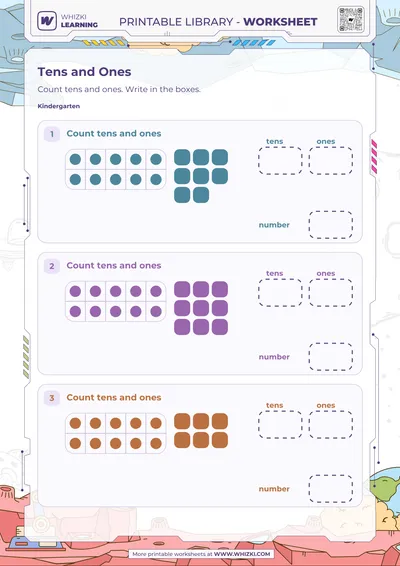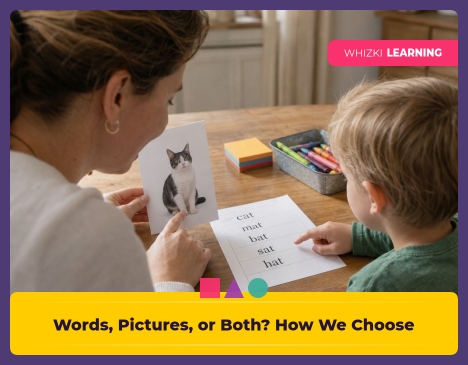
When a child keeps naming the picture instead of looking at the letters, the page can feel like a tiny family argument; today, cover the picture with a sticky note for one round, read the printed word for one round, then ask, "Which clue helped your brain?" The goal is not to make every page harder. The goal is to choose the clue that matches the skill your 3 to 7-year-old is practicing.
Reviewed by Whizki Editorial Team, Early Childhood Education Editors.
Field note: three prompts are not the same
The page prompt can be a picture, a printed word, or a picture beside a printed word. In Reggio-inspired observation, the adult watches what the child actually uses, not what the adult hoped the child would use. The same worksheet can invite oral language, letter attention, or plain guessing depending on the prompt.
Documented fact: the picture supports meaning before print is reliable. A picture of a mop helps a prereader talk about cleaning, beginning sound, category, or story detail. The picture does not prove the child read the word mop.
Documented fact: the printed word supports letter work and word-shape attention when the child is ready to look at print. The word mop gives the adult a place to say, "My mouth starts with /m/, and the first letter is m." The printed word does not guarantee the child understands the object without oral language or a picture nearby.
Proposed check: the adult can ask one quiet question before printing, "What clue do I want the child to use first?" The answer guides the design choice. A vocabulary page usually earns a clear picture, while a letter-discrimination page often needs the picture moved, faded, or removed.
When the picture should lead
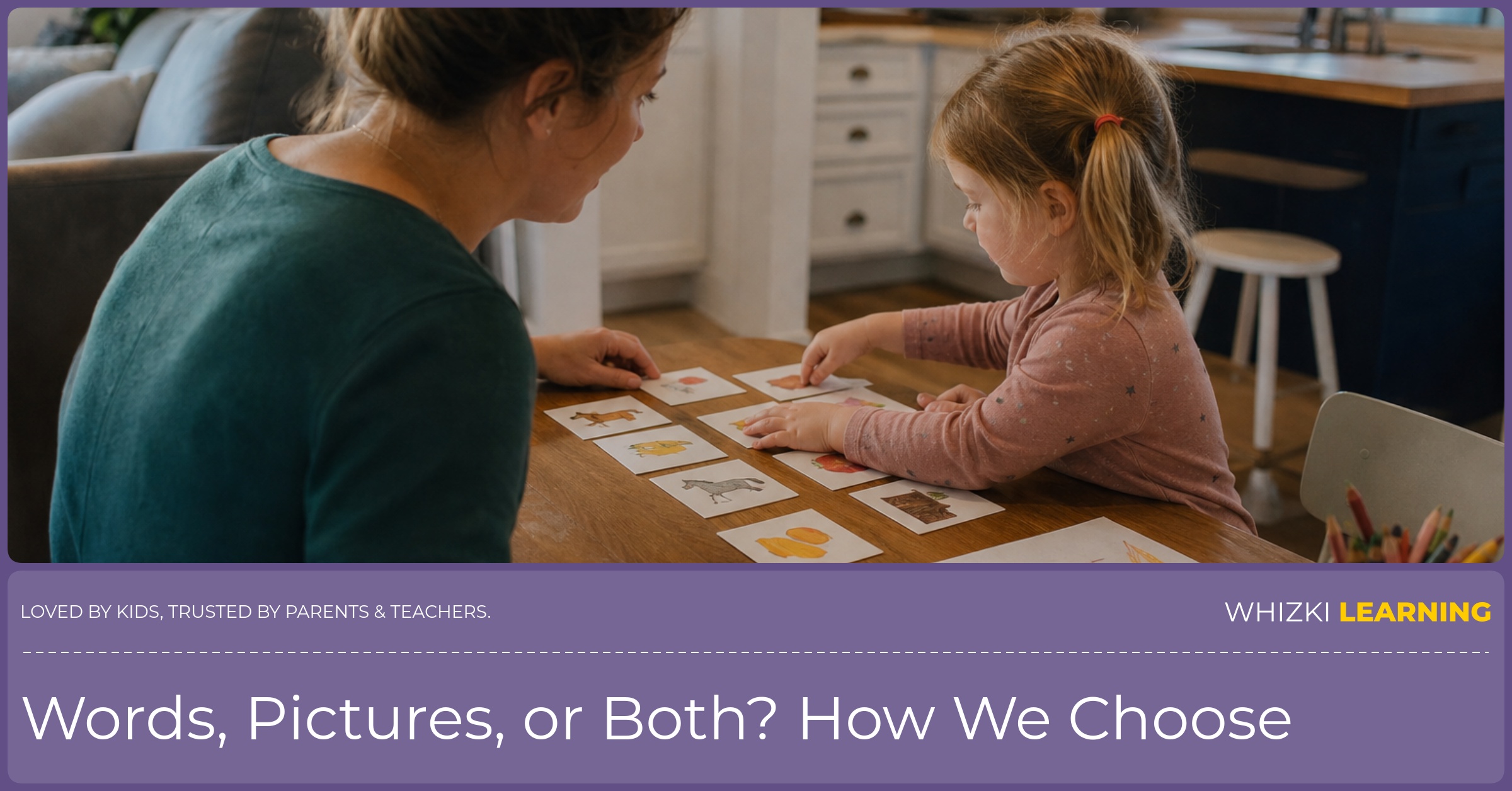
The picture should lead when the learning target is vocabulary, oral language, categorizing, storytelling, or real-world meaning. Speech-language pathology practice often begins with shared attention to an object or image before asking for more exact speech or print work. A clear picture lets the child join the task without needing to decode.
The picture also helps 3- and 4-year-olds who are still building the bridge between a word they hear and an object they know. A preschooler can point to a nest, say bird, then hear the adult model, "A nest is a home for eggs." That exchange is useful language work, even when no reading has happened.
The picture can still help 5- to 7-year-olds when the word is new, uncommon, or easily confused. NAEYC guidance reminds adults to connect learning with meaningful experiences, and a picture can keep the page grounded in something the child can discuss. The picture should be clean, large enough to identify, and free from decorative clutter that steals attention.
When the printed word should lead
The printed word should lead when the learning target is letter recognition, sound-symbol work, or careful looking at left-to-right print. The Orton-Gillingham approach keeps sound, symbol, and mouth movement close together, so the printed word needs enough visual space to matter. A child cannot attend to the first letter if the picture has already answered the question.
The printed word also needs friendly physical design. An occupational-therapy heuristic I use is simple: if the pencil task, eye tracking, or page crowding makes the work harder than the literacy target, the page needs less on it. Big spacing, plain type, and a short response path can protect the actual reading job.
The adult can use the alphabet learning hub when the target is letter naming, beginning sound practice, or alphabet review. A printed word on a letter page is strongest when the adult says the sound, points to the letter, and keeps the child from relying only on the nearby drawing. The page is doing letter work when the child has to look at the print.
For ready-made practice, the printable library has alphabet and prewriting pages you can use for quick comparisons. Print one page twice, cover the picture on one copy, and watch which clue your child uses first.
When both become an unintended clue
A picture plus a printed word can be lovely during shared reading, labeling, and vocabulary play. Montessori-inspired work calls attention to the control of error, or the built-in way a child can notice and correct a choice. On a page meant to check letter attention, the picture can become too much of a control and can hand over the answer.
The design problem shows up fast with familiar nouns. If the page says dog and shows a dog, a prereader can say dog without touching d, o, or g. If the page asks the child to circle the word sun and the only bright yellow object on the page is the matching picture, the child may be solving a picture puzzle instead of a print task.
The same risk appears in crowded pages. The adult may think more drawings make the worksheet cheerful, while the child may scan for the easiest visual match and skip the print. I use the previous field notes guide as a reminder that a busy layout can change the skill being practiced.
A ten-minute review before printing
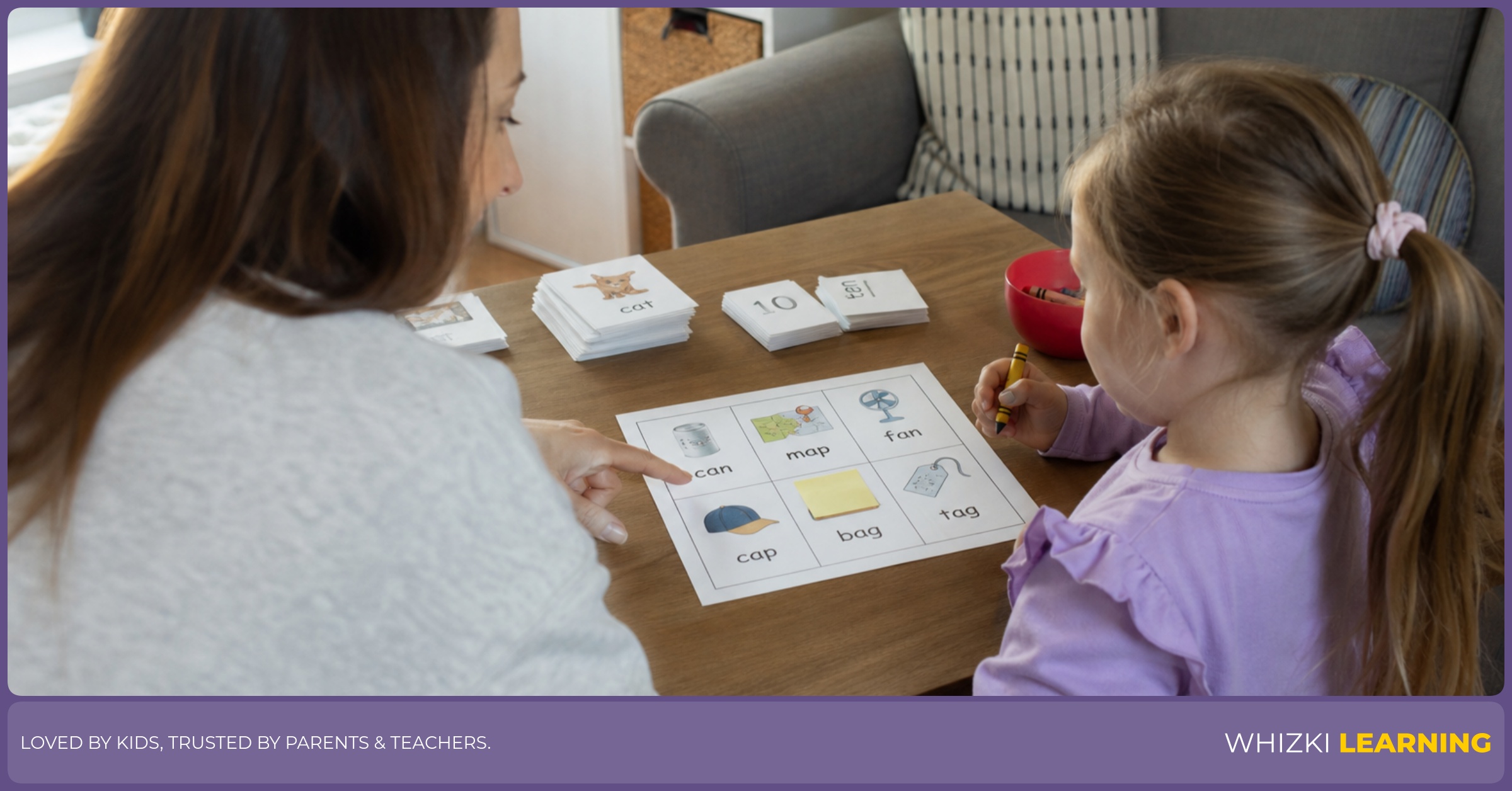
The ten-minute review begins with the page on the table, not on a screen. Reggio-style documentation asks the adult to slow down and notice the materials, so I look at the page as a child would: What is biggest, brightest, closest to the answer, and easiest to touch? The first visual pull often tells me which clue will lead.
The first pass checks the learning target. If the target is naming objects, the picture stays clear and central. If the target is finding the letter m, the picture moves away from the answer or waits until the child has named the letter sound.
The second pass checks the body job. Occupational-therapy basics remind adults that young children spend effort on sitting, stabilizing the paper, moving the crayon, and scanning the page. A page with too many tiny pictures may ask for more visual-motor control than a 3- to 7-year-old can comfortably give during literacy practice.
The third pass checks the adult script. The adult script can be as short as, "Look at the first letter," or "Tell me what the picture shows." The script matters because the same page can become a vocabulary chat, a letter hunt, or a guessing game based on the words the adult uses.
Age adjustments and honest limits
A 3- or 4-year-old usually benefits from fewer choices and stronger picture support. NAEYC guidance keeps early learning playful and concrete, so a page for preschoolers can pair a large object picture with one spoken focus, such as "moon starts with /m/." The adult can write the word nearby without expecting the child to read the word independently.
A 5- or 6-year-old often benefits from a clearer split between picture time and print time. The adult might talk about the picture first, then cover the picture and ask the child to find the first letter in the printed word. The split keeps vocabulary support from turning into the answer key.
A 6- or 7-year-old who is starting to decode may need the printed word to lead more often. Orton-Gillingham tutoring routines commonly ask the child to say the sound, trace or tap the letter, blend the word, and then connect the word back to meaning. A picture can come after the reading attempt as a confirmation instead of before the reading attempt as a shortcut.
The page cannot tell the whole story of a child. If a child avoids print every time, cannot see the page comfortably, loses pencil control quickly, or seems frustrated by sounds in spoken words, a pediatrician, vision provider, occupational therapist, speech-language pathologist, or reading specialist can help sort out the next step. A printable is a tool for practice, not a diagnosis and not a promise about placement.
The best page is the page where the clue matches the teaching aim: picture for meaning, print for letters, and both for shared reading when guessing is acceptable. Tomorrow, change only one clue on one page, because small design choices are easier to notice than a whole new routine.