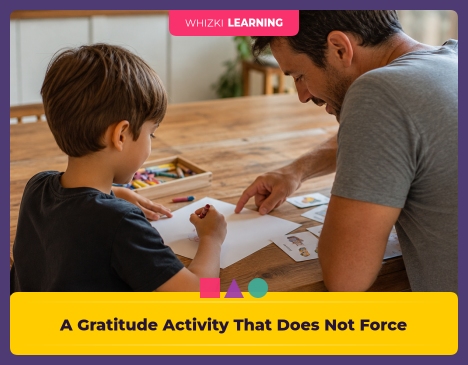
Your child may love Thanksgiving crafts and still freeze when Grandma asks for one happy grateful answer, so today set out paper and crayons and say, "You can draw, choose, tell me, or pass." A small choice lowers the performance pressure and keeps gratitude close to real family life, where children can feel thankful, grumpy, shy, and excited in the same hour.
Reviewed by Whizki Editorial Team, Early Childhood Education Editors.
Start with a four-choice decision tree
The gratitude activity works best when the adult treats gratitude as communication, not compliance. NAEYC guidance asks early-childhood adults to honor a child's development, culture, language, and temperament, and a choice-based prompt does that better than a forced round-robin answer.
The materials stay simple: blank paper, crayons, four small sticky notes, and five quiet minutes. The adult writes one option on each sticky note, then lets the child point, speak, or move a note instead of producing a polished sentence.
- Draw.
- Choose.
- Dictate.
- Pass.
The decision tree can sit inside the family learning planner when a family wants a gentle November routine without adding another big project. The planner page can hold one tiny drawing, one adult-written sentence, or a blank space that still counts as participation.
Make room for ordinary answers
The child who says "mac and cheese," "my dinosaur," or "nothing today" is giving useful information. Reggio-inspired observation reminds teachers and parents to notice what a child expresses before rushing to make the answer look adult-approved.
The adult can answer ordinary words with a calm sentence: "Mac and cheese counts," or "A blank page counts today." The adult's steady response teaches that gratitude is a real feeling, not a stage performance for relatives, classmates, or guests.
Mixed feelings belong in the activity because young children often hold two truths at once. A preschooler can miss a parent at work and still like pumpkin pie, and a kindergartner can feel annoyed by a scratchy sweater and still enjoy seeing cousins.
Families who want seasonal conversation support can pair the gratitude prompt with the previous fall season guide and keep the tone curious rather than quiz-like. The adult can ask one question, accept one answer, and move on before the child starts performing for approval.
Keep gratitude separate from gifts and behavior
The gratitude activity loses trust when adults connect the answer to dessert, presents, manners, or behavior charts. Occupational-therapy basics often use low-demand choices to support regulation, and the same idea helps a child keep a steady body while thinking about feelings.
The adult can say, "Thank-you notes happen because someone gave a gift, and gratitude drawings happen because our family is noticing good things." The separation helps a child learn social kindness without feeling that a happy answer is required to be safe, loved, or included.
Speech-language practice gives another useful option: the adult can write the child's exact words without editing the feeling. Dictation honors a three-year-old who speaks in short phrases and a seven-year-old who can talk faster than the child's hand can write.
The honest limit is that a gratitude page will not fix a hard visit, a hungry afternoon, or a child who needs quiet space. The gratitude page is a small invitation, and the adult can stop the activity when the child's body shows fatigue, silliness that turns frantic, or repeated refusal.
If a ready page helps, the holiday and culture printables include simple seasonal pages that can hold drawings, dictated words, or one chosen picture. Keep the printable as an invitation on the table, not as proof that a child felt the correct feeling.
Use a five-minute routine
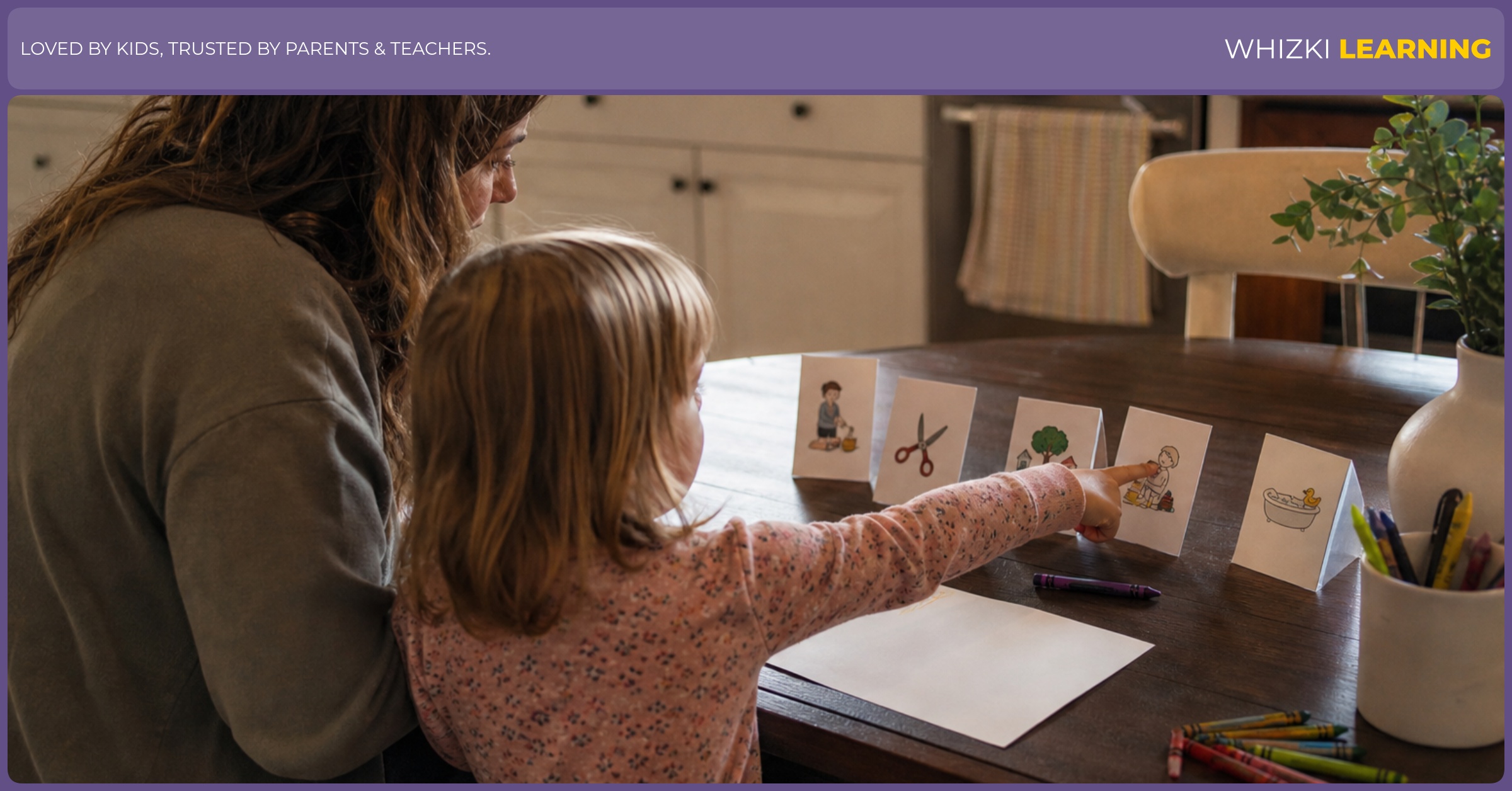
The five-minute routine begins with the adult placing paper sideways, offering two crayons, and saying the four choices in the same order each time. Montessori practice often protects concentration with an uncluttered work space, and two crayons are usually enough for a child who gets stuck when the whole box appears.
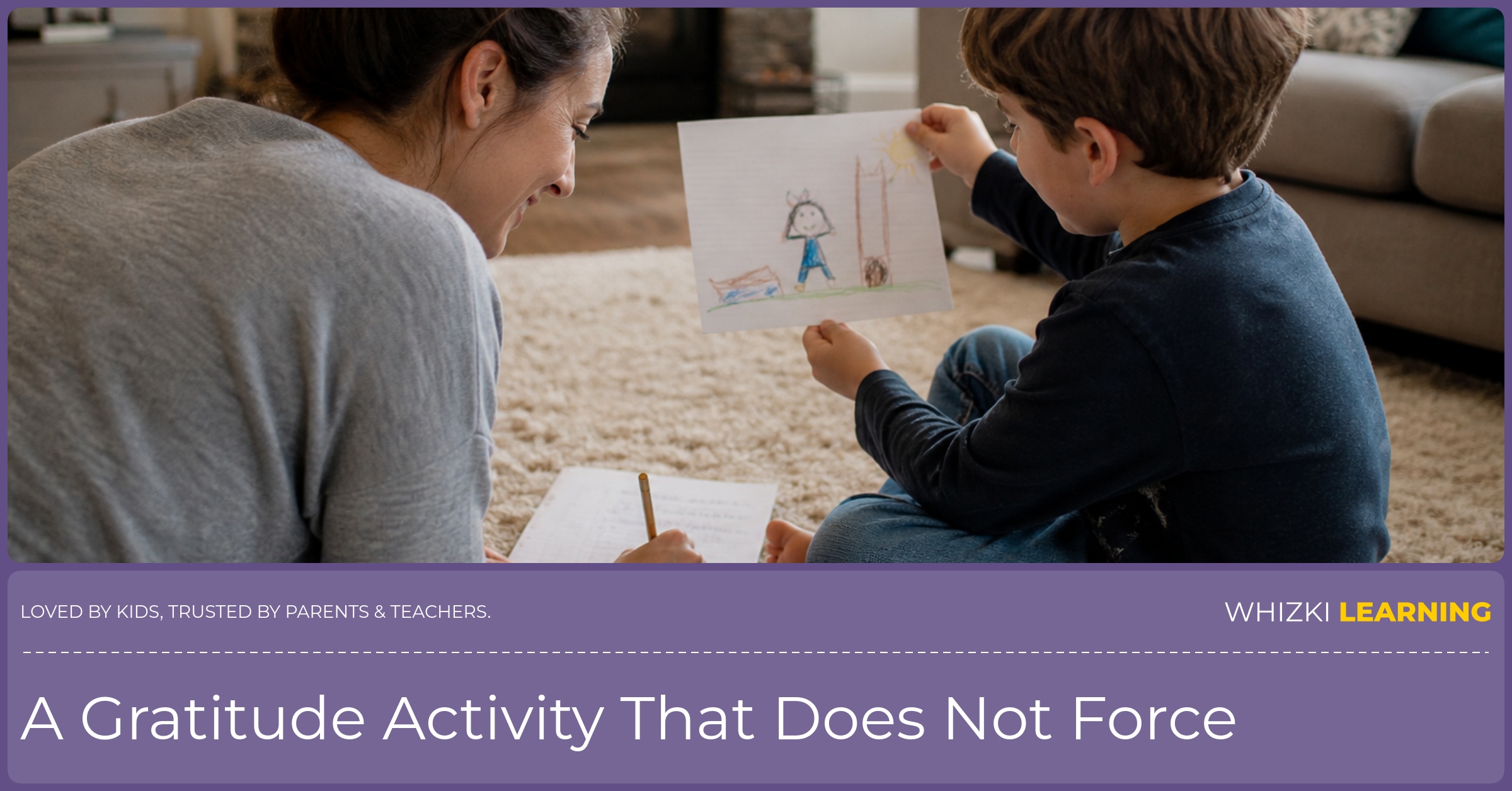
The routine changes by age without changing the message. A three-year-old may point to a picture, a four-year-old may draw a scribble story, a five-year-old may dictate one sentence, and a six- or seven-year-old may try invented spelling with adult help.
The Orton-Gillingham approach reminds teachers to connect speaking, hearing, moving, and writing when early literacy is involved. If a child wants to write "dog," the adult can slowly say the word, help the child tap the sounds, and accept a partial spelling beside the drawing.
The routine ends with choice again: keep the page, give the page, photograph the page for family records, or recycle the page later. The adult protects the child's dignity by asking permission before reading the words aloud at dinner or sending the drawing to a relative.
A gratitude activity for ages 3-7 can be warm without becoming a performance. Offer drawing, choosing, dictating, or passing, then let the child's ordinary answer be enough for today.