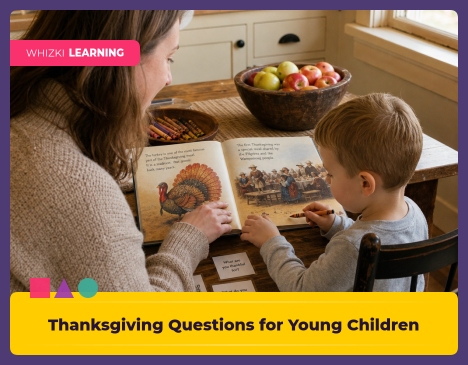
If your child asks "Who were the first Thanksgiving people?" while the turkey is late and a cousin is asking for a screen, pause the quiz and try one question today: "What do we know, and who might tell the story another way?" The Thanksgiving conversation can stay warm, short, and truthful without turning a preschooler into a historian. The goal for ages 3 to 7 is curiosity, gratitude, and respect, not a perfect speech at the table.
Reviewed by Whizki Editorial Team, Early Childhood Education Editors.
A decision tree for the dinner-table question
The decision tree begins with the question your child actually asked, not the speech an adult prepared in the car. NAEYC guidance reminds early-childhood teachers to start with children’s lived questions and build from real family life. A useful adult line is, "Are you asking about the food, the people, or why families gather?"
The "Who was there?" question gets a calm answer: "Many people were involved, including English settlers and Wampanoag people, and families tell the history in different ways." That answer leaves room for complexity without handing a 4-year-old a lecture. The adult can add, "Native nations are still here today, and real families have many different Thanksgiving practices."
The "Were Native people happy?" question needs honesty and a boundary. A child-friendly answer is, "Some meals may have included sharing, and the bigger history includes harm and unfairness too." The adult can stop there, then ask, "What is one respectful question we could bring to a book or trusted grown-up later?"
Keep history honest without making a myth quiz
The history answer should avoid costumes, reenactments, and tidy claims about "the Indians" or "everyone getting along." Young children hear categories before nuance, so broad labels can stick harder than adults intend. A better phrase is, "Some Native people belonged to the Wampanoag nation, and Native nations have their own names, languages, and stories."
The vocabulary piece can borrow from Orton-Gillingham practice, even though the topic is social studies rather than reading. Orton-Gillingham teaching favors clear language, repeated key words, and checking what the child heard. The adult might say, "Wampanoag is a name for a people, not a costume," then let the child say the word slowly if the child wants to try.
The classroom or living-room rule is simple: pretend play can focus on cooking, hosting, setting a table, or making a gratitude card, not acting out Indigenous identities. Reggio-inspired teachers often ask what materials are saying to children, and paper feathers, headbands, and staged pilgrim scenes can send the wrong message. For another fall routine that keeps the season playful without turning the holiday into a script, see the previous fall season guide.
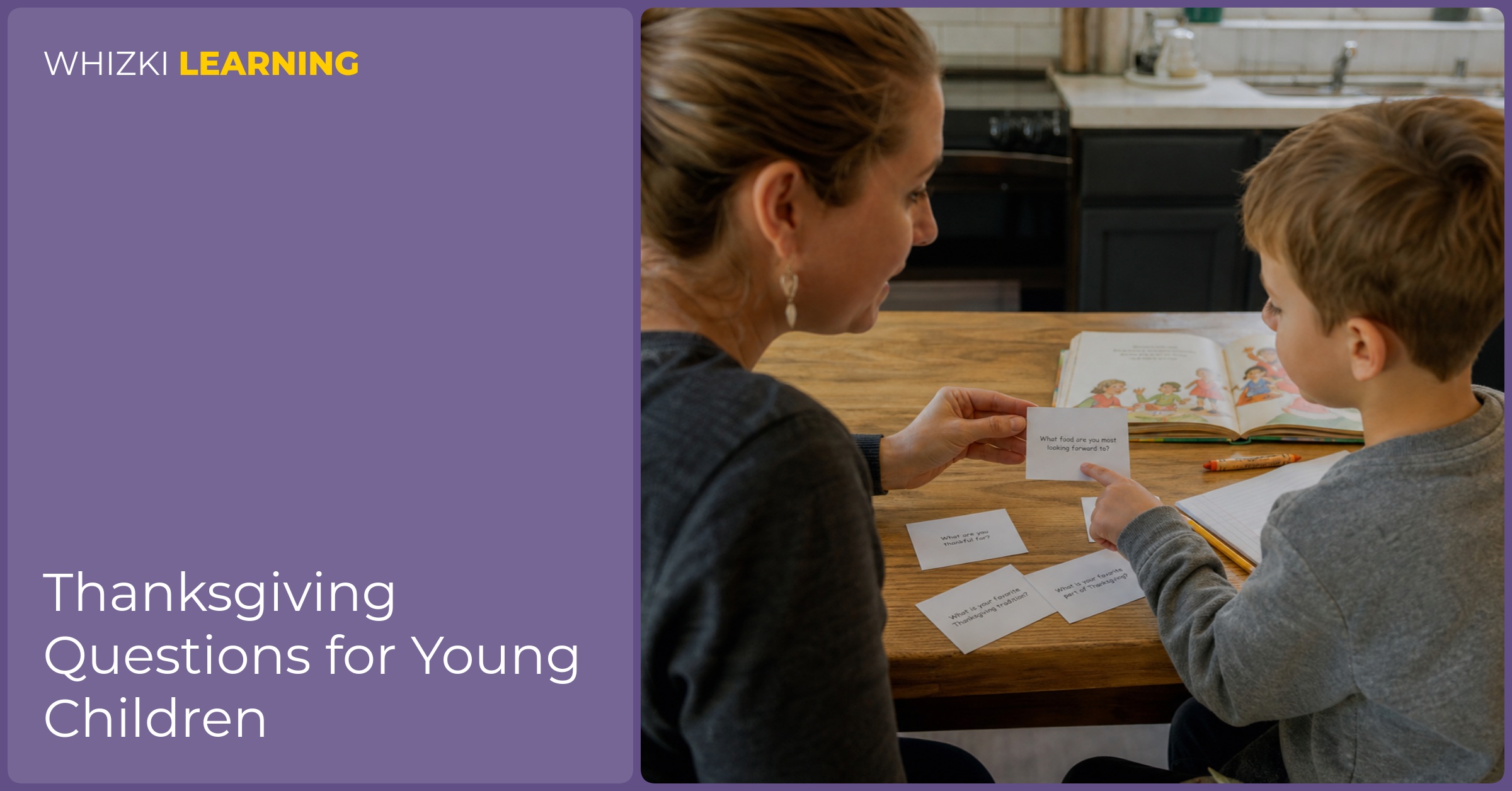
The holiday printable can sit next to crayons, books, and family photos instead of acting like a test. If a ready page would help, the holiday and culture printables offer simple prompts for food, gratitude, and gathering.
Make gratitude concrete with food and gathering
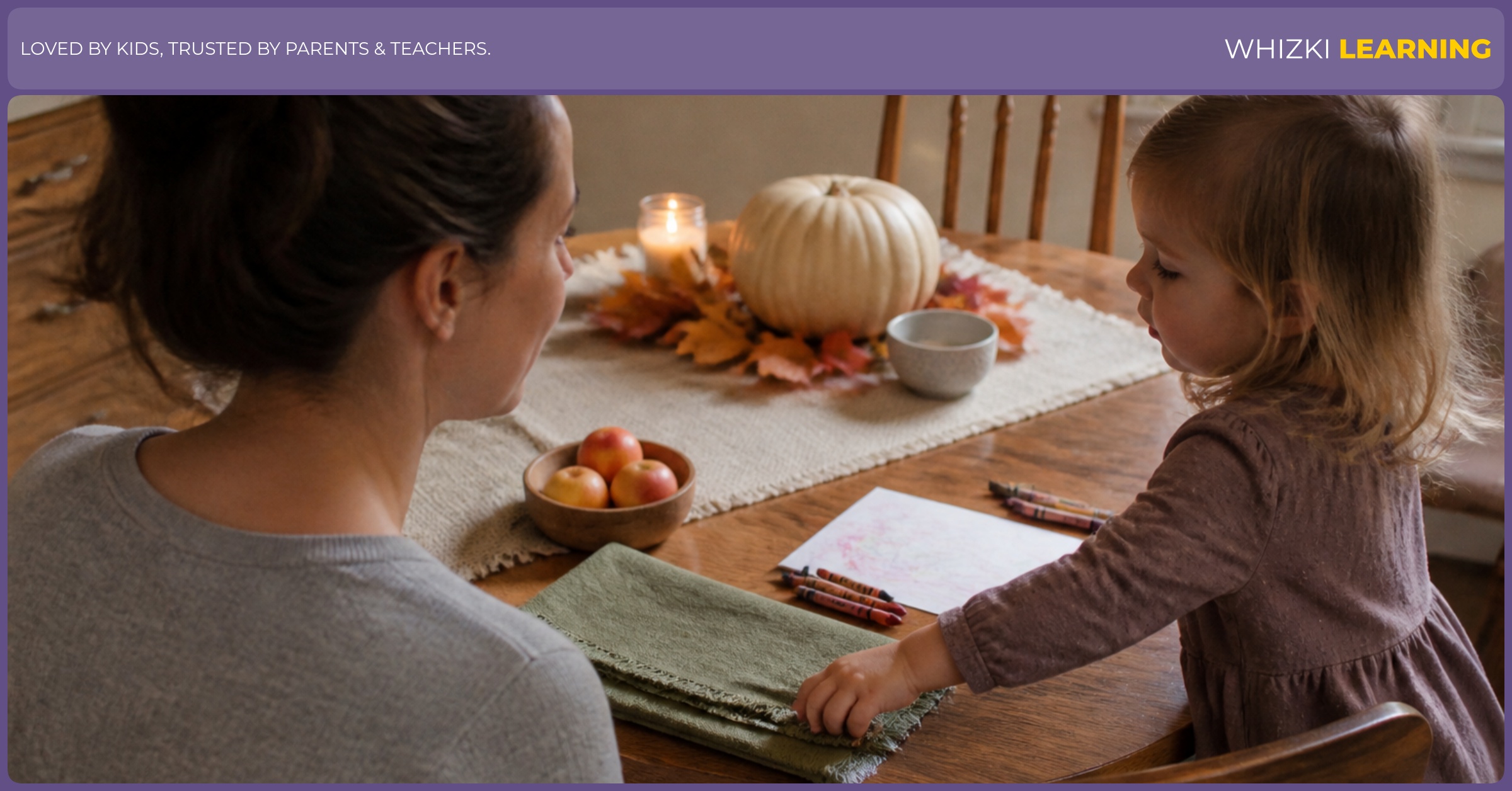
The gratitude routine works best when the child can touch or move something. Reggio practice treats real materials as part of the conversation, so a spoon, napkin, apple, photo, or place card can become the prompt. The adult can ask, "Who helped bring food to our table today?"
The food prep job can support attention and body awareness, not just manners. Occupational-therapy basics often use hand work, steady posture, and short jobs to help children settle into a group moment. A 3-year-old can place napkins, a 5-year-old can count forks, and a 7-year-old can write a short menu with invented spelling accepted.
The gathering piece should include children who do not love crowded rooms. Montessori practice respects purposeful work, so a child can carry rolls, draw place cards, or choose a quiet book basket before greeting relatives. The adult can say, "Your job helps the meal feel welcoming," instead of forcing a public gratitude performance.
Use books, maps, and family stories carefully
The book basket should include current Native voices when possible, plus family food stories, gratitude stories, and simple nonfiction. Speech-language pathology practice often uses open-ended prompts because young children answer better when adults avoid rapid-fire recall questions. The adult can ask, "What did the author want readers to notice?" instead of, "What year did that happen?"
A short browse through the main learning hub can help a caregiver pair a seasonal page with a book, a map, or a family photo. The activity should invite conversation rather than ask children to prove a memorized claim. The adult can write one child sentence on a sticky note and save the note beside the book.
The family interview can stay small and kind. Ask one relative, "What food reminds you of being cared for?" or "Who taught you to make something we eat?" Family stories do not replace history, but family stories help children see that gatherings carry memories, work, and many points of view.
A 20-minute plan for today
The 20-minute plan uses the same steady sequence I use with preschool and kindergarten groups: connect, name, make, share. Orton-Gillingham routines use predictable steps because children can listen better when the order is familiar. NAEYC guidance supports short, meaningful experiences over long adult talks.
The first five minutes can be a food or photo notice: "I see soup, bread, Grandma’s bowl, and a picture from last year." The next five minutes can name the history with one honest line: "People tell Thanksgiving history in different ways, and Native nations are still here today." The next seven minutes can make a card, draw a food memory, or place one object on the table for gratitude.
The final three minutes can share one sentence, with no pressure to perform for the whole room. A preschooler may point to a drawing, a kindergartner may dictate a sentence, and an older 7-year-old may write a few words. The honest limit is that one activity cannot teach the whole history, but one respectful routine can keep the holiday from becoming a myth quiz.
The goal is a Thanksgiving conversation your child can carry gently: food matters, gratitude matters, people tell history differently, and respect matters. The adult does not need perfect wording before the potatoes cool; the adult needs one calm sentence, one real material, and one invitation to wonder.