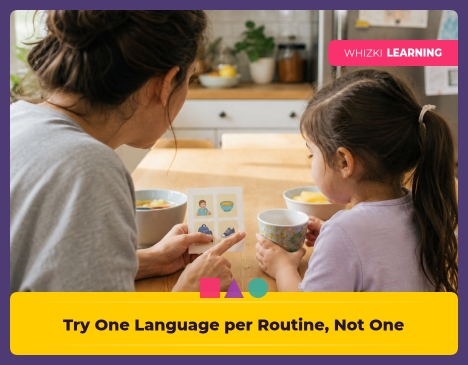
If one parent wants Spanish at breakfast, another switches to English during the cereal spill, and a grandparent asks whether mixing languages will confuse the child, choose one small routine today instead of voting on a whole-house policy. Breakfast, bath, books, or a weekly call can become a predictable language context for 5 to 10 minutes. The goal is steady exposure, not perfect adult performance.
Reviewed by Whizki Editorial Team, Early Childhood Education Editors.
Start with one routine, not a house rule
One language per routine is an option where a family chooses a predictable pocket, such as breakfast in Spanish or bath in Arabic, instead of assigning one language to every room. NAEYC guidance on developmentally appropriate practice backs routines because young children learn best through familiar relationships, repeated actions, and real objects. A routine plan also respects the adult who is tired, bilingual, or still learning alongside the child.
For today, choose the routine that already happens even on messy days. Place one concrete cue nearby, such as a mug, bath toy, library basket, or phone reminder for a grandparent call. Use the chosen language for greeting, two useful phrases, and the closing sentence, then let the rest of family life stay flexible.
Natural code-switching belongs in bilingual homes, so a child can answer in English during a Spanish breakfast without being corrected like a mistake. The adult can model the target phrase back warmly, such as yes, more milk, más leche, and keep the toast moving. The pattern gives the child a path into the language without making the language a behavior chart.
Use the decision tree when life is messy
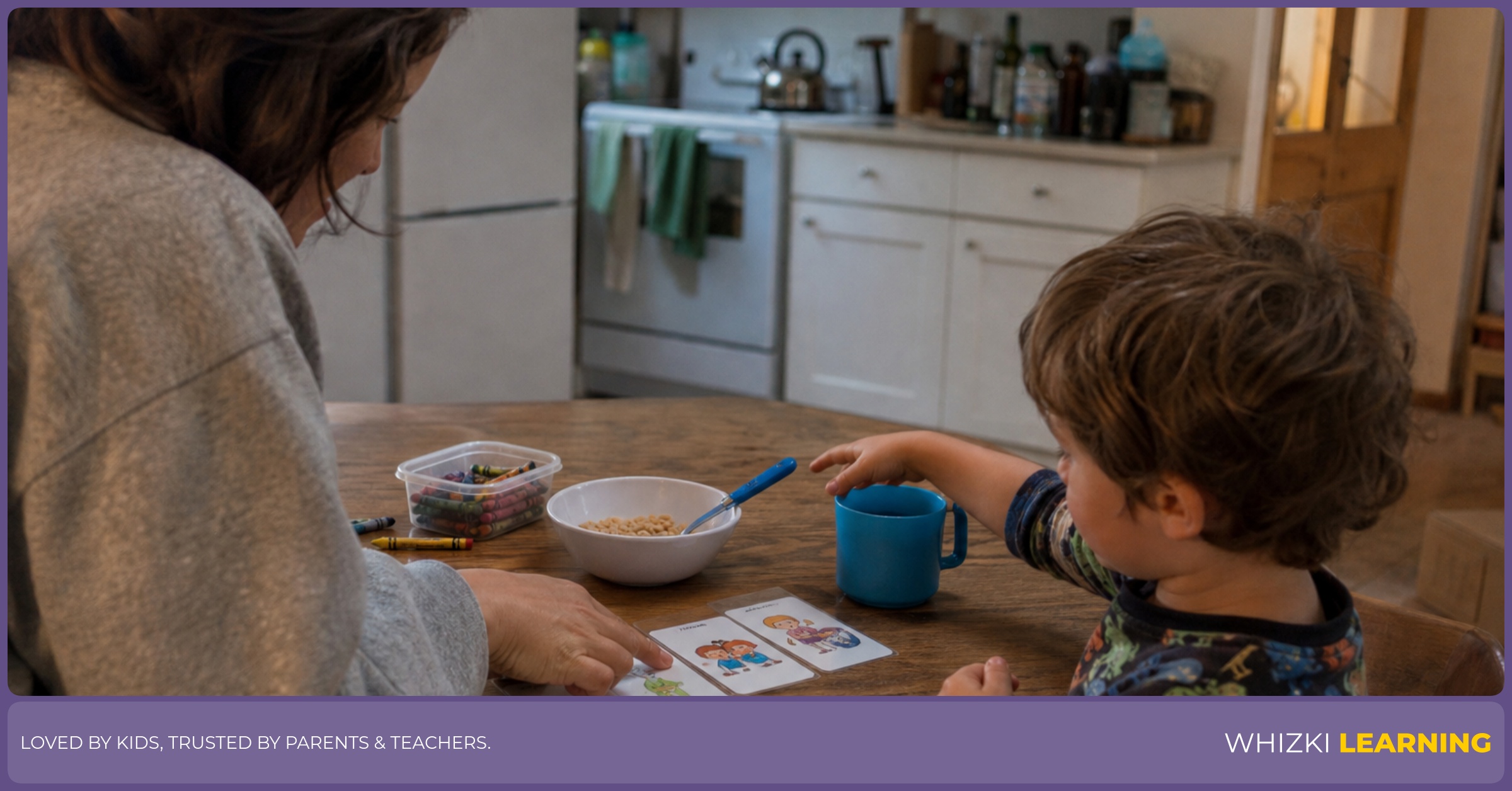
A kitchen-table decision tree works better than a strict rule because speech-language pathology practice treats communication as connection first. Start with the routine that has the most shared attention: food, water play, a lap book, or a familiar speaker call. Shared attention gives the child a reason to listen and answer.
If the child is hungry and cranky before preschool, choose a shorter breakfast routine with only three lines. If bath time is calmer, choose bath words for body parts, water temperature, and cleanup. If a grandparent is the strongest speaker, choose a weekly call and send the same three picture prompts ahead of time.
If an adult forgets and switches languages, the adult can simply return to the routine language at the next natural sentence. Code-switching is normal in multilingual families, and a quick return is enough. The child learns from the predictable pattern, not from adult guilt.
If the child pushes back, shrink the plan before dropping the plan. Two minutes of book cuddling in the home language can be more useful than twenty minutes of tense correction. A Reggio-inspired view asks the adult to observe what the child is already showing through play, voice, and body posture.
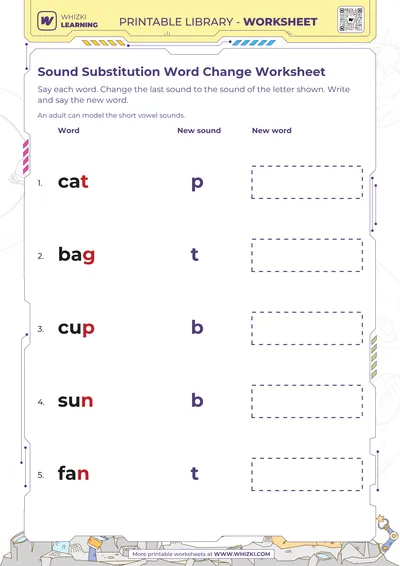
A simple printable can help adults remember the plan without turning breakfast into a lesson. If a visual cue would help, browse the Learning Hub for routine-friendly pages and use only the pieces that fit your table.
Try breakfast, bath, books, or a weekly call
The Orton-Gillingham approach reminds educators to use eyes, ears, voice, and hands together, and routine language can follow that same multisensory spirit without becoming a phonics lesson. A child can touch a cup, hear the word, say part of the phrase, and hand the cup to the adult. The object keeps meaning clear when vocabulary is new.
Breakfast can be a 4-minute routine with three repeatable phrases: good morning, more please, and all done. The adult can point to food, wait a few seconds, and model the phrase without demanding a perfect repeat. A 3-year-old may only gesture, while a 6-year-old may add a full sentence or a silly food opinion.
Bath can be a 5-minute routine for action words because warm water, cups, and washcloths invite real verbs. Books can be a 7-minute routine for repeated lines, animal sounds, and page-turn language. A weekly call can be a 10-minute routine when a relative has a stronger language model than the adults at home.
Adjust the routine for ages 3 to 7
Occupational-therapy basics remind caregivers to watch regulation, posture, and sensory load before adding language demands. A child who is hungry, slippery from bath soap, or upside down on the couch may need fewer words and more gestures. A calm body gives a young child more room to listen.
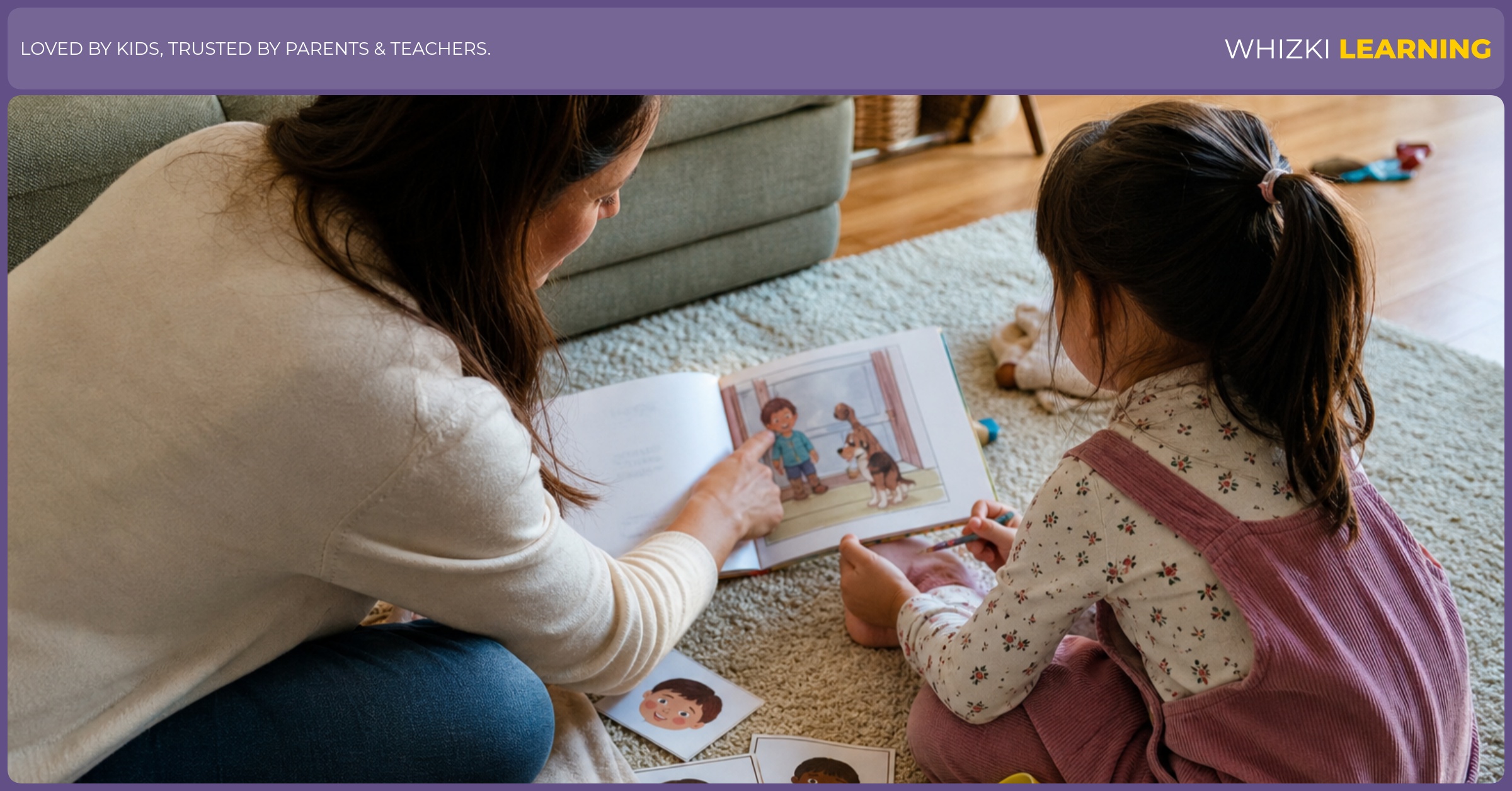
For ages 3 and 4, keep the routine mostly receptive and playful. The adult can say the phrase, pause, and accept pointing, nodding, or one sound as participation. Picture cards can help, but the real spoon, towel, or book usually carries more meaning than a worksheet.
For ages 5 to 7, invite more expressive language without turning the routine into a quiz. The adult can offer sentence frames, such as I want, I see, or I remember, and the child can finish the idea in either language. If the child writes comfortably, one label on a sticky note is plenty.
Know when to keep, shrink, or switch
A routine deserves a change when the child avoids the routine, the adult dreads the routine, or the chosen time keeps collapsing. Montessori observation practice would call for watching the child and adjusting the environment before blaming motivation. Moving the same language goal from breakfast to books may solve more than extra reminders.
The family plan can stay simple enough to fit on a fridge note. Use the family learning planner to write the routine, the language, the cue object, and the adult who usually leads. Review the note after one week and keep only the parts that made family life calmer.
Families with grandparents can connect the routine plan to the previous bilingual home guide and invite one elder story into the week. A grandparent can repeat the same greeting, song line, or photo description each call. If a child shows ongoing difficulty understanding or using language in any language, a pediatrician or speech-language pathologist can help the family decide what support is needed.
One language per routine is a gentle option, not a rule for every bilingual home. A predictable pocket of language can protect family warmth while giving children ages 3 to 7 more chances to hear useful words in context. Start with the routine that already has the least friction, and let natural code-switching stay part of the family story.