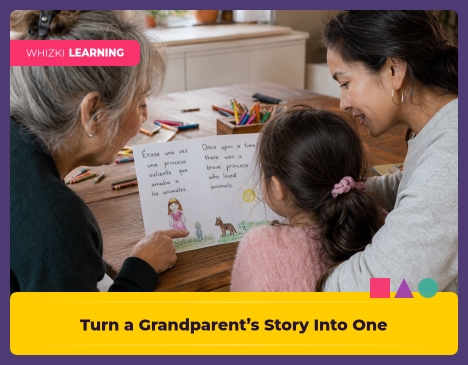
If the family chat turns tense over which language Grandma should use, choose one tiny story today: ask for a 60-second memory about food, a song, or a walk, and write the exact words down. The page can stay simple, private, and imperfect. A child ages 3 to 7 can add one drawing while the adult protects the speaker’s language and the family’s sharing rules.
Reviewed by Whizki Editorial Team, Early Childhood Education Editors.
The 25-minute page plan
The 25-minute page plan needs one sheet of plain paper, a pencil, a dark marker, crayons, and an optional family photo for reference. NAEYC guidance reminds early-childhood adults to build learning from family culture and real relationships, so a grandparent story page fits better than a polished family-history project. The plan works best when the adult handles writing and the child handles drawing, choice-making, and read-aloud listening.
The paper needs four clear spaces: the memory in the grandparent’s language, the family-approved translation, the child drawing, and a small permission note. A Reggio-inspired classroom habit helps here because the adult treats the child drawing as documentation, not decoration. The page does not need perfect spelling, perfect art, or a long interview.
The planning part can live beside appointments, library days, and home-language goals in the family learning planner. The planner can hold the date, the speaker’s name, the language or dialect named by the family, and the sharing choice. The small record helps teachers and homeschoolers remember that one page is a relationship activity first and a literacy activity second.
Invite one short memory
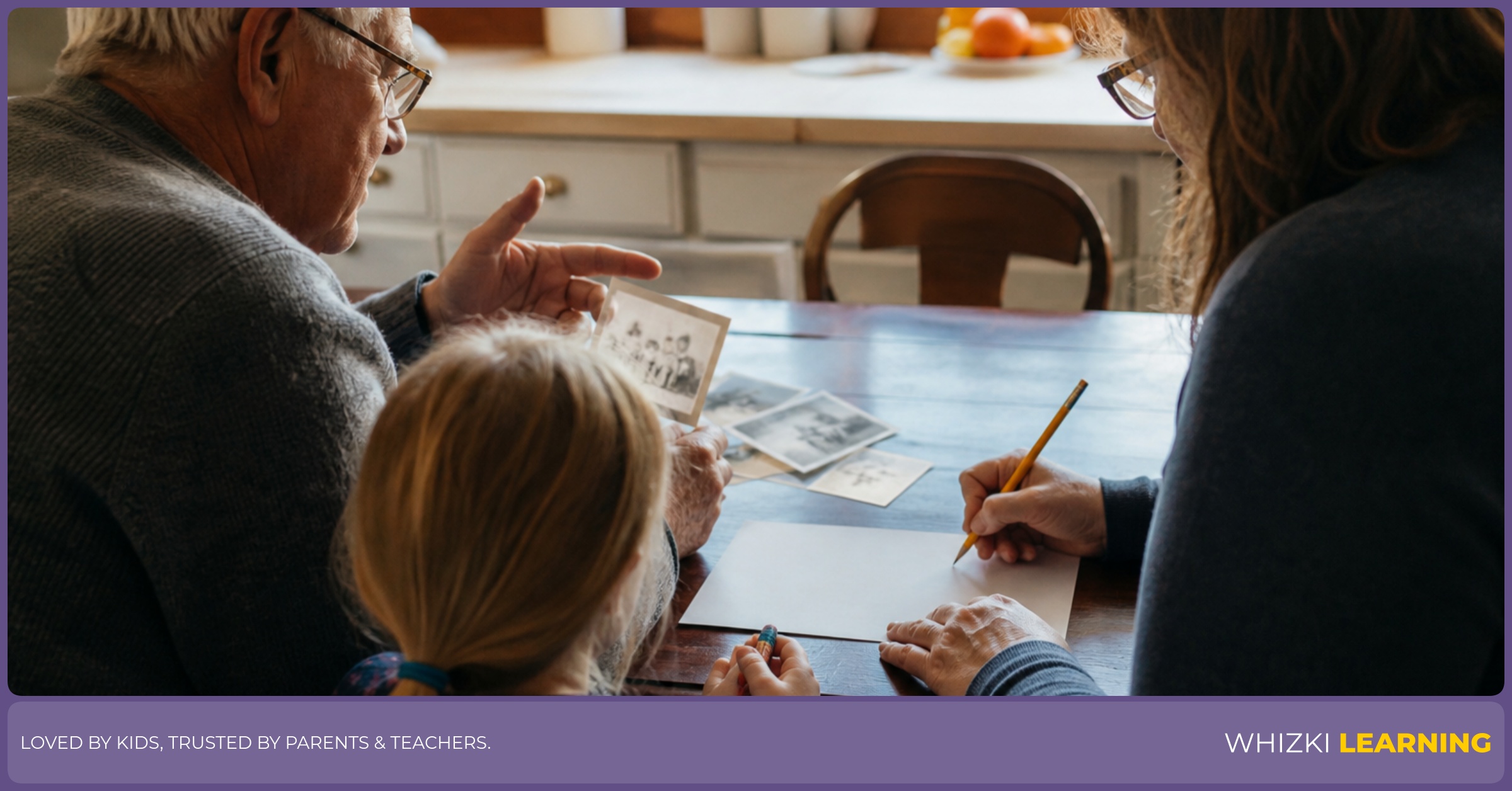
The invitation should be small enough for a tired adult and clear enough for a young child to understand. A speech-language pathology practice I use in classrooms is to offer a narrow choice, such as a food memory, a song memory, or a walk-to-school memory, because a narrow choice supports shared attention. The adult can say, “Please tell one short memory in the words that feel natural to you.”
The age adjustment matters because a 3-year-old may only point to the topic card while a 7-year-old may ask the grandparent a follow-up question. Montessori and Reggio observation habits both favor watching the child’s interest before adding more directions. The adult can stop after one scene, even when the speaker has a bigger life story ready.
The home language deserves room to sound like home, including nicknames, repeated phrases, and dialect words the family uses with affection. The same spirit appears in the previous bilingual home guide, where pictures help children connect real words to real meaning. The grandparent story page uses the same child-friendly idea, one picture and one meaningful bit of language at a time.
Keep the speaker’s words first
The grandparent’s wording should be written before any English translation is added. The Orton-Gillingham approach reminds teachers to respect sound, symbol, and sequence, and bilingual pages give children a concrete way to notice how spoken words become print. Family spellings, accent marks, and name choices should follow the speaker’s preference whenever possible.
The translation line should answer one question: what does the family want a visitor or teacher to understand? The adult can ask, “Which part is okay to translate?” and then write only that part. The private words can stay in the home-language line, or the private words can be left off the page entirely.
The reading routine should keep both languages visible without turning the page into a test. The adult reads the grandparent’s line slowly, then reads the translation, then invites the child to tell about the drawing. The child can repeat a favorite word, tap a name, or simply listen, and each response counts as participation.
When the memory page turns into letter-sound play, the printable library in the learning hub can give families simple pages for tracing, matching, and read-aloud practice. Use a printable as a follow-up, not as a replacement for the grandparent’s voice.
Add a child drawing without fixing the picture
The drawing step gives the child a real job and gives the memory a visual anchor. An occupational-therapy basic I use often is to offer chunky crayons, a stable sitting position, and paper that does not slide, because comfort helps small hands stay with the task. Big arm movements, loose circles, and scribbled color patches are welcome for younger children.
The adult job is to narrate effort without correcting the picture. NAEYC guidance supports process-focused comments, so the adult might describe the child’s choices instead of judging the art. The drawing can show the food, the song, the house, the path, or the feeling of the memory.
The label under the drawing can come from the child’s own words. A 3- or 4-year-old may dictate one label while a 5-, 6-, or 7-year-old may copy a short name with adult help. The label should be short enough to keep the page joyful and long enough to help the child remember the story later.
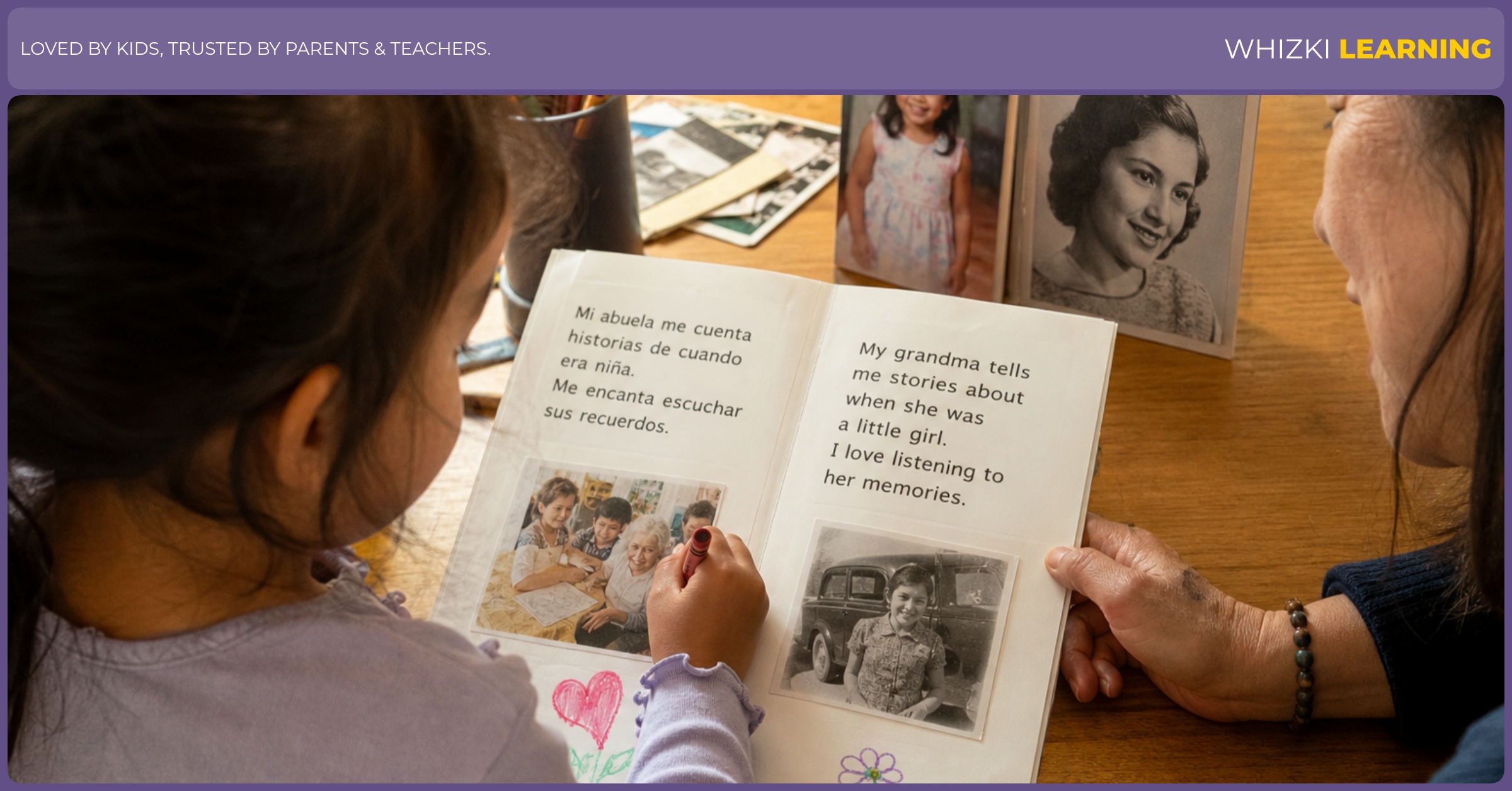
Set consent and sharing boundaries
The consent step belongs on the page before the page leaves the kitchen table. NAEYC family-engagement guidance asks educators to honor family knowledge and boundaries, and a bilingual memory may carry names, migration details, grief, humor, or faith practices. The speaker should choose whether the page stays at home, goes to school, or gets copied for relatives.
The sharing choice can be written in plain language at the bottom: home only, classroom share, or family copy. A public version can use a general line, while a private version can keep the exact place name, family name, or personal detail. The child can help place the page in a folder, which makes privacy a concrete routine.
The teacher or homeschool adult should never require a translation of private family language. A homeschooler can read the page during morning basket time, and a classroom teacher can invite the child to show the drawing without reading every word aloud. The boundary teaches respect as clearly as the memory teaches vocabulary.
The finished page may look small, but the finished page carries voice, print, drawing, and consent in one manageable routine. A binder, photo box, or folder can hold the page until the child asks to hear the story again. The next page can wait for another day, another grandparent, or another tiny memory.
The honest limit is simple: a one-page activity cannot capture a whole life or solve every bilingual-learning question. The one-page activity can make room for a child to hear family language with care, see the words on paper, and learn that some stories are shared only when the speaker says yes.