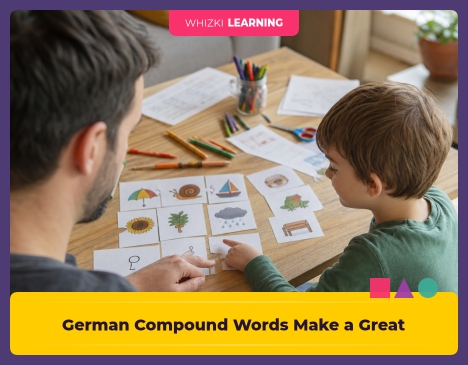
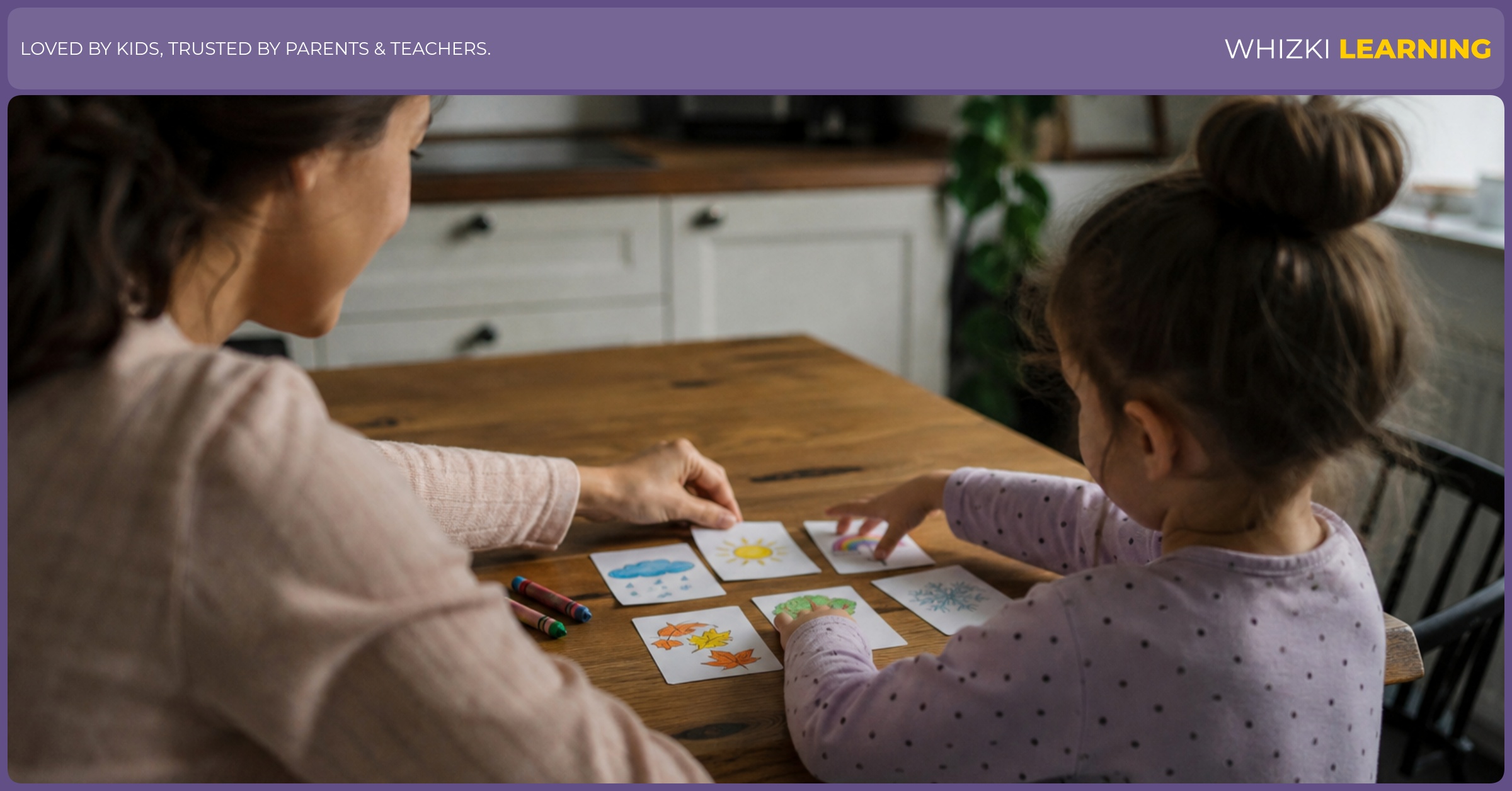
If your child wants to cut every card while dinner needs to happen, start with two picture cards on the table today: say the two familiar German words, slide the cards together, and name the new word like a little secret. German compound words can feel big on the page, but young children usually understand the idea when the pictures do the talking first. The goal for today is one calm round, not a perfect German lesson.
Reviewed by Whizki Editorial Team, Early Childhood Education Editors.
Set up the picture puzzle
The picture puzzle needs 10 to 12 minutes, blank index cards, crayons, scissors for the adult or a careful child, and a pencil for the grown-up. The adult draws or prints two familiar pictures that can join into one German compound word, then adds the German words only after the child has handled the pictures. The Reggio habit of letting children explore real materials fits well here, because the child can move, test, and notice before the adult explains.
The first card pair can be der Apfel plus der Saft, which becomes der Apfelsaft, meaning apple juice. Another friendly pair is die Sonne plus die Blume, which becomes die Sonnenblume, meaning sunflower. The adult should say the article out loud with every noun, because German children hear articles as part of the word long before grammar charts appear.
The card size matters for little hands. Occupational-therapy basics often start with comfort and control, so cards about the size of a playing card are easier to grasp than tiny labels. If letter names are also on the table, keep a small alphabet strip nearby from the alphabet learning hub so the child can compare print without turning the game into handwriting practice.
Play the twelve-minute game
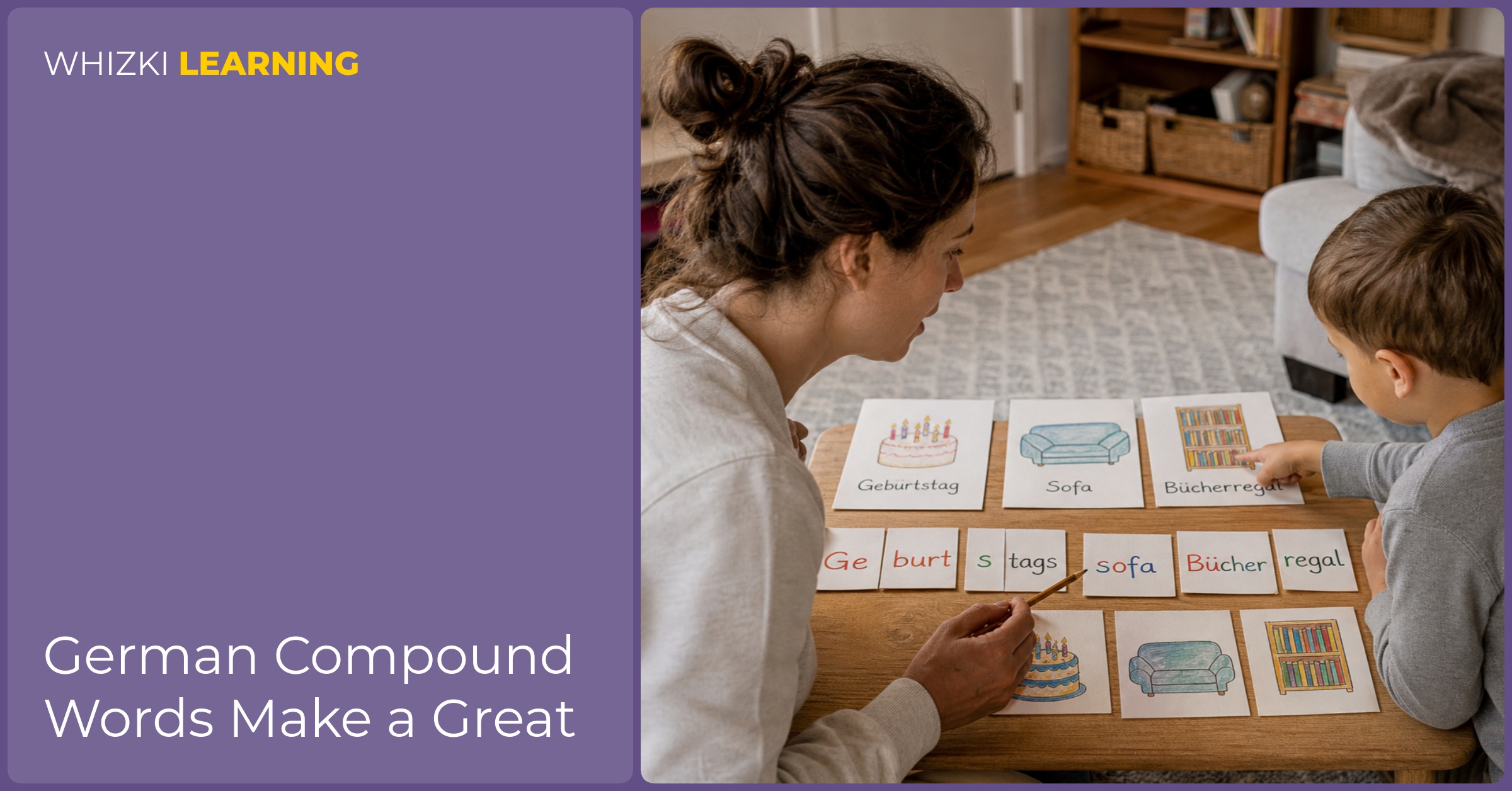
The game starts with the adult modeling one round slowly. The adult points to the apple card and says der Apfel, points to the juice card and says der Saft, then slides the cards until the edges touch and says der Apfelsaft. The Orton-Gillingham approach uses a hear, see, say, touch pattern for early word learning, and the same multisensory rhythm helps a bilingual vocabulary game feel clear.
The child gets a turn after the model round. The child chooses two picture cards, taps each picture while the adult says the words, and pushes the cards together to hear the compound. NAEYC guidance favors playful, active learning in early childhood, so the adult should keep the pace light and stop before the child is tired of the idea.
The article rule can stay simple: the last noun gives the compound word its article. In die Zahnbürste, the final noun is die Bürste, so the compound word also takes die. In der Regenmantel, the final noun is der Mantel, so the compound word takes der.
Fact-check before copying
The adult should fact-check each German compound word before a child copies the word onto a card. German nouns are capitalized, umlauts matter, and the article usually follows the final noun in the compound. A quick check in a trusted German dictionary or with a fluent speaker prevents a cute card from teaching the wrong spelling.
The meaning also needs a check, because a word-for-word translation can fool young learners. der Handschuh is literally hand shoe, but the English meaning is glove. der Eisbär looks like ice bear, but the English meaning is polar bear, and the picture should show the animal rather than a bear made of ice.
The spelling check should include joining letters, because German compounds sometimes change shape in the middle. die Sonnenblume adds an n between Sonne and Blume, while die Haustür joins Haus and Tür without a space. Speech-language pathology practice often values a clear, accurate adult model first, so the adult can say the correct word warmly instead of making the child hunt for the mistake.
Bilingual homes already juggle print differences, and letter look-alikes can add another small hurdle. If your family uses more than one alphabet, the previous bilingual home guide gives a calm way to talk about letters that look familiar but sound different. The same adult habit works here: name what the child sees, then name what German does.
Adjust for ages three to seven
For ages 3 and 4, the picture cards should stay mostly picture-based. The adult says the German words, and the child finds the matching real object, toy, or drawing. Montessori-style matching work supports attention because the child can pair a picture with something touchable.
For ages 5 and 6, the adult can add one printed compound word after the child has guessed from the pictures. The child can trace the word with a finger, clap the two parts, and circle the final noun that gives the article. Occupational-therapy basics remind adults to separate small-muscle writing from language play, so a tired hand should not end the vocabulary fun.
For age 7, the child can sort the finished cards by article after several rounds. The adult can place der, die, and das headers on the table, then let the child place each compound under the article that matches the final noun. The sort keeps grammar visible without asking a young child to memorize a rule in the abstract.
Mixed-language groups can use English for the directions and German for the target words. The kindergarten teacher or homeschool parent can say, “Apple plus juice makes Apfelsaft,” then repeat the full German phrase with the article. NAEYC guidance on culturally and linguistically responsive teaching supports using the child’s known language as a bridge rather than pretending the bridge is not there.
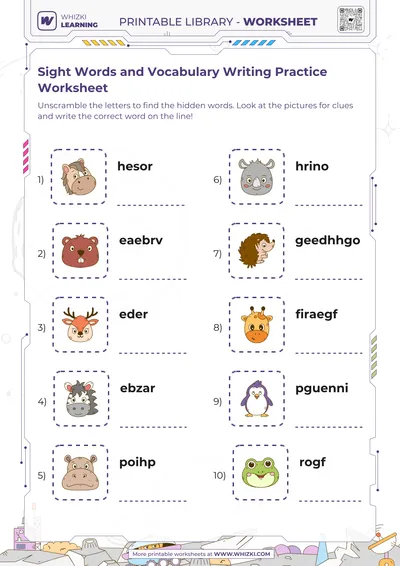
If a ready-made page helps during a busy week, the printed workbooks can give you simple paper practice to place beside homemade cards. A workbook page is only a helper, so keep the child’s talking, pointing, and picture-building at the center.
Know the honest limits
The compound puzzle builds vocabulary, sound awareness, and print curiosity, but the puzzle is not a full German curriculum. A child may remember die Bettdecke, meaning blanket or comforter, and still need many real-life chances to hear German at snack, story time, and play. Orton-Gillingham teaching reminds adults that repeated, clear practice helps new words stick better than one crowded page.
The adult should avoid turning every funny compound into a quiz. Young children often need to laugh at the picture first, especially with words like der Fußballschuh, meaning soccer cleat or soccer shoe. The teacher can accept the giggle, repeat the accurate word, and move on while the child still likes the game.
The activity should pause if the child cannot hear the two spoken parts, avoids talking across many familiar routines, or becomes upset by ordinary word play again and again. The next step is a conversation with the child’s teacher, pediatrician, or a licensed speech-language pathologist, depending on the concern. A simple picture game can reveal useful observations, but a picture game cannot diagnose a language delay.
A good first session might make only three compounds, and three careful compounds are plenty. Save the cards in a sandwich bag, bring the cards back tomorrow, and let the child be the teacher for one round. The best sign is not a perfect accent or a perfect article; the best sign is a child reaching for two pictures and wanting to hear the big new word again.