
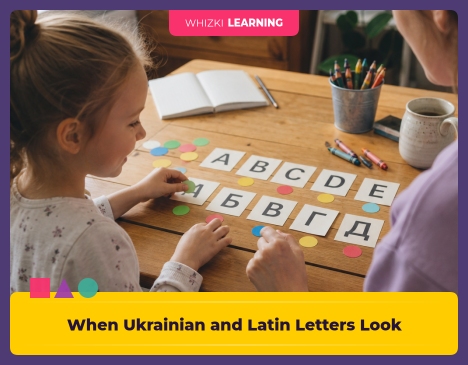
When your child points to a Ukrainian В and proudly says “B,” the family friction is real: do you correct the letter, switch languages, or let bedtime reading keep moving, and today you can place one blue dot on Ukrainian letters and one green dot on Latin letters before reading together. Young children are pattern seekers, so look-alike letters are a noticing job first, not a gotcha moment.
Reviewed by Whizki Editorial Team, Early Childhood Education Editors.
Start with a small look-alike set
The adult’s first job is to choose a small, accurate set before a child starts practicing. Ukrainian В looks like Latin B but says /v/, Ukrainian Н looks like Latin H but says /n/, Ukrainian Р looks like Latin P but says /r/, and Ukrainian С looks like Latin C but says /s/.
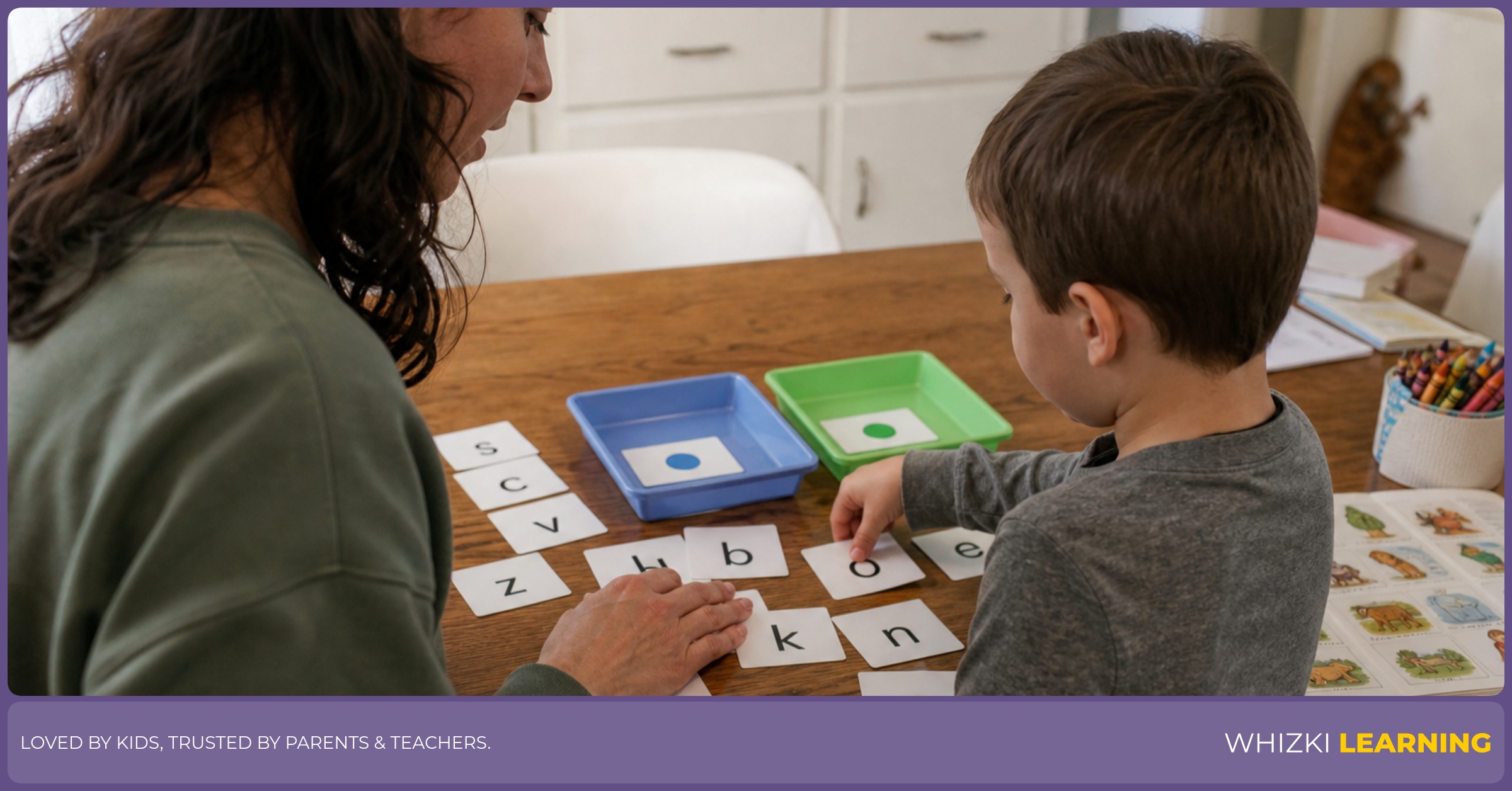
The small set gives a preschooler enough contrast without turning the kitchen table into a quiz show. In Orton-Gillingham teaching, clear contrast and multisensory practice matter, so a child can say the sound, trace the shape, and place the card in the right language pile.
The publishing or teaching adult should verify every example before publication or classroom use. A current Ukrainian alphabet chart, a trusted Ukrainian-language source, and, when possible, a native speaker can catch font issues, regional explanations, or a rushed mistake before a child sees the page.
The Latin alphabet can stay nearby as a friendly reference, not as the only alphabet that counts. For a plain refresher, the alphabet learning hub can sit beside Ukrainian cards while the adult says, “Same-looking shape, different language job.”
Use color and context, not correction
A color cue works best when the cue names the language job instead of the child’s error. A blue dot can mean Ukrainian sound, a green dot can mean Latin sound, and a yellow mat can mean “still noticing” when a child is unsure.
The NAEYC guidance on developmentally appropriate practice reminds teachers to build from what children already know. A child who says “B” for Ukrainian В is using a real visual memory, so the adult can answer, “Your eyes found the B shape, and in Ukrainian this letter says /v/.”
The occupational-therapy basics I use in preschool favor simple visual boundaries before longer explanations. Separate baskets, separate paper colors, or separate book corners reduce the load on small hands and busy eyes, especially for children ages 3 to 5.
The bilingual response can also be a point, a nod, or a card choice before a spoken answer. If your child is between languages during reading, the previous bilingual home guide explains why pointing can be a valid bridge.
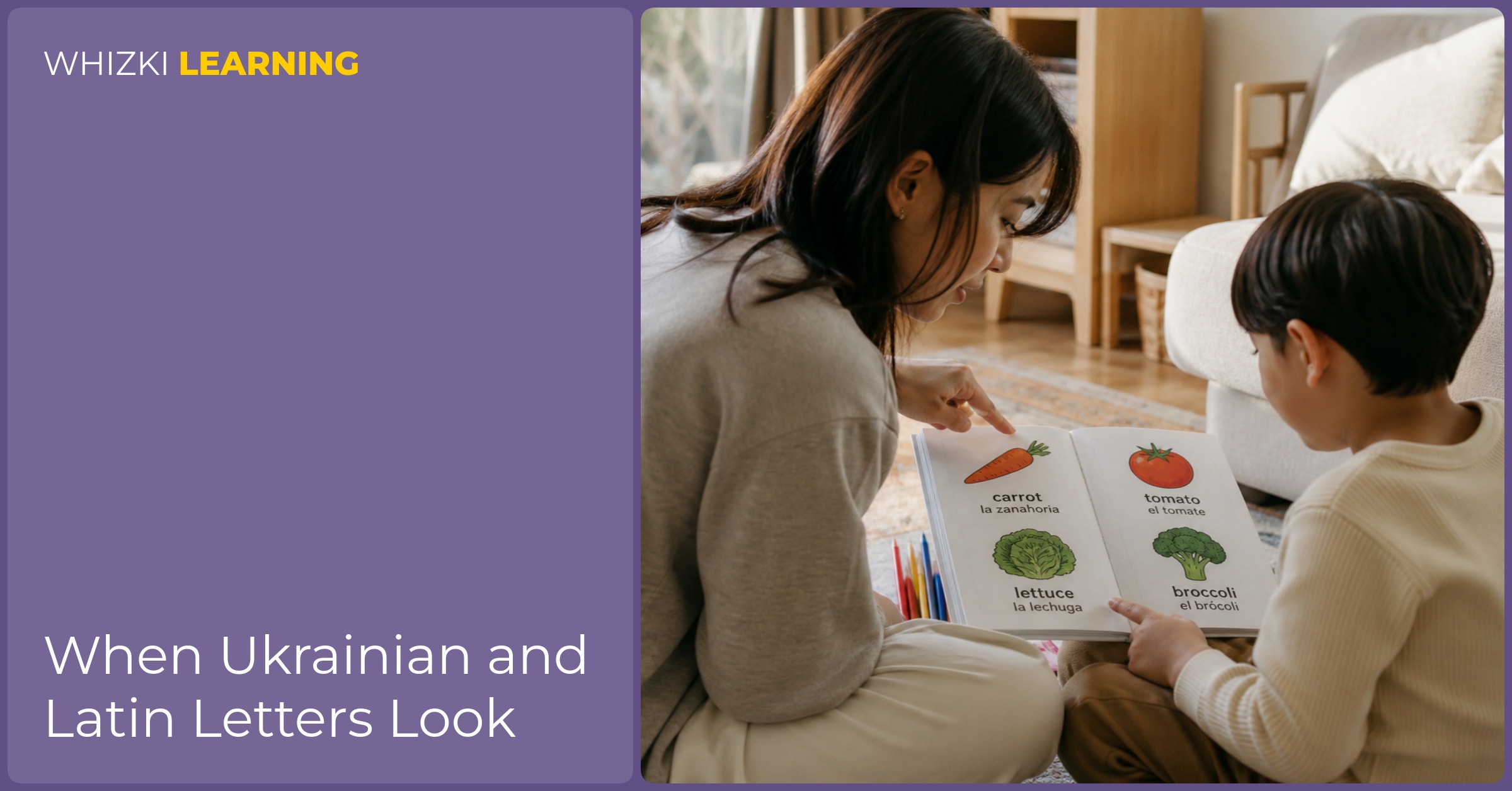
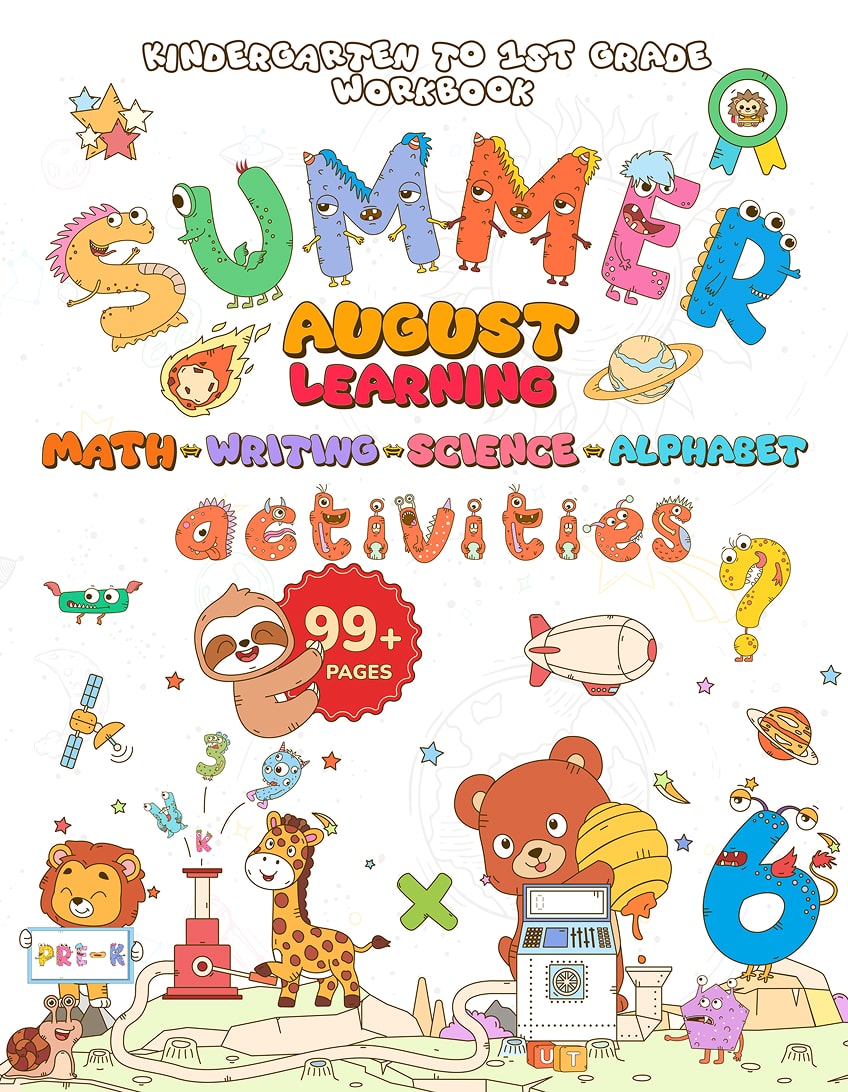
Printed workbooks can be useful when a child enjoys paper practice and an adult stays close enough to name the language cue. Browse the printed workbooks and choose only a few pages that match the letters your child is already noticing.
A seven-minute kitchen-table routine
The seven-minute routine needs four cards, two crayons, one small tray, and a book or label from real life. Reggio-inspired observation starts with watching what the child notices first, so the adult should pause before teaching and let the child touch, point, or sort.
The first two minutes are for looking and naming. The adult places one Ukrainian card and one Latin card on the tray, says each sound slowly, and traces each shape with a finger while the child watches or copies.
The next three minutes are for sorting by color or context. Children ages 3 to 4 can sort two cards into blue and green spaces, while children ages 5 to 7 can sort four cards and draw one matching sound picture, such as a vest for /v/ or a sun for /s/.
The last two minutes are for using one card in a real reading moment. Montessori practice often keeps work brief and concrete, so the adult can close the routine by finding one matching letter in a Ukrainian book, a family name, or a food label.
When the mix-up keeps happening
A repeated mix-up usually means the child needs more context, not a sterner voice. Speech-language pathology practice often accepts pointing, choosing, and imitation as part of communication, so a child can show understanding before producing the exact sound.
The kindergarten teacher or homeschool adult can reduce the set even further when frustration rises. Ukrainian В and Latin B alone may be enough for one week, and adding Ukrainian Р or С can wait until the first pair feels familiar.
The home routine has honest limits. If a child avoids all print, cannot see the difference between large high-contrast symbols, or loses skills across languages, the family should ask a pediatrician, vision professional, speech-language pathologist, or bilingual educator for guidance.
Look-alike letters are not proof that a child is behind, and the mix-up is often a sign that the child is paying close attention to shape. A calm phrase, a color cue, and a tiny verified set can turn “wrong letter” into “good noticing, new sound.”