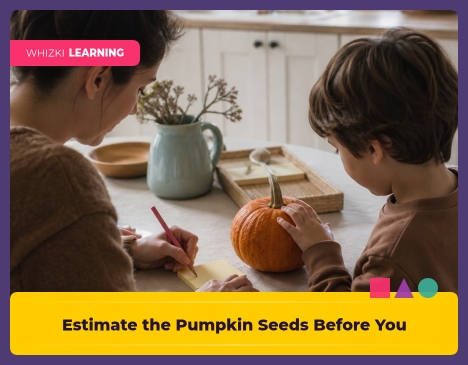
The pumpkin is on the table, dinner is late, and a child wants to scoop everything right now, so try one calm move today: ask for a seed estimate before the knife comes out. The estimate gives the waiting a purpose, and the adult still keeps control of the sharp tools and the messy parts. The count can happen in small groups, with plenty of room for sticky hands, wiggly bodies, and imperfect math.
Reviewed by Whizki Editorial Team, Early Childhood Education Editors.
Set up the pumpkin investigation
The pumpkin-seed investigation works best as a 20- to 35-minute kitchen routine, not a perfect math lesson. NAEYC guidance reminds early-childhood teachers to build math from real objects, movement, and talk, and a pumpkin gives children all three. The adult can decide ahead of time whether the goal is a full count, a short count, or simple comparison language.
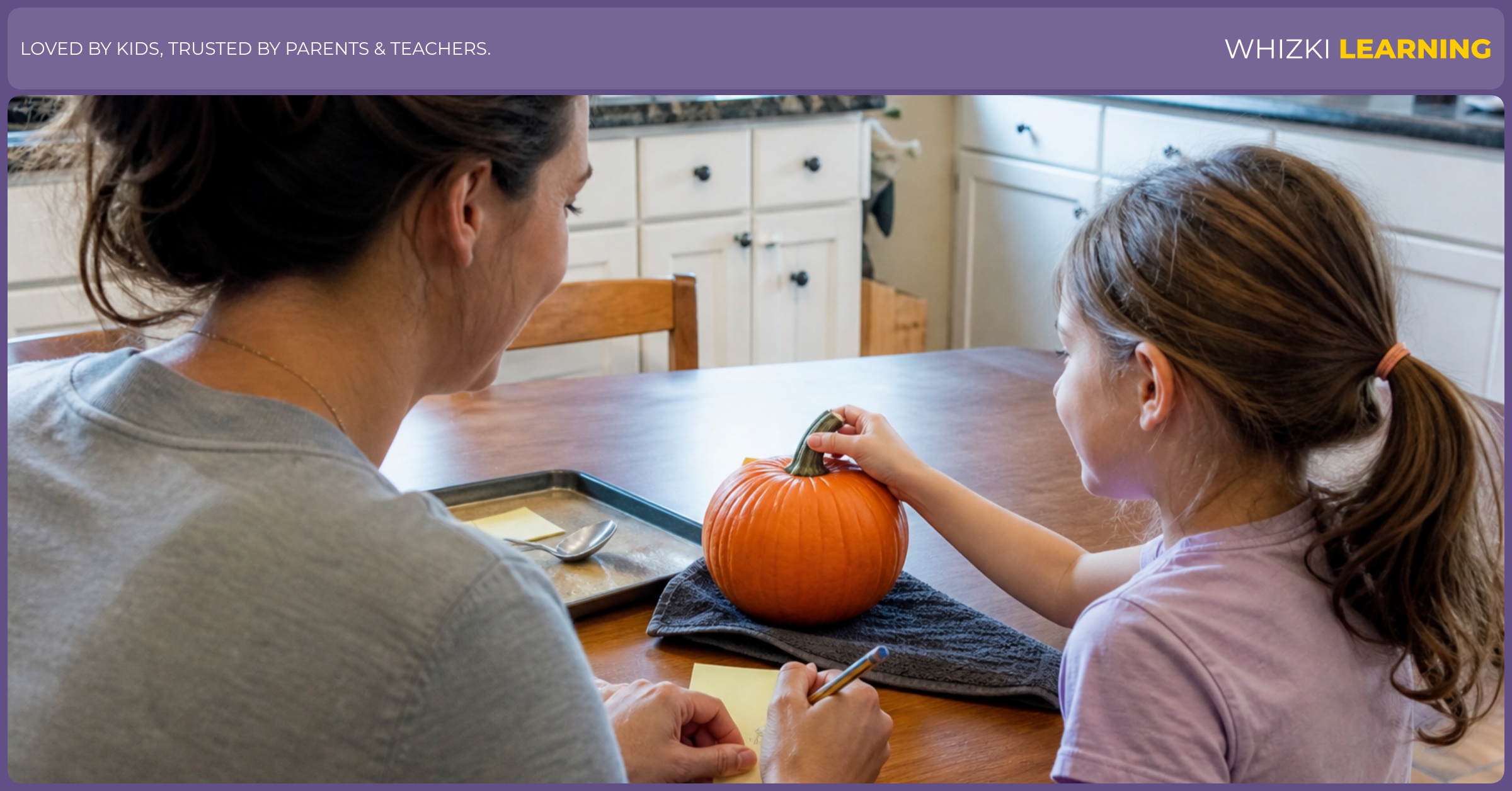
The material list can stay simple: one small pumpkin, a towel, a tray or baking sheet, a large spoon, two bowls, sticky notes, a pencil, and a washable marker. The tray gives seeds a boundary, which is an occupational-therapy trick I use often with children who need a clear work space. The spoon gives children a tool for scooping without asking small hands to manage slippery pulp for too long.
The prediction comes before the pumpkin opens because young children need a reason to look closely. The adult can say, “How many seeds do you think are hiding inside?” and write the number exactly as the child says the number. The child can change the estimate after looking at the pumpkin size, and families who enjoyed the previous fall season guide may notice the same helpful pattern: name, predict, handle, and talk.
Open the pumpkin with adult help
The adult handles the knife, the lid, and any hard scraping because pumpkin cutting is adult work. Montessori practice often separates real child jobs from adult safety jobs, and that separation keeps the activity respectful without pretending a preschooler should manage a sharp blade. The child can draw a circle around the top, hold the bowl, or announce the first look inside.
The sensory part needs an honest invitation, not pressure. Occupational-therapy basics tell me that sticky textures feel different for every child, so the adult can offer a spoon, a glove, or a dry towel nearby. The child who hates pulp can still count seeds from the clean bowl, and the child who loves the slime can scoop for a few extra minutes.
The food-safety cleanup starts before the first seed hits the tray. The adult washes hands, wipes the table, uses a clean bowl for seeds that might be roasted, and throws away seeds from a moldy pumpkin. The adult washes hands again after scooping, cleans the tools with hot soapy water, and skips roasting when allergies, classroom rules, or uncertain storage make eating a poor choice.
Group seeds in useful quantities
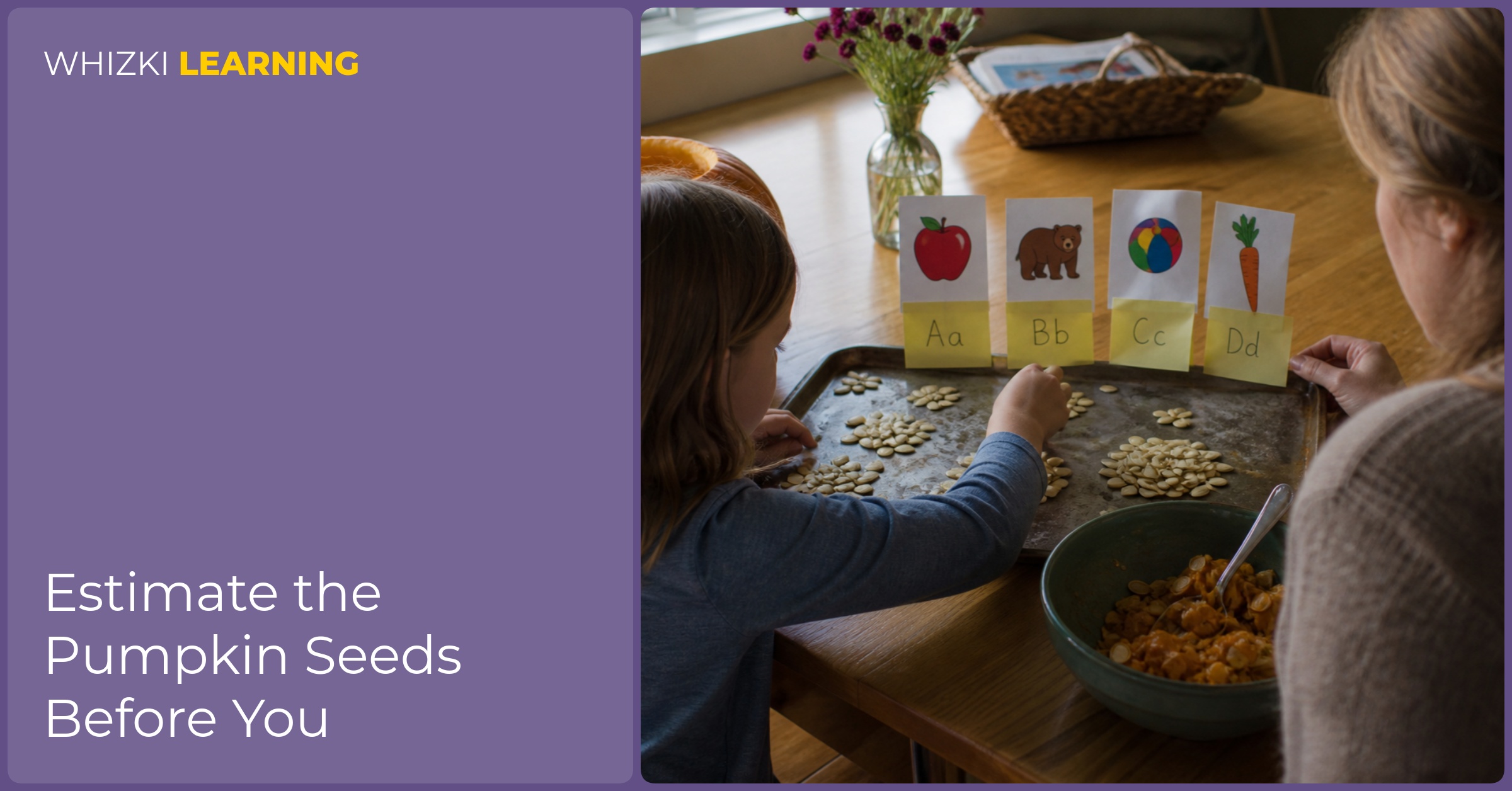
The grouping step borrows from Montessori math because children see quantity before children use abstract marks on paper. The adult spreads a small scoop of seeds on the tray and says, “Let’s make groups we can check with our eyes.” The child can move seeds into little piles while the adult keeps the piles from sliding together.
Children ages 3 and 4 usually do best with groups of 2 or 5, plus a small leftover pile. The adult can touch each seed once and count slowly, because one-to-one matching is the real skill at that age. A short stop after 20 or 30 seeds is still a useful math moment.
Children ages 5 through 7 can try groups of 10, especially when the adult lines the piles in rows. The number work connects naturally to the numbers learning hub when a child wants extra practice with counting words, numerals, and quantity. The adult can write “10, 20, 30” under the rows, then count leftover seeds by ones.
The Orton-Gillingham approach reminds me to make learning multisensory, direct, and cumulative, even when the subject is math instead of reading. The child touches the seed, says the count, moves the seed, and sees the pile grow. The same touch-say-move pattern helps children slow down and notice mistakes without turning the count into a lecture.
Compare the estimate with the count
The comparison is a conversation, not a score. Reggio-inspired documentation treats a child’s first idea as part of the learning record, so the estimate stays visible beside the final count. The adult can ask, “Was the count more, fewer, or about the same as the estimate?”
Speech-language pathology practice gives young children helpful comparison words in a natural setting. The adult can model sentences such as “The count was more than the estimate” or “The estimate was close because both numbers were near 40.” The child can repeat the sentence, point to the written numbers, or answer with a gesture.
The count is allowed to stop when attention is gone, because tired counting becomes sloppy counting. The adult can record “We counted 62 before cleanup” and still compare that count with the estimate. The honest limit teaches children that mathematicians sometimes pause, save a record, and return later.
Use a paper pumpkin when carving is not the plan
The paper-pumpkin version works when carving feels like too much, when a classroom cannot use food, or when a family wants a quicker table activity. NAEYC developmentally appropriate practice supports offering more than one way to join, especially for children with sensory, allergy, or safety needs. The adult draws a pumpkin outline, hides paper “seeds” under a flap, and asks for an estimate before the reveal.
The paper seeds can be circles from scrap paper, beans on a mat, or small stickers placed inside a drawn pumpkin. Occupational-therapy basics show up here too, because peeling stickers, pinching paper circles, and moving beans all build hand strength for later writing. The adult can reduce the number of pieces for a tired child or increase the number for a child who wants a longer count.
A seasonal printable can stand in for a real pumpkin when the kitchen is busy or the class needs a no-food option. The holiday and culture printables page has fall pages that can sit beside seed counting without turning the activity into a worksheet-only lesson.
The paper version still keeps the same math sequence: predict, reveal, group, count, and compare. The adult can write the estimate on the top of the paper pumpkin and the final count underneath the flap. The tracing gives children a small record to show another adult later, which often brings the math language back one more time.
The pumpkin estimate is allowed to be messy, short, and surprising. The real win is a child who sees that a guess can be checked, a big pile can be organized, and a number can tell a story about something real on the kitchen table. The adult can keep the routine gentle by stopping before the fun turns into fatigue.