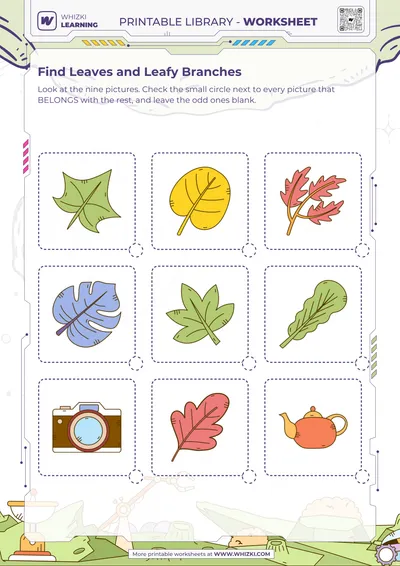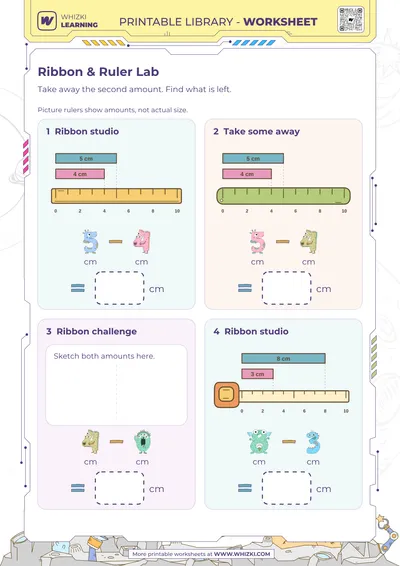
Halloween evening can become a tug-of-war over candy, costumes, dinner, and one more printable, so choose one real Halloween worksheet today, set a 15-minute timer, and plan to stop while the child still has energy. The worksheet does not need to carry the whole holiday; the page can become one calm pocket of practice before the next noisy thing.
Reviewed by Whizki Editorial Team, Early Childhood Education Editors.
The 15-minute Halloween worksheet routine
The worksheet works best when the adult treats the page like a short routine, not a test. NAEYC guidance for young children favors brief, meaningful activity with room for choice, so the adult can keep the pace light and the goal visible.
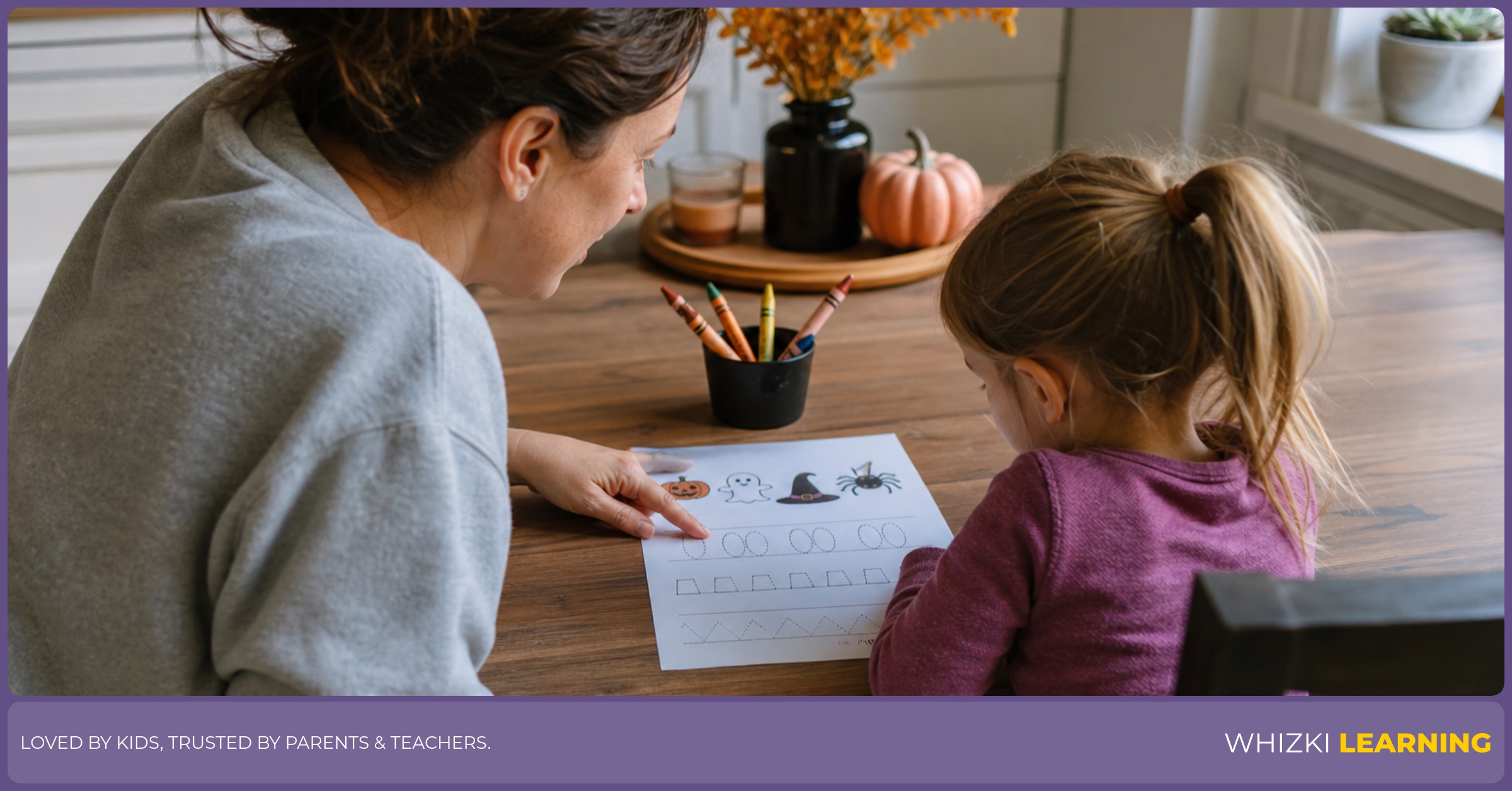
The preview takes two minutes, with the adult naming what the child will see before any pencil touches paper. The adult might say, "I see pumpkins, bats, and three places to circle," while the child points, notices, or simply watches.
The work time lasts eight minutes, and the adult gives only the help that keeps the child moving. Occupational-therapy basics are useful here: feet supported, paper steady, crayon or pencil easy to grasp, and a quick hand break if the fingers look tight.
The talk or extension takes three minutes, and the stop-and-store takes two minutes. The estimating habit from the previous fall season guide fits nicely here because the child can guess before counting candy corn erasers, buttons, or toy spiders.
A simple decision tree before pencils touch paper
The decision tree starts with observation, not persuasion. Reggio-inspired teaching asks adults to watch how a child approaches materials, so the adult looks at the child's eyes, hands, posture, and first comment before giving directions.
The first path is simple: when the child leans in, the adult starts the two-minute preview. The second path is also valid: when the child looks unsure, the adult completes the first item aloud and invites the child to choose the next mark.
The third path protects the mood of the room: when the child pushes the page away, the adult stores the worksheet for later and offers a related object to handle instead. A preschooler may count plastic spiders, a kindergartener may sort pumpkin seeds, and the paper can wait.
The hand clue matters because small muscles tire quickly during holiday excitement. An occupational-therapy heuristic I use in classrooms is to change the tool before changing the task, so a chunky crayon, slant board, clipboard, or shorter pencil may be enough.
For families who want a ready page without hunting through a stack, the Halloween Learning Activities Pack gathers simple seasonal pages for counting, tracing, matching, and early language. Choose one page for the routine, then put the rest away so the child sees a small job instead of a pile.
Preschool and kindergarten adjustments
The preschool version should feel almost like guided play. Orton-Gillingham practice reminds adults to connect sound, sight, movement, and speech, so a three- or four-year-old can say the pumpkin sound, trace a big line in the air, and place a button on the matching picture.
The preschool worksheet can be half a page, a single row, or only the first three items. The adult can write the child's words nearby, because shared writing still gives language value even when the child does not form every letter independently.
The kindergarten version can ask for a little more independence without turning the page into a race. The child can preview the page, try the first section alone, check one answer with the adult, and explain one choice using a complete sentence.
The classroom or homeschool version should also leave room for families who celebrate differently. Seasonal pages can sit beside broader holiday and culture printables so children practice the same early skills through several traditions and topics.
How to talk during the three-minute extension
The talk time gives the worksheet a second life without adding more paper. Speech-language pathology practice often uses modeling and expansion, so the adult can repeat the child's idea with one extra word or a clearer sentence.
The adult can use plain prompts that sound like normal family talk. A useful sentence might be, "You found two bats, and I found one more bat," or "Your pumpkin has a curved line at the top."
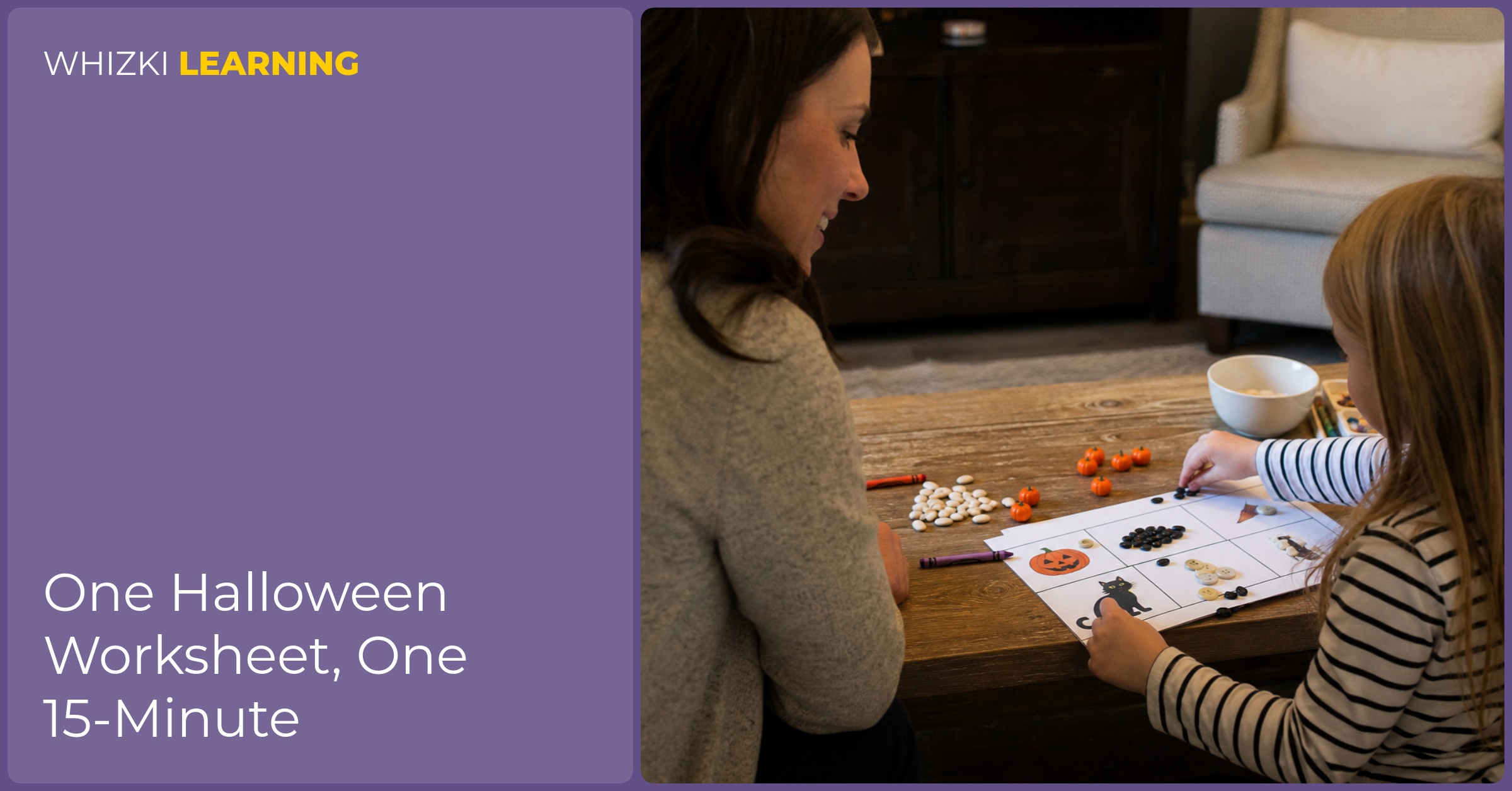
The object extension can be as simple as five beans, three blocks, or a handful of orange and black pom-poms. The child can match one object to each picture, count aloud, sort by color, or build the shape from the worksheet with loose parts.
The stop-and-store step matters because ending well teaches children that learning has boundaries. The adult can say, "The timer is done, the page goes in the folder, and the objects go back in the cup," while the same place receives the work every time.
What to save, what to skip
The saved page should show effort, not perfection. Montessori and Reggio classrooms both value the child's process, so a wobbly circle, an invented mark, or an adult note about what the child said can be worth saving.
The folder can hold one Halloween page, one photo of the object extension, or one sticky note with the child's words. The folder should stay small enough that the child can open the folder and remember the work without feeling buried by paper.
The Halloween page also has limits, and limits are healthy. If a child regularly avoids looking at print, cannot use either hand comfortably, becomes very upset with ordinary drawing tools, or has speech that caregivers do not understand, the family should ask the pediatrician, teacher, occupational therapist, or speech-language pathologist for guidance.
One Halloween worksheet can be a calm 15-minute routine when the adult previews, supports, extends, and stops on purpose. The page is a tool, the relationship is the lesson, and the best ending is a child who can say, "I did some work," then move on.