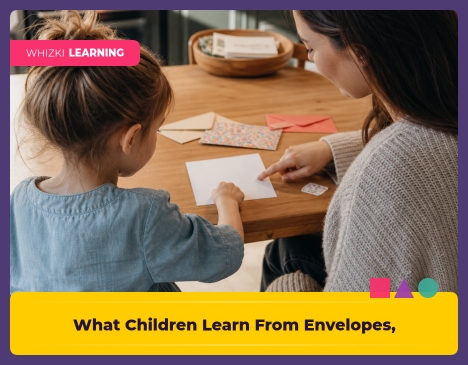
When the mail pile is full of bills and school flyers, a preschooler’s busy hands can make a private mess fast, so today choose one safe envelope, cover any private line, and spend five minutes noticing the name, address, stamp, and message. Real mail gives print a job that children can see, because a card travels to someone and the words help the card get there. A short mail moment can fit between snack and cleanup without becoming a lesson with a worksheet stack.
Reviewed by Sarah Mitchell, M.S., CCC-SLP, Speech-Language Pathologist.
Set up safe mail before the child joins you
Safe mail comes first because children ages 3 to 7 are still learning where family information belongs. The NAEYC guideline I lean on here is simple, young children learn best from meaningful, everyday materials, and adults still need to protect privacy while inviting curiosity. A grocery flyer, blank thank-you card, old invitation with permission, or empty envelope can carry plenty of print without showing bills, medical mail, account numbers, or full family details.
The adult setup takes about two minutes. Cut off or cover barcodes, phone numbers, full street lines, and any message that was not meant for a child’s eyes. Keep one envelope with a visible first name if the family is comfortable, or write a pretend name and pretend address on a blank envelope.
The material list can stay small: one envelope, one card or flyer, one sticker to stand in for a stamp, and one crayon. Place the mail on the table with the front facing the child, because preschoolers read faces and print best when the object is oriented toward the child’s body. A small tray or placemat tells little hands, “The mail work stays here,” which is an occupational-therapy basic for reducing clutter and helping attention settle.
Use a field-note routine: name, address, stamp, message
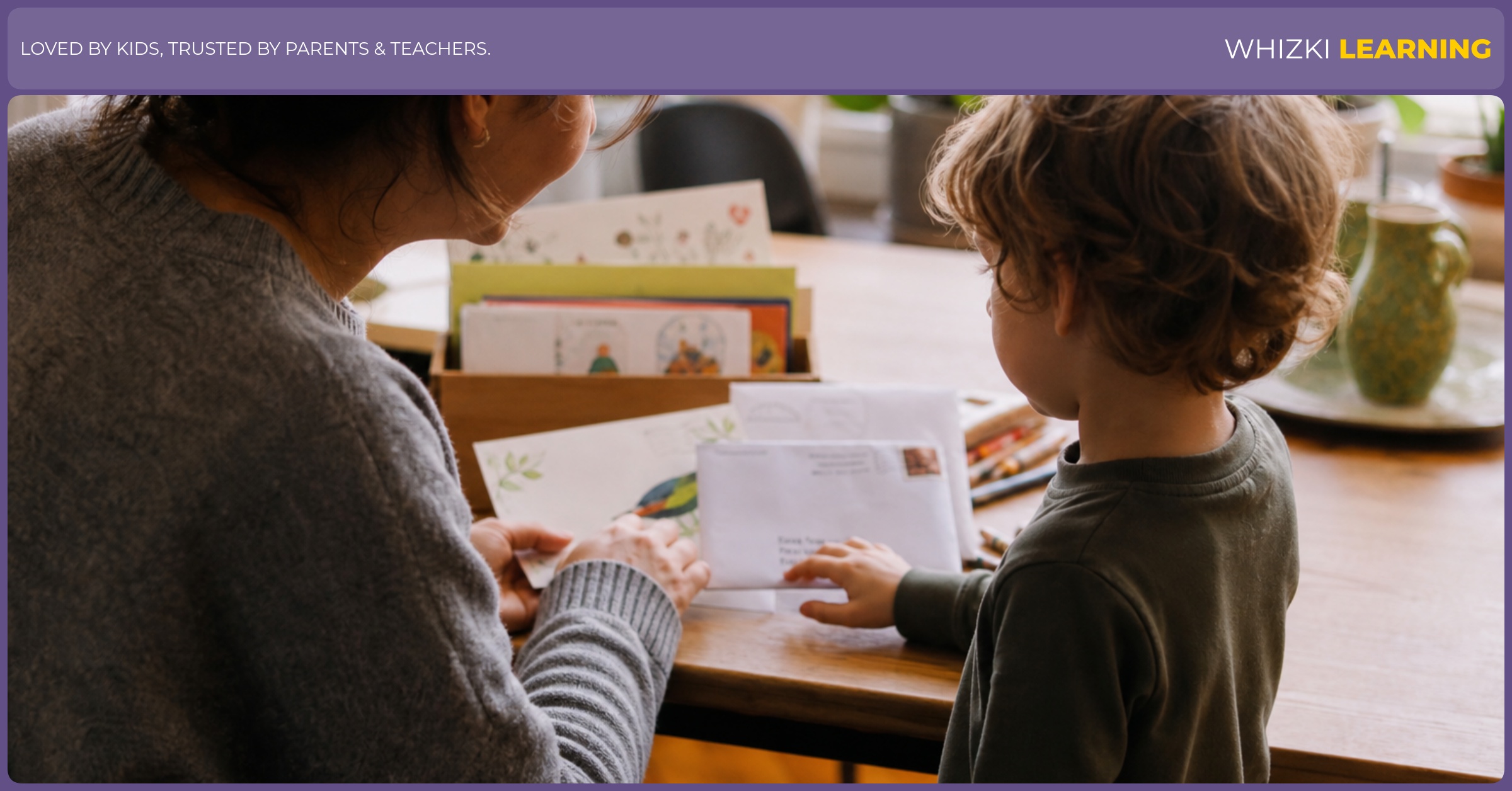
The mail field note begins with the child looking while the adult talks softly. In Orton-Gillingham lessons, teachers make print direction and sound-symbol links very explicit, and the same clear language works with real mail. Say, “The name tells who the mail is for,” then slide a finger under the name from left to right.
The address comes next, and the address can stay pretend. Say, “The address tells where the mail should go,” while pointing to the lines from top to bottom. The adult finger movement matters because children often notice print direction long before children can read the words independently.
The stamp is the tiny picture with a big purpose. Say, “The stamp helps the letter travel,” and let the child place a sticker in the stamp corner on a blank envelope. Speech-language pathology practice often uses functional words, such as name, send, open, and deliver, because useful words stick when a child can act them out.
The message is the reason the mail exists. Open the card and say, “A message tells someone something,” then invite the child to draw a smile, a sun, or one favorite mark inside. If the child starts asking about letter names after the mail play, keep practice gentle with the alphabet learning hub rather than turning the kitchen table into a quiz.
Choose the right next step for ages 3 to 7
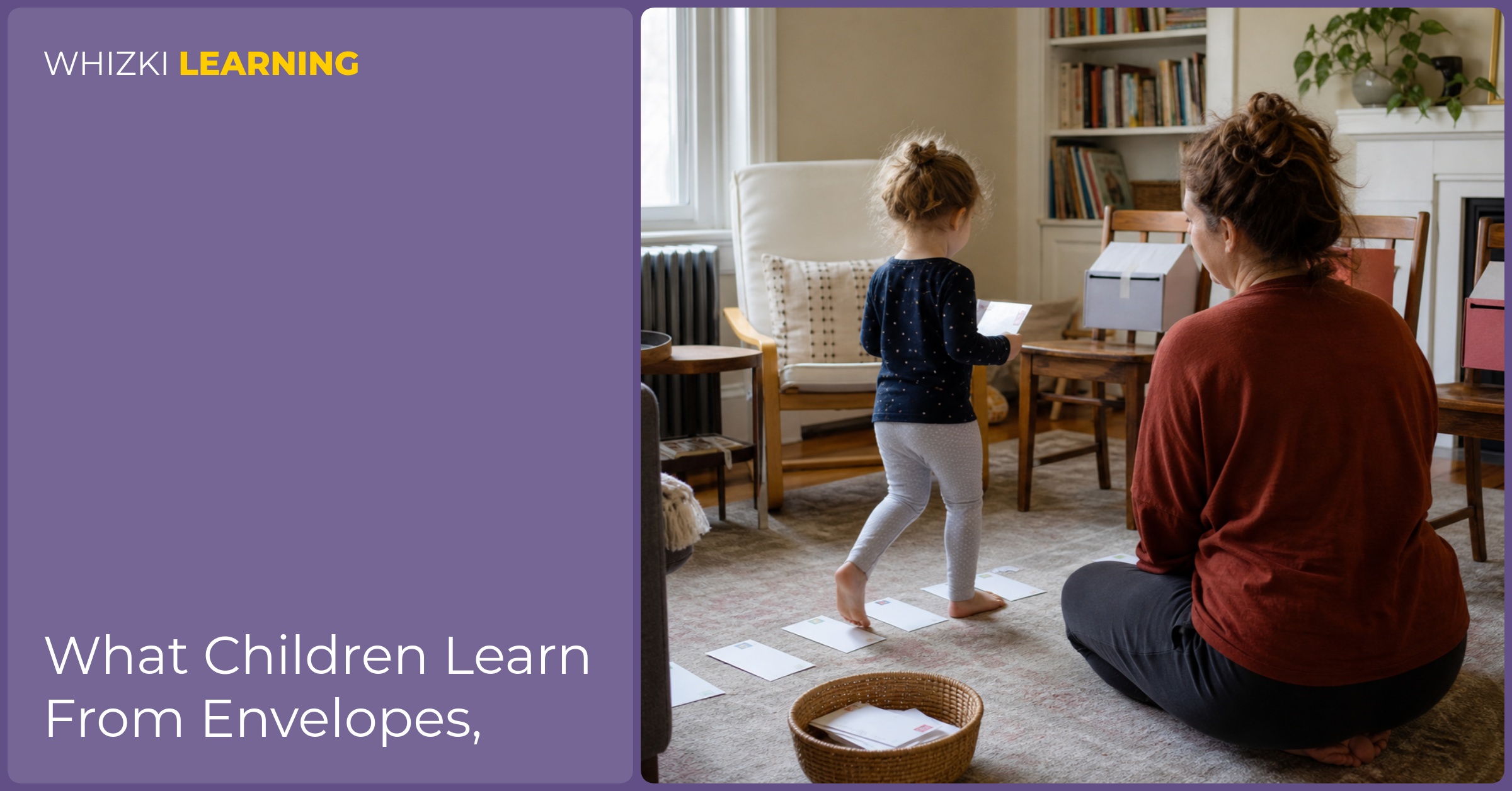
The age decision can start with attention, not reading level. If a three or four-year-old wants movement, ask the child to find the stamp corner, carry the envelope to a chair mailbox, and come back for another card. The occupational-therapy rule of thumb is to match the task to the hand skill and body control the child has today, so a big crayon mark counts as writing work.
The five or six-year-old may be ready to compare the child’s first name with the name on a pretend envelope. Say the name slowly, tap the first sound, and point to the first letter without demanding a full word read. That light sound-symbol connection fits the Orton-Gillingham approach because the adult keeps the link clear, short, and multisensory.
The six or seven-year-old may enjoy adding a return address, drawing a map path, or copying one short word like Mom, Dad, Nana, or Sam if those names fit the family. Reggio-inspired teaching values children’s questions, so let the child decide whether the card is an invitation, a thank-you note, or a pretend package label. The adult goal is print awareness, not perfect spelling.
Whizki Learning has simple letter and mark-making pages in the learning library if a child wants more paper after the mail game. A printable can be a quiet follow-up, while the real envelope remains the main hands-on lesson.
Play the make-believe delivery game
The pretend delivery game takes about 10 to 15 minutes and works well after the child has examined one real piece of safe mail. Tape three paper “mailboxes” to chairs, baskets, or bedroom doors, then write a large first name or simple picture on each mailbox. Montessori practice favors real movement with a clear purpose, and the delivery path gives the child a reason to look at the print again.
The adult can model the first delivery slowly. Say, “I see the name Pat on the envelope, and I see Pat on the mailbox,” then walk the envelope across the room. Hand the next envelope to the child with the print facing the child, not the adult, because orientation is part of reading.
The game can grow without becoming noisy or long. Add a sticker stamp, a drawn postcard, or a folded note that says a single familiar name. If the child cannot match names yet, use color dots or family photos on the mailbox and keep the printed name beside the picture.
The Reggio habit of watching the child closely helps the adult know when to stop. If the child begins racing, crumpling envelopes, or ignoring the print, the mail game has given enough practice for the day. Put the envelopes in a basket for another afternoon rather than pushing one more round.
Keep the limits honest and follow the child’s lead
Real mail will not teach reading by itself, and a single envelope is not a full early-literacy plan. NAEYC guidance reminds educators and families to use play, conversation, books, drawing, and songs together across the day. Mail play is one useful doorway into print awareness because the child can see that written marks help people share information.
The adult should protect family privacy every time mail comes out. If the mail pile contains bills, legal papers, health information, or personal letters, the safest answer is no child handling for that stack. A make-believe envelope can teach the same name, address, stamp, and message ideas without exposing private information.
The follow-up can be as simple as making a card for a stuffed animal or reading a real greeting card aloud at bedtime. If the child enjoyed using family names and pictures, the previous literacy lab guide gives another low-prep way to connect words with people the child knows. When a child shows steady frustration with speech sounds, hearing, fine-motor control, or understanding simple directions, a pediatrician, speech-language pathologist, occupational therapist, or early-childhood specialist can help the family choose the next step.
Tomorrow’s mail moment can stay tiny. Point to the name, slide under the address from left to right, tap the stamp, and ask, “What message should we send?” A child does not need a worksheet packet to learn that print has direction, purpose, and a real job in family life.