
When cleanup is half done and your child wants one more game, grab six safe objects from the room and make two sound piles for five minutes. A first-sound sort turns that wiggly moment into listening practice without pulling out a workbook or arguing about sitting still.
Reviewed by Sarah Mitchell, M.S., CCC-SLP, Speech-Language Pathologist.
Pick two sounds that stay clear
The first-sound sort works best with two starting sounds that feel and sound different in the mouth. The Orton-Gillingham approach treats speech sounds as the starting point, so the game begins with what the child hears before any letter name enters the room.
The pair /m/ and /s/ is a friendly first choice because /m/ is hummed with closed lips and /s/ is a hiss with air near the teeth. The pair /p/ and /t/ can also work because the mouth movements are easy to see, but both sounds are quick, so many younger children need more modeling.
The adult can say, “Listen for the first sound, not the letter name.” The adult says /mmm/ for mitten, not “em,” and /sss/ for sock, not “ess,” because letter names add an extra layer that many preschoolers cannot separate yet.
Gather safe objects and start the sort
The sound sort needs two labels and four to eight objects, which keeps the task small enough for ages 3 to 7. NAEYC guidance reminds early-childhood teachers to build skills through play and active exploration, and a little object hunt fits that guidance better than a long sit-down lesson.
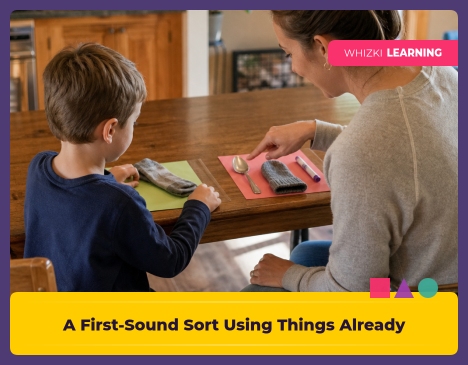
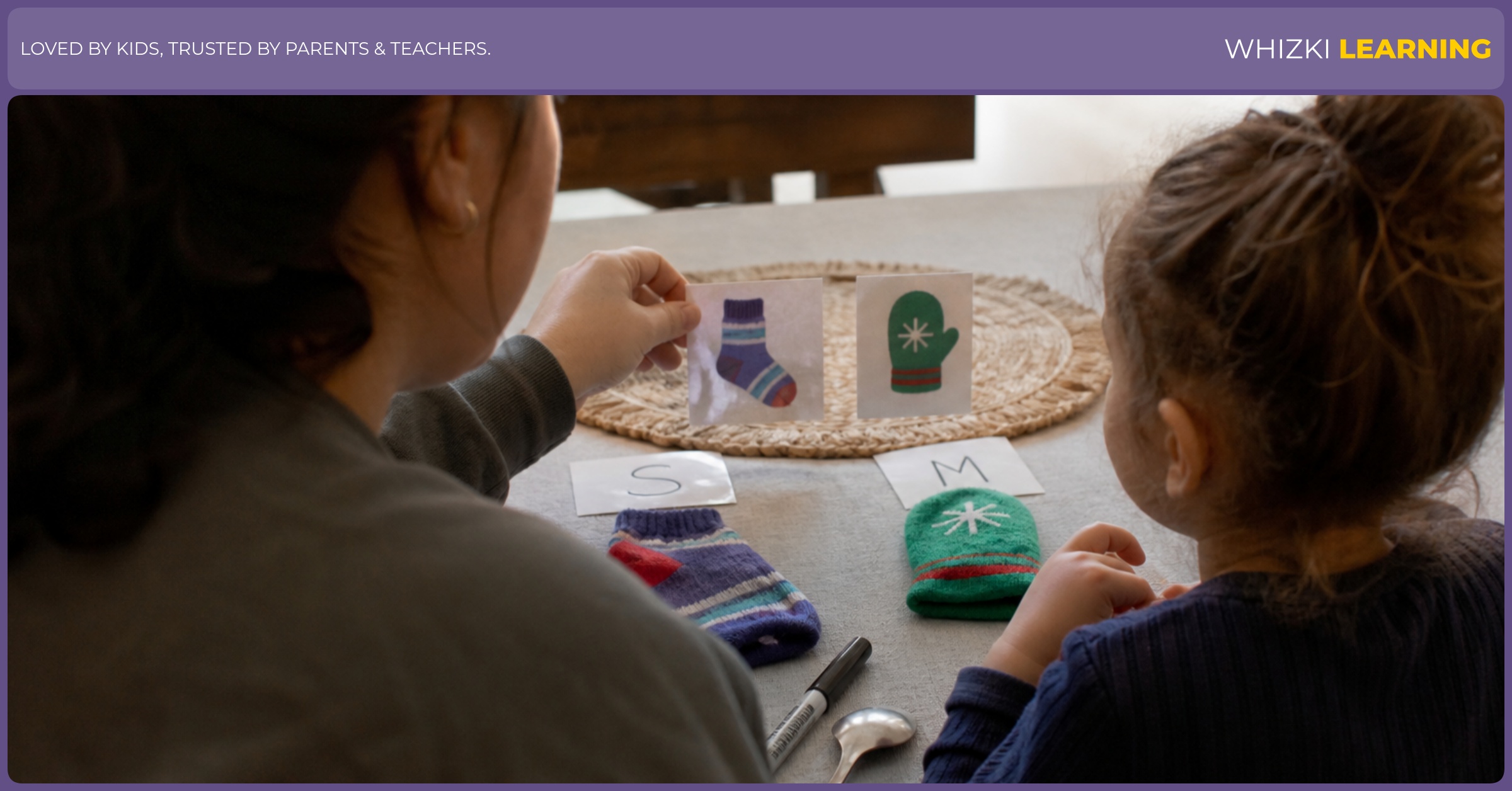
The adult can place one sticky note on the left for /m/ and one sticky note on the right for /s/. The adult should draw a simple mouth mark, a dot, or a tiny picture cue on the note rather than writing a big capital letter, because the child is sorting by sound first.
The child can touch each object, name the object, and stretch only the first sound. A capped marker, mitten, and magnet can go near /m/, while a sock, spoon, and sponge can go near /s/, as long as every object is clean, safe, and large enough for the child in front of you.
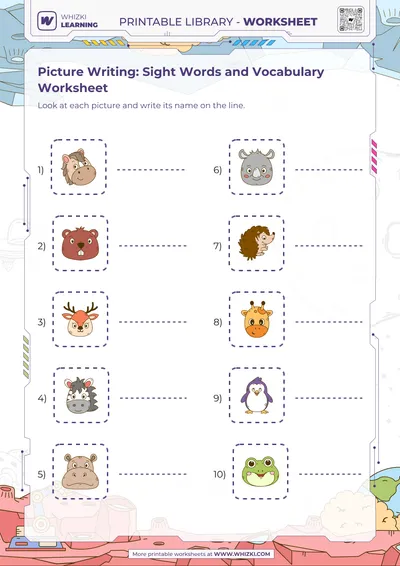
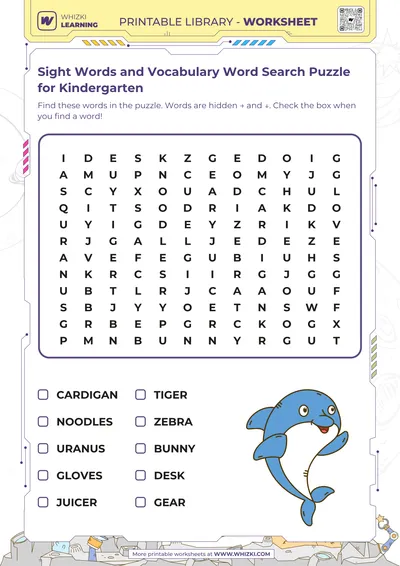
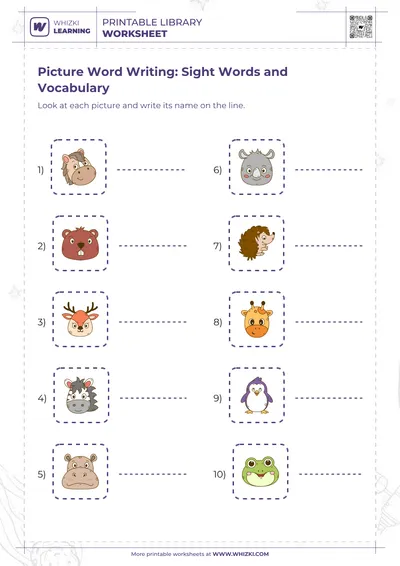
If a household hunt stalls, Whizki Learning has sound and letter practice in the printable library that can stand in for objects. A printable should feel like a small support, not the whole lesson, so keep the child saying the word aloud and moving each card by hand.
Use a simple decision tree for odd words
The decision tree for a mystery word starts with one question: “Do we hear one of our two sounds at the very beginning?” Speech-language pathology practice often separates listening tasks into small yes-or-no choices, and that small choice keeps the child from guessing based on color, shape, or favorite object.
The adult can make a parking spot in the middle for any word that does not fit. Chair begins with /ch/, shoe begins with /sh/, and toy begins with /t/, so those words should not be forced into /m/ or /s/ just because the child wants another turn.
The adult can model the parking spot with a calm script: “Chair starts with /ch/, so chair is not in either pile today.” The parking spot protects the main learning point, which is hearing the first sound clearly, not making every object match the adult’s plan.
Add letter names only after the sound is steady
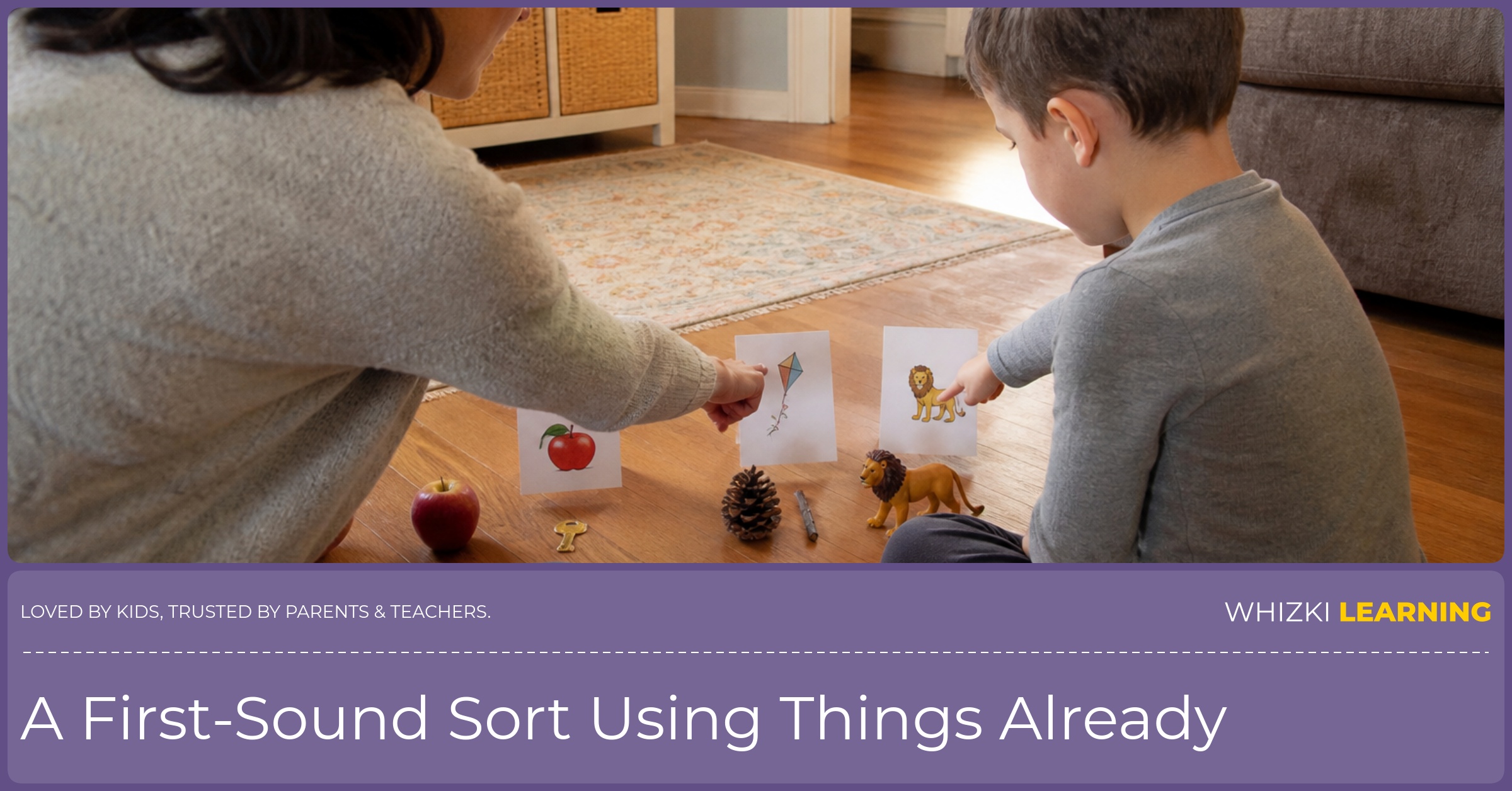
The letter name can wait until the child can sort several objects by sound with light help. Montessori and Orton-Gillingham teachers both tend to protect the sound first because a child who says “em” for /m/ may start listening for the wrong first noise in a word.
The adult can add the printed letter after the child has sorted the object by ear. A plain sentence works well: “The letter m can spell /m/ in mitten,” and the adult can point to more letter examples in the alphabet learning hub when the child is ready for print.
The grocery receipt activity from the previous literacy lab guide pairs nicely with a sound sort on another day. The receipt hunt is about noticing print in real life, while the first-sound sort is about hearing the beginning of spoken words.
Adjust the routine for ages three to seven
The age adjustment starts with how much the adult asks the child to hold in mind. Occupational-therapy basics point teachers and parents toward short tasks, stable seating, and hands-on movement, so the five-minute limit is a feature rather than a failure.
A 3- or 4-year-old may only sort two objects after watching the adult model several times. A 5- or 6-year-old may handle six objects and explain each choice, while a 7-year-old can search the room for one more safe item that matches a sound.
The Reggio habit of observing before correcting helps during the sound sort. If the child sorts by color, size, or favorite object, the adult can notice the pattern, reset with two objects, and say the first sound again instead of turning the game into a quiz.
A first-sound sort is small enough to use while dinner warms, before read-aloud, or during a homeschool transition. The best version is short, playful, and honest about mistakes, because young children learn more from a clear repeat than from a long correction.
The adult can stop while the child still wants another turn and save the same two sounds for tomorrow. Repetition with familiar objects builds the listening habit, and the letter names can join the game after the child’s ears have had a real chance to lead.