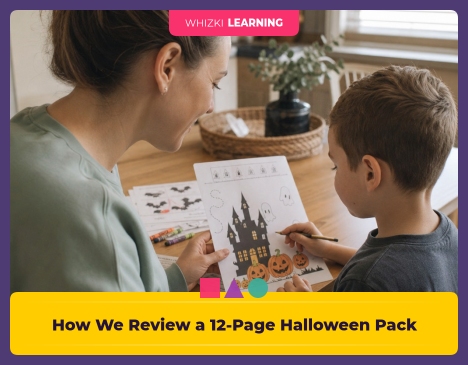
If your child wants Halloween pages right now and your printer ink is already giving you side-eye, print one counting or tracing page first, set out crayons and a pencil, and stop after 10 minutes. The Halloween theme can carry a lot of practice, but a 12-page set still needs a grown-up eye for age fit, repeated pictures, and page-by-page purpose. My field note below separates documented facts from the checks I use before handing a seasonal pack to children ages 3 to 7.
Reviewed by Whizki Editorial Team, Early Childhood Education Editors.
What is documented in the pack
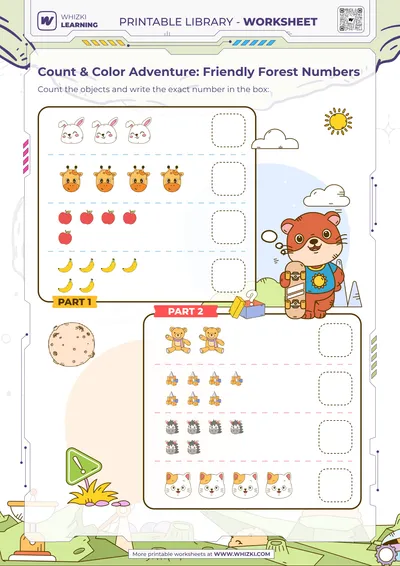
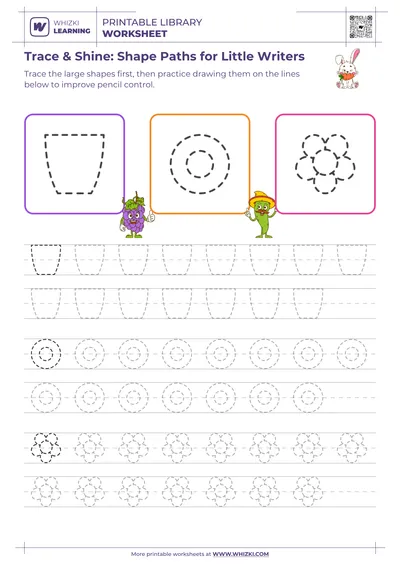
The documented fact is simple: the Halloween resource is a 12-page printable set with counting, patterns, a word search, vocabulary, tracing, and handwriting practice. The page mix matters because a young child may look like one kind of learner on a counting page and a very different learner on a handwriting page.
The documented design choice is friendly Halloween imagery, not scary imagery. NAEYC guidance keeps me looking for materials that fit a child's age, culture, and emotional safety, so pumpkins, bats, cats, and seasonal objects should feel playful rather than harsh or spooky.
The documented constraint is that seasonal art repeats across pages. Repeated pictures can make a pack feel connected, but repeated pictures can also blur the difference between a counting task, a pattern task, and a writing task when a child is tired.
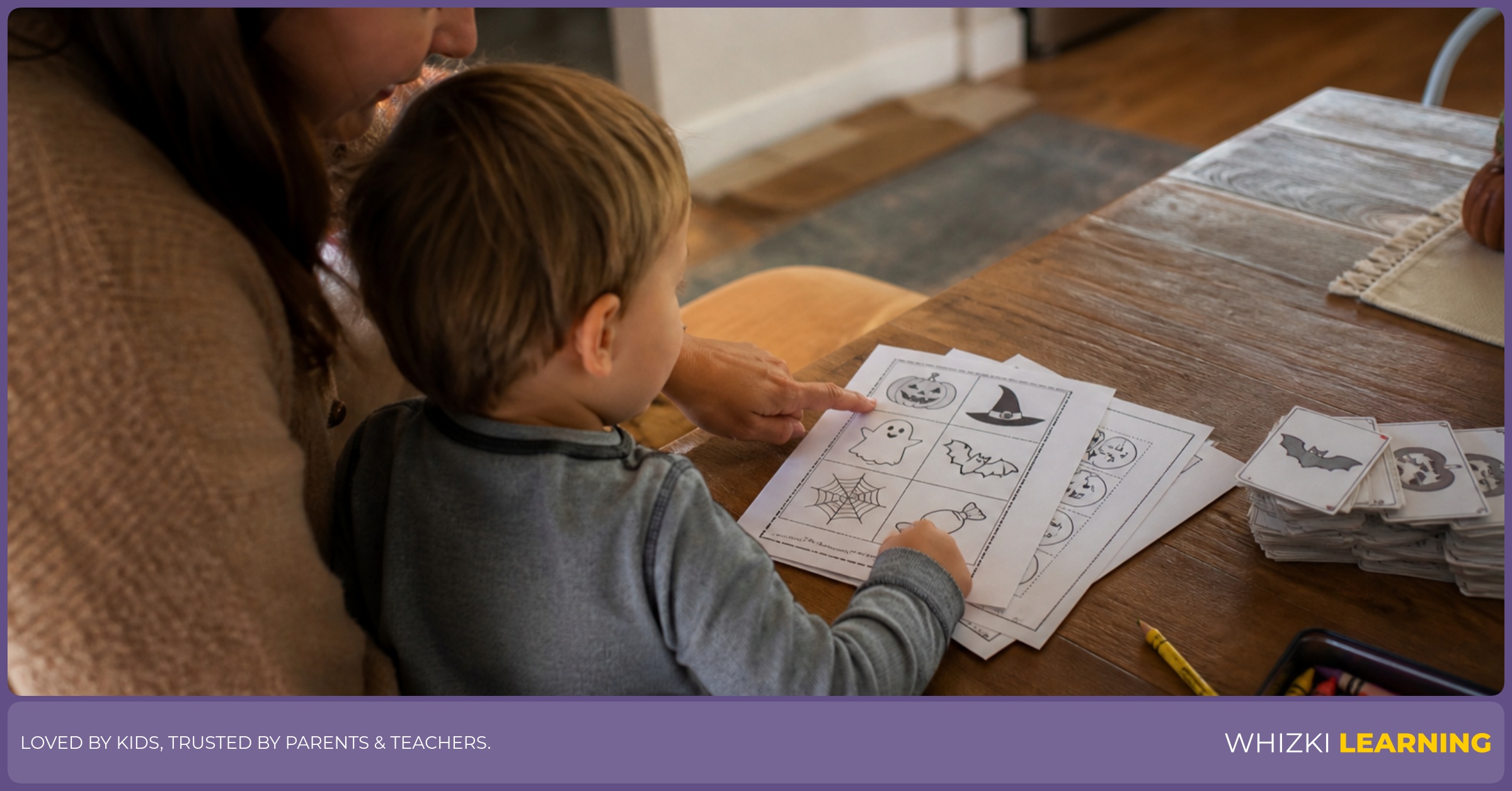
The easiest place to see the exact seasonal pages is the 12-page Halloween Learning Activities Pack. I would treat the pack as a menu for short practice, not a plan that has to be finished in one sitting.
How I check skill variety before I print
The counting page asks a child to match quantity to a mark or number, so my review looks for clear grouping and enough white space around the pictures. In an Orton-Gillingham classroom, clear contrast helps children focus on the target skill instead of guessing from clutter.
The pattern page asks a child to notice order, predict what comes next, and hold a small sequence in mind. NAEYC practice values playful repetition at this age, so a seasonal pattern can be useful when the page gives the child a real reason to compare shapes or pictures.
The vocabulary and word search pages ask for different kinds of language work. Speech-language practice reminds me to check whether the picture name is familiar, whether the printed word is readable, and whether the search grid demands more visual scanning than a younger child can manage.
The tracing and handwriting pages ask the hand, eyes, and posture to work together. Occupational-therapy basics keep my review grounded in pencil grip comfort, line size, start points, and whether the child can rest the forearm on the table without fighting the page.
A small decision tree for age and stamina
For a 3- or 4-year-old, the decision tree starts with one page, one crayon, and a 5-minute window. A counting page or broad tracing page usually gives enough success without asking for long sitting, which matches occupational-therapy advice about short handwork bursts for preschoolers.
For a 5-year-old, the decision tree can move toward a pattern page, a vocabulary page, or a short handwriting line after warm-up scribbles. The adult can read the direction aloud, point to the first example, and let the child finish only the items that still look careful.
For a 6- or 7-year-old, the decision tree can include the word search, tighter handwriting, or two related pages in one sitting. The word search still needs adult support if the grid becomes a hunting game with no attention to letter order.
The Montessori-style decision point is independence with a boundary. The adult can place two page choices on the table, let the child choose one, and save the rest of the pack for another day.
How repeated art can help or get in the way
Repeated art can help a child settle into the page because the pictures stop being brand new after the first look. Reggio observation keeps me watching how the child uses the images, because the same pumpkin can become a counting object, a pattern unit, or a vocabulary cue depending on the page job.
Repeated art can get in the way when a child assumes every page works the same way. My proposed check is to cover the written directions for a moment and ask the child to name the page job with adult help, such as counting, matching, searching, tracing, or writing.
Friendly imagery matters because young children often bring big feelings to Halloween materials. A calm seasonal page can invite conversation about costumes and pretend play, while a frightening page can pull attention away from the early math or literacy skill.
Printing and use-at-home checks I would actually do
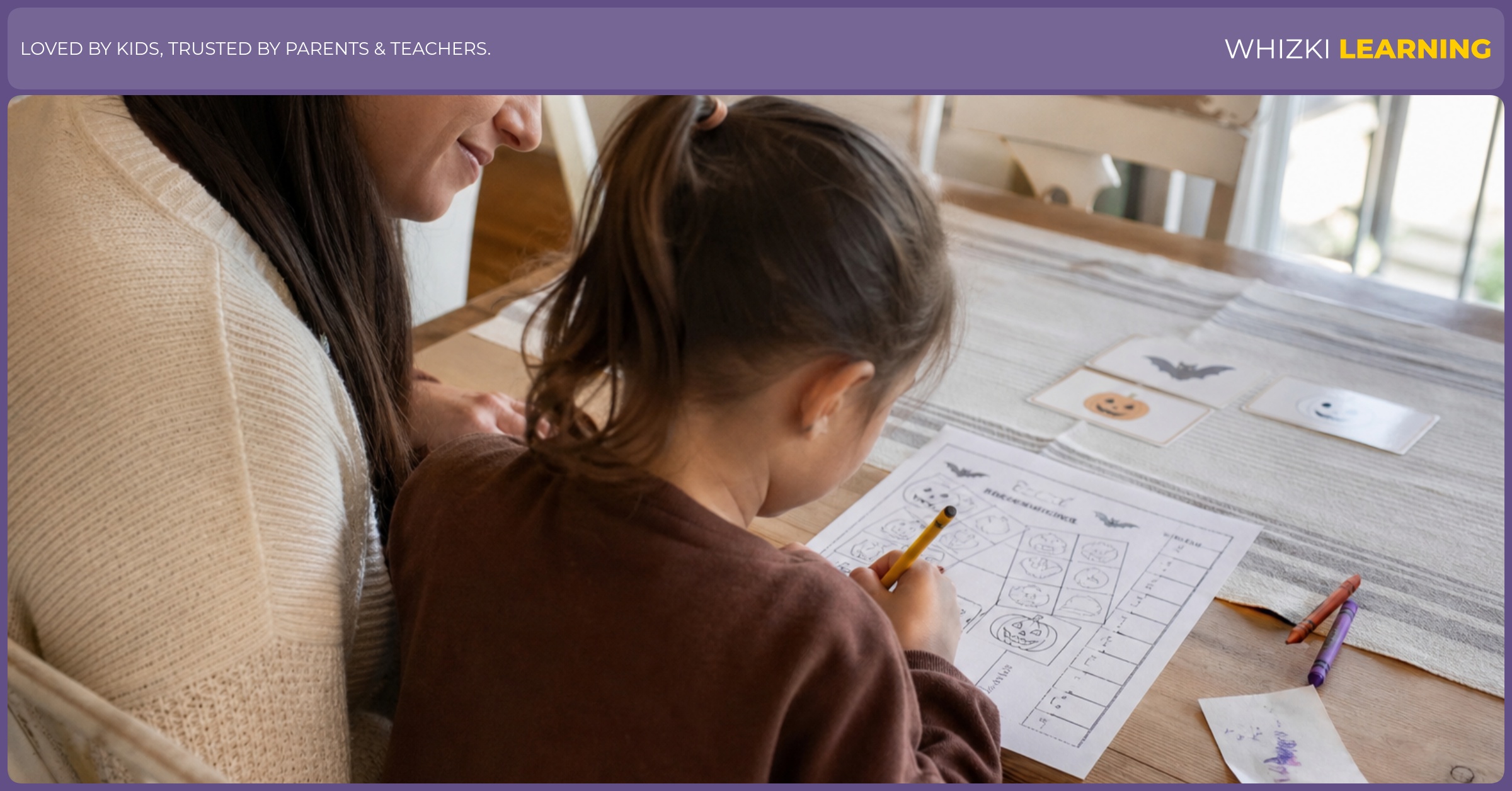
The grayscale print choice is parent-friendly because seasonal pages should not require a full-color ink tank to feel useful. My review checks whether the picture outlines, tracing paths, and word boxes still read clearly when the page prints in black and white.
The one-page use question is practical, not fancy. Because the resource is a printable pack, the next step is to open the print window, choose a single page number or a small page range, and avoid printing the full set until the first page shows a good fit.
The seasonal category check matters when a family wants more than Halloween. I compare the pack with nearby holiday and culture printables, and I use the previous field notes guide when a page includes people, places, traditions, or cultural language.
The home setup can stay simple: a flat table, two crayons, a pencil, and a small scrap paper for extra drawing. NAEYC developmentally appropriate practice reminds me that the worksheet should match the child in front of me, not the age printed in a file description.
Honest limits in a seasonal worksheet pack
A Halloween worksheet pack can give useful practice, but a worksheet pack is not a full early literacy or math program. Orton-Gillingham teaching still needs sound work, oral language, movement, and direct adult feedback beyond a printed page.
A tracing page can reveal whether a child is comfortable holding a pencil, but a tracing page should not be used to label a child as behind. Occupational-therapy basics suggest stopping when the hand looks tense, the shoulders rise, or the child starts pressing so hard that the pencil tears the paper.
A word search can be fun for an older kindergarten child or a 6- to 7-year-old, but a word search can frustrate a younger child who is still learning letter names. Speech-language and early reading practice both point back to naming pictures, hearing sounds, and matching spoken words to print before long visual search tasks.
My parent-coach answer is to use the Halloween pack as a short seasonal tray, not a stack to finish. Print one page, watch the child's hand, eyes, and mood for 5 to 12 minutes, and stop while the work still feels steady.
The best review of a printable happens at the kitchen table with real crayons, a real pencil, and a real child who may need a snack break. The pack earns a place in the week when each page has a clear job and the adult feels free to skip, save, or repeat a page.