
You are trying to choose a social studies worksheet before snack, circle time, or a tired Tuesday afternoon, and the hard part is spotting whether the page quietly says who belongs in which job, place, or culture; today, try one quick check: cover the words and ask, “What story does the picture tell?” The small social studies page carries more weight than grown-ups sometimes expect because children ages 3-7 read faces, tools, clothing, and setting before reading sentences. A calm adult review can catch trouble before a child has to puzzle through a mixed message.
Reviewed by Whizki Editorial Team, Early Childhood Education Editors.
Field note: what pre-publication review means
The worksheet review happens before a page reaches a child, so the review is a design check rather than a child test. The NAEYC guidance on anti-bias early education reminds me to ask whether materials give children fair, varied pictures of people and everyday life. The review question stays practical: can a young child understand the task without absorbing a narrow rule about people?
The documented fact is simple: early social studies pages often use a few pictures to stand for big ideas, such as work, neighborhood, maps, and culture. In the previous field notes guide, the same concern came up around art that accidentally teaches the wrong idea. The proposed check for a new page is to read the art first, then the words, and then the child-facing directions.
The review setup is low-tech on purpose: one printed draft, two sticky notes, a pencil, and about 12 minutes. A Reggio-inspired observation habit helps here because the adult looks closely before correcting or explaining. The first sticky note marks what a child could likely notice alone, and the second sticky note marks what an adult would need to explain.
Jobs across genders and backgrounds
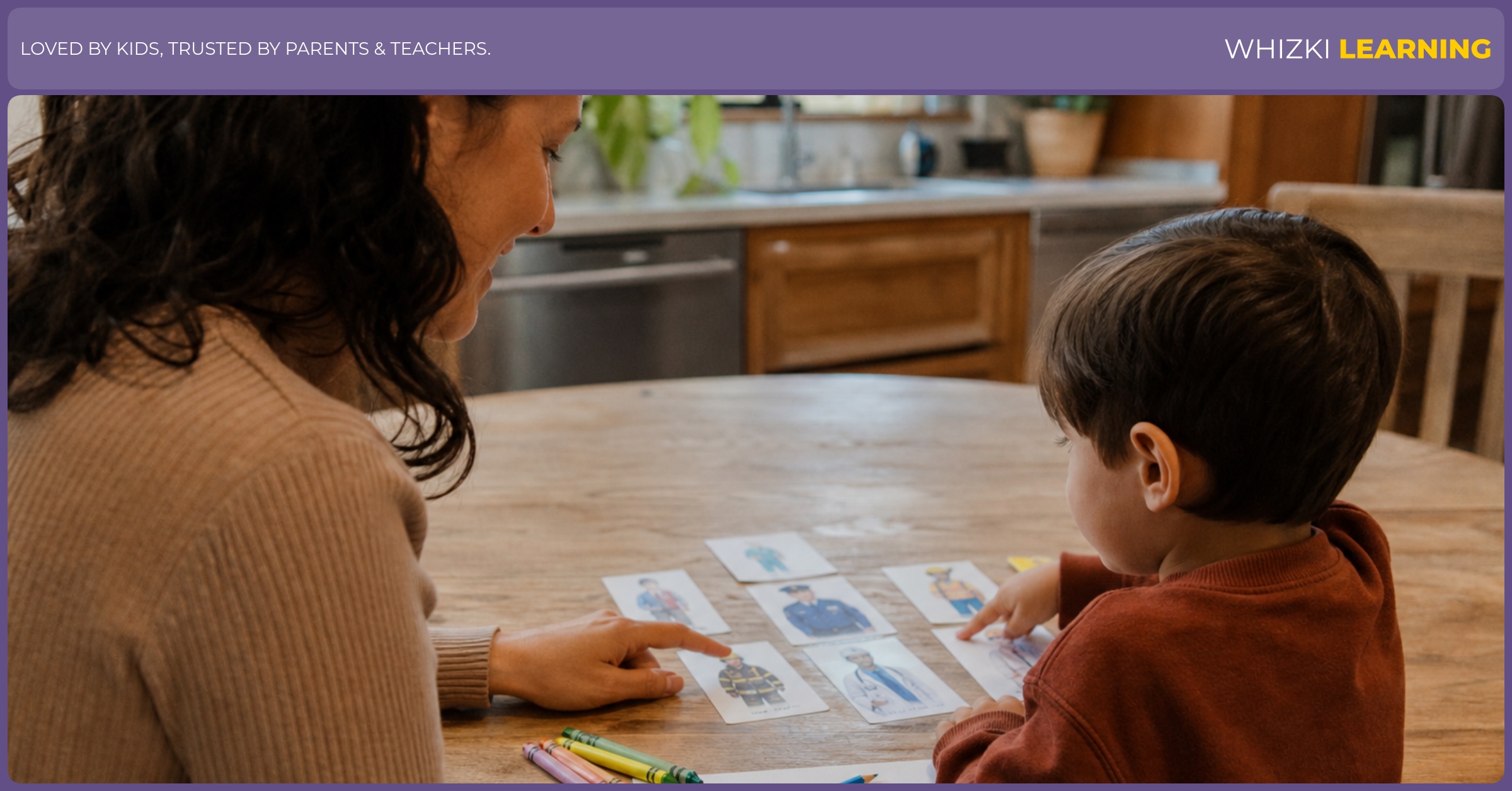
The community helpers page gets checked for who is shown doing skilled, caring, public, and physical work. NAEYC anti-bias practice pushes educators to widen the picture beyond a single default worker, so a doctor, nurse, firefighter, builder, teacher, mail carrier, cook, librarian, and bus driver should not fall into predictable gender or background patterns. The page also needs children with many family experiences to see familiar adults treated with respect.
The documented fact is that one worksheet cannot show every worker in every community. The proposed review choice is to vary gender presentation, skin tone, age, body size, mobility support, tools, and setting across a set of pages rather than forcing one crowded page to do every job. A Montessori observation lens helps the adult notice whether the child can match a tool to a job without being distracted by costume-like stereotypes.
The age adjustment matters because a 3-year-old may only name “helper,” while a 6-year-old may explain why a person uses a stethoscope, hose, cart, or book scanner. The reviewer looks for real work clues, not decorative clues, because young children learn categories through repeated concrete examples. A fair page lets the child say, “A person can do that job,” instead of “Only that kind of person does that job.”
Simple maps without an extra lecture
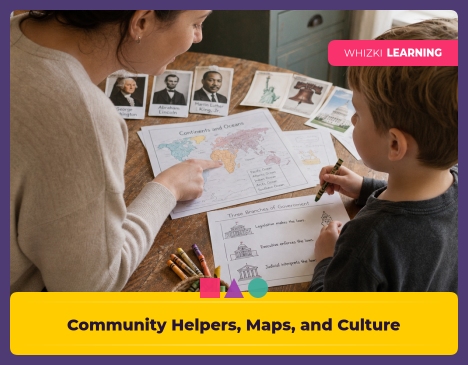
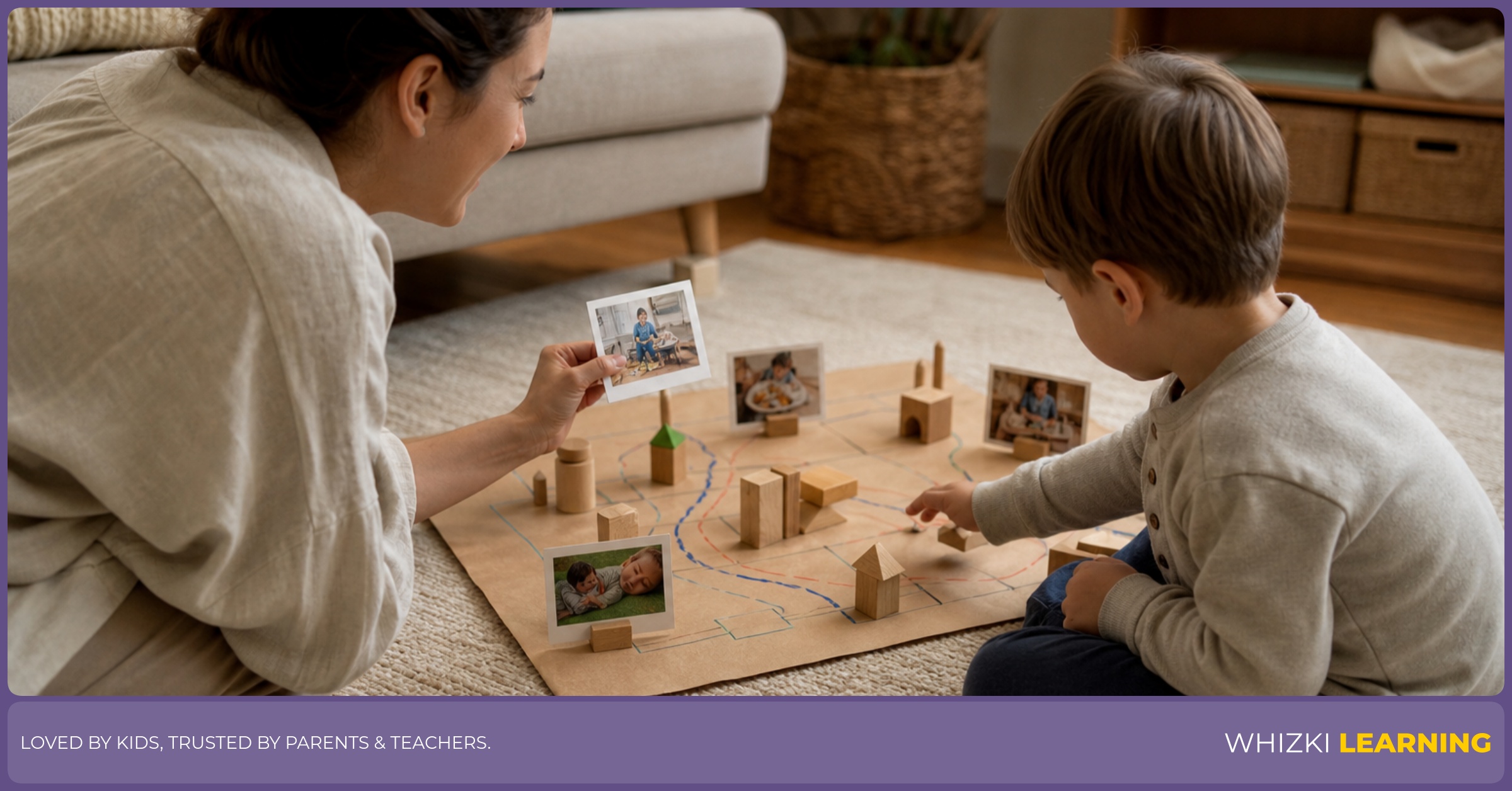
The map page for ages 3-7 should work like a picture route before the map asks for adult symbols. Occupational therapy basics remind me that visual scanning, left-to-right tracking, and finger tracing are real demands for young hands and eyes. A simple map can show a house, park, school, store, road, and path without asking a preschooler to manage scale, a compass rose, and a busy legend all at once.
The documented fact is that maps are abstract, even when a map looks cute. The proposed decision tree is plain: if the child needs a lecture to start, reduce symbols; if the path crosses too many lines, simplify the route; if the landmark picture and label disagree, redraw or relabel before publication. The reviewer also checks whether the direction words match the picture, especially words like near, next to, under, across, and between.
The home version takes about 7 minutes with a cereal box for a house, a spoon for a road, and two blocks for places. A caregiver can invite the child to move a toy from home to park, then draw that route with one crayon line. Families who want more practice with early geography and neighborhood vocabulary can browse the Learning Hub for related paper activities.
Culture beyond costumes
The culture page gets reviewed for daily life before special outfits or festival objects. NAEYC family partnership guidance asks educators to treat family culture as real and present, not as a display case. A page about culture can include clothing for a celebration, but the same page or set should also show food preparation, greetings, stories, music, work, play, homes, and family routines.
The documented fact is that culture pages can accidentally flatten people into one holiday image. The proposed review asks whether the child sees people doing meaningful actions, such as cooking with a grandparent, sharing a song, reading a family story, visiting a market, or caring for a younger sibling. Speech-language pathology practice supports this choice because vocabulary grows when a picture label connects to an action a child can talk about.
The honest limit is important: no worksheet can represent every community with full depth. The reviewer avoids wording such as “all families” or “these people always,” because young children often treat adult wording as a rule. When a page is about a living tradition outside the author’s experience, the next step is a community review rather than a guess.
Picture-label agreement and directions
The picture-label check protects the child from guessing games that look like reading. The Orton-Gillingham approach values clear, direct connections between sound, symbol, and meaning, and early social studies pages need the same respect for clarity. If the label says “veterinarian,” the picture should show an animal-care clue rather than a generic doctor scene.
The documented fact is that young children often trust the picture more than the printed label. The proposed check is to cover the label, name the picture, uncover the label, and ask whether those two clues tell the same story. The reviewer marks a mismatch when the drawing could reasonably be named something else by a 4-year-old.
The direction check asks whether a child can begin without a lecture. Occupational therapy heuristics keep the adult honest here because a direction can overload attention when the page asks for cutting, coloring, tracing, matching, and explaining at the same time. A stronger direction says “Circle the helper who brings mail” rather than “Identify the occupational role associated with postal delivery.”
The try-it-today test takes about 90 seconds. Read the direction aloud once, turn the paper facedown, and ask the child, “What will your hands do first?” If the child cannot answer because the sentence is too long, the direction needs a kinder edit before the worksheet gets used.
A family can pair social studies review with a few quiet practice pages from the printable library. The best printable is still just one tool, so sit nearby, name what looks clear, and mark anything that needs a kinder edit.
Adult review checklist before sharing
The adult checklist is short because tired adults still deserve a usable tool. Reggio practice reminds educators to notice children’s thinking before fixing the product, and NAEYC guidance reminds adults to ask who is represented, who is missing, and who carries the important action. The checklist below is written as a field note in prose, so the review does not become another worksheet.
The people check asks whether jobs, families, bodies, and neighborhoods appear with respect and variety across the page or set. The map check asks whether the path, landmarks, labels, and direction words match what a young child can see. The culture check asks whether daily life appears beside special events, with no group treated as a costume or a single story.
The clarity check asks whether each picture and label agree, whether the child-facing direction names one action first, and whether the fine-motor demand fits the age. The adult can mark “revise art,” “revise words,” or “revise task” in the margin. Those three notes are enough to guide a practical edit without turning the review into a long meeting.
The stop check matters because some pages need more than a quick fix. A page should wait when a culture is unfamiliar to the author, when the page implies one gender owns a job, or when a map cannot be followed without adult rescue. A pause before publication is kinder than asking a child to work around adult confusion.
The review goal is not a perfect page; the review goal is a page that gives a young child a fair picture, a clear task, and room for family talk. A preschooler or kindergartener deserves materials that say, quietly and consistently, many people help, many families belong, and pictures should match words.
If a page makes you uneasy, pause before handing the page to the child and write one plain note in the margin: “The picture and words do not match,” or “The job pattern feels too narrow.” That small adult pause can turn a throwaway worksheet into a better conversation at the table.