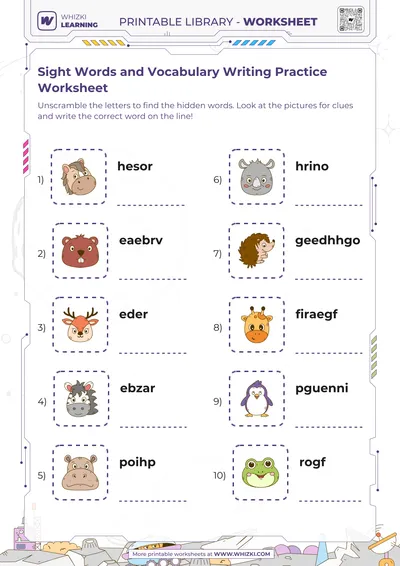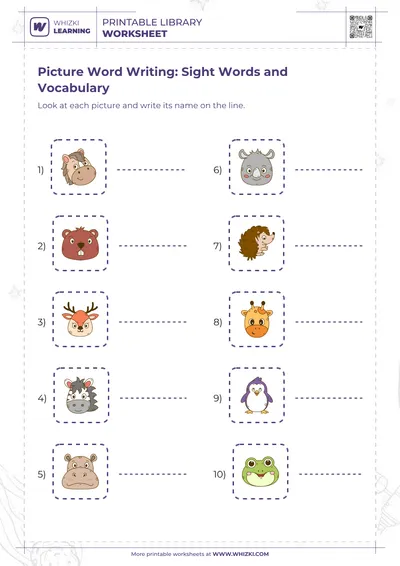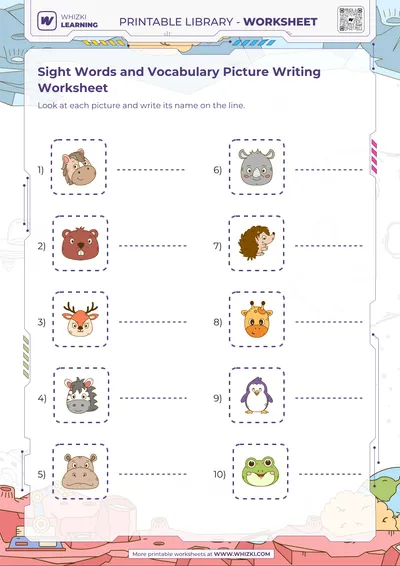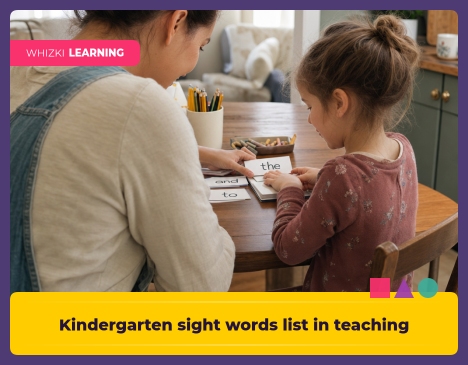
If the kindergarten sight words list has turned your table into a guessing game, print the first small group below and practice for five calm minutes after snack. A short stack feels kinder to a young reader than a fat packet, and the small stack gives a teacher or parent clear words to revisit tomorrow. The goal is quick recognition for common words while phonics keeps doing the heavy lifting.
Reviewed by Whizki Editorial Team, Early Childhood Education Editors.
What counts as kindergarten sight words?
Kindergarten sight words are common words a child is expected to recognize quickly during early reading. Some sight words are fully decodable, and some sight words have one part that needs extra memory, such as a vowel spelling or an unusual ending. The Orton-Gillingham approach treats sight word teaching as careful word study, not random flashcard drilling.
A balanced sight word plan gives a child quick access to common words while letter sounds, blending, and spelling patterns keep growing. Parents often ask how sight words and phonics fit together, and the practical answer is simple, teach the sound parts first whenever possible, then mark the tricky part. NAEYC guidance on developmentally appropriate practice also points toward short, meaningful reading moments instead of long memory sessions.
The kindergarten sight words list below merges Dolch pre-primer, Dolch primer, and the Fry first 50, then removes repeated entries. The merged list gives families and teachers one clean reference instead of three overlapping lists. The teaching order starts with the shortest, most useful words and moves toward color words, action words, question words, and less frequent words.
Kindergarten sight words list by teaching order
Group 1, first reading words: a, I, the, and, to, in, is, it, you, me, my, we. Group 2, action and classroom words: can, see, go, like, play, look, come, here, up, down, help, run. A Reggio-style observation habit helps adults notice which words a child already uses naturally during drawing, block play, book browsing, and pretend reading.
Group 3, sentence-builder words: he, she, was, with, for, on, at, be, are, have, said, do. Group 4, number, color, and size words: one, two, three, four, red, blue, yellow, black, brown, white, big, little. Montessori teachers often move from concrete labels to printed words, and that order works well when a child can touch a red block before reading a color card.
Group 5, early book words: all, am, as, but, by, did, had, no, not, now, so, that, there, this, too, what. Group 6, story and action words: away, find, funny, jump, make, where, ate, came, eat, get, good, into, must, new. The teaching order keeps short and high-use words early because young readers need success before a stack gets bigger.
Group 7, Fry first 50 additions: of, his, they, from, or, word, were, when, your, use, an, each, which, how, their, if. Group 8, Dolch primer additions: our, out, please, pretty, ran, ride, saw, say, soon, under, want, well, went, who, will, yes. The final groups make a strong review bank for late kindergarten or the summer before first grade.
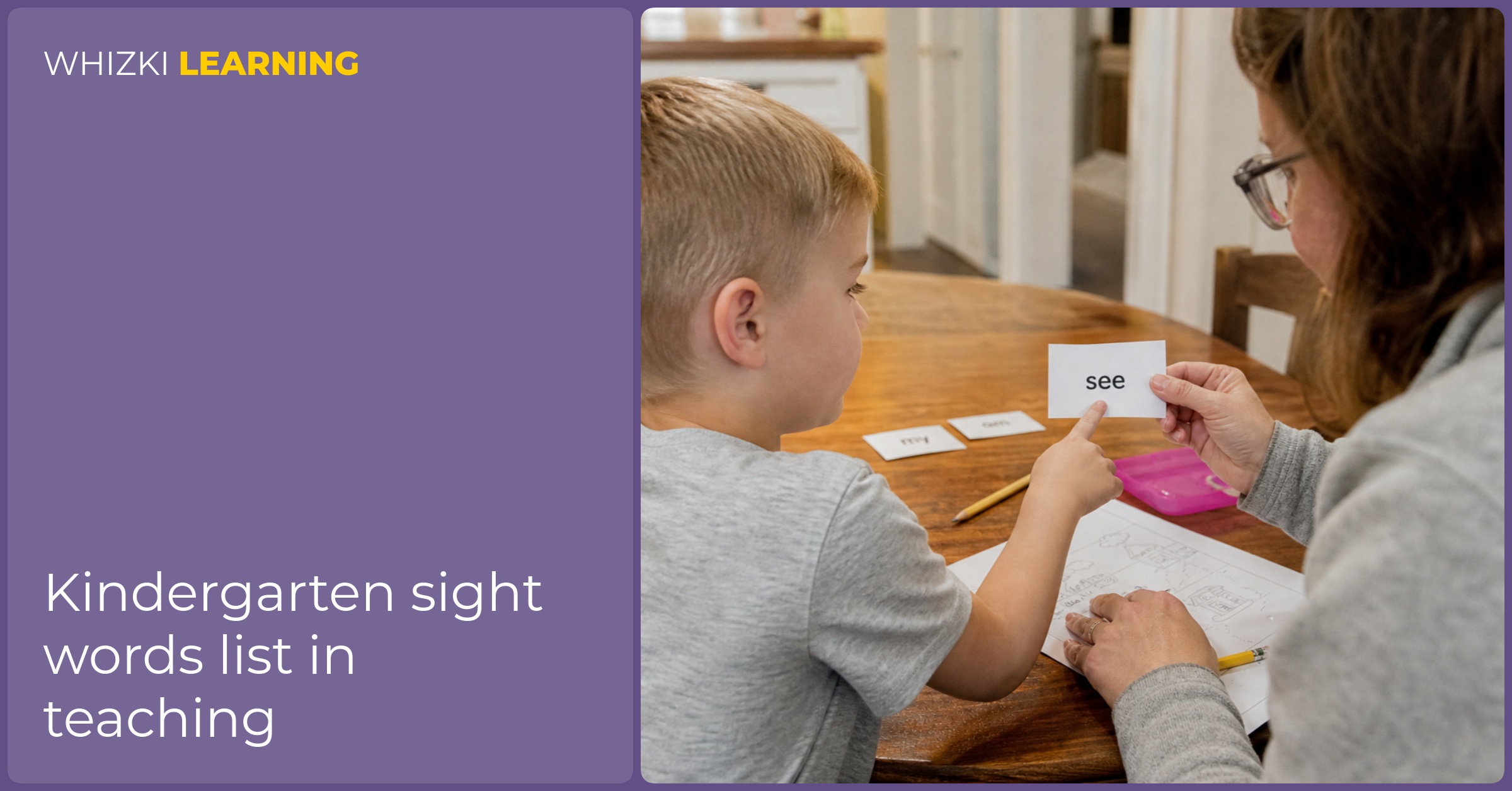
How many sight words to teach each week
For a kindergarten sight words list, teach 3 to 5 new words per week, with older words reviewed for about 2 minutes each day. For a 3-year-old, a 4-year-old, or a child still building letter-sound control, 1 to 3 new words per week is plenty because steady recall matters more than a bigger stack.
Occupational-therapy basics remind adults to watch the whole child during practice, including posture, pencil grip, eye tracking, and hand fatigue. A child who wiggles, slides under the table, or rubs eyes may need a shorter session rather than a harder word. The best weekly pace is the pace that keeps the child accurate and calm.
NAEYC guidance supports play, choice, and repetition for young children, so sight word practice should feel like a small routine rather than a test. A teacher can count a word as learned when a child reads the word quickly in a card stack, finds the word in a simple book, and uses the word in a sentence strip. A child who guesses from the first letter needs more sound mapping before new words are added.
How to practice sight words without guessing
Sight word practice works best when the adult points to the print, says the word, and then asks the child to notice the sounds and letters. In an Orton-Gillingham routine, the adult can tap sounds for a decodable word and circle only the tricky spelling when the word has an irregular part. A child learns more from one careful word than from twenty rushed flips.
Speech-language pathology practice often uses clear modeling before asking for recall, and that same pattern helps sight words. The adult says the word, the child repeats the word, the adult uses the word in a short sentence, and the child reads the word again. Printable cards from our sight-words printables make that routine easy to repeat without rewriting cards every day.
A simple multisensory routine can be read, trace, build, and read again. The child reads the card, traces the letters with a finger, builds the word with magnetic letters, and reads the card one more time. That pattern gives the eyes, ears, voice, and hands a job, which is often the difference between guessing and real recognition.
The Kindergarten Sight Words Practice Set in our worksheet sets adds printable cards, tracing pages, sentence strips, and quick review sheets for this exact age band. The complete pack lives in Whizki Plus. Families who prefer one ready folder can print a small weekly stack and keep the rest tucked away.
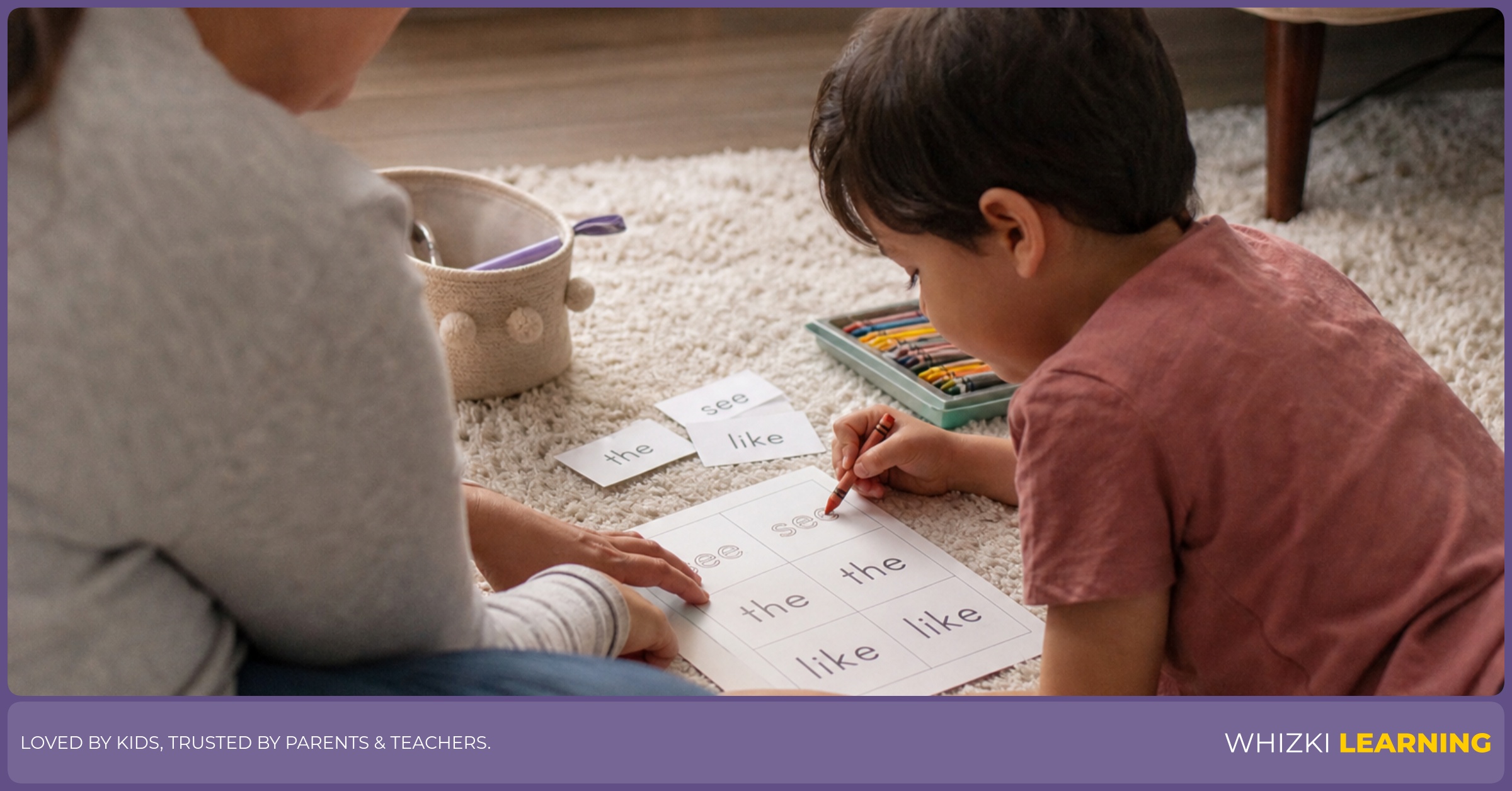
Printable PDF framing for home or class
A printable PDF for kindergarten sight words should be framed as a weekly routine, not a giant checklist. Page one can hold the current group, page two can hold review words, and page three can hold sentence strips or a simple home reading log. The format keeps the adult focused on a few words while still showing the full path ahead.
Montessori and Reggio classrooms both remind adults to prepare the environment before expecting independence. A small tray with five word cards, a pencil, a crayon, and one favorite book is easier for a child to manage than a full binder. Families who want more early-literacy pages can browse our printable library and choose only the pages that match the child’s current stamina.
A kindergarten teacher or homeschool parent can use the printable PDF as a record of exposure, accuracy, and confidence. A check mark can mean the child read the word in a card stack, a star can mean the child found the word in a book, and a date can show when the word felt automatic. The record should guide instruction, not label a child as ahead or behind.
When to slow down or ask for help
A sight word routine should slow down when a child starts guessing every word, avoiding books, or mixing up very different letters. Occupational-therapy heuristics suggest checking sitting position, lighting, paper angle, and fine-motor fatigue before assuming the word list is too hard. A tired hand or a crowded page can make a known word look brand new.
A teacher, reading specialist, speech-language pathologist, or pediatric occupational therapist can help when a child shows steady frustration with letters, sounds, or visual tracking across several weeks. Professional support is especially useful when a child cannot remember letter names, cannot hear first sounds in spoken words, or loses place on a simple line of print. Early help should feel practical and kind, with clear next steps for home and class.
The best kindergarten sight words list is the list a child can practice in small, steady pieces. Start with Group 1, keep phonics in the routine, and let the child’s real reading behavior tell you when the next group is ready.