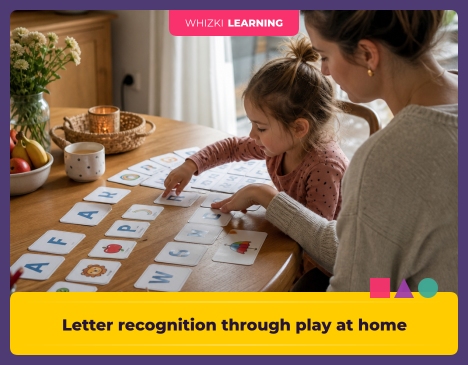
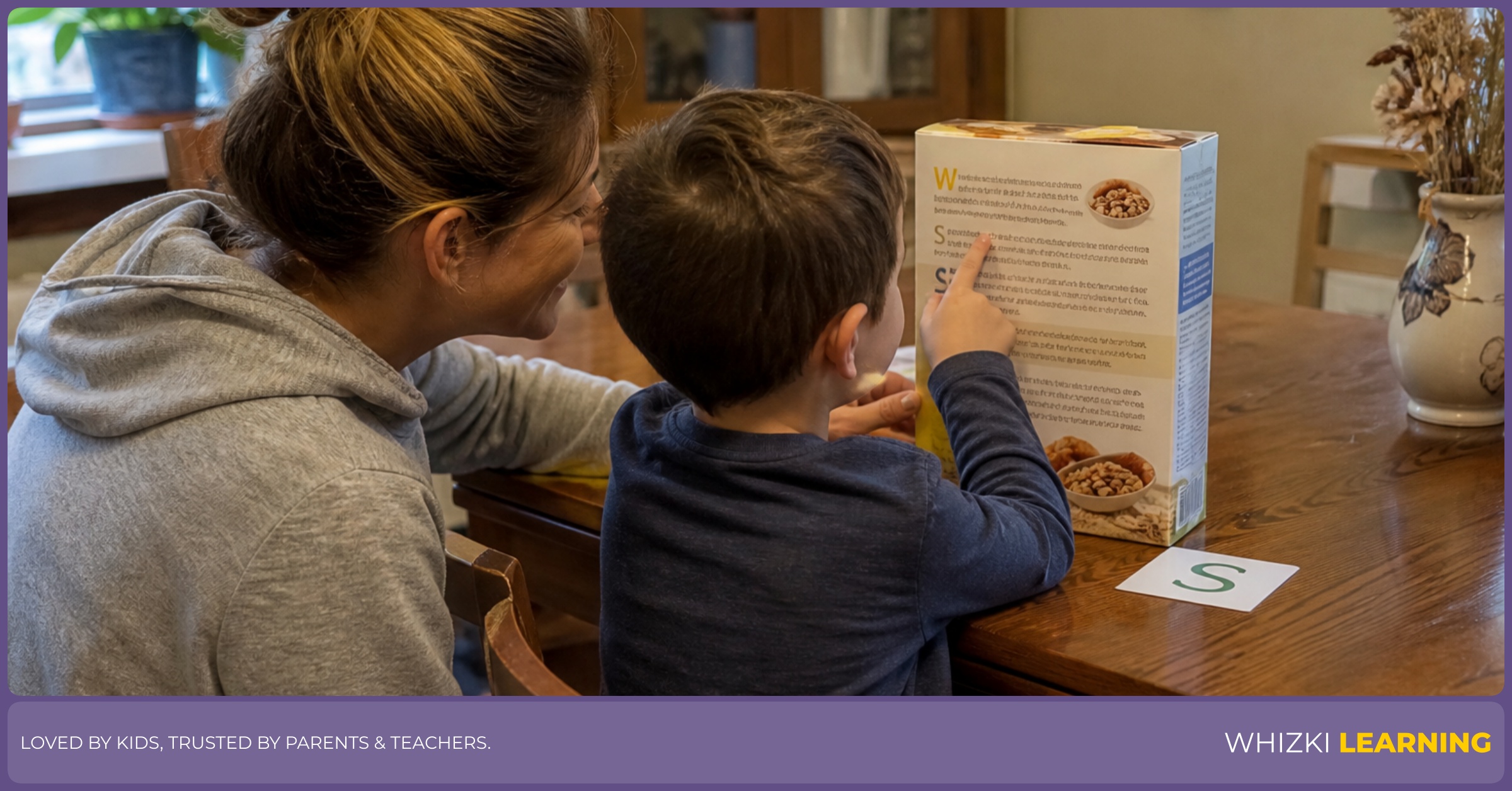
Letter practice can turn into a standoff fast when dinner is half-made and a preschooler decides every symbol looks the same, so start with a two-minute hunt for the first letter in the child's name on a cereal box. Letter recognition grows best in short, warm bursts, and play gives a child a reason to look closely without feeling quizzed.
Reviewed by Whizki Editorial Team, Early Childhood Education Editors.
Why play builds letter recognition
Letter recognition means a child can notice a letter shape, name the letter when ready, and connect the letter with a sound over time. The Orton-Gillingham approach treats letters as visual, verbal, and tactile patterns, so a child hears a sound, sees a symbol, and moves a hand or body. Play-first practice fits that sequence because the child's attention stays on a real object instead of a worksheet battle.
NAEYC guidance reminds teachers and parents that young children learn through active, meaningful experiences, not long sit-down drills. For a bigger picture of low-pressure literacy, read our guide to making letter learning joyful, then keep the alphabet learning hub open for quick letter pages when a child asks, “What letter is that?”
Start with print-rich hunts
1. Cereal box hunts are the easiest letter recognition activity because breakfast boxes already have giant print. A Reggio-inspired classroom treats the kitchen as a learning environment, so invite the child to find the big C on cereal and compare the curve with our letter C learning page. The cereal box hunt can end after three finds, because success matters more than covering the whole alphabet.
2. Name-in-mail hunts work well when a child loves envelopes, coupons, and delivery labels. Ask the child to search for A, a common letter in many names and addresses, then match the symbol with our letter A learning page. Montessori practice often begins with a child's own name because personal meaning helps the child care about the symbol.
3. Magnet sorts turn the fridge into a tiny literacy table. Put two bowls on the floor and ask the child to sort B magnets near our letter B learning page and D magnets near our letter D learning page. The magnet sort helps a child notice sticks, curves, and direction without a lecture about reversals.
4. Sticky-note door paths make letter practice feel like a hallway game. Put three notes on the door and ask the child to tap S before opening, then check the snake-like curve on our letter S learning page. A kindergarten teacher trick is to place the target letter at the child's eye level so the child sees the symbol during real movement.
Move letters with hands and bodies
5. Body letters help children who need movement before pencil work. Ask the child to make a tall T with arms out wide, then compare the body shape with our letter T learning page. Occupational-therapy basics remind parents that big shoulder and arm movements often come before steady finger control.
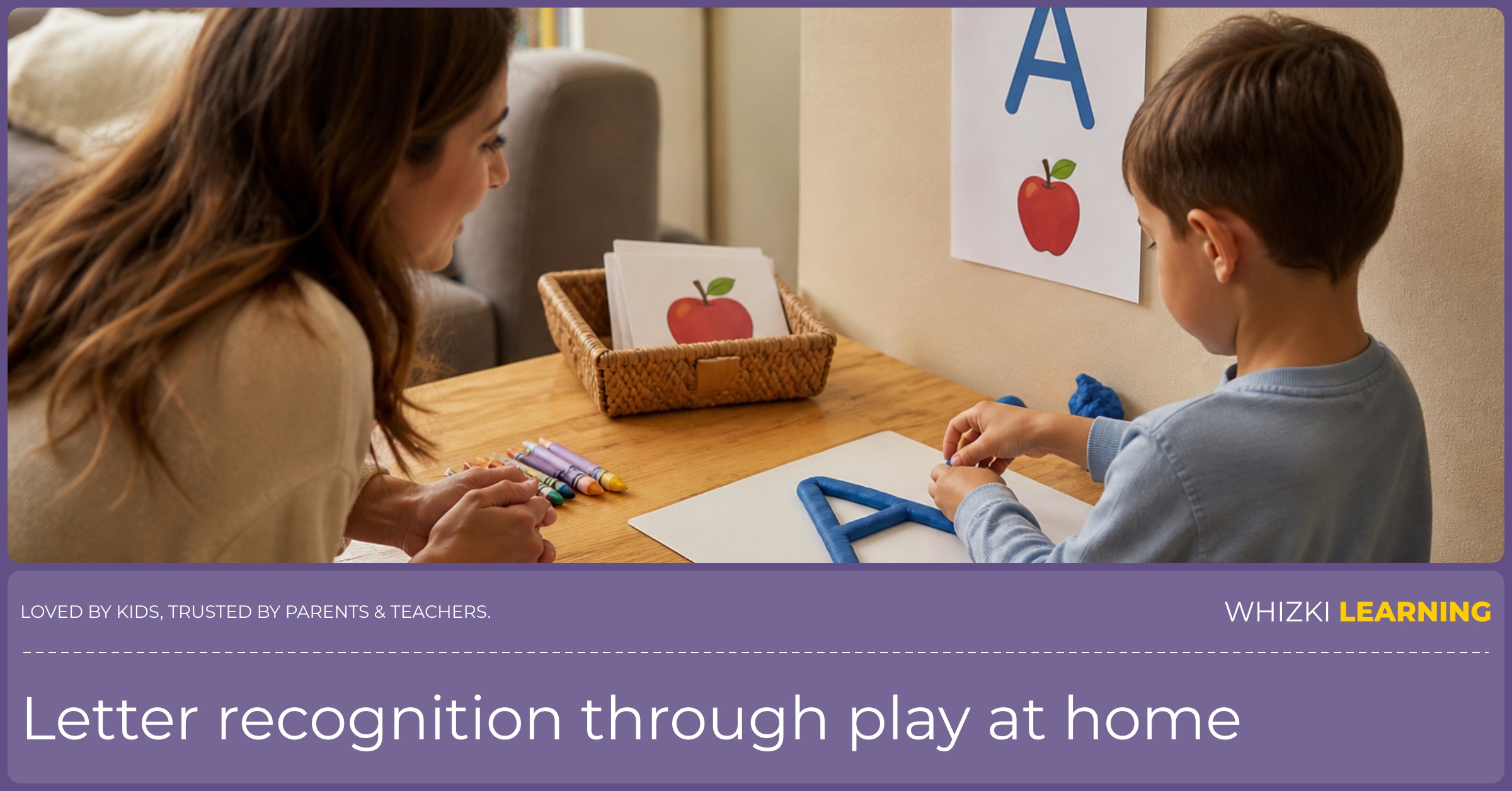
6. Playdough letter rolls give small hands a real reason to pinch, press, and curve. Roll one long snake for L and place the finished shape beside our letter L learning page, then let the child squish the dough flat at the end. Fine-motor practice feels calmer when the child can build the letter instead of being asked to trace perfectly.
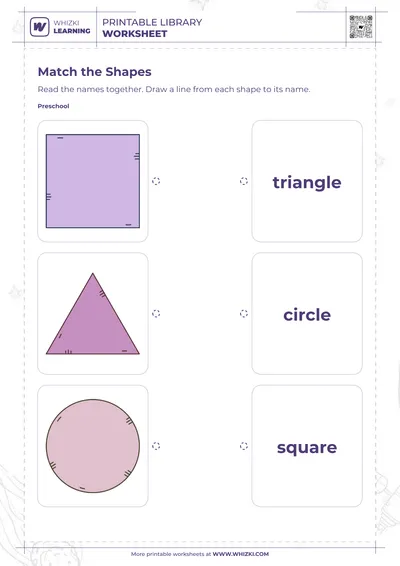
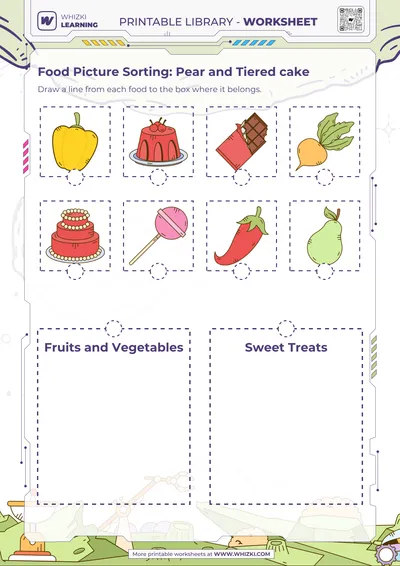
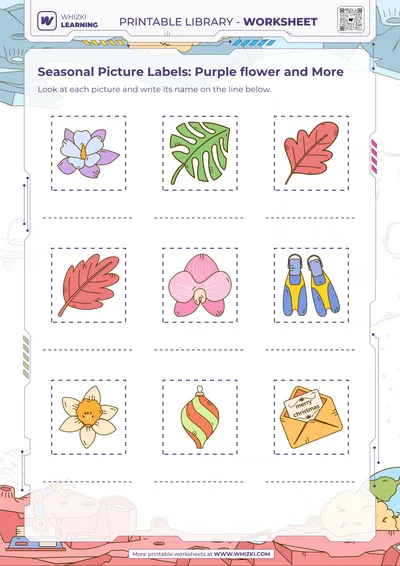
Print one matching alphabet printable from our printable library and tape the page to the wall right beside the play spot. The wall page gives the child a steady model during body letters, playdough rolls, or chalk games without adding another adult direction.
7. Chalk smash is loud in the best backyard way. Write X on the driveway, invite the child to name the letter, and let the child tap the chalk mark with a sponge or beanbag before looking at our letter X learning page. The chalk smash gives sensory feedback, which many occupational therapists use as a simple way to help attention return to the target shape.
Add sound, choice, and cleanup games
8. Sound baskets connect letter recognition with real vocabulary. Put a fork, feather, and toy fish in a basket, say the /f/ sound, and point to our letter F learning page after each object. Speech-language pathology practice often pairs clear sounds with mouth movement and objects because the child can hear, see, and touch the idea.
9. Letter parking lots turn toy cars into sorting tools. Draw a big P on paper, park a car on the letter, and compare the tall line and round bump with our letter P learning page. The letter parking lot gives the child a choice of car color, which often lowers resistance during a short literacy routine.
10. Cleanup toss makes the last minute of practice feel useful. Place a basket near the rug, ask the child to toss only the cards with R, and check the target symbol beside our letter R learning page. An Orton-Gillingham-style routine ends well when the child says the letter name, hears the sound, and touches the card before putting materials away.
Keep the routine short and calm
Letter recognition practice for ages 3 to 7 works best in small servings. NAEYC-aligned classrooms often rotate literacy into blocks, snack, art, and dramatic play because young children need repeated exposure across real moments. A home routine can copy that rhythm with two minutes at breakfast, one letter during bath foam, or a quick match before bedtime stories.
Letter confusion is normal, especially with b, d, p, and q, because children are still learning direction, sequence, and left-to-right print habits. Occupational-therapy heuristics support using big movement, textured materials, and consistent visual models before expecting tidy pencil lines. If a child avoids print every day, cannot recognize name letters by kindergarten, or seems frustrated by sounds and symbols, a pediatrician, teacher, or speech-language pathologist can help decide the next step.
Letter recognition through play is not a race through twenty-six flashcards. Pick one activity, pick one letter page, and stop while the child still feels proud, because that proud feeling is the hook that brings the child back tomorrow.