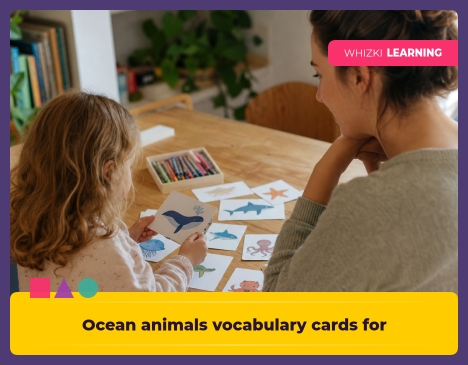
When the kitchen table is sticky, breakfast is half-finished, and a preschooler keeps asking about sea creatures, print four ocean animal cards today and play a two-minute name-and-point game. Ocean animals for preschool learning works best when the first step feels small enough for a tired adult. The printable cards give a child real words to say, touch, sort, and notice without adding another screen.
Reviewed by Sarah Mitchell, M.S., CCC-SLP, Speech-Language Pathologist.
What the ocean animal cards teach
Ocean animals for preschool vocabulary practice gives young children clear picture-to-word matches, which fits NAEYC guidance about using meaningful, concrete materials in early learning. I like to start with a few cards from our printable library because a small set protects attention and gives a child enough success to ask for another turn. The card frame matters because the border tells little eyes where the picture stops and the printed name begins.
The Orton-Gillingham approach reminds teachers to connect sound, sight, speech, and touch during word learning. A child can trace the card border with one finger, say the animal name, clap the syllables, and listen for the first sound. A shark card becomes more than a picture when a child hears /sh/, feels the mouth shape, and sees the printed word under the animal.
Reggio and Montessori observation both ask adults to watch what a child does with materials before adding more directions. The ocean animal cards may become a pretend aquarium, a matching mat, or a story prompt, and each choice shows what the child understands. A teacher or parent can follow that interest while still naming the animals clearly and accurately.
The 20 ocean animals in the pack
The shark card says a shark grows new teeth throughout life, and the octopus card says an octopus has three hearts. The sea turtle card says a sea turtle can travel a very long distance through the ocean, and the dolphin card says a dolphin uses clicks and whistles to communicate. The whale card says a whale breathes air through a blowhole.
The jellyfish card says a jellyfish has no bones, and the crab card says a crab can move sideways. The seahorse card says a seahorse dad carries the eggs, and the starfish card says a starfish can regrow an arm after injury. The stingray card says a stingray glides through water with wide fins.
The clownfish card says a clownfish can live safely among sea anemone tentacles, and the lobster card says a lobster sheds a shell as the lobster grows. The seal card says a seal rests on land and hunts in water, and the penguin card says a penguin uses wings like flippers. The squid card says a squid can squirt ink to get away.
The eel card says an eel can hide in rocky holes, and the sea lion card says a sea lion can rotate back flippers to move on land. The pufferfish card says a pufferfish can puff up when danger comes close, and the manta ray card says a manta ray feeds by filtering tiny food from water. The narwhal card says a narwhal has a long tusk, and speech-language pathology practice favors short, true facts because a child can repeat one fact without losing the main word.
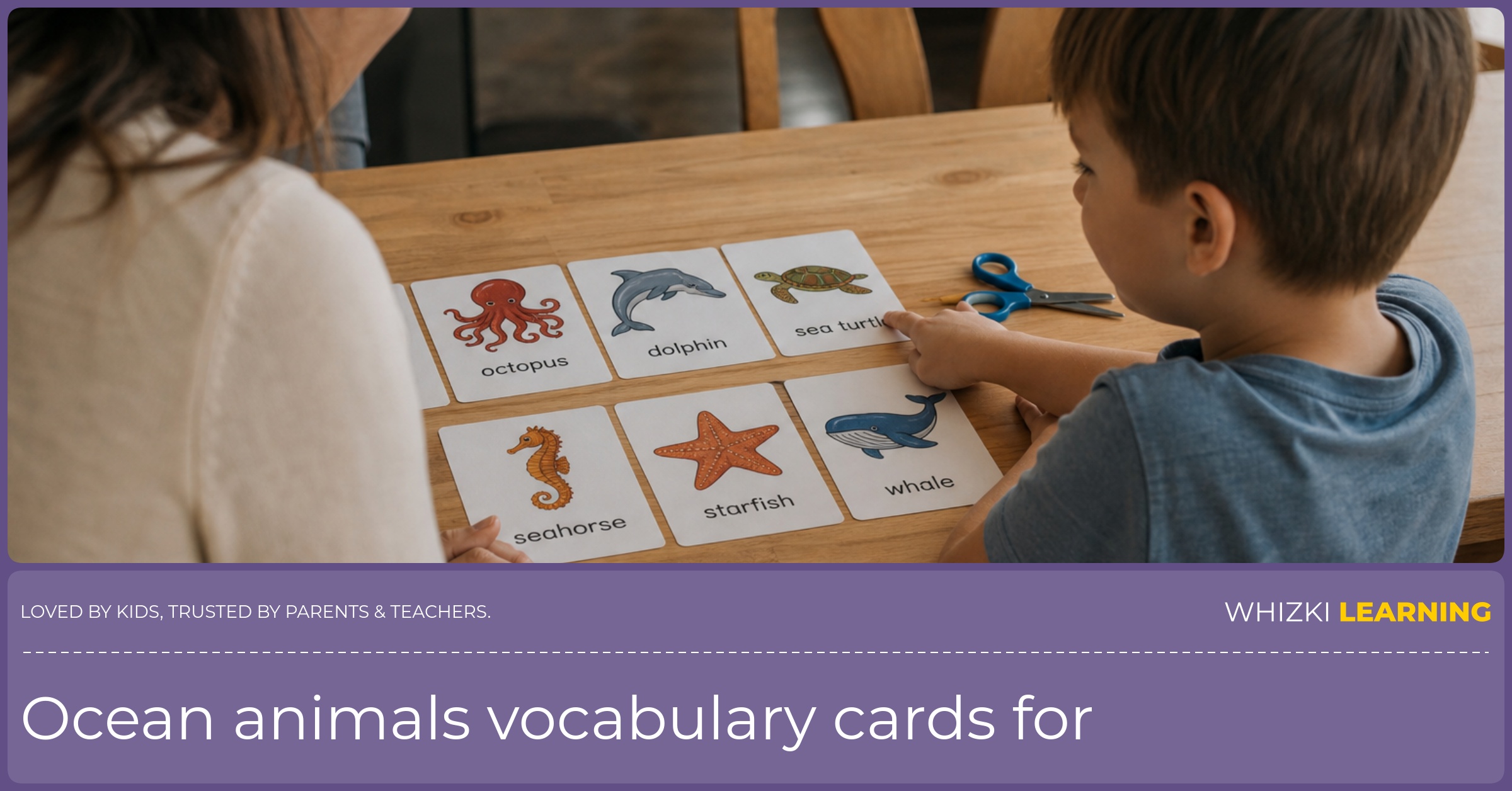
How to play the sort-by-size game
The sort-by-size game starts with three animal cards, such as crab, dolphin, and whale. Occupational therapy basics often use just-right challenge, so three cards are enough for a three-year-old while six or eight cards may fit a confident kindergartner. The child places the cards from smallest to largest, then explains the choice with a simple sentence.
The next round can add body movement for a child who needs more input before sitting. A parent can place small, medium, and large paper circles on the floor, and the child can carry each animal card to the matching circle. The movement gives heavy-work style feedback through walking, squatting, and placing, which often helps attention during the next quiet turn.
The premium Ocean Animals Vocabulary Worksheet Set in our worksheet sets adds tracing, matching, and simple classification pages for a child who wants pencil work after card play. The worksheet pages should come after oral play because young hands write better when the word already feels familiar. A kindergarten teacher can use one worksheet page at a center while another pair of children handles the cards on a rug.
For families who prefer paper practice already bound, our printed workbooks offer screen-free pages that pair well with vocabulary cards at home or in a small classroom. The complete ocean animals card pack lives in Whizki Plus.
How to set up ocean I-spy
The ocean I-spy game begins by placing six cards faceup around a room or table. A parent says, I spy an animal with eight arms, and the child points to the octopus card before saying the name. Speech-language practice often builds vocabulary through feature clues, so the clues can mention body parts, movement, color, habitat, or sound.
The clue style can shift by age without changing the cards. A three-year-old may hear, I spy the animal that snaps claws, while a six-year-old may hear, I spy the animal that filters tiny food from seawater. Reggio practice treats the room as part of the lesson, so card placement on a rug, windowsill, or low shelf can invite careful looking.
NAEYC guidance supports playful repetition because young children need many low-pressure chances to hear and use new words. The ocean I-spy game can repeat the same six cards for several days, and the clues can grow from obvious to more specific. A child who finds the dolphin quickly on Monday may be ready to compare dolphin and whale by Friday.
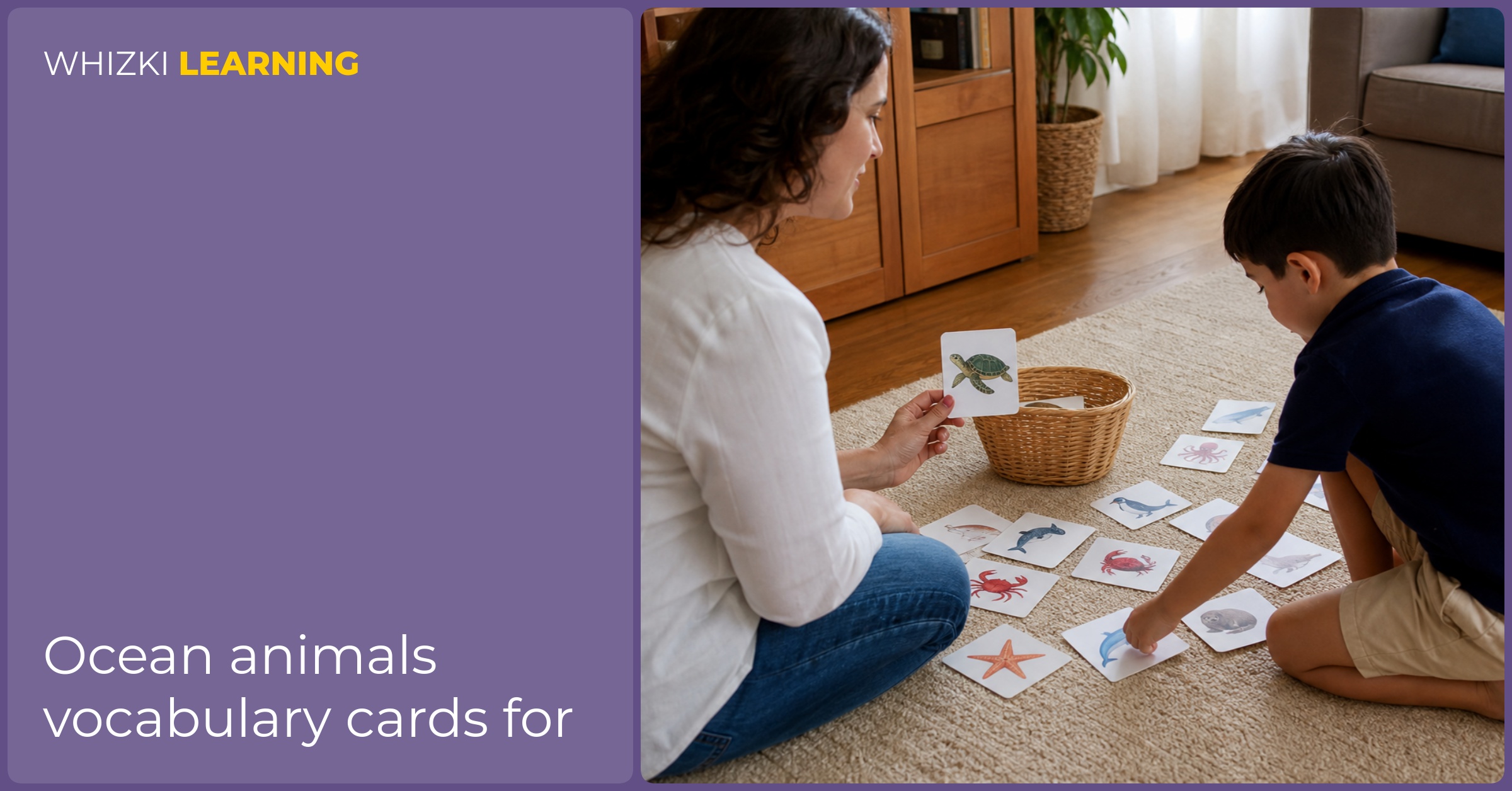
Printing and using the cards without extra stress
The printable card framing works best with a wide white border, a clear picture, and the animal name under the picture. Occupational therapy basics favor materials that are easy to grasp, so thicker paper or a laminated sheet can help small hands pick up one card at a time. Rounded corners are worth the extra minute when cards will travel between table, rug, and backpack.
The storage plan should be simple enough for a child to help. A small envelope labeled ocean animals keeps the set together, and a binder ring through one corner can turn the cards into a flip deck. A teacher can keep duplicate cards in a science basket for matching, sorting, and oral language turns.
Montessori observation reminds adults to notice order, independence, and purposeful movement during card work. A child may line up the animals by size, group water movers together, or choose a favorite card for a drawing. The adult can add one accurate word, one clear fact, and one invitation to look again.
The best ocean animal vocabulary lesson is the small lesson that actually happens on a busy day. Choose six cards, say the names slowly, and let a child show knowledge through pointing, moving, sorting, or telling one fact.
Ocean animals can carry a lot of language, science, and pre-reading practice when the adult keeps the pace gentle. A child who remembers one new animal name at dinner has done real learning.