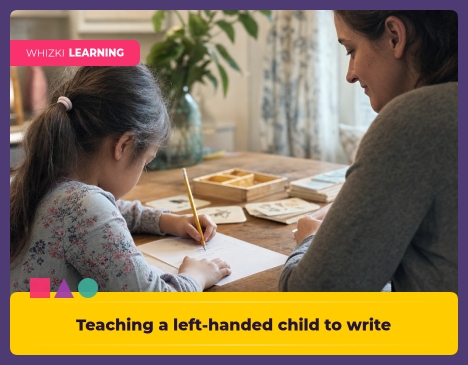
If your left-handed preschooler smears every name attempt and someone has suggested switching hands, stop the hand-switching today and set the paper for the left hand instead. Left-handed writing can look awkward at first because many adults model from a right-handed body. A small paper tilt, a relaxed grip, and a calm script usually change the whole table mood.
Reviewed by Whizki Editorial Team, Early Childhood Education Editors.
Never switch a left-handed child's writing hand
A left-handed child should keep using the left hand for writing when the left hand is the chosen hand for drawing, feeding, and building. NAEYC guidance asks adults to respect individual development, and hand preference belongs in that respect. Forced switching can make letter work feel confusing because the child has to manage the pencil, the letter path, and the wrong hand at the same time.
In my classroom, the cleanest check is observation across real play, not a one-time pencil test. A child who reaches left for crayons, pegs, tongs, and snack utensils across several days is giving useful information. The Orton-Gillingham approach begins with clear, consistent routines, and the first routine here is simple: the writing hand stays the writing hand.
A few 3- and 4-year-olds still trade hands during big scribbles, and that can be ordinary exploration. The concern is a 5- to 7-year-old who wants one hand but keeps getting corrected away from that hand. The next step is to tell every adult, "We are teaching left-handed writing now, so please model without switching hands."
Set the paper, grip, and wrist for a left hand
The paper setup matters more than a perfect pencil grip during the early years. Occupational therapy practice often starts with the body, the table height, and the page angle before anyone talks about neat letters. A left-handed child usually writes more easily when the page sits a little left of the belly button.
The paper tilt should let the left hand pull the pencil across the page without covering every fresh mark. For most left-handed children, the top right corner of the paper moves slightly up, and the top left corner moves slightly down. The child can test the tilt by drawing a slow rainbow line from left to right while the wrist stays mostly straight.
The pencil grip may look a little different on a left-handed child because the fingers need space to see the writing line. A left-handed child may hold the pencil a little higher than a right-handed child, and that higher hold can be useful. For a bigger age-by-age picture, compare your child's hand position with normal pencil grip by age rather than chasing a perfect tripod before the fingers are ready.
The adult model can be simple even when the adult is right-handed. Sit across from the child and model letter formation slowly, or sit beside the child and name the motion instead of asking the child to copy your hand shape. Orton-Gillingham lessons use clear verbal paths, such as "start at the top, pull down, go back up," and those words help a left-handed child follow the letter without switching hands.
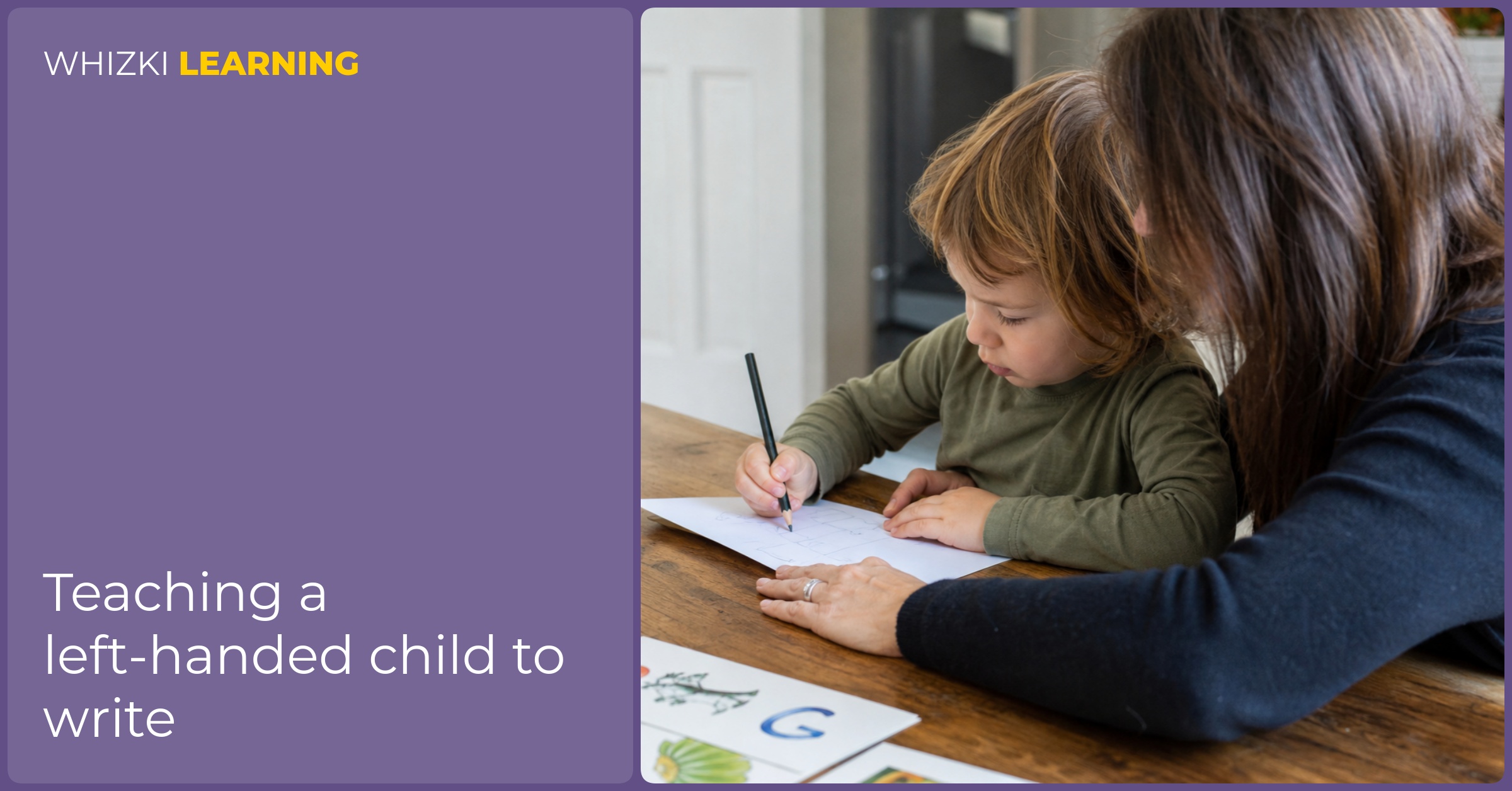
Fix smudges without making writing feel fussy
Pencil smudges are common for left-handed writers because the hand moves over fresh marks from left to right. Occupational therapy basics treat smudging as an environment problem first, not a child problem. The page angle, tool choice, and drying time can reduce the gray hand without turning writing into a lecture.
A softer crayon, a short colored pencil, or a quick-dry pencil can make the first week feel better. A small blank card under the side of the left hand can act like a hand rest when the child is ready, but the card should never become another rule to manage. The best smudge fix is the one the child can use without losing the letter idea.
Writing practice should still feel playful because a tense child usually presses harder and smears more. I like name cards, grocery lists, pretend menus, and sidewalk chalk because the writing has a reason. If practice has started to feel like a battle, the parent guide to making writing fun can help you reset the mood before the next pencil session.
A left-handed child also benefits from short bursts instead of a full page of copy work. Reggio-inspired observation asks adults to notice the child's energy, grip, and curiosity while the work is happening. Five strong letters with a smile are usually better teaching than twenty tired letters with a tight fist.
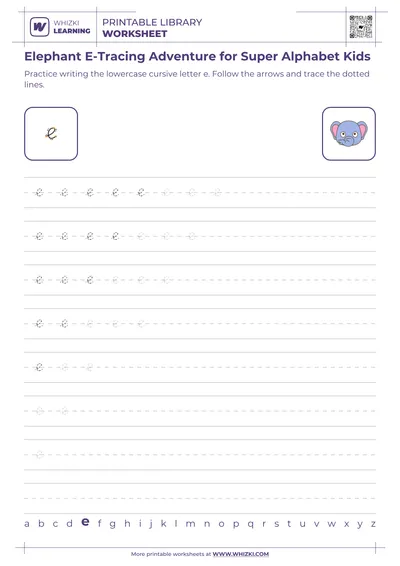
For low-pressure practice, the free handwriting and fine-motor pages in our printable library give left-handed children bigger spaces, simple paths, and short name-writing moments. Print one page, rotate the paper for the left hand, and stop before the fingers get tired.
Scissors, notebooks, and classroom routines
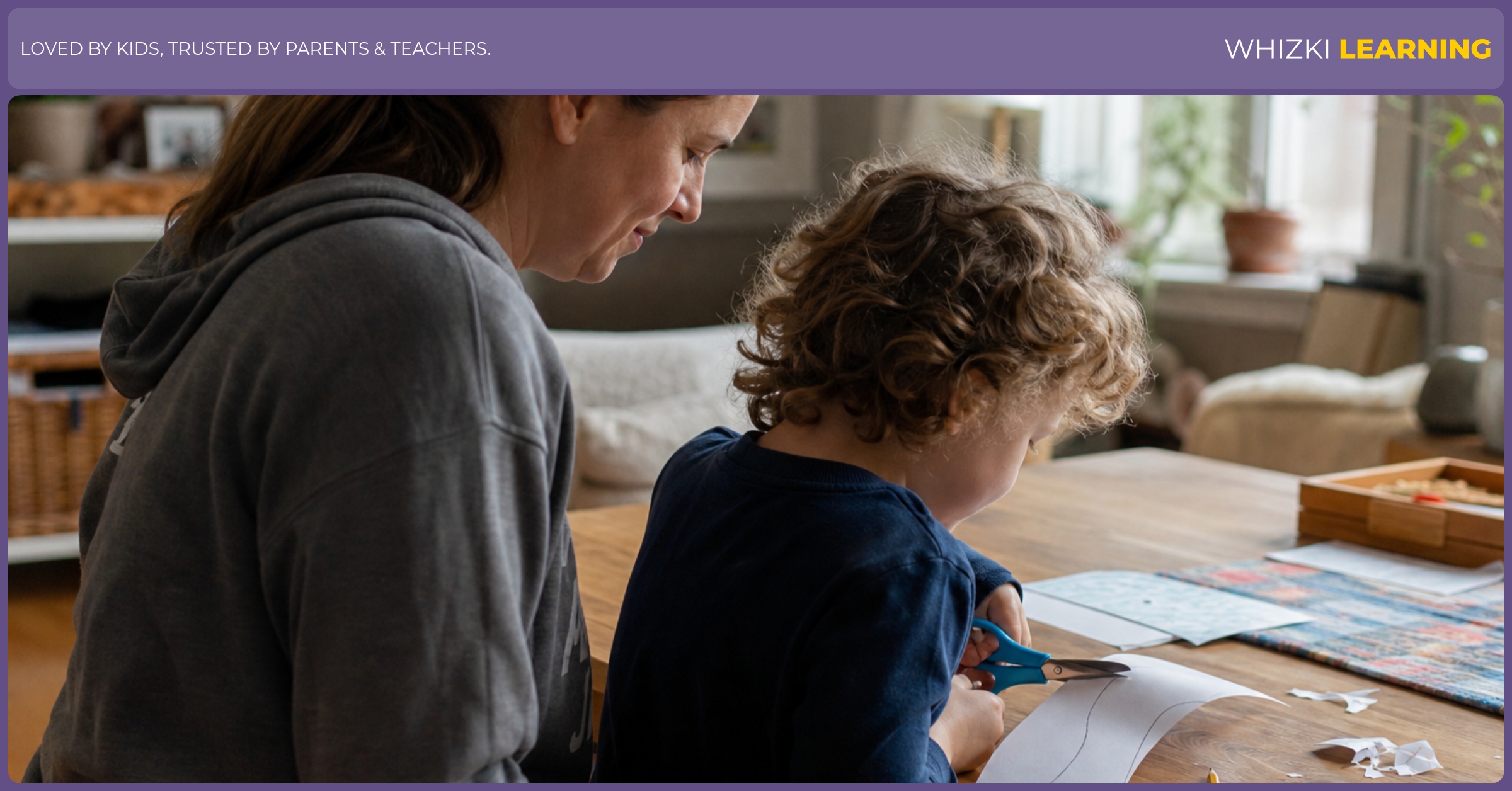
Left-handed scissors are worth trying when cutting looks choppy even though the child understands the line. Standard scissors can hide the cutting line from a left-handed child because the blade position was designed for a right hand. Occupational therapy classrooms often check the tool before assuming the child needs more practice.
Notebook placement can also help a left-handed child write with less frustration. A spiral binding on the left side can bump the child's hand, so loose paper, top-bound notebooks, or a clipboard may be easier during kindergarten practice. The goal is not special treatment, but fair access to the same writing task.
The kindergarten teacher should know the child's writing hand before pencil routines begin. A simple note can say, "Please seat my child where the left elbow has space, and please do not switch the writing hand." NAEYC-aligned classrooms make room for individual materials when a small change helps a child participate.
Montessori and Reggio classrooms both remind adults to watch the child before correcting the child. If the child cuts with the left hand, draws with the left hand, and reaches for tools with the left hand, the classroom routine should support that pattern. The strongest routine is calm repetition across home, preschool, and kindergarten.
The encouragement script I use at the table
The encouragement script should protect the child's chosen hand and name the next tiny action. Orton-Gillingham teaching uses direct, specific language because young children do better when the adult names one step at a time. Speech-language practice also leans on short, repeatable phrases when a child is learning a new motor sequence.
The table script can sound like this: "Your left hand is your writing hand. Tilt the paper so your hand can move. Start at the top, pull down, and stop." The script is short enough for a 4-year-old to remember and steady enough for a 7-year-old who feels self-conscious.
The correction script should be just as gentle. Say, "The letter is facing the other way, so let's trace the path once with a finger." A finger trace gives the brain and hand another try without making the pencil mark feel like a failure.
The praise script should notice effort, setup, and independence. Say, "You kept your left hand on the pencil, you tilted the page, and you checked the line." A left-handed child hears that the adult values the writing process, not just the neatest letter on the page.
Left-handed handwriting grows through smart setup, short practice, and adults who protect the child's chosen hand. If the writing table needs a steadier rhythm, come sit with me in the weekly newsletter for small, doable early-learning ideas.