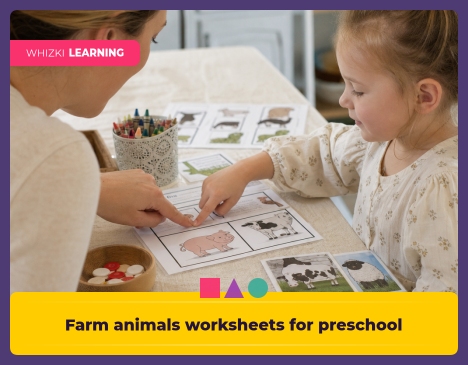
Farm animal worksheets can turn into a mess fast when a preschooler wants scissors, a kindergartner races ahead, and a tired adult just needs ten calm minutes. Start with one page, one crayon, and one farm job: “Circle the animals that live in the barn,” then stop while the child is still willing. The farm theme works well for ages 3 to 7 because children can act out sounds, count familiar objects, and sort picture cards with real purpose.
Reviewed by Whizki Editorial Team, Early Childhood Education Editors.
Why farm animals work for early learning
Farm animals worksheets preschool pages are popular because the farm gives children words, sounds, movement, and pretend play in one familiar theme. NAEYC guidance encourages meaningful, hands-on learning for young children, and a farm page can invite a child to moo, hop, clap, count, and draw instead of sitting silently. The worksheet becomes stronger when the adult adds one real action before or after pencil work.
A farm page gives a child clear categories without needing long explanations. A cow, hen, pig, horse, sheep, goat, duck, and dog are easy to compare by size, sound, covering, home, or food. The same idea shows up in our printable library, where themed pages help children practice one skill in many friendly settings.
If a child already knows cow and pig, the adult can stretch vocabulary gently by asking, “Which animal has feathers?” or “Which animal gives milk?” Speech-language practice often starts with naming, describing, and sorting familiar pictures because children answer more confidently when the words connect to real life. Families who like animal themes can later compare land animals with ocean animals vocabulary cards for a simple talk-about-same-and-different activity.
What to include in a farm worksheet pack
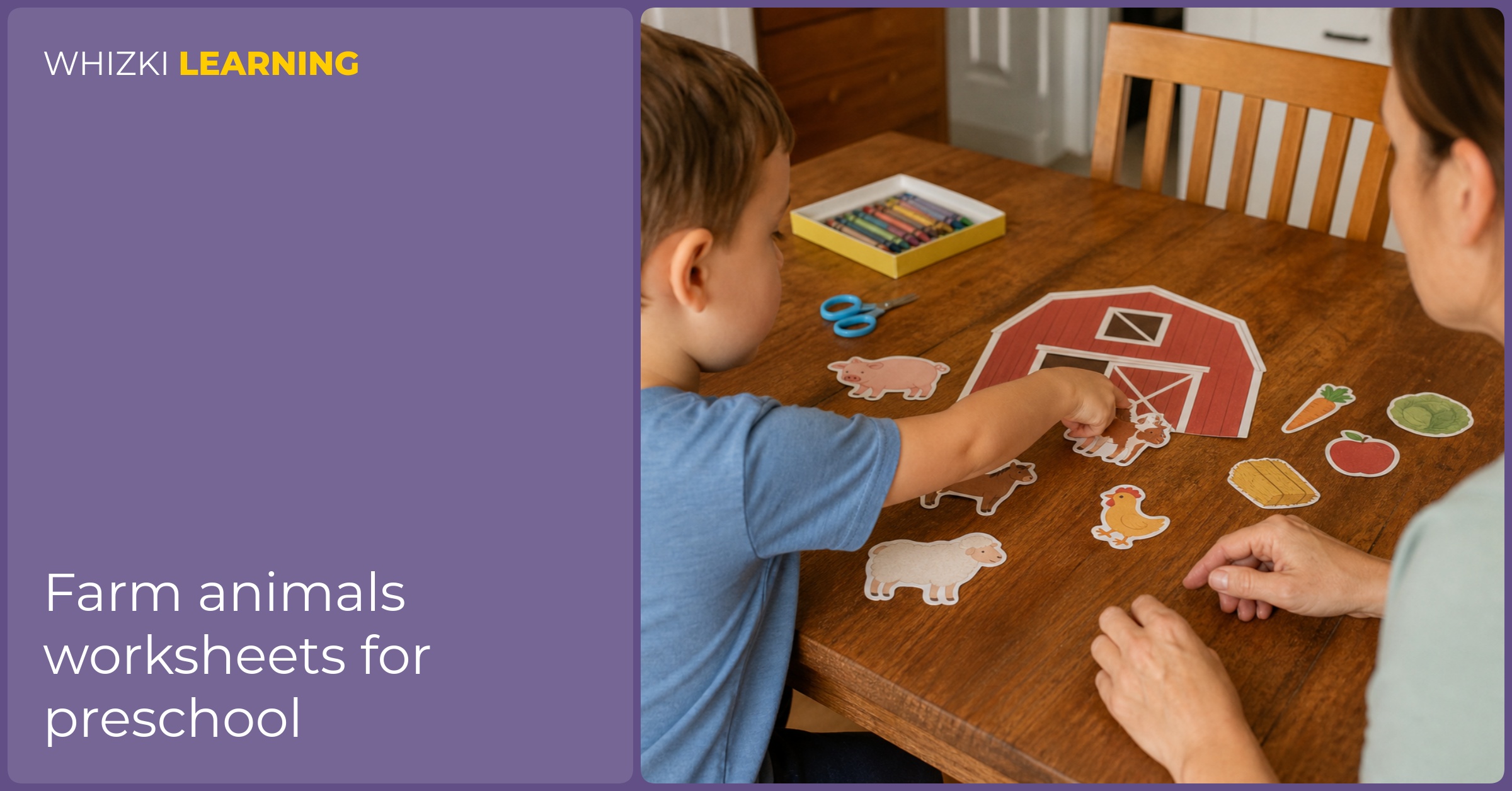
Counting pages should ask the child to touch one picture for each number spoken. In Orton-Gillingham lessons, teachers keep practice multisensory because seeing, saying, touching, and marking help children hold the task in working memory. A farm counting page can use eggs in a nest, apples for a horse, or chicks by a hen, as long as the pictures are clear and spaced well.
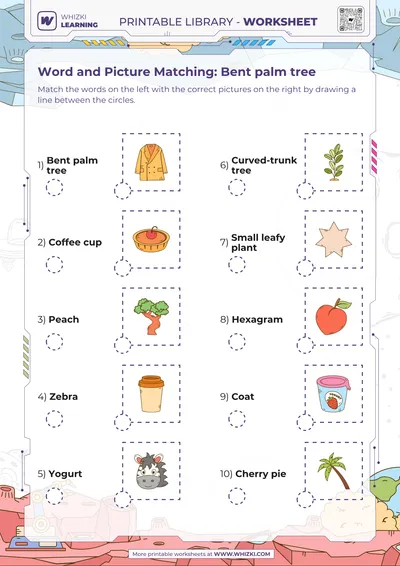
Matching pages should connect a picture to a shadow, a baby animal to an adult animal, or a farm tool to a job. The child practices visual discrimination, which matters later for telling apart letters that look close to one another. Matching also gives quick wins for children who are not ready for long tracing lines.
Beginning-sound pages should stay simple and oral before pencil-heavy work begins. The adult can say, “Duck starts with /d/,” while the child taps the picture and repeats the sound, which fits the sound-first habit used in Orton-Gillingham and speech-language practice. A farm page might include pig for /p/, goat for /g/, barn for /b/, and hen for /h/ without asking the child to read full words yet.
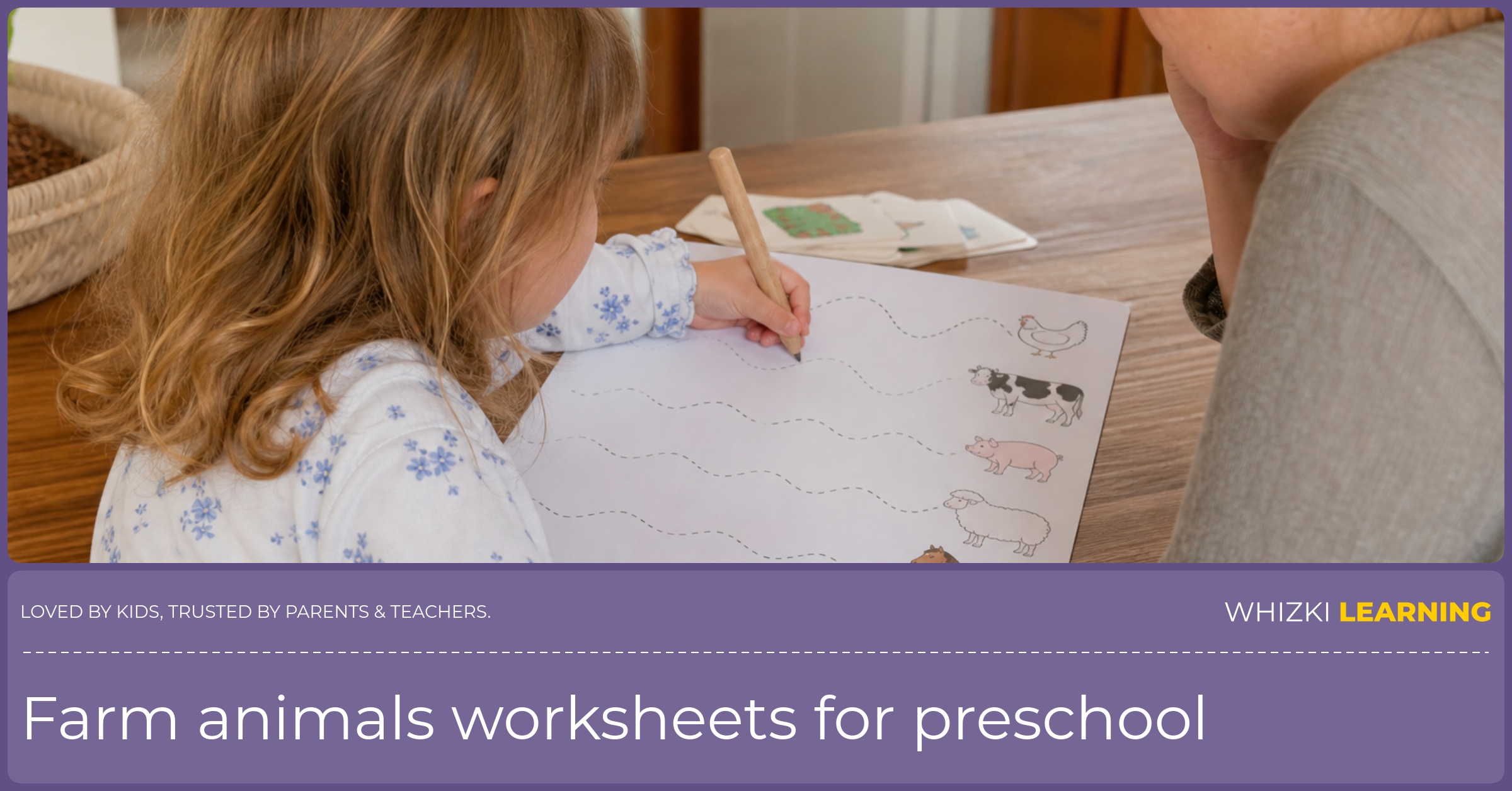
Tracing pages should use short strokes, wide paths, and a reason to move the pencil. Occupational-therapy basics remind teachers to watch posture, paper angle, and pencil pressure before asking for neater lines. Families who want more themed practice can browse our worksheet sets and choose pages that match the skill the child is practicing today.
How to run a calm fifteen-minute lesson
Fifteen minutes is plenty for a farm worksheet lesson with a 3 to 7 year old. The occupational-therapy rule I use at the table is simple: warm up the hands, give one clear task, and stop before fatigue turns into scribbling. A child can squeeze play dough, push toy animals into a pretend pen, or pinch clothespins onto a paper fence before picking up a pencil.
Parent language matters during farm worksheet time because young children borrow the adult calm. The adult can say, “First circle the animals, then feed the horse card,” instead of giving five directions at once. Clear first-then language matches classroom practice and helps children know exactly when the work will end.
Reggio-inspired teaching asks adults to notice what the child is already showing. A preschooler who lines up sheep may be ready for counting, while a kindergartner who asks about animal food may be ready for the who-eats-what sorting game. Observation keeps the worksheet from becoming a power struggle.
Cleanup can be part of the lesson when the adult gives the child a farm job. The child can put crayons in the bucket, place animal cards in the barn envelope, and choose one favorite animal to tell about. A short closing routine helps the child leave the table feeling capable.
How to adapt pages for ages three to seven
Age 3 worksheets should feel like guided play with paper. Montessori observation reminds adults to match the task to the child in front of them, so a 3 year old may point, stamp, cover pictures with counters, or make animal sounds instead of writing. The learning goal is attention, vocabulary, and one-to-one connection with an adult.
Age 4 and 5 worksheets can add matching, simple counting, beginning sounds, and short tracing paths. NAEYC guidance supports playful, developmentally appropriate practice, so the adult can offer choices such as crayon color or which animal to do first. Choice lowers resistance without changing the skill goal.
Age 6 and 7 worksheets can include more precise tracing, simple labels, and sorting by animal need. A kindergartner can decide whether hay, corn, grass, or a worm belongs with each animal, then explain the choice in a full sentence. The explanation matters as much as the cut-and-paste work because oral language supports reading comprehension later.
Print, reuse, and keep the farm theme playful
Printables last longer when the adult chooses fewer pages and repeats favorite formats. In Orton-Gillingham review, familiar routines free the child to focus on the new sound or number, and the same idea helps at home. A child who knows how a matching page works can spend more energy noticing the animal detail.
Farm centers can stay screen-free with crayons, counters, toy animals, scissors, glue, and a small basket for finished cards. Reggio practice values real materials, so a paper cow next to a toy cow can become a conversation about size, color, sound, and care. The who-eats-what sorting game works especially well when the child moves each food card by hand and says the animal name aloud.
The premium Farm Animals Early Skills Pack gathers counting, matching, beginning sounds, tracing, and the who-eats-what sorting game in one printable set. Families who prefer bound pages can find our printed workbooks for screen-free table practice. The complete pack lives in Plus.
Farm worksheets are useful when the worksheet serves the child, not the other way around. Choose one skill, add one real movement, and stop while the child still feels successful. A child who leaves the table proud is more likely to come back for the next pig, duck, or barn page tomorrow.