Learning Outcomes
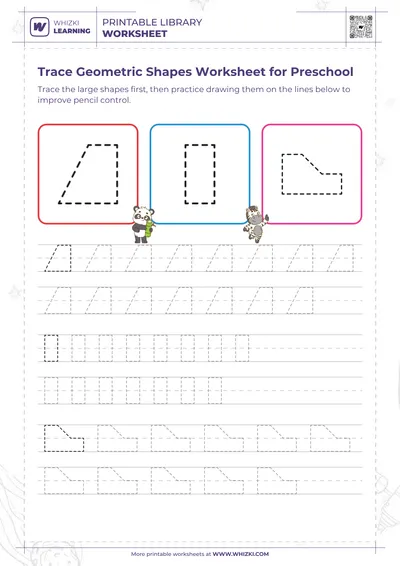
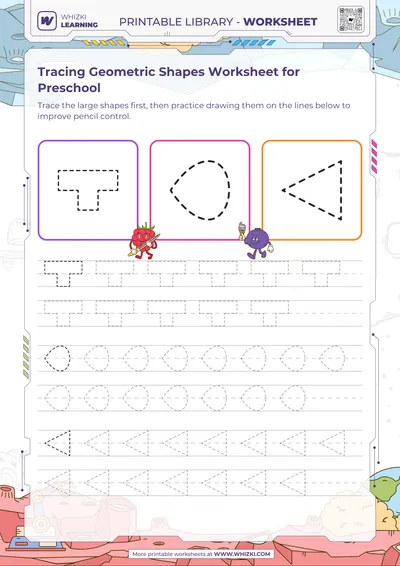
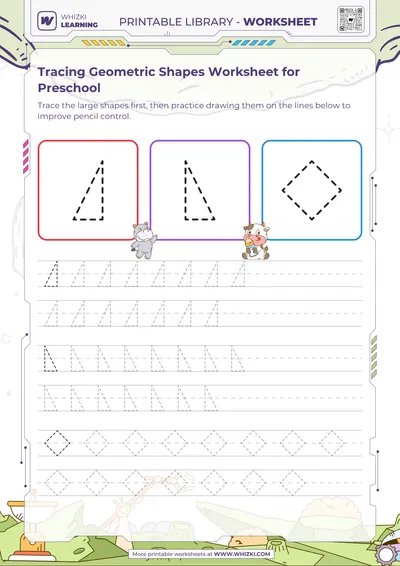
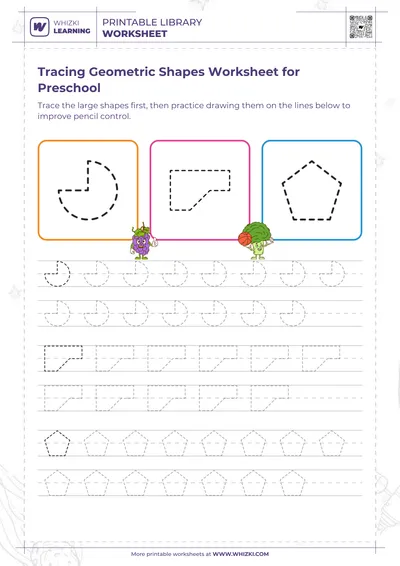
The Whizki Learning shape tracing worksheet improves fine-motor control by guiding 3-year-old children to follow bold shape outlines, supporting smoother pre-writing movements and confident pencil handling.
The Whizki Learning geometric tracing worksheet strengthens shape recognition because children repeatedly see and trace circles, triangles, and rectangles while hearing clear shape names during guided practice.
The Whizki Learning shape worksheet introduces early geometry concepts by helping children notice straight sides, corners, and curves in each shape, building visual math reasoning for later problem-solving tasks.

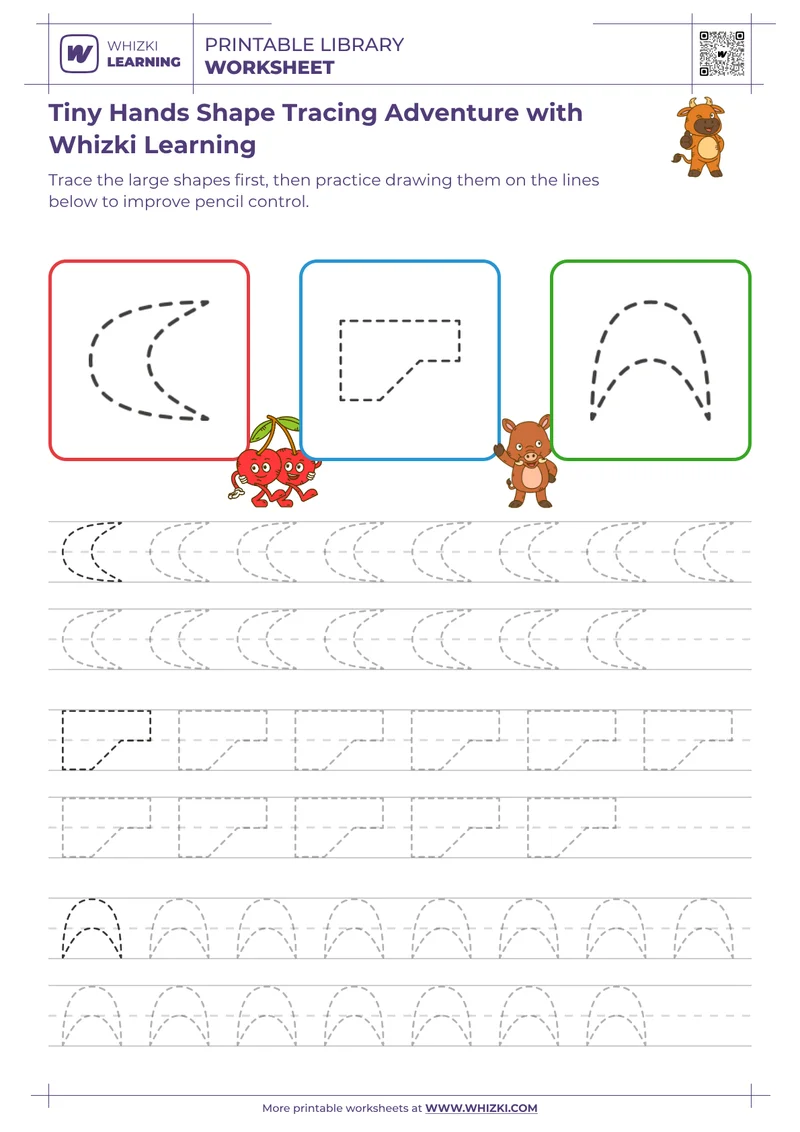
Tiny Hands Shape Tracing Adventure with Whizki Learning
This Whizki Learning shape tracing worksheet for 3-year-olds introduces geometric shapes in a fun, age-appropriate way that supports early math skills. The worksheet invites the child to trace large, clear outlines of circles, triangles, and rectangles while hearing shape names spoken aloud by an adult. Educator-designed spacing and line thickness help young learners recognize each geometric shape as a unique visual pattern, laying a strong foundation for future geometry understanding in kindergarten and first grade.
This Whizki Learning printable worksheet is crafted by experienced early childhood educators to strengthen pencil control and fine-motor coordination in young children. The guided tracing paths encourage the child to follow smooth curves and straight edges, which strengthens the small hand muscles required for writing numbers and letters. Consistent practice with the same Whizki Learning shape outlines helps the child develop steady hand movements, improved grip, and better control over drawing tools such as crayons, markers, or pencils.
This Whizki Learning geometric tracing worksheet also builds early math vocabulary and shape recognition through simple, repeatable activities. Parents or teachers can point to each shape and clearly say the name, while the child traces slowly along the outline. Repetition of shape names such as circle, triangle, and rectangle helps the child connect spoken words with visual forms, improving early math language, listening comprehension, and readiness for classroom instructions that reference shapes in storybooks, games, and problem-solving tasks.
This Whizki Learning worksheet is designed using research-informed practices and classroom testing to support playful, low-pressure learning for very young children. The layout limits visual clutter so the child can focus on a few large shapes per page without feeling overwhelmed. Educator feedback guided the size, spacing, and number of shapes to match realistic attention spans of 3-year-olds, making the activity achievable in short sessions. Families and teachers can confidently use the Whizki Learning printable worksheet as part of a balanced early math routine that also includes hands-on blocks, puzzles, and shape hunts in the real world.
Limited Time Sale
Kids’ Workbooks!
Boost your child’s skills with our discounted workbooks. Engaging activities for preschool, kindergarten, and grade 1 - now at special sale prices!


Fast shipping
Secure Payment
Licensed Teachers
For the planet
Printed in the USA
Find fresh ideas
To help your little learners grow!
Helpful guides for parents and teachers, and tips for making learning at home super fun.

Getting an energetic preschooler to sit still for handwriting practice often results in frustrating power struggles. This educator-approved playbook provides 10 screen-free, proprioceptive calm-down activities designed to regulate a dysregulated nervous system. Learn how heavy work, fine motor warm-ups, and breath control prepare a child's body and mind for successful, tear-free tracing and writing.
Sunny Hedge
When a preschooler complains of boredom, parents often feel immediate guilt and offer digital entertainment. This educator-approved guide explains the psychological mechanism of unstructured time and why boredom is the ultimate catalyst for independent play. Learn how to survive the initial complaining phase and utilize high-quality printed workbooks to bridge the gap between digital stimulation and deep, analog focus.
Sunny Hedge
Many parents panic when their preschooler cannot sit still for more than two minutes, fearing the child is not ready for formal schooling. This educator-tested guide explains why early attention spans are naturally short and provides a step-by-step plan to gently stretch cognitive stamina. Learn how to build a reliable 15-minute focus habit using screen-free, analog activities before the first day of kindergarten.
Sunny Hedge
The kitchen provides a natural, highly engaging mathematics classroom for preschoolers. This educator-approved playbook details 10 easy, screen-free number games using everyday pantry items and snacks. Learn how sorting pasta, measuring water, and counting blueberries builds foundational counting skills, one-to-one correspondence, and deep number recognition without any formal preparation.
Sunny HedgeJoin the Screen-Free Movement.
Get exclusive activities, expert tips, and inspiration for a more meaningful, offline family life.