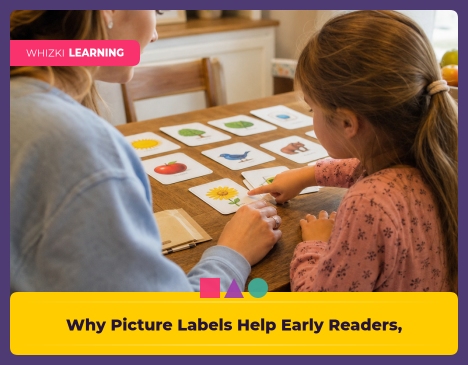
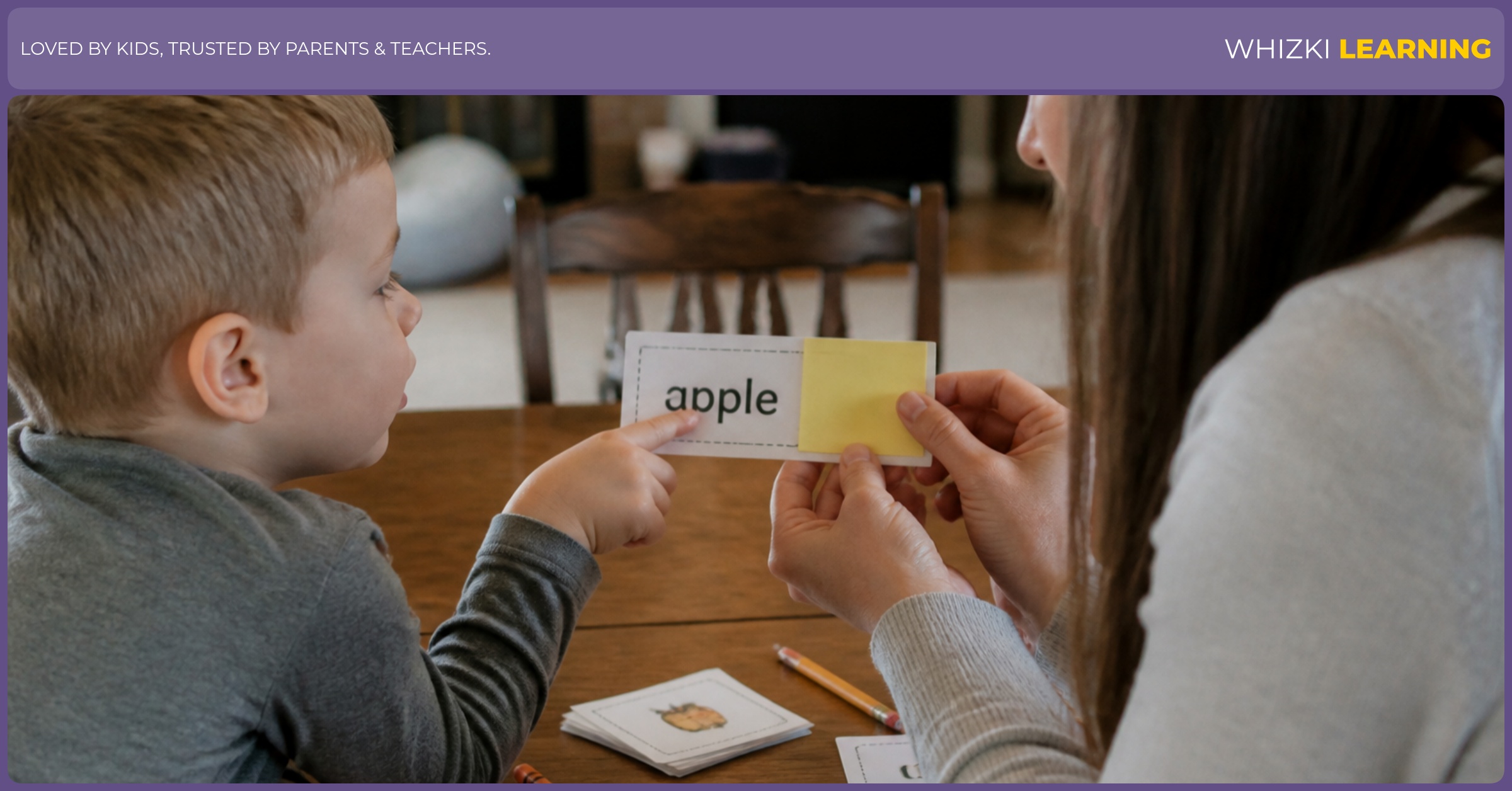
Your child sees a picture of a cat, says “cat” before looking at the word, and you are stuck deciding whether to cheer or cover the picture, so try one quick move today: slide a sticky note over the picture, ask for the first sound, then reveal the picture to check meaning. Picture labels can be helpful, and picture labels can also invite guessing when the adult goal is not clear. A calm cover-and-reveal choice keeps the lesson honest without turning the kitchen table into a test.
Reviewed by Sarah Mitchell, M.S., CCC-SLP, Speech-Language Pathologist.
What the picture is doing
Picture support is not cheating when the goal is meaning. NAEYC guidance favors print in meaningful settings, and a labeled basket, cubby, or snack chart gives young children a reason to care about words.
Picture support becomes a problem when the adult asks for word reading but leaves the answer in the picture. In an Orton-Gillingham approach, the teacher separates meaning, sound, and print so the child knows which skill is being practiced.
The cleanest comparison is simple: reveal the picture for vocabulary, cover the picture for first-sound listening, and hide the picture until after word reading when the goal is the whole word. If letter names are already familiar, the previous literacy lab guide gives a helpful bridge from naming letters to listening for sounds.
A decision tree for cover or reveal
The decision tree starts with the adult question, not the card. Speech-language pathology practice often separates naming a picture, hearing a sound, and recognizing a printed word because each task asks for a different response.
When the adult asks, “What is in the picture?”, the picture should stay uncovered. A three-year-old or four-year-old may be building vocabulary, and the word label can sit nearby as friendly print without pressure to read every letter.
When the adult asks, “What sound do you hear first?”, the picture can stay visible for a moment and then get covered. The adult can say the word slowly, “mmmmoon,” and the child can touch the mouth or throat area to notice the starting sound before the picture comes back.
When the adult asks, “What word is this?”, the picture should be covered until the child has looked across the letters from left to right. For quick letter-sound refreshers before label work, the alphabet learning hub keeps the focus on the alphabetic code.
Five-minute routine with one label card
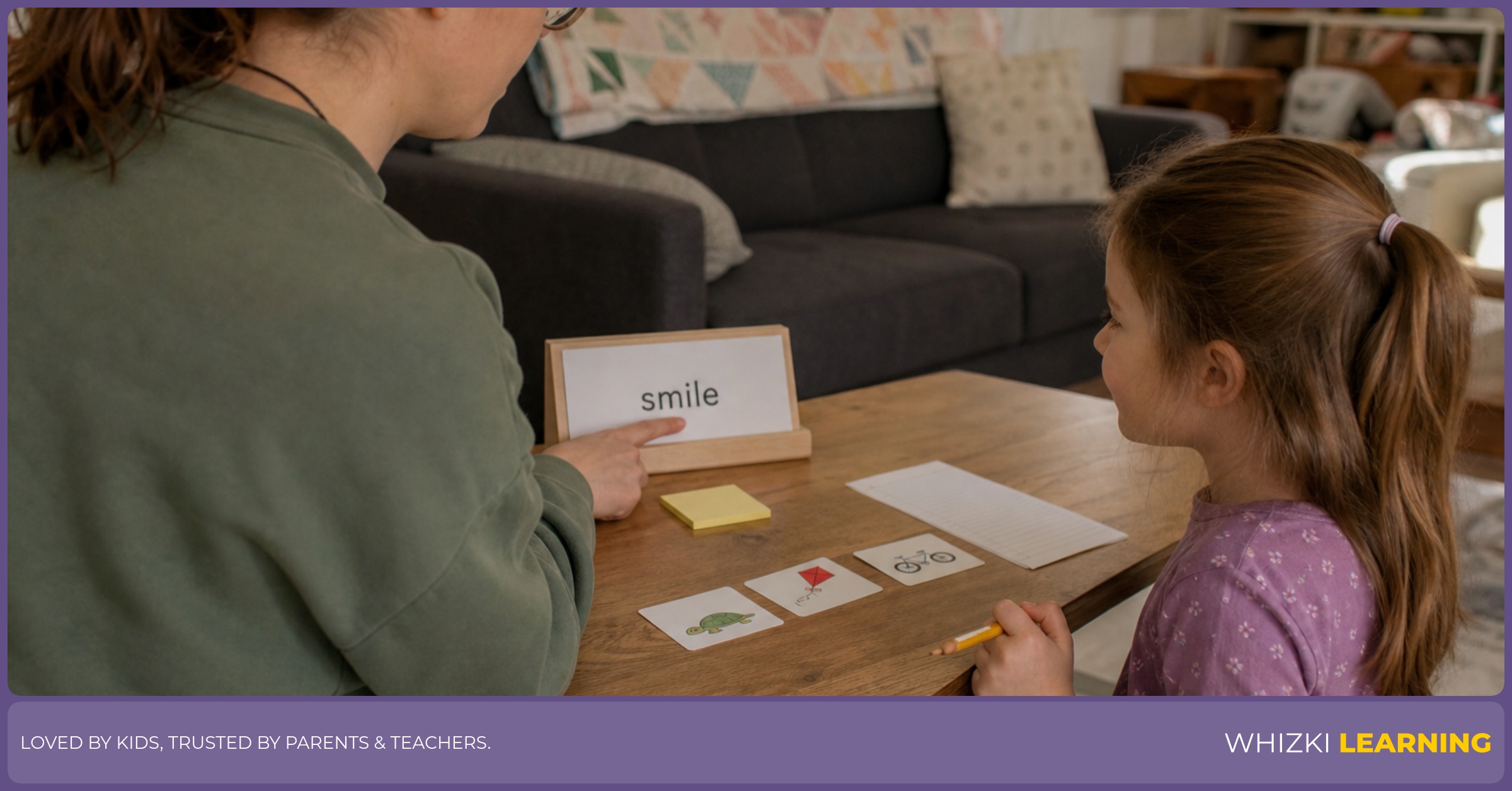
The routine takes about five minutes and needs one picture label, a sticky note, and a pencil. Occupational-therapy basics remind adults to lower the motor load, so the child can point, tap, trace in the air, or say the answer instead of writing every time.
First, the adult shows the picture and names the object together with the child. The adult runs a finger under the printed word while saying the word in a normal voice, which connects speech, picture, and print without turning the card into a test.
Next, the adult covers the picture and asks for the first sound. A child ages three or four can answer with a sound or a matching object from the room, while a child ages five to seven can point to the first letter and say the sound.
Last, the adult covers the picture again and asks the child to look through the whole word. The adult can reveal the picture after the attempt, because the reveal turns the picture into a check rather than the main clue.
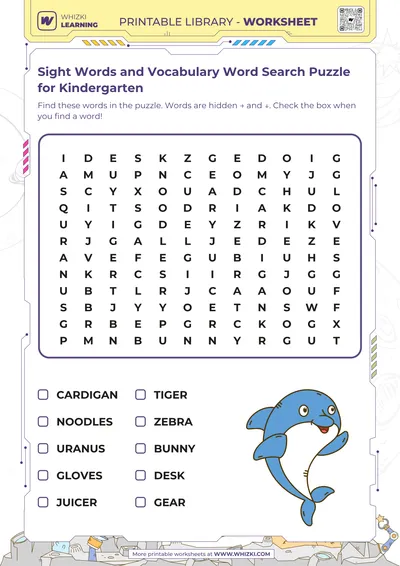
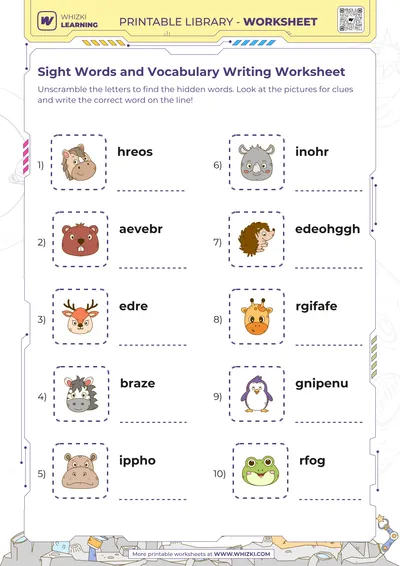
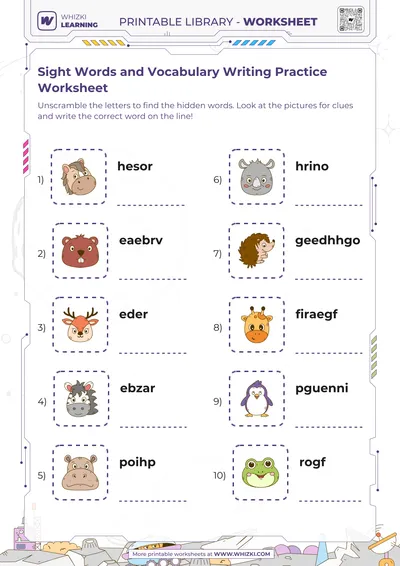
For low-prep practice, picture-label cards from the Whizki printable library can give you clean words and simple images for the cover-and-reveal routine. Print only a small set, because four calm cards usually teach more than a thick stack.
How to tell practice from guessing
Guessing sounds fast, but real early reading usually looks slower and more deliberate. Montessori and Reggio observation habits both help here: watch the child's hands, eyes, and self-corrections before deciding whether the label was read or guessed.
Picture-based practice is working when the child names the picture, notices the first sound, and then checks the letters with adult support. Guessing is taking over when the child says a word before looking at print, swaps in a related word, or gets frustrated because the picture has been covered.
The adult response can stay calm and specific. Say, “The picture gave us one clue, and the letters give us another clue,” then cover the picture and ask the child to start at the first letter again.
Honest limits and when to ask for help
Picture labels cannot replace shared reading, oral language, play, and explicit letter-sound teaching. NAEYC-aligned early literacy practice keeps worksheets and cards as one small part of a print-rich day, not the whole plan.
Some children remember logos, names, and favorite book covers long before children can read new words without pictures. The difference matters because memorized environmental print can be useful, but unfamiliar words still need sound-by-sound attention.
Ask the kindergarten teacher, pediatrician, speech-language pathologist, or occupational therapist for input when a child cannot hear first sounds after many playful tries, avoids looking at print, struggles to say common words clearly, or shows fine-motor strain during short paper tasks. Early help is practical, and a caring professional can sort out speech, vision, hearing, attention, or motor questions without blaming the child.
Picture labels are a good tool when the adult decides the job before the card comes out. Cover the picture to practice sounds or whole-word reading, reveal the picture to build meaning or check an attempt, and keep the moment short enough that the child still wants another turn tomorrow.